Think of the right drill bit size for 1/4 grease fitting as the key that opens a secure grease fitting installation.
When you’re working with a 1/4-28 grease fitting, precision is everything — too large a hole compromises the seal, too small makes threading difficult.
You’ll want to use a #21 drill bit, measuring 0.159 inches, but there’s more to the process than just picking the size.
Let’s explore what else you need to get this right.
Drill Bit Size for 1/4 Grease Fittings
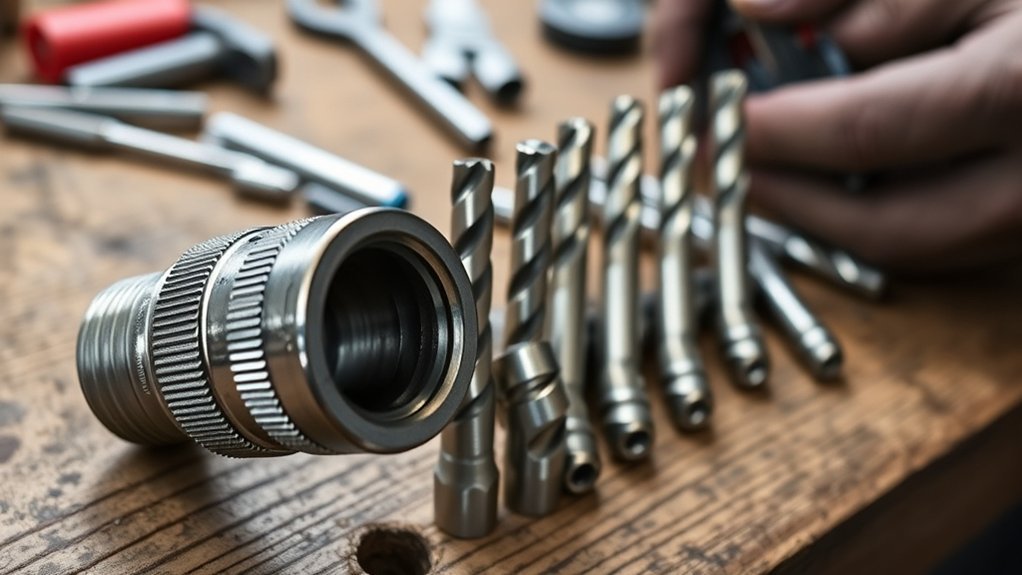
When installing 1/4 grease fittings, you’ll need a drill bit that matches the thread size precisely to guarantee a secure fit. For standard 1/4-28 grease fitting types, a #21 drill bit, measuring 0.159 inches in diameter, is typically recommended.
The drill bit material greatly impacts performance; high-speed steel (HSS) bits offer durability and heat resistance, making them suitable for metal components, while cobalt bits provide enhanced wear resistance for tougher materials. Carbide bits excel in drilling hardened surfaces but are more brittle.
Selecting the correct drill bit size guarantees the threaded hole accommodates the fitting’s external thread without excess clearance, preventing leaks and loosening. Always verify the grease fitting type, such as straight, angled, or flush mount, since thread pitch consistency is vital for ideal installation and long-term reliability.
Preparing the Hole for a 1/4 Grease Fitting
Before installing a 1/4 grease fitting, you’ll need to prepare the hole accurately to guarantee a tight, leak-free fit. Start by selecting the correct drill bit size for the grease fitting location to ascertain compatibility. Carefully measure and mark the precise spot to maintain alignment and functionality.
Control the hole depth precisely to avoid compromising the material or the fitting’s thread engagement. Use these steps to prepare the hole:
- Confirm grease fitting location with a center punch mark
- Choose a drill bit matching the fitting’s thread tap size
- Drill perpendicular to the surface for proper fit alignment
- Measure hole depth with a depth gauge or tape before stopping
Accurate preparation ascertains the grease fitting seals perfectly and functions reliably.
Tips for Drilling a Clean and Accurate Hole
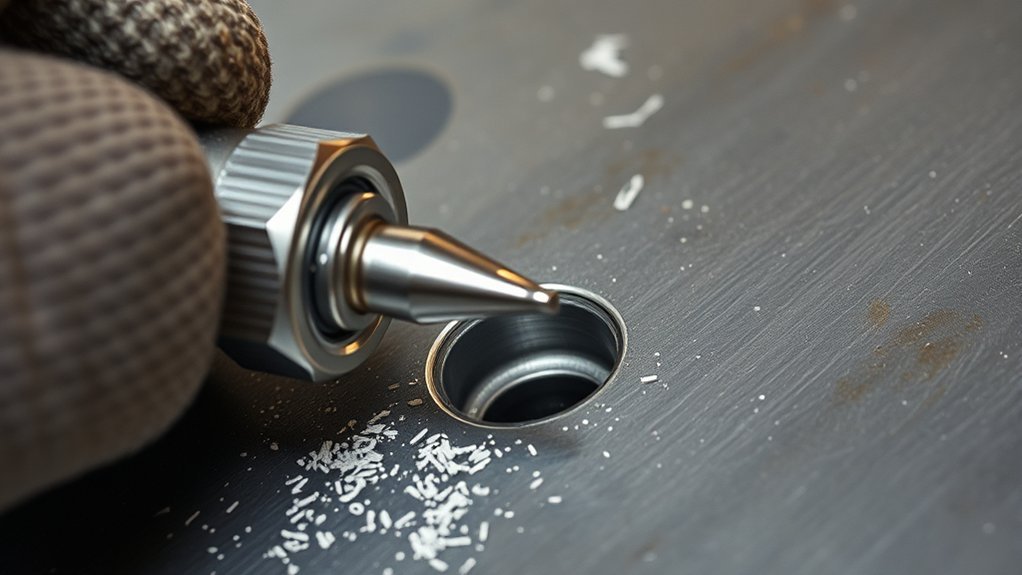
Five essential techniques help guarantee you drill a clean and accurate hole for your grease fitting. Precise hole alignment is critical; always mark the drilling point clearly and use a center punch to prevent bit wandering.
Employ proper drilling techniques such as starting with a pilot hole and using steady, moderate pressure to avoid material deformation. Maintain tool stability by securing your workpiece firmly.
Use sharp drill bits designed for the material at hand and apply cutting fluid when necessary to reduce friction and heat.
| Technique | Description |
|---|---|
| Marking & Punching | Guarantees exact hole alignment |
| Pilot Hole Drilling | Guides final drill bit |
| Steady Pressure | Prevents bit slipping and hole damage |
| Secure Workpiece | Maintains drilling accuracy |
| Sharp Bits & Fluid | Reduces heat, improves hole finish |
Common Drilling Mistakes to Avoid
Even with careful marking, steady pressure, and sharp bits, drilling mistakes can still occur and compromise the integrity of your grease fitting installation. To avoid common errors, refine your drilling techniques by steering clear of these pitfalls:
- Applying excessive force, which can cause bit wandering and oversized holes.
- Using dull or incorrect drill bits, leading to rough edges and imprecise fits.
- Neglecting to secure the workpiece, resulting in misalignment and unsafe conditions.
- Failing to clear metal shavings during drilling, which may damage the bit and affect hole quality.
Installing and Securing a 1/4 Grease Fitting
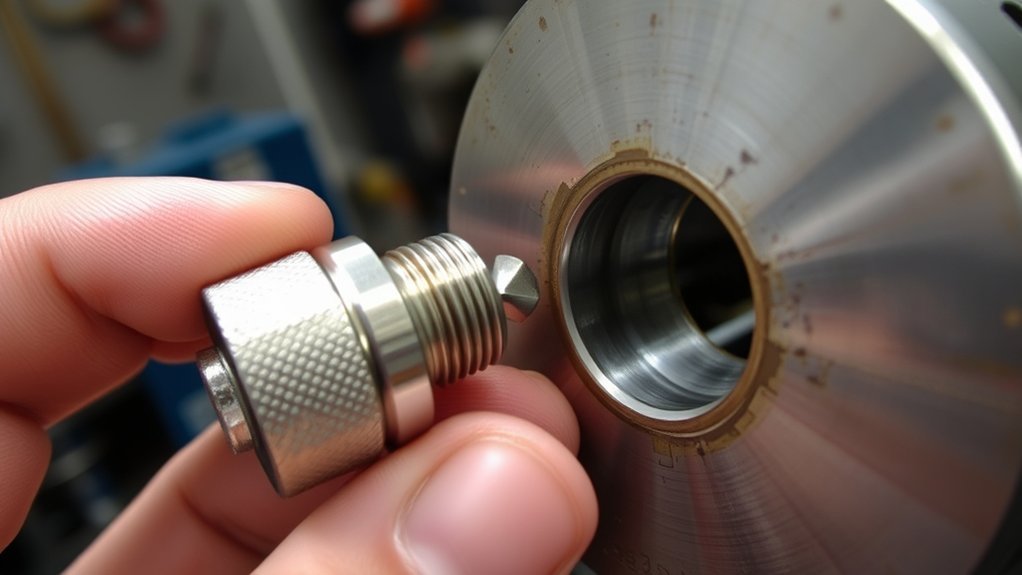
When installing and securing a 1/4 grease fitting, you must ascertain the hole is drilled with exact dimensions and properly tapped to match the fitting’s thread size. Begin by selecting the appropriate drill bit, commonly a #21 (0.159 inch), to create a precise pilot hole.
Then, use a 1/4-28 UNF tap, matching the standard thread pitch for most 1/4 grease fittings. Proper tapping ascertains secure engagement without cross-threading.
Use a 1/4-28 UNF tap to ensure precise threading and prevent cross-threading of grease fittings.
When choosing grease fittings, consider grease fitting types such as zerk or button head since thread compatibility varies slightly. After tapping, clean the hole thoroughly to remove debris.
Then, carefully thread in the fitting by hand before tightening with a wrench to the manufacturer’s recommended torque. This process ascertains a leak-free seal and reliable lubrication access.
Conclusion
Choosing the correct #21 drill bit for your 1/4-28 grease fitting is essential for a secure, leak-free installation. You might worry that a slightly larger bit makes insertion easier, but excess clearance compromises thread engagement and sealing.
Drill carefully, keeping the hole perpendicular and depth controlled to guarantee an ideal fit. Following these precise steps prevents leaks and ensures your grease fitting performs reliably under pressure.
Don’t cut corners—accuracy matters for long-term durability. When selecting the size drill bit for 1/4 grease fitting, always prioritize precision to maintain a tight, effective seal.