What Is the Best Drill Bit for Stainless Steel?
It’s no coincidence that cobalt drill bits are often recommended when working with stainless steel—they’re designed to withstand the material’s hardness and heat.
But if you’re weighing options like carbide or titanium-coated bits, the choice isn’t always straightforward.
Selecting the right drill bit involves understanding material properties, cutting angles, and heat management.
Before you pick a bit, consider these factors carefully, as they’ll determine both the quality of your work and the tool’s longevity.
Why You Need Special Drill Bits for Stainless Steel
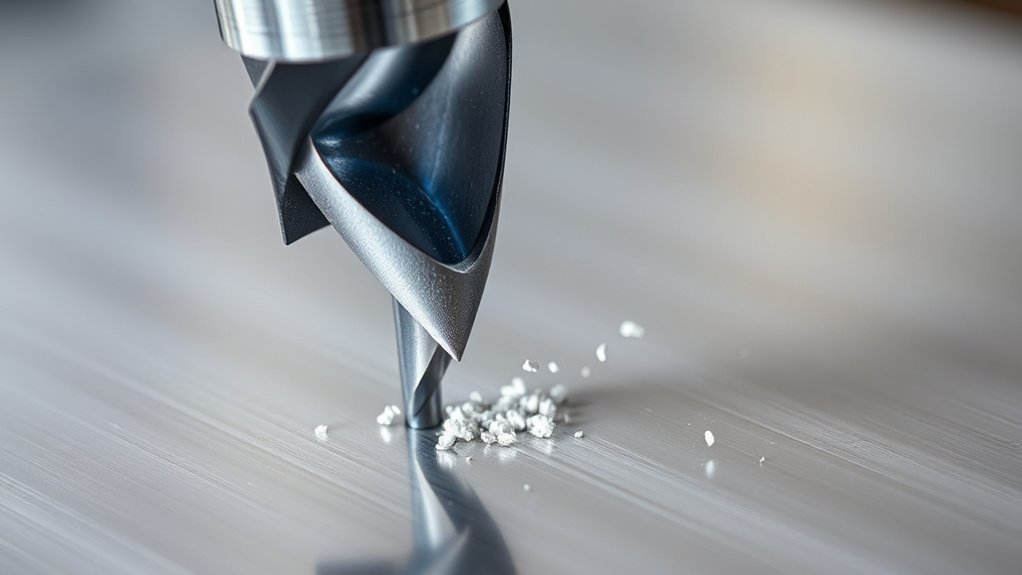
Although stainless steel’s durability makes it an ideal material for many applications, its hardness and heat resistance require you to use specialized drill bits. Standard bits quickly dull or overheat when drilling stainless steel, compromising efficiency and tool life.
Drilling stainless steel demands specialized bits to prevent dulling and overheating, ensuring efficiency and longevity.
You need drill bits with specialized designs that manage heat dissipation and maintain sharpness under high pressure. Material considerations play a critical role; the bit’s composition must resist abrasion and retain hardness at elevated temperatures.
Additionally, the geometry of the cutting edge must facilitate smooth chip removal to prevent work hardening. Without these features, you risk excessive wear, inaccurate holes, and potential damage to the workpiece.
Consequently, selecting drill bits engineered specifically for stainless steel guarantees superior performance and prolonged durability.
Comparing Drill Bit Types for Stainless Steel: Cobalt, Carbide, HSS, and Titanium-Coated
When choosing drill bits for stainless steel, you need to take into account the material composition, as it directly influences durability and cutting performance. Cobalt bits offer heat resistance and longevity, while carbide excels in hardness but can be brittle.
High-speed steel (HSS) provides versatility, and titanium-coated bits enhance wear resistance, making each suitable for different drilling demands.
Material Composition Benefits
Understanding the material composition of drill bits is essential for selecting the right tool for stainless steel. Each bit’s material properties, influenced by specific manufacturing processes, define its cutting efficiency and heat resistance.
Cobalt bits, alloyed with 5-8% cobalt, enhance hardness and red-hardness, enabling higher temperature tolerance. Carbide bits, produced through sintering fine tungsten carbide particles, offer extreme hardness but are brittle.
HSS bits, made from high-speed steel, balance toughness and hardness, suitable for moderate stainless steel drilling. Titanium-coated bits apply a thin titanium nitride layer via physical vapor deposition, improving surface hardness and reducing friction without altering the core material.
Durability and Performance
Since stainless steel demands high resistance to heat and wear, selecting a drill bit that balances durability with cutting performance is essential. When evaluating drill bit lifespan and performance metrics, cobalt bits excel due to their heat tolerance and hardness, offering prolonged service in tough conditions.
Carbide bits deliver superior cutting speed and edge retention but are brittle, risking chipping under impact. High-speed steel (HSS) bits provide moderate durability with good toughness but wear faster on stainless steel. Titanium-coated bits improve HSS lifespan by reducing friction but don’t match cobalt or carbide in sustained performance.
To optimize efficiency and longevity, choose cobalt for balance, carbide for precision and speed, and titanium-coated for cost-effective moderate tasks, always considering specific stainless steel grades and drilling conditions.
Choosing the Right Drill Bit Size and Angle for Stainless Steel
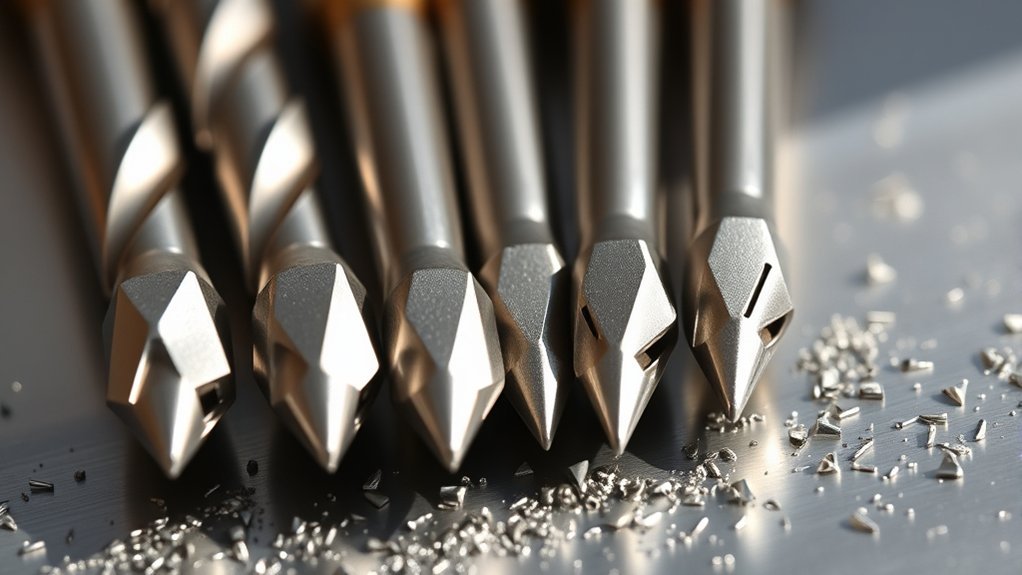
You need to select drill bit sizes that match the hole diameter required while maintaining structural integrity in stainless steel. The drill bit angle greatly affects cutting efficiency; a 135-degree split point is typically ideal for this material.
Choosing the correct size and angle minimizes heat buildup and reduces tool wear during drilling.
Optimal Drill Bit Sizes
Selecting the correct drill bit size and angle plays a critical role in efficiently penetrating stainless steel without causing damage. Using suitable sizes minimizes heat buildup and reduces bit wear. Generally, start with a smaller pilot bit, around 1/16 inch, to guarantee accuracy, then incrementally increase to your desired hole diameter. This staged approach prevents excessive force and bit dulling.
| Hole Diameter (inches) | Recommended Drill Bit Size (inches) |
|---|---|
| 1/8 | 1/16 (pilot), 1/8 (final) |
| 3/16 | 1/8 (pilot), 3/16 (final) |
| 1/4 | 3/16 (pilot), 1/4 (final) |
| 3/8 | 1/4 (pilot), 3/8 (final) |
| 1/2 | 3/8 (pilot), 1/2 (final) |
Selecting these sizes guarantees efficient cutting performance and tool longevity.
Ideal Drill Bit Angles
Although drill bit size is essential, the angle of the bit greatly impacts your ability to penetrate stainless steel efficiently and cleanly. For stainless steel, the ideal drill bit angles typically range between 135° and 140°, which differ from the standard 118° used for softer materials.
These superior cutting angles reduce heat buildup and minimize bit wear by providing a flatter tip, enhancing cutting efficiency. Using a sharper angle can cause excessive friction and rapid dulling, while a too-flat angle may increase thrust force, risking material deformation.
Drilling Stainless Steel Without Warping or Breaking Bits
When drilling stainless steel, maintaining proper technique is vital to prevent bit warping or breakage. You should guarantee consistent pressure and avoid excessive force, which generates heat and stresses the bit. Employ precise drilling techniques like peck drilling, periodically withdrawing the bit to clear chips and reduce friction.
Proper bit maintenance is imperative: regularly inspect and sharpen the cutting edges to maintain efficiency and reduce heat buildup. Use a sharp, high-quality bit designed for stainless steel to resist deformation.
Also, make sure the drill press or handheld drill is stable to avoid bit wobble, which promotes uneven wear and potential breakage. By combining these disciplined drilling techniques with diligent bit maintenance, you’ll preserve bit integrity and achieve clean, accurate holes without warping or failure.
Best Drilling Speeds and Coolants for Stainless Steel
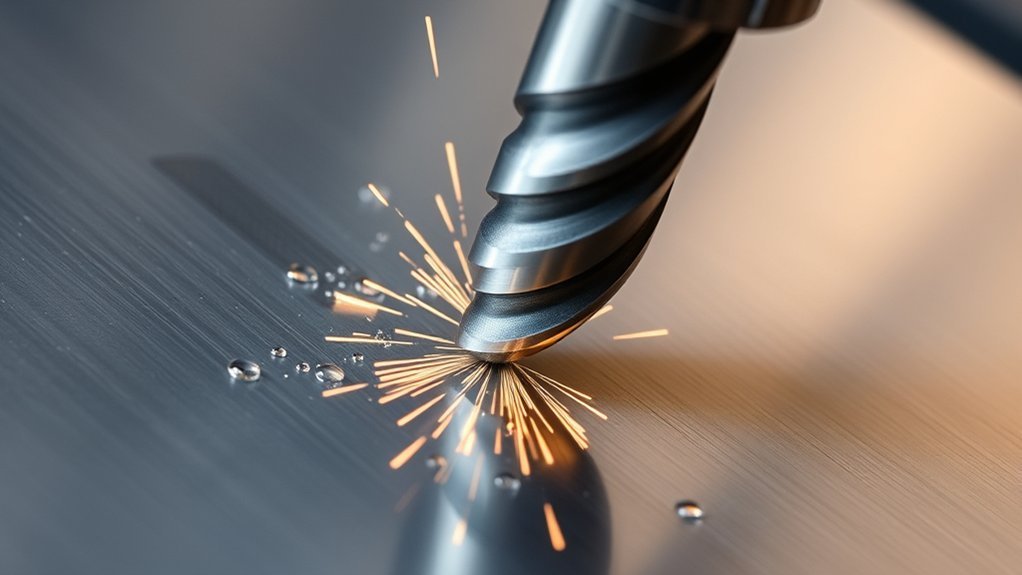
Maintaining proper drilling speeds and using effective coolants directly influence tool life and hole quality when working with stainless steel. You should operate at slower speeds, typically between 30 to 60 surface feet per minute (SFM), to minimize heat buildup and preserve the drill bit’s hardness.
Applying the right coolant types, such as water-soluble oils or synthetic coolants, helps reduce friction and dissipate heat efficiently. Avoid air cooling, as it’s often insufficient for stainless steel’s thermal conductivity.
Incorporate advanced drilling techniques like peck drilling to clear chips and prevent clogging, which improves coolant penetration and hole finish. By combining controlled speeds, suitable coolant types, and precise drilling techniques, you optimize cutting conditions, extend drill bit life, and achieve cleaner, more accurate holes in stainless steel.
Why Cobalt Drill Bits Are Ideal for Stainless Steel
Because stainless steel demands high heat resistance and toughness, cobalt drill bits stand out as the ideal choice for drilling this material. You’ll find their cobalt advantages include superior hardness and elevated red hardness, allowing them to maintain sharp cutting edges at temperatures exceeding 1000°F.
In a performance comparison, cobalt bits outperform standard high-speed steel bits by resisting wear and preventing premature dulling. Their alloy composition, typically 5-8% cobalt integrated into high-speed steel, enhances durability without sacrificing flexibility, reducing breakage risk.
When drilling stainless steel, these bits offer consistent penetration rates and minimize heat buildup, essential for maintaining material integrity. By choosing cobalt drill bits, you guarantee efficient cutting, extended tool life, and reduced downtime, making them a technically sound and economically advantageous option for stainless steel applications.
Advantages of Carbide-Tipped Drill Bits for Stainless Steel
While cobalt drill bits offer impressive heat resistance and durability, carbide-tipped drill bits push these qualities further, making them a top contender for stainless steel applications requiring extreme hardness and wear resistance. The carbide benefits include superior cutting edge retention and the ability to withstand the high temperatures generated during drilling without losing hardness.
This translates into enhanced drill bit longevity, allowing you to maintain precision over extended periods and multiple uses. Carbide tips reduce wear and deformation, minimizing the risk of bit failure when drilling tough stainless steel alloys. While more brittle than cobalt, with proper handling, carbide-tipped bits deliver unmatched performance in industrial settings where sustained hardness and minimal tool degradation directly impact efficiency and output quality.
How High-Speed Steel (HSS) Drill Bits Perform on Stainless Steel
Although High-Speed Steel (HSS) drill bits don’t match the extreme hardness of carbide-tipped options, they remain a reliable choice for many stainless steel drilling tasks due to their balance of toughness and heat resistance. When you use HSS bits, you’ll notice their ability to maintain sharpness under moderate heat, which directly impacts drilling efficiency and tool longevity.
The HSS performance on stainless steel excels especially in applications where high cutting speeds and moderate pressure are applied. One key HSS advantage is its toughness, reducing the risk of bit breakage during angled or off-center drilling.
However, you should apply adequate lubrication and control speed to optimize heat dissipation, as excessive heat can diminish the bit’s hardness and effectiveness on stainless steel surfaces.
Top Drill Bit Brands for Stainless Steel Projects
Choosing the right drill bit brand can greatly influence your stainless steel project’s outcome, especially when considering the material properties and drilling conditions discussed earlier. When choosing brands, focus on those known for precision manufacturing and durability, as these factors directly affect performance and drill bit maintenance demands.
Selecting high-quality drill bit brands ensures durability and optimal performance for stainless steel projects.
- Dormer Pramet: Renowned for cobalt and HSS bits, they offer excellent heat resistance and longevity, minimizing wear during stainless steel drilling.
- Bosch: Their titanium-coated bits provide a balance of hardness and flexibility, reducing the frequency of bit replacements and maintenance.
- Irwin Tools: Specializing in cobalt and titanium bits, they maintain sharpness longer, guaranteeing consistent penetration and reducing downtime.
Selecting from these brands guarantees enhanced efficiency, reduced tool degradation, and optimized drilling results in stainless steel projects.
Conclusion
When working with stainless steel, choosing cobalt drill bits cuts through challenges with consistent clarity and cooling control. You’ll find carbide tips deliver durability despite demanding conditions, while HSS and titanium-coated bits offer varied versatility.
By selecting sizes and speeds strategically, you’ll prevent warping and wear, ensuring sharp, steady strokes. Proper technique helps maintain the integrity of the material and extends the life of your tools.
Ultimately, mastering material and method maximizes machining momentum, making your stainless steel projects precise, productive, and professional every time. For best results, the best drill bit for stainless steel remains cobalt, combining toughness and heat resistance to handle this challenging metal efficiently.