If you’re working on a project requiring a 7/16-inch drill bit but only have a 27/64-inch or 15/32-inch bit, understanding the slight size differences is critical.
Knowing what is close to a 7/16 drill bit can help you make the right choice when the exact size isn’t available. These sizes aren’t interchangeable without considering material tolerance and fastener fit.
Knowing when to choose a slightly smaller or larger bit can affect your hole’s precision and strength.
Let’s explore how these nearby sizes compare and when each is technically appropriate. This knowledge ensures your project maintains quality and durability.
What Exact Size Is a 7/16 Drill Bit?
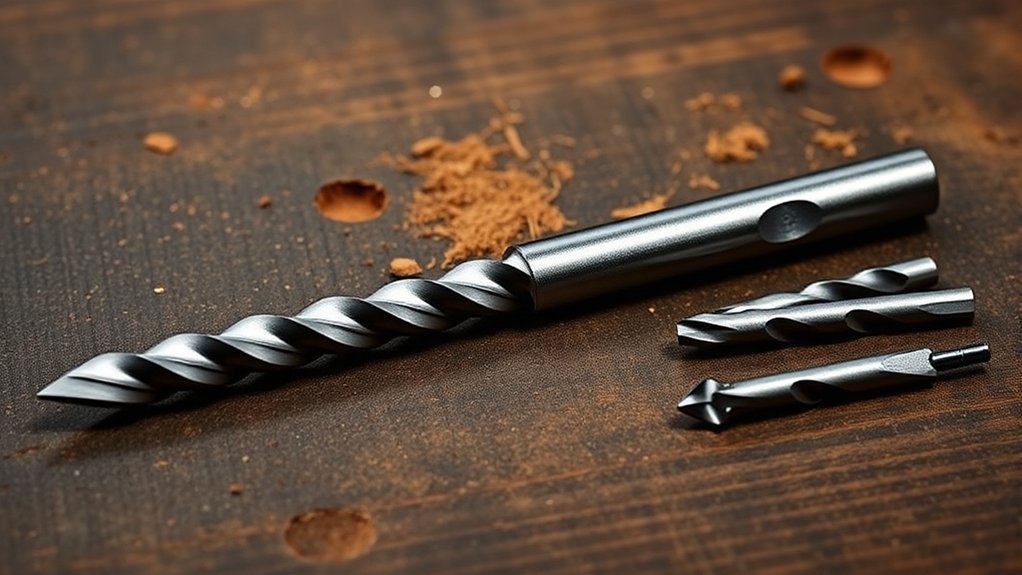
A 7/16 drill bit measures exactly 0.4375 inches in diameter. When selecting this size for your project, consider the drill bit materials, as they influence performance and durability.
High-speed steel (HSS) bits suit general-purpose drilling, while cobalt or carbide bits excel in tougher materials like stainless steel or masonry. Adhering to bit usage guidelines guarantees ideal results; applying steady pressure and appropriate speed prevents overheating and premature wear.
The 7/16 size is common for drilling medium-sized holes in wood, metal, and plastic, balancing precision and versatility. Understanding the exact diameter helps you match fasteners or components accurately, avoiding fitment issues.
How to Measure Your Drill Bit Size Accurately at Home
To measure your drill bit size accurately at home, start by using a caliper tool for precise diameter readings. You can also compare the bit against a drill gauge to quickly identify its size.
If those tools aren’t available, use a ruler to measure the bit’s diameter carefully, though this method is less exact.
Using a Caliper Tool
When you need to determine the exact size of your drill bit, using a caliper tool provides the most accurate measurement. Start by zeroing your caliper to guarantee caliper accuracy, then position the drill bit between the jaws.
Use the external measuring jaws to measure the diameter at the widest point, perpendicular to the bit’s axis. Apply consistent, gentle pressure to avoid compressing the bit or the caliper.
Digital calipers offer clear readouts, minimizing human error in reading scales. Employ proper measuring techniques by checking multiple points around the bit’s circumference to confirm uniformity.
This precise approach eliminates guesswork and helps you identify if your drill bit closely matches the 7/16-inch size or requires adjustment for your project specifications.
Comparing With Drill Gauge
Several drill gauge types help you measure drill bit sizes accurately at home, providing a straightforward alternative to calipers. When conducting a drill gauge comparison, you’ll find that standard and fractional gauges offer different levels of measuring accuracy.
Standard gauges list drill sizes in decimal inches, while fractional gauges use fractions, which may introduce slight rounding errors. Using a drill gauge is as simple as inserting your drill bit into the matching hole. The correct fit indicates your bit size without needing complex tools.
| Drill Gauge Type | Measuring Accuracy |
|---|---|
| Standard (Decimal) | High precision, minimal error |
| Fractional | Moderate precision, slight rounding |
| Metric | High precision, ideal for metric bits |
Choose your gauge based on the required precision and bit system to guarantee accurate sizing.
Measuring With Ruler
Drill gauges offer precise sizing, but if you don’t have one handy, a ruler can provide a practical alternative for measuring drill bit diameter. To obtain accurate readings, follow these steps carefully:
- Place the drill bit on a flat surface next to the ruler, ensuring the ruler’s edge aligns with the widest part of the bit.
- Use a ruler with fine, clearly marked increments (preferably in millimeters or 1/64 inch) to improve ruler measurements accuracy.
- Look directly above the bit’s diameter to avoid parallax error and note the measurement where the bit’s widest point ends.
Drill Bit Sizes Just Smaller Than 7/16?
When you need a drill bit just smaller than 7/16 inch, you’ll typically consider sizes like 27/64 or 13/32 inch. Understanding the difference between fractional and decimal sizes helps you select the most accurate fit for your application.
Choosing the right alternative depends on the material and tolerance you require for the hole.
Common Smaller Drill Sizes
If you need a size just smaller than a 7/16-inch drill bit, you’ll typically consider options like 27/64-inch or 13/32-inch bits. These sizes are common in various drill bit types, including twist, brad point, and masonry bits, each suited for specific materials and tasks. Understanding size conversions between fractional and decimal inches is vital for precision.
Here are three common smaller drill sizes near 7/16-inch:
- 13/32-inch (0.40625 inches), slightly smaller, ideal for pilot holes.
- 27/64-inch (0.421875 inches), a precise step down, useful in metalworking.
- 3/8-inch (0.375 inches), a standard size for wood and plastic.
Choosing the right drill bit size guarantees accuracy and compatibility with fasteners or workpieces.
Fractional Vs. Decimal Bits
Although fractional and decimal drill bit sizes both measure diameter, they serve different purposes and offer distinct advantages when selecting a bit just smaller than 7/16 inch. A fractional drill uses common fractional inch increments, such as 7/16 minus 1/64 (27/64 inch, or 0.4219 inch), which simplifies measurement and communication in traditional woodworking or metalworking.
Conversely, a decimal drill provides precise diameters expressed in thousandths of an inch, like 0.4210 inch or 0.4200 inch, allowing tighter tolerance control essential in machining or engineering applications. When you need a size just smaller than 7/16 (0.4375 inch), decimal drills let you fine-tune the diameter more accurately than fractional drills, which are limited to standard fractional steps.
Understanding this distinction guarantees you select the most appropriate drill bit for precise hole sizing requirements.
Selecting Appropriate Drill Alternatives
Choosing the right drill bit just smaller than 7/16 inch requires understanding both fractional and decimal sizing systems. When selecting appropriate drill alternatives, consider the following:
- Fractional Drill Bit Sizes: Options like 27/64 inch (0.4219″) or 13/32 inch (0.4063″) provide close fits under 7/16 (0.4375″), ensuring precision in hole diameter.
- Decimal Equivalent Bits: Using metric or decimal drill bits, such as 10.5 mm (0.4134″) or 11 mm (0.4331″), offers fine gradations for exact sizing needs.
- Drill Bit Types and Materials: Choose drill bit types (e.g., twist, brad point) and alternative materials (e.g., cobalt, carbide) based on the substrate to optimize durability and accuracy.
Drill Bit Sizes Just Larger Than 7/16?
Several drill bit sizes immediately exceed the 7/16-inch diameter, providing options when you need a slightly larger hole. For drill bit comparisons, the next common fractional size is 15/32 inch (0.46875 inches), which is noticeably larger than 7/16 (0.4375 inches).
Alternatively, 29/64 inch (0.4531 inches) offers a more incremental increase. When considering size conversion, you might explore metric drill bits just above 11 mm (0.433 inches), such as 11.5 mm (0.452 inches) or 12 mm (0.472 inches).
These sizes bridge the gap between 7/16 and larger fractional bits, allowing precise diameter selection. Understanding these size increments helps you achieve accurate hole dimensions without oversizing. Consequently, selecting just larger drill bits requires careful analysis of fractional and metric equivalents in your drill bit kit.
Choosing Fractional Vs Metric Drill Bits Near 7/16
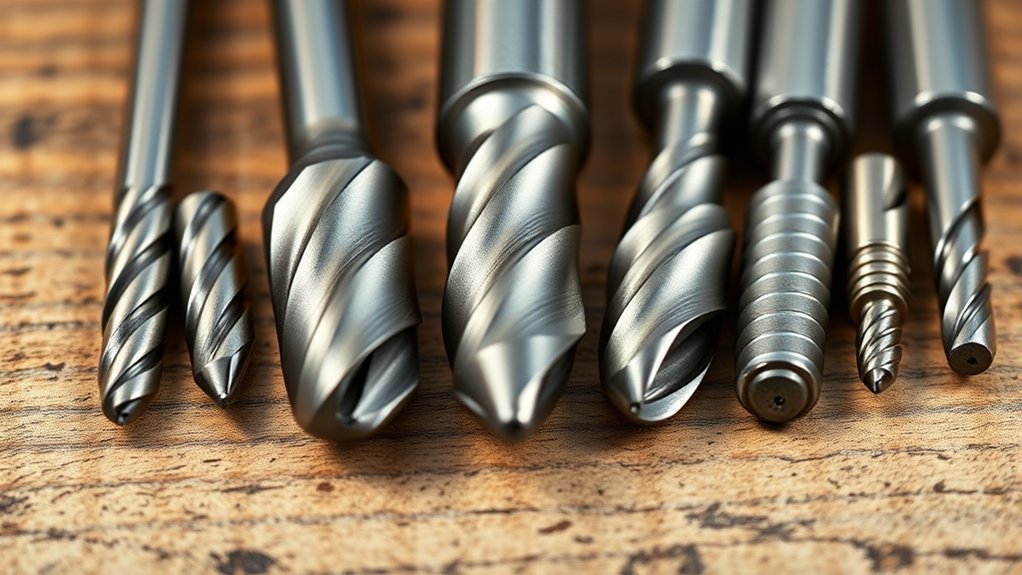
When you work near the 7/16-inch drill bit size, deciding between fractional and metric options hinges on the level of precision you require and the measurement system your project follows. Fractional drill bits, like 7/16″ (0.4375 inches), suit projects using imperial units and often require fractional conversion for metric compatibility.
Choosing between 7/16-inch fractional and metric drill bits depends on your project’s precision and measurement system.
Metric equivalents such as the 11 mm bit (0.4331 inches) offer a close but not exact match. To choose effectively:
- Assess tolerance needs: fractional sizes may require adjustments when precise metric equivalents aren’t available.
- Determine measurement standards: stick with fractional bits for imperial-based plans, metric for metric-based ones.
- Consider tool availability: fractional sets may not include fine increments found in metric sets, affecting accuracy.
Your choice depends on matching measurement systems and managing fractional conversion or metric equivalents precisely.
When to Use a 7/16 Drill Bit or a Nearby Size
One key factor in selecting a 7/16-inch drill bit or a nearby size is the exact diameter required for the material and fastener compatibility. You’ll find that drill bit applications often dictate slight size adjustments. For example, if a bolt requires a clearance hole, a bit slightly larger than 7/16″ may be necessary. Size conversion between fractional and metric also influences your choice when precise fits are critical.
| Drill Bit Size | Typical Use |
|---|---|
| 27/64″ (0.422″) | Slightly smaller clearance |
| 7/16″ (0.4375″) | Standard hole for 7/16″ bolts |
| 15/32″ (0.469″) | Larger clearance holes |
| 11 mm (0.433″) | Metric alternative |
Choose based on fastener tolerance and material hardness to optimize performance.
How Using Drill Bits Near 7/16 Affects Your Project
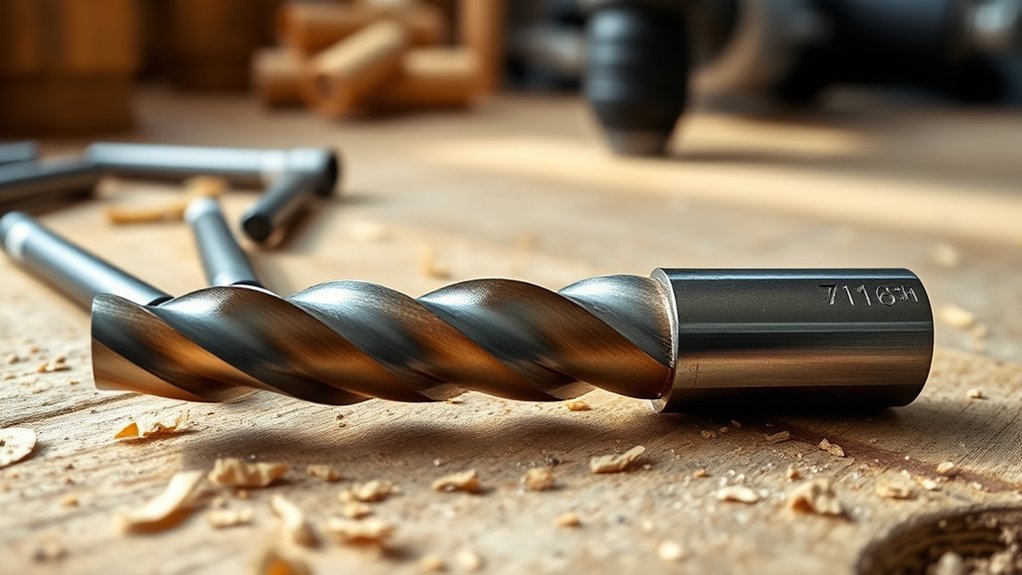
Although selecting a drill bit near 7/16 inch might seem minor, even slight diameter variations can greatly impact hole fit and fastener performance. When you choose drill bits close to 7/16 for your project, consider these effects on drill bit applications and project precision:
- Hole Tolerance: A slightly larger bit may cause loose fits, compromising structural integrity. Conversely, a smaller bit can create tight fits, risking material stress or fastener damage.
- Fastener Compatibility: The hole must match fastener size for ideal load distribution. Deviations can lead to uneven pressure or fastener failure.
- Material Behavior: Different materials react uniquely; softer materials might deform with oversized holes, while harder materials may crack with undersized ones.
These factors underscore why precise drill bit selection is critical to successful project outcomes.
Tips for Finding Replacement Drill Bits Close to 7/16
Finding replacement drill bits close to 7/16 inch requires careful measurement and verification to guarantee compatibility with your project specifications. Start by using a caliper to measure the exact diameter of your original bit, ensuring precise identification.
When 7/16-inch bits are unavailable, consider alternative sizes such as 11mm (0.433 inch) or 15/32 inch (0.469 inch), but always assess drill bit compatibility with your material and fasteners. Check manufacturer specifications or technical datasheets to confirm tolerances and performance.
Additionally, verify shank size and type to avoid fitment issues with your drill chuck. Opt for high-quality bits with consistent diameter control for accurate results. By systematically evaluating alternative sizes and confirming drill bit compatibility, you’ll maintain project integrity without compromising precision or efficiency.
Common Tools Needing a 7/16 Drill Bit or Similar Size
Drill bits measuring close to 7/16 inch serve critical roles in various tools and applications requiring precise hole diameters. When you work on woodworking projects or metalworking applications, selecting the right bit size guarantees accuracy and structural integrity.
Here are common tools and scenarios where a 7/16 drill bit or a similar size is necessary:
- Bolt Installation: You’ll often need a 7/16-inch hole to fit standard bolts or fasteners, especially in machinery assembly or framing.
- Pipe Fittings: Properly sized holes enable secure pipe connections in plumbing or HVAC systems.
- Wood Joinery: Accurate holes create tight dowel or screw joints in cabinetry and furniture construction.
Conclusion
Think of your 7/16 drill bit as the key to a precise lock—too small, and it won’t turn smoothly; too large, and it risks damaging the mechanism. By understanding sizes just smaller or larger, like 27/64 or 15/32 inches, you guarantee your project fits perfectly.
Choosing the right bit isn’t guesswork; it’s engineering precision. With careful measurement and selection, you access efficiency and maintain structural integrity in every hole you drill.
Knowing what is close to 7/16 drill bit size ensures you can make the best choice for your tool and project needs.