Did you know that step drill bits can reduce your tool changes by up to 50% when working with thin materials?
Step drill bits are especially useful if you often handle sheet metal, plastics, or electrical panels.
These bits offer a unique advantage over regular drill bits. Their design allows you to create multiple hole sizes with a single tool, improving efficiency and precision.
Understanding how they work and when to use them can greatly impact your projects.
It’s worth exploring their full range of applications to maximize their benefits.
How Step Drill Bits Differ From Regular Ones
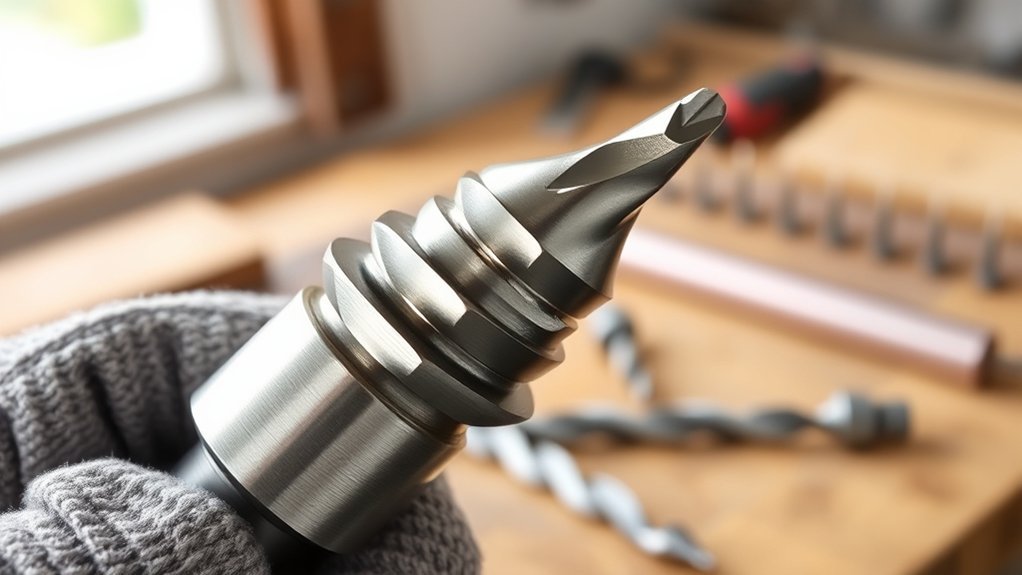
While regular drill bits are designed for drilling holes of a single, fixed diameter, step drill bits offer a unique, tapered design that allows you to drill multiple hole sizes with one bit. When you use a regular drill bit, you need to switch bits to change hole sizes, which can slow your work.
In contrast, a step drill bit features progressively larger steps, enabling you to enlarge holes incrementally without changing tools. Step drills are especially effective for thin materials like sheet metal, creating clean, precise holes.
Additionally, their design reduces the risk of bit wandering, providing greater control. You’ll find that step drill bits simplify tasks requiring multiple hole sizes, while regular drill bits remain better suited for deep, single-diameter holes. This fundamental difference shapes how each bit performs in various applications.
Which Materials Work Best With Step Drill Bits
You’ll find step drill bits work best with thin metals like aluminum, copper, and mild steel, providing clean, precise holes without excessive wear. They’re also compatible with various plastics, offering smooth cuts without cracking or melting the material.
While not ideal for thick hardwoods, they can handle some woodworking tasks, especially with softer woods and thinner panels.
Ideal Metal Types
Because step drill bits are designed to gradually enlarge holes, they perform exceptionally well on softer metals like aluminum, brass, and thin sheet steel. When working with aluminum alloys, you’ll appreciate the bit’s ability to create clean, burr-free holes without causing deformation.
Brass also responds well to step drill bits due to its softness, allowing precise hole enlargement without cracking. While step drill bits aren’t ideal for thick or hardened metals, they can handle thinner stainless steel sheets if you use moderate speed and steady pressure to avoid excessive heat buildup.
For tougher materials, using a lubricant can extend bit life and improve cutting performance. Overall, step drill bits excel on softer, thinner metals, making them an efficient choice for many metalworking tasks involving aluminum alloys and thin stainless steel.
Compatible Plastics
Step drill bits work exceptionally well with a variety of plastics, especially those that are softer and less prone to cracking. When considering plastic compatibility, materials like acrylic, polycarbonate, PVC, and ABS are ideal for step bit drilling.
These plastics respond well to the smooth, gradual cutting action of step drill bits, which reduces the risk of chipping or splintering. The step bit materials, often high-speed steel (HSS) or cobalt, provide the necessary sharpness and durability to maintain clean, precise holes in plastic sheets.
You’ll want to use a slower drill speed and apply consistent pressure to avoid melting or deforming the plastic. Overall, step drill bits offer versatility and efficiency when working with compatible plastics in various fabrication or repair tasks.
Woodworking Applications
Although woodworking involves a wide range of materials, certain types respond better to step drill bits due to their density and grain structure. You’ll find step drill bits particularly effective when working with wood laminates, as their stepped design allows for clean, precise holes without splintering the outer layers.
When creating dowel joints, these bits help you drill accurately sized holes that guarantee tight, secure fits. Softwoods and engineered wood products, such as plywood, also work well with step drill bits because they reduce the risk of cracking or chipping during drilling.
However, dense hardwoods may require slower drilling speeds to prevent overheating. By selecting the appropriate speed and pressure, you can use step drill bits to achieve smooth, professional results in various woodworking projects.
Why Step Drill Bits Are Perfect for Sheet Metal and Thin Materials
When working with sheet metal and other thin materials, you’ll find that these drill bits offer unmatched control and efficiency. Step drill bits are designed to gradually cut through thin surfaces, reducing the risk of snagging or tearing the material.
Their conical shape allows you to easily start the hole without wandering, which is essential for precise work on sheet metal. You’ll also appreciate how these bits provide easy drilling by eliminating the need to switch between multiple bits for different hole sizes.
This feature minimizes setup time and enhances your workflow. Additionally, the smooth cutting action helps prevent deformation, ensuring clean, accurate holes every time.
For anyone working with sheet metal or thin materials, step drill bits are a reliable, versatile solution.
How Step Drill Bits Create Multiple Hole Sizes
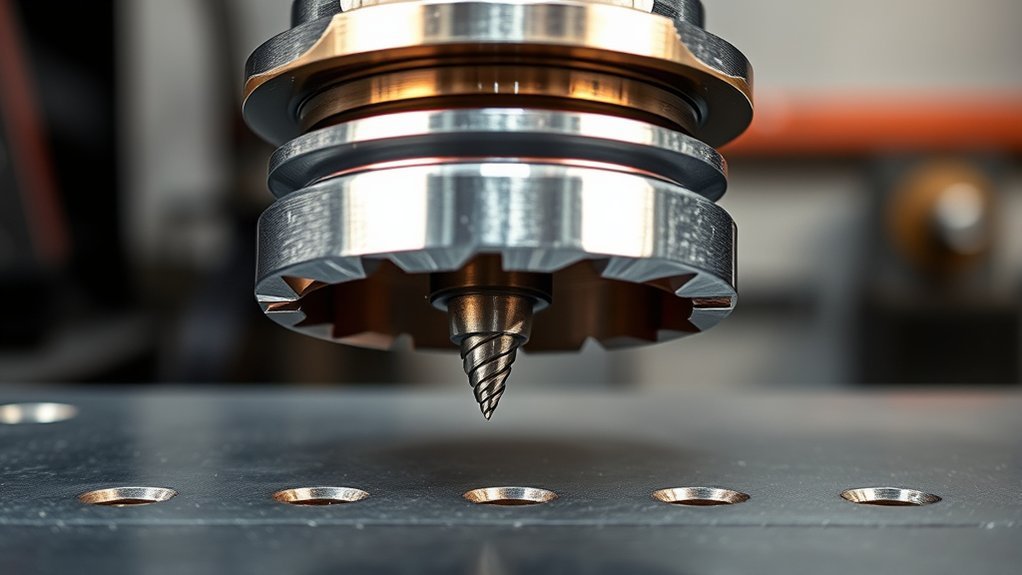
You’ll notice that step drill bits feature a gradual diameter increase along their length, allowing you to create different hole sizes with one tool. The tapered cutting edges smoothly shift between sizes, making it easy to enlarge holes incrementally.
This design gives you versatile hole sizing without switching bits, saving time and effort.
Gradual Diameter Increase
Because step drill bits feature a series of progressively larger diameters along their length, they allow you to create multiple hole sizes with a single tool. This gradual sizing makes it easier to drill holes with precision drilling, eliminating the need to switch bits frequently.
You can smoothly increase the hole diameter by simply drilling deeper, ensuring consistent control over hole dimensions. This design is especially useful for thin materials like sheet metal, plastics, and laminates.
Key benefits of gradual diameter increase include:
- Versatility in hole sizing without changing bits
- Reduced risk of material damage due to controlled enlargement
- Streamlined workflow with fewer tool changes
Tapered Cutting Edges
The gradual diameter increase in step drill bits is made possible by their uniquely tapered cutting edges, which allow each step to cut progressively larger holes as you drill deeper. This design provides several tapered edge benefits, including smooth shifts between hole sizes without needing to change bits.
The tapered edges optimize cutting efficiency by reducing the load on the drill, minimizing heat buildup, and preventing material deformation. As you advance, each step’s precise angle guarantees consistent hole dimensions and cleaner finishes.
These cutting edges also help maintain the bit’s durability, allowing you to drill through various materials with less wear. By understanding how the tapered cutting edges function, you can better appreciate why step drill bits offer such versatility and efficiency in hole-making tasks.
Versatile Hole Sizing
Step drill bits achieve versatile hole sizing through their innovative stepped design, which features multiple diameters arranged sequentially along the bit’s length. This allows you to drill holes of varying sizes using a single bit, eliminating the need to switch bits frequently.
As you drill deeper, the bit progressively enlarges the hole, providing you with precise control over the diameter. This design supports versatile applications across materials like metal, plastic, and wood.
Key benefits include:
- Efficient hole sizing without multiple bit changes
- Consistent, clean hole edges for precision drilling
- Adaptability to a range of project requirements
Common Trade Applications for Step Drill Bits
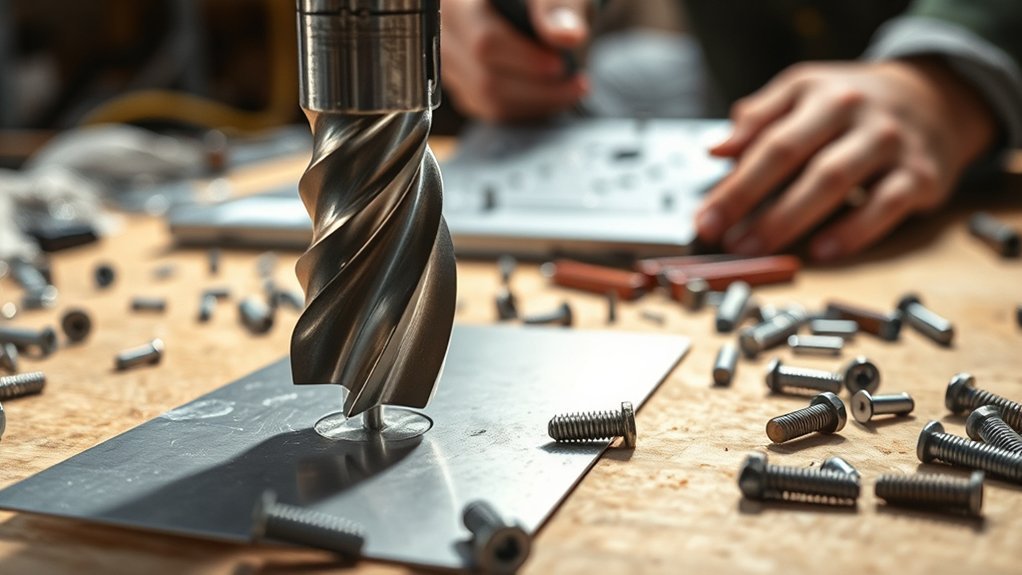
When you’re working with metals, plastics, or thin materials, you’ll find that step drill bits offer versatility unmatched by standard drill bits. In plumbing applications, these bits allow you to quickly enlarge or create clean holes in pipes and metal sheets, simplifying tasks like fitting new fixtures or running water lines.
For electrical installations, step drill bits are invaluable for drilling precise holes in panels, junction boxes, and conduit materials without causing cracks or deformations. Their stepped design lets you drill multiple hole sizes with a single bit, saving time and reducing tool changes.
Whether you’re cutting through aluminum, brass, or plastic, step drill bits provide smooth, burr-free holes essential for professional trade work, making them a reliable choice across diverse industries.
Choosing the Right Step Drill Bit: Key Factors
Anyone looking to select the right drill bit must consider several key factors to guarantee peak performance and durability. First, focus on material compatibility. Confirm the step drill bit matches the materials you’ll be working with, such as metal, plastic, or wood.
Next, consider the bit’s size range and step increments to suit your specific hole dimensions. Finally, evaluate the bit’s coating and build quality, which influence both cutting efficiency and bit maintenance requirements.
- Material compatibility to prevent wear and confirm clean cuts
- Size range and step increments tailored to your project needs
- Coating type affecting durability and ease of maintenance
How to Extend Your Step Drill Bits’ Lifespan
Selecting a step drill bit with the right material compatibility, size range, and coating sets the foundation for long-lasting performance, but maintaining that condition requires careful handling and routine care.
To extend your step drill bits’ lifespan, follow essential maintenance tips such as regularly cleaning the bits to remove metal shavings and debris that can cause wear. Apply cutting oil or lubricant when drilling to reduce heat buildup, which degrades the bit’s edge.
Regularly clean and lubricate step drill bits to prevent wear and reduce heat damage during drilling.
After use, guarantee proper storage by keeping the bits in a dry, organized case to prevent corrosion and damage from impact. Avoid excessive pressure during drilling to minimize stress on the bit.
Consistently applying these maintenance tips and proper storage techniques will preserve sharpness and reliability, guaranteeing your step drill bits perform efficiently over time.
Common Mistakes to Avoid With Step Drill Bits
Although step drill bits offer versatility and efficiency, misusing them can lead to premature wear or damage. To guarantee proper step drill bit usage, you need to be aware of common step drill errors that can compromise your work and tool longevity.
Avoid these mistakes:
- Applying excessive pressure, which can overheat and dull the bit quickly.
- Using the wrong drill speed for the material, causing inefficient cutting and increased wear.
- Neglecting to secure the workpiece, leading to inaccurate holes and potential bit damage.
Conclusion
You’ve seen how step drill bits save you time by handling multiple hole sizes and work best with thin materials like sheet metal and plastics. Remember, “measure twice, cut once” applies here—choosing the right bit and using it properly prevents costly mistakes.
By understanding their unique design and ideal applications, you’ll boost efficiency and precision in your projects. With proper care, your step drill bits will serve you reliably for years to come.
In conclusion, knowing what step drill bits are used for helps you select the right tool for the job, ensuring better results and a smoother workflow.