Are Core Drill Bits Reverse Threaded? It’s a question that can impact your drilling experience significantly.
You might assume all core bits twist on the same way, but some actually use reverse threading, turning counterclockwise to tighten.
This design isn’t just a quirk—it plays a critical role in performance and safety during high-torque drilling.
Understanding why and how this threading matters can change how you approach your next project.
Are Core Drill Bits Reverse Threaded?
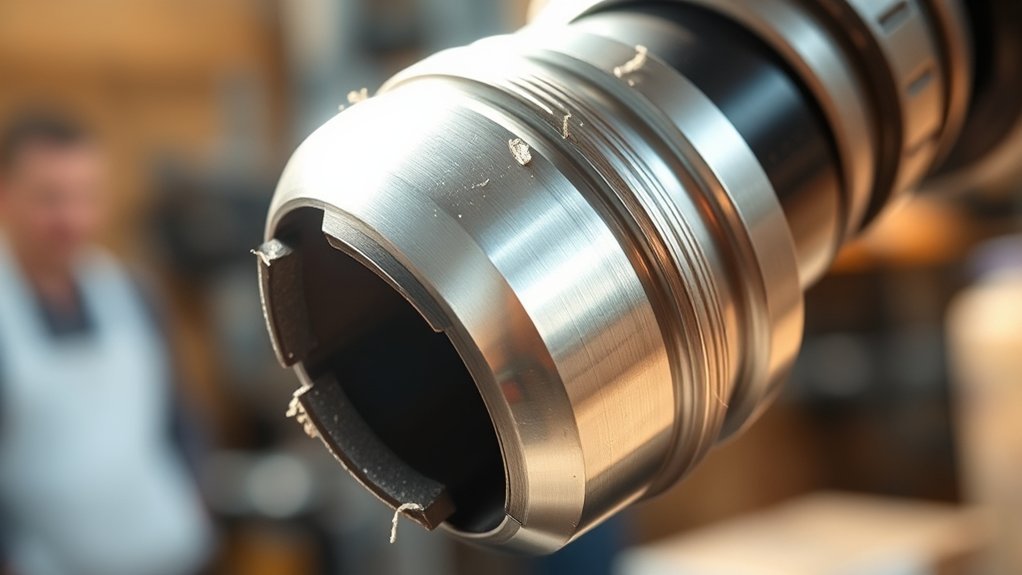
How can you tell if a core drill bit is reverse threaded? First, examine the threading direction on the bit’s shank relative to the drill’s rotation. Most core bit types conform to standard right-hand threading, tightening clockwise.
However, some reverse-threaded bits tighten counterclockwise to prevent loosening during operation. To identify this, compare the threading to established threading standards: right-hand threads advance clockwise, reverse threads counterclockwise.
Some reverse-threaded bits tighten counterclockwise to prevent loosening during operation—identify by comparing threading direction to standards.
You can also check manufacturer specifications or markings on the bit. Visually, reverse threads slope oppositely to standard threads. Being aware of these distinctions guarantees proper compatibility and safety.
Understanding threading standards across core bit types helps you avoid mismatched connections and guarantees efficient, secure installation during drilling tasks.
Why Do Some Core Drill Bits Use Reverse Threads?
Because core drill bits operate under high rotational forces and torque, some manufacturers use reverse threads to prevent the bit from loosening during drilling. This design exploits the reverse thread advantages by counteracting the natural tendency of standard-threaded bits to unscrew under clockwise rotation.
In core bit applications involving hard materials like concrete or stone, maintaining a secure attachment is critical to guarantee drilling accuracy and safety. Reverse threads create a self-tightening effect as the bit rotates, minimizing the risk of bit detachment and equipment damage.
You’ll find reverse-threaded core bits particularly useful in high-torque scenarios or when using hammer drills, where vibration and torque spikes could otherwise compromise the bit’s stability. Overall, reverse threads enhance operational reliability and extend bit lifespan in demanding core bit applications.
How to Identify Reverse vs. Standard Thread Core Bits
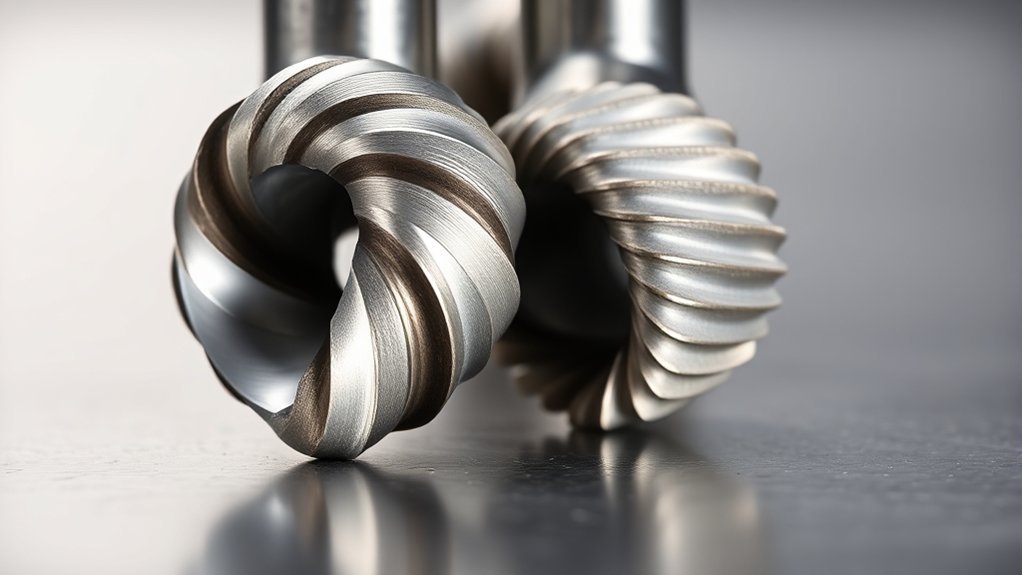
Determining whether a core drill bit features reverse or standard threading requires close inspection of the thread direction relative to the bit’s rotation. You’ll notice that standard threads tighten clockwise, matching the forward rotation of most drills, while reverse threads tighten counterclockwise, opposing typical rotation.
To identify thread types, examine the helical angle and direction on the bit’s shank. Additionally, verify the drill compatibility by consulting the manufacturer’s specifications or markings on the bit, as some drills mandate specific thread orientations to function safely and effectively.
If unsure, test the threading engagement by manually screwing the bit onto the drill spindle, noting whether it tightens clockwise or counterclockwise. This analytical approach guarantees you select the appropriate core bit for peak drill compatibility and performance.
How Reverse Threading Affects Core Drill Bit Safety and Performance
You’ll find that reverse threading secures the core bit more tightly as the drill operates, enhancing overall stability during use. This threading mechanism reduces the risk of the bit loosening under torque, which directly contributes to safer operation.
Understanding these effects can help you optimize both the performance and safety of your core drilling tasks.
Reverse Threading Mechanism
While reverse threading mechanisms may seem counterintuitive, they play an essential role in enhancing both the safety and performance of core drill bits. By engaging threads that tighten under rotational forces, reverse threading prevents loosening during operation, a critical reverse threading advantage.
This mechanism guarantees secure bit attachment, reducing the risk of accidents and improving drilling efficiency. You’ll find reverse threading applications particularly useful in high-torque environments where vibration could otherwise compromise bit stability.
| Aspect | Effect |
|---|---|
| Thread Direction | Engages tighter with clockwise rotation |
| Safety | Minimizes accidental bit detachment |
| Performance | Enhances torque transfer efficiency |
| Maintenance | Simplifies bit removal against rotation |
Impact On Drill Stability
The secure engagement provided by reverse threading directly influences the overall stability of core drill bits during operation. When you use reverse-threaded bits, the design counters the natural rotational forces, minimizing loosening and enhancing drill stability.
This precise fit guarantees consistent torque transfer between the bit and the drill, reducing vibration and wobbling that can degrade performance or damage the workpiece. However, thread compatibility is critical; mismatched threads compromise this stability, increasing the risk of bit slippage or detachment.
You must verify that the reverse threading on your bit matches the drill’s spindle specifications exactly. By maintaining proper thread compatibility, you optimize the mechanical connection, which stabilizes the core drill bit’s motion, improves cutting accuracy, and prolongs tool life under demanding conditions.
Safety Benefits Explained
Because reverse threading counteracts loosening caused by rotational forces, it greatly enhances the safety of core drill bit operation. When you use reverse-threaded bits, the risk of the bit detaching mid-operation decreases considerably, minimizing potential hazards.
However, you must guarantee thread compatibility between the drill and the core bit to maintain secure attachment and avoid mechanical failure. Adhering to safety precautions, such as verifying proper thread direction and engagement, is essential to prevent accidents.
Reverse threading also reduces vibration-induced loosening, contributing to stable and controlled drilling. By understanding these mechanics, you can improve operational safety and prolong equipment lifespan.
Ultimately, reverse threading offers a reliable method to maintain bit integrity under high torque, enhancing both performance and safety during core drilling tasks.
Which Core Drill Bit Thread Is Right for Your Project?
How do you determine which core drill bit thread suits your project? Begin by reviewing the core drill specifications, focusing on thread type, pitch, and diameter. Thread compatibility is vital; mismatched threads can compromise tool performance and safety.
Check the drill’s spindle threading. Most commonly, standard right-hand threads are used, but some applications require reverse threads to prevent loosening under rotation. Evaluate the material and drilling conditions, as certain threads provide better grip and torque resistance.
Consult manufacturer guidelines to verify your chosen bit matches the drill’s specifications. By analyzing these factors precisely, you’ll select a core drill bit thread that guarantees ideal fit and functionality, minimizing downtime and enhancing drilling accuracy. Proper thread compatibility is the foundation of effective and safe core drilling operations.
How to Install and Remove Reverse Threaded Core Drill Bits
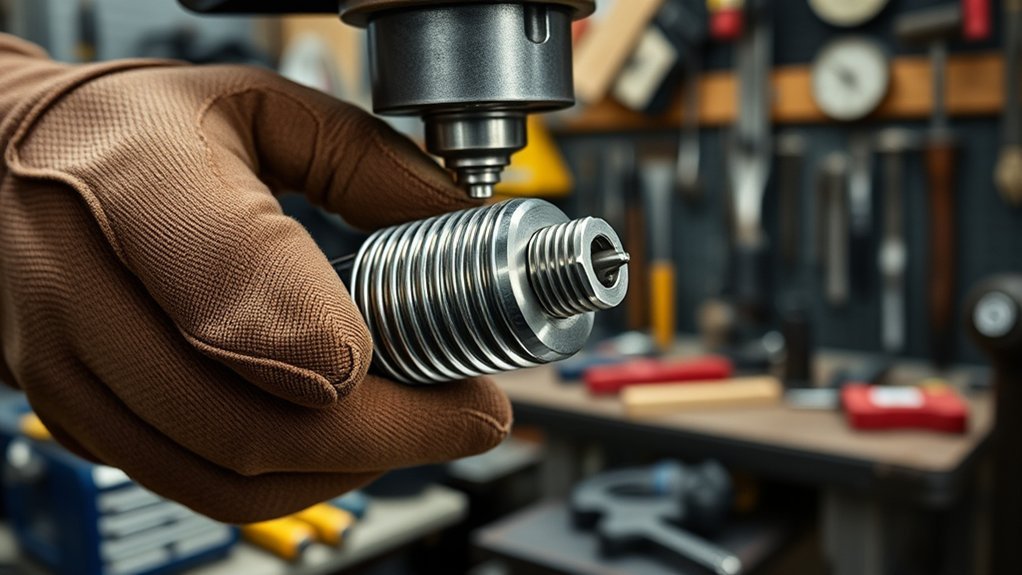
You need to first identify the reverse thread direction to avoid cross-threading during installation. Apply consistent torque while turning the bit counterclockwise to secure it properly.
When removing, use controlled force in the opposite direction to prevent damage to both the bit and the drill.
Identifying Reverse Threads
Recognizing reverse threads on core drill bits is essential for proper installation and removal, as their direction opposes standard threading. For effective reverse thread identification, conduct a thorough core bit inspection focusing on thread orientation and pitch.
Reverse threads tighten counterclockwise, unlike regular threads.
| Feature | Standard Thread | Reverse Thread |
|---|---|---|
| Tightening Direction | Clockwise | Counterclockwise |
| Thread Angle | Right-handed | Left-handed |
| Visual Cue | Threads slope right | Threads slope left |
| Common Use | Most drill bits | Specific core bits |
| Installation Note | Turn right to tighten | Turn left to tighten |
Proper Installation Techniques
Proper installation and removal of reverse threaded core drill bits require careful attention to their unique threading direction. To guarantee secure attachment, start by inspecting the bit and arbor for damage or debris.
Engage the bit by turning it counterclockwise, which contrasts with standard right-hand threads. Use proper alignment to avoid cross-threading; misalignment can damage both the bit and the drill.
Apply consistent, moderate torque during installation, verifying that the bit seats fully and evenly. Avoid forcing the bit, as this compromises thread integrity.
When removing, reverse the process by turning clockwise, maintaining alignment to prevent stripping. Mastering these installation techniques provides peak performance and prolongs tool life by respecting the distinct mechanics of reverse threading.
Safe Removal Methods
Although reverse threaded core drill bits require a different approach than standard bits, safely removing them hinges on understanding their unique thread direction and maintaining precise alignment throughout the process. To guarantee safe removal, first confirm the bit rotates counterclockwise to loosen; applying force in the usual clockwise direction can damage threads or the drill.
Use a torque-controlled wrench or the drill’s reverse setting at low speed to carefully back out the bit, keeping it aligned to prevent cross-threading. Avoid excessive force, which risks stripping the reverse threads. Regular drill maintenance, including cleaning threads and lubricating them before removal, reduces friction and wear.
Conclusion
Now that you know core drill bits can be reverse threaded to tighten counterclockwise, you’re better equipped to tackle tough materials with confidence. Like a key fitting its lock, choosing the right thread type guarantees stability and safety, preventing bit detachment under high torque.
Always identify your bit’s threading before installation or removal to optimize performance. Understanding these details helps you work smarter, not harder, especially in demanding construction and masonry projects.
In conclusion, knowing whether core drill bits are reverse threaded is essential for ensuring proper use and achieving the best results in your drilling tasks.