You might wonder if a metal drill bit will work on brick when you need to mount something outdoors or run wiring through a wall.
While it’s possible to force a metal bit into brick, you’ll quickly notice it’s inefficient and risks damaging both the bit and the material.
Metal drill bits struggle with brick because the material is much harder and more abrasive than typical metals.
Using the wrong bit can lead to overheating, dulling, or even breaking your drill bit.
Understanding why metal bits aren’t ideal for brick, and knowing what alternatives exist, can save you time and frustration on your project.
For brick, specialized masonry bits are a better choice to ensure clean, effective drilling.
Can You Use a Metal Drill Bit on Brick?
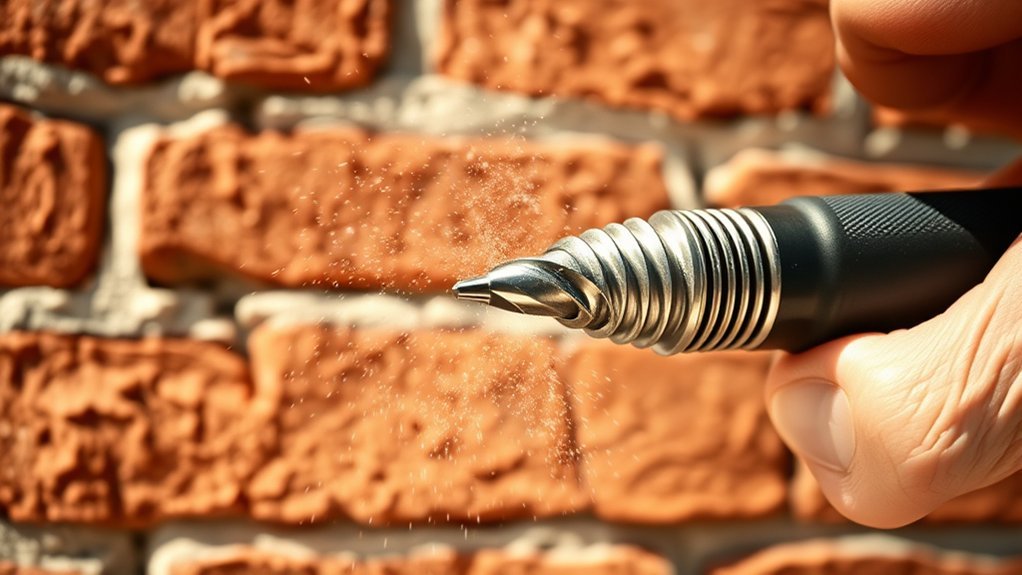
When drilling into brick, you might wonder if a standard metal drill bit will get the job done. Technically, you can use a metal drill bit on brick drilling tasks, but it’s not ideal.
Metal drill bits are designed for softer materials like wood or metal, lacking the hardness and tip geometry to effectively penetrate brick. If you proceed, expect slower progress and increased wear on the bit.
Metal drill bits suit softer materials but struggle with brick, causing slower drilling and faster bit wear.
For efficient brick drilling, you need a masonry bit with a carbide tip, which resists abrasion and manages the brick’s hardness. While a metal drill bit might create holes in brick with patience, it won’t provide clean, precise results and risks damaging both bit and surface.
Use the right bit to guarantee safety and efficiency.
Why Metal Drill Bits Usually Struggle With Brick
Because brick is a dense, abrasive material, metal drill bits lack the necessary hardness and cutting edge design to penetrate it effectively. When you use a metal bit on brick, you’ll notice rapid wear and diminished drill performance due to several factors:
- Metal fatigue sets in quickly from constant friction.
- The bit’s cutting edges dull, reducing efficiency.
- Heat buildup accelerates material degradation.
- Inability to remove brick dust hampers progress.
- Increased risk of bit breakage under stress.
These issues mean metal bits struggle to maintain the force and sharpness needed to cut through brick. You’ll find that without specialized design or materials, the drill bit’s lifespan and effectiveness are severely compromised when tackling brick surfaces.
What Makes Masonry Bits Better for Brick?
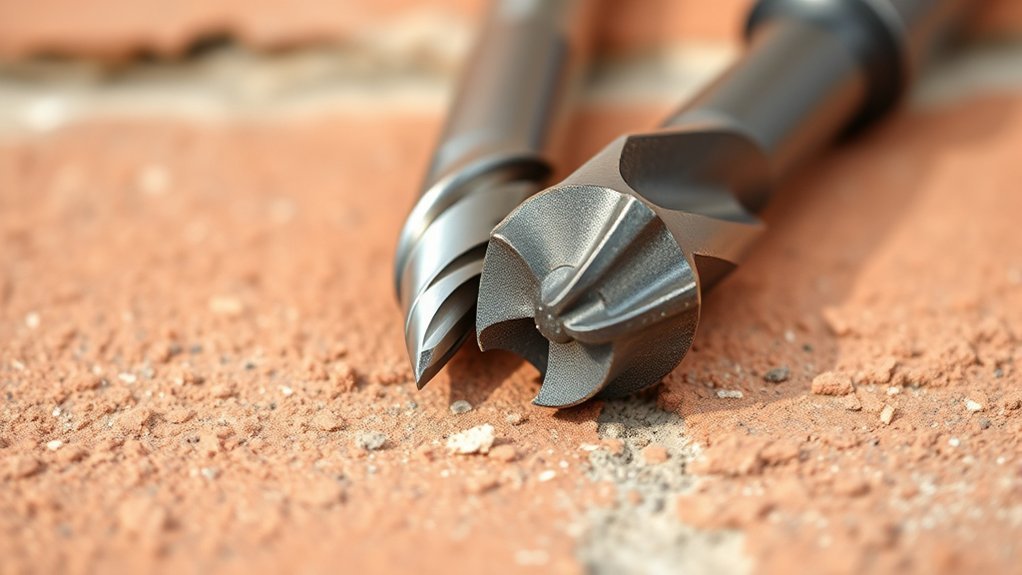
Although metal drill bits falter on brick, masonry bits excel due to their specialized design and materials. You’ll notice masonry bit advantages mainly come from their tungsten carbide tips and fluted bodies.
These features improve drill bit performance by efficiently chipping away hard brick surfaces while dissipating heat. This design prevents dulling and breakage that metal bits often suffer.
| Feature | Masonry Bit Advantage |
|---|---|
| Tip Material | Tungsten carbide for durability |
| Tip Shape | Chisel-shaped for efficient cutting |
| Flute Design | Spiral flutes clear debris quickly |
| Heat Resistance | High, reduces wear and overheating |
| Drill Compatibility | Designed for hammer drills |
These features collectively boost your drilling precision and longevity when working on brick.
How to Choose the Best Drill Bit for Brick
When choosing a drill bit for brick, focus on selecting types designed for masonry, such as carbide-tipped bits. You’ll want to guarantee the material of the bit matches the hardness and abrasiveness of brick to avoid wear or breakage.
Understanding the compatibility between drill bit materials and brick will help you achieve clean, efficient holes.
Types of Drill Bits
Selecting the right drill bit is essential for effectively penetrating brick without causing damage. Understanding drill bit materials and drill bit shapes helps you choose the best tool for the job.
Masonry drill bits, typically tungsten carbide-tipped, are designed specifically for brick and concrete, offering durability and efficient cutting. Their shape usually features a spear-point tip to reduce slipping and improve accuracy.
Other types, like high-speed steel (HSS) bits, suit metal but struggle with brick. Here’s a quick guide to common drill bits for brick:
- Tungsten carbide-tipped masonry bits: optimized for brick
- SDS-plus bits: for hammer drills, enhanced impact resistance
- Diamond-tipped bits: for precision and longevity
- High-speed steel (HSS) bits: better for metal, less effective on brick
- Carbide-grit bits: abrasive surface for tough masonry
Choose based on your drill and brick type for best results.
Material Compatibility
Since brick varies in hardness and density, you need to match your drill bit material accordingly to guarantee efficient drilling and prevent bit damage. Different drill bit materials perform differently against varying brick hardness.
For softer bricks, high-speed steel (HSS) bits may suffice, but for harder bricks, carbide-tipped bits provide superior durability and cutting efficiency. Diamond-tipped bits excel on extremely dense or engineered bricks, ensuring clean, precise holes without excessive wear.
Avoid using standard metal drill bits made for wood or metal alone, as they lack the toughness required for masonry and will quickly dull or break. Assess your brick’s hardness before selecting drill bit materials. Prioritizing compatibility extends bit life, improves drilling speed, and reduces the risk of damaging your work surface or drill.
What Happens If You Use a Metal Bit on Brick?
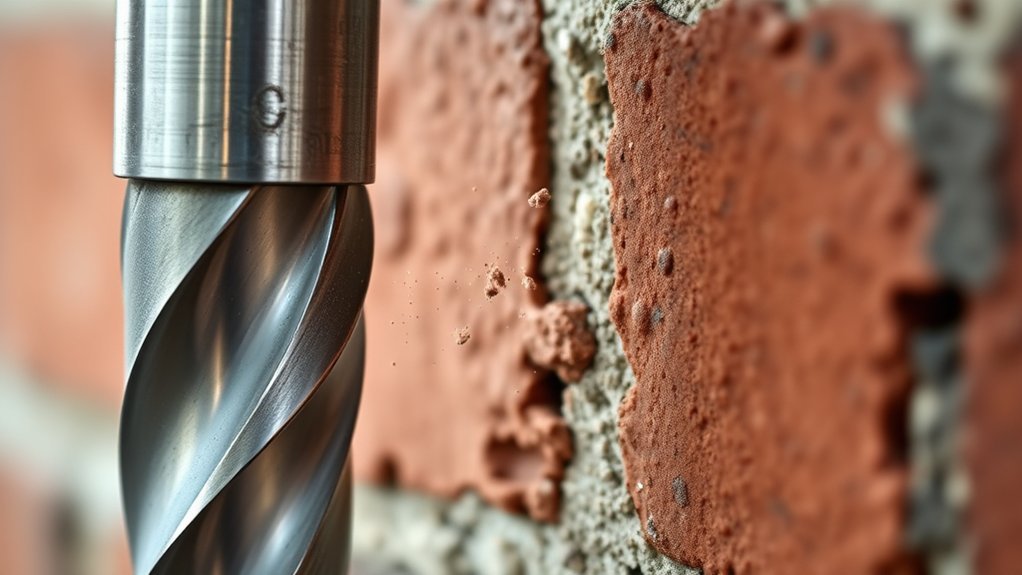
Although a metal drill bit might seem suitable for drilling into brick, it typically won’t perform effectively because it’s not designed to handle the hardness and abrasiveness of masonry materials. Using a metal bit on brick exposes you to several metal bit limitations and brick drilling challenges. You’ll likely encounter:
- Rapid dulling of the bit due to abrasive brick particles
- Overheating, risking damage to both bit and brick
- Difficulty penetrating the hard surface, causing inefficient drilling
- Increased chance of bit slipping or wandering off target
- Potential cracking or chipping of the brick from improper cutting action
These issues occur because metal bits lack the carbide tips or diamond grit needed to grind through masonry. To avoid wasted time and damaged materials, selecting the proper masonry bit is essential when working with brick.
Tips for Drilling Clean Holes in Brick Without Damage
To drill clean holes in brick without causing damage, you need to select the correct drill bit. Ideally, use a masonry bit with a carbide tip designed for hard materials.
Use a steady, moderate speed and apply consistent pressure to avoid overheating or cracking the brick. Starting with a small pilot hole can also improve accuracy and reduce stress on the material.
Choosing The Right Bit
When drilling into brick, selecting the right drill bit directly impacts the quality of your hole and prevents damage to the material. Proper bit selection guarantees drill compatibility and efficient cutting, reducing wear and tear on both the bit and the brick. Avoid using standard metal drill bits, as they’re not designed for masonry surfaces.
Consider these factors for ideal bit selection:
- Use carbide-tipped masonry bits designed specifically for brick.
- Confirm your drill supports hammer or rotary hammer modes.
- Match bit diameter to anchor or screw size for precise holes.
- Choose bits with a robust tip to resist chipping.
- Replace worn or damaged bits to maintain drilling accuracy.
This approach ensures clean holes and preserves brick integrity during your project.
Proper Drilling Technique
Since brick is a brittle material, you need to control your drilling speed and pressure carefully to avoid cracking or chipping. Start by setting a moderate drilling speed. Too fast generates excessive heat, damaging both the bit and the brick.
Apply steady, moderate bit pressure. Pressing too hard risks cracking, while too light slows progress and wears the bit. Use a hammer drill if possible, as it provides controlled percussive force ideal for brick.
Begin with a pilot hole at low speed to guarantee accuracy, then increase speed slightly while maintaining consistent bit pressure. Periodically withdraw the bit to clear dust and cool the drill site.
Keep the drill perpendicular to the surface to prevent uneven holes and maintain bit integrity throughout the process.
How to Protect Your Drill Bits When Drilling Brick
Many factors can wear down your drill bits quickly if you don’t take proper precautions while drilling into brick. To protect your bits and extend their lifespan, focus on proper bit storage and consistent drill maintenance. Keep your bits sharp and clean, and store them in a dedicated case to prevent damage.
Proper storage and maintenance are key to keeping your drill bits sharp and durable.
Additionally, apply steady pressure without forcing the drill, and use a hammer drill setting if available.
Use carbide-tipped masonry bits designed for brick.
Regularly inspect bits for signs of wear or dullness.
Keep bits cool by pausing periodically to avoid overheating.
Clean dust and debris from bits and drill chuck after use.
Store bits in a dry, organized bit storage case to prevent corrosion and damage.
Following these steps guarantees efficiency and longevity in your drilling tasks.
Alternative Ways to Drill Into Brick
Although traditional drill bits are common for brickwork, exploring alternative methods can improve efficiency and reduce wear on your tools. One practical drill alternative is using a rotary hammer with a carbide-tipped bit designed specifically for masonry. This tool delivers percussive force, making it easier to penetrate brick without excessive heat or bit damage.
If drilling isn’t ideal, consider brick adhesives to mount fixtures. These specialized adhesives bond securely to brick surfaces, eliminating the need for holes altogether.
When you must drill, using a hammer drill with masonry bits provides precision and longevity. Opting for these alternatives not only preserves your metal bits but also optimizes workflow. Assess the project requirements to choose the best method, balancing tool wear and task complexity efficiently.
Common Mistakes Using Metal Bits on Brick
Using metal drill bits on brick often leads to avoidable errors that can damage your tools and compromise the integrity of the material. One of the most common misconceptions is believing that any metal bit will perform well on brick, which reduces drilling efficiency and increases wear.
To avoid these pitfalls, you need to understand typical mistakes:
- Applying excessive pressure, causing bit overheating and premature dulling
- Using high speed without hammer action, reducing drilling effectiveness
- Reusing worn metal bits, which increases heat and damage risk
- Neglecting to clear dust from the hole, leading to slower progress
- Failing to select carbide-tipped bits designed for masonry, resulting in poor penetration
Avoiding these errors will improve your drilling efficiency and preserve both your tools and the brick surface.
Conclusion
You might think a metal drill bit saves time or money on brick, but it won’t. Metal bits wear out fast, overheat, and risk damaging both your tool and brick.
Using a carbide-tipped masonry bit guarantees cleaner, faster holes with less effort and longer bit life. Investing in the right bit upfront prevents frustration and costly repairs later.
For best results, always choose the appropriate tool. A metal drill bit will not work on brick, so opt for a masonry bit designed specifically for the job.