When you’re preparing to install 1/2 inch rebar, choosing the right drill bit size is critical to guarantee a secure fit without compromising the surrounding material.
Selecting the proper size drill bit for 1/2 inch rebar ensures the rebar fits snugly and maintains the strength of the structure.
Using a drill bit that’s too small can damage the rebar or make insertion difficult, while one that’s too large may weaken structural integrity.
Typically, a 5/8 inch bit provides the necessary clearance for 1/2 inch rebar.
However, factors like concrete density and application specifics can influence this choice.
Understanding these nuances will help you select the best drill bit size for your project.
Why Drill Bit Size Matters for 1/2 Inch Rebar
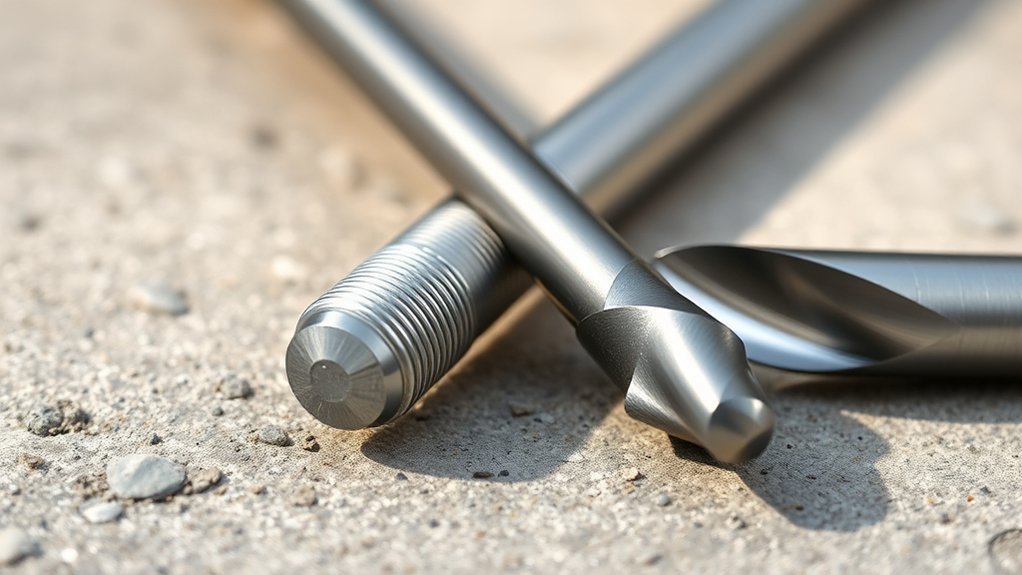
Although selecting the correct drill bit size might seem straightforward, using the proper diameter for 1/2 inch rebar is essential to ascertain a secure fit and structural integrity. When you choose a drill bit, you need to verify drill bit compatibility with the rebar diameter to avoid loose or overly tight holes.
An undersized bit will force the rebar, causing potential damage or stress fractures, while an oversized bit compromises the rebar installation’s strength by allowing movement. Precision in matching the drill bit size to the 1/2 inch rebar diameter ensures the rebar fits snugly within the drilled hole, maintaining load distribution and structural performance.
Accurate sizing also facilitates efficient installation and helps prevent costly rework or material failure in your project.
How to Measure 1/2 Inch Rebar Accurately
Measuring 1/2 inch rebar accurately requires using calibrated tools such as a digital caliper or a precise ruler to determine the nominal diameter. To guarantee exact measurements with your measuring tools and rebar calipers, follow these steps:
Accurate 1/2 inch rebar measurement requires calibrated tools like digital calipers or precise rulers for exact diameter readings.
- Clean the rebar surface to remove debris and rust for an unobstructed measurement.
- Position your rebar calipers perpendicular to the rebar axis to avoid angular distortion.
- Gently close the calipers until they just contact the rebar surface; avoid compressing the steel.
- Read the measurement directly from the digital display or scale, noting the diameter to the nearest thousandth of an inch.
This methodical approach guarantees you acquire an accurate diameter, critical for selecting compatible drill bits and maintaining structural integrity.
Recommended Drill Bit Size for 1/2 Inch Rebar
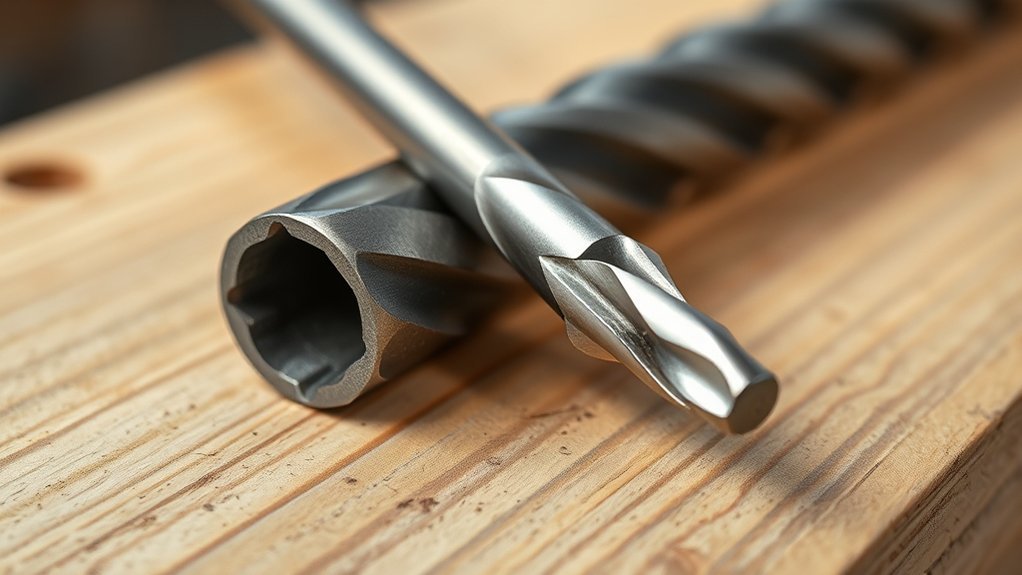
When drilling 1/2 inch rebar, you’ll want a drill bit slightly larger than the bar’s diameter to guarantee proper clearance. Selecting the right material and type of drill bit is essential for durability and efficiency, especially when working with hardened steel.
Let’s examine the standard bit sizes and materials best suited for this task.
Standard Drill Bit Diameter
Selecting the correct drill bit size is essential for efficiently drilling holes to accommodate 1/2 inch rebar. The standard drill bit diameter slightly exceeds the rebar diameter to allow for ease of installation and concrete placement.
For 1/2 inch rebar, the recommended drill bit diameter is generally 5/8 inch (0.625 inches).
When choosing your drill bit, consider these points:
- Use drill bit types designed for masonry or concrete, such as carbide-tipped bits.
- Confirm drill bit materials are durable and heat-resistant to withstand high friction.
- Verify the drill bit diameter matches 5/8 inch for ideal hole size.
- Avoid undersized bits to prevent difficulties inserting the rebar.
This approach guarantees proper fit and structural integrity without compromising drilling efficiency.
Material Considerations
Material properties considerably influence the choice of drill bit size for 1/2 inch rebar installation. When selecting the drill bit, you must consider drill material types since harder bits, like carbide-tipped or cobalt, maintain sharpness and dimension accuracy better when penetrating tough materials.
Rebar coating considerations also affect your choice; epoxy-coated rebar requires a slightly larger hole to avoid damaging the coating during insertion, which can lead to corrosion. In practice, you’ll often select a drill bit marginally larger than the nominal 1/2 inch diameter, typically around 9/16 inch, to accommodate these factors.
This adjustment guarantees clean, precise holes without compromising the integrity of the rebar or surrounding concrete. Matching the bit size meticulously to material specifics optimizes installation quality and longevity.
Drill Bit Types
Three primary types of drill bits excel in creating holes for 1/2 inch rebar installation: carbide-tipped masonry bits, cobalt bits, and diamond core bits. Each type varies in drill bit materials and drill bit shapes, affecting performance and durability. Choosing the appropriate bit depends on the base material and hole size.
- Carbide-tipped masonry bits: Designed with a conical tip, ideal for concrete and brick.
- Cobalt bits: Feature a twist shape, suitable for penetrating metal and reinforced concrete.
- Diamond core bits: Cylindrical shape, perfect for large-diameter, precise holes in hard materials.
- Size recommendation: Use a 5/8 inch bit to guarantee clearance around 1/2 inch rebar for ease of installation and adhesive bonding.
Select the right drill bit type and size to optimize drilling efficiency and hole quality.
1/2 Inch Vs Larger Drill Bits: Pros and Cons for Rebar Holes
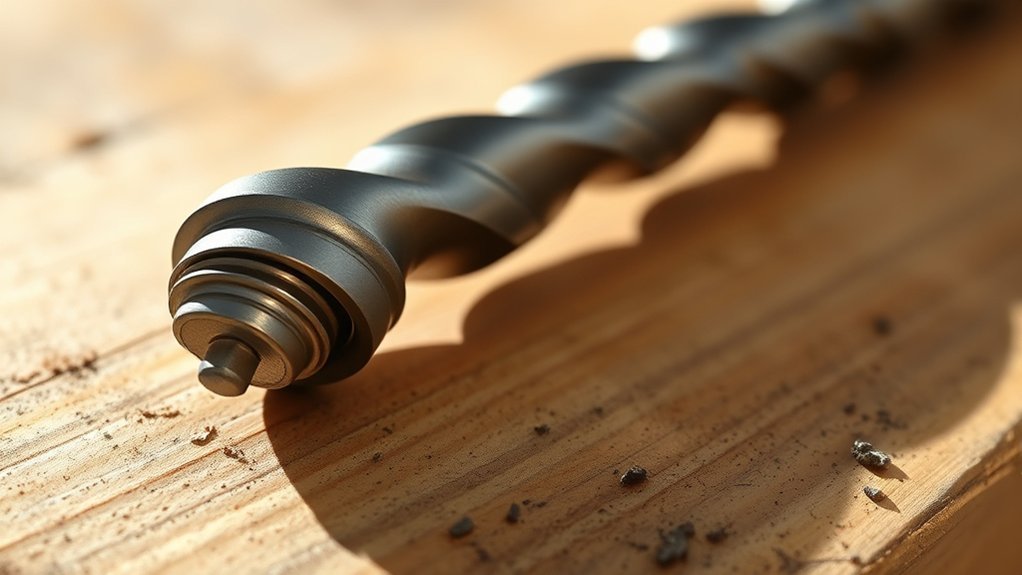
Although choosing between a 1/2 inch drill bit and a larger size may seem straightforward, understanding their specific advantages and drawbacks for rebar holes is essential. Using a 1/2 inch bit guarantees a tight tolerance around the rebar, which is critical for structural integrity in rebar applications.
It minimizes voids, improving concrete bonding. However, it demands precise drilling techniques to avoid damaging the rebar or bit. Larger drill bits create oversized holes, simplifying alignment but compromising load transfer due to increased gap around the rebar.
This can lead to structural weaknesses and requires additional filler material. Additionally, larger bits increase drilling time and wear. Consequently, selecting the bit size involves balancing precision, time efficiency, and the specific demands of your rebar application to optimize performance and durability.
Best Drill Bit Types for Concrete and 1/2 Inch Rebar
When drilling through concrete with 1/2 inch rebar, you need a bit designed for toughness and durability. Masonry bits excel at penetrating concrete, while carbide-tipped drill bits offer enhanced strength for cutting through embedded rebar. Choosing the right bit guarantees efficient drilling and prolongs tool life.
Masonry Bits Advantages
Because drilling through concrete and 1/2 inch rebar demands both durability and accuracy, masonry bits stand out as the best choice. Understanding masonry bit benefits helps you select the right tool for tough materials. Different masonry bit types, typically featuring tungsten carbide tips, optimize performance on concrete and embedded metal like rebar.
Here are key masonry bits advantages:
- Exceptional hardness resists wear when penetrating concrete and steel.
- Precision-engineered tips reduce wandering, ensuring accurate hole placement.
- Flute design efficiently removes debris, maintaining drilling speed.
- Compatibility with hammer drills enhances impact force for faster drilling.
Carbide-Tipped Drill Bits
Carbide-tipped drill bits provide the ideal balance of toughness and cutting efficiency needed for drilling through concrete and 1/2 inch rebar. When you select these bits, you benefit from carbide durability, which maintains sharpness longer than standard steel, reducing wear during repetitive use.
This durability guarantees consistent drill efficiency, allowing you to penetrate tough materials without frequent bit replacement. Their tips resist heat buildup, preventing premature dulling and preserving cutting performance.
To maximize results, use a hammer drill at recommended speeds and apply steady pressure; this method leverages the carbide tip’s hardness to break through concrete and rebar cleanly. Choosing carbide-tipped bits is a practical investment for projects involving 1/2 inch rebar, offering reliability and precision in demanding drilling tasks.
Which Drill Bit Materials Work Best on Rebar and Concrete?
Selecting the right drill bit material is essential for efficiently penetrating rebar and concrete without damaging your tools or work surface. You need drill bits that withstand high friction and impact, paired with appropriate drill bit coatings to extend tool life.
Consider these materials:
- Tungsten Carbide offers superior hardness and heat resistance, ideal for cutting through tough rebar and concrete.
- Cobalt Steel provides durability and heat tolerance, suitable for rebar drilling techniques requiring moderate hardness.
- Diamond-Tipped bits are best for extreme abrasiveness, guaranteeing clean cuts in concrete with embedded rebar.
- High-Speed Steel (HSS) with coatings is effective for softer concrete but less durable on dense rebar.
Choosing the correct material guarantees precision, efficiency, and longevity in your drilling tasks.
Tips for Drilling Clean Holes for 1/2 Inch Rebar Anchors
When you drill holes for 1/2 inch rebar anchors, maintaining a steady hand and consistent pressure is essential to verify clean, accurate openings. Start by selecting a carbide-tipped masonry bit matching the anchor diameter to guarantee a snug fit.
Use a hammer drill on a low speed setting, applying firm, even pressure without forcing the bit. Periodically withdraw the bit to clear dust and debris, preventing clogging and overheating.
Keep the drill perpendicular to the surface to avoid angled holes that compromise anchor installation. Mark the drilling depth to maintain uniformity across all holes.
Employing these drilling techniques minimizes surface chipping and guarantees ideal embedment depth, resulting in secure, reliable anchor performance. Following this methodical approach streamlines your anchor installation process with precision and efficiency.
Common Mistakes When Drilling for 1/2 Inch Rebar
Maintaining proper technique while drilling for 1/2 inch rebar is essential, but even skilled operators can make mistakes that affect hole quality and anchor performance. Recognizing common errors in drilling techniques helps you avoid costly rework.
Proper drilling technique for 1/2 inch rebar is crucial to ensure hole quality and anchor reliability.
- Using incorrect drill bit size, too large or too small, compromises anchor grip and stability.
- Applying excessive pressure causes bit wandering, resulting in misaligned holes.
- Neglecting to clear debris during drilling reduces hole accuracy and depth control.
- Failing to maintain a perpendicular angle leads to uneven holes, weakening anchor hold.
Adjusting Drill Bit Size for Different Rebar Applications
When working with different rebar diameters, you need to adjust your drill bit size accordingly to guarantee a proper fit. Selecting a drill bit slightly larger than the rebar diameter accounts for concrete tolerance and ease of installation.
Always measure the specific rebar size before choosing your drill bit to maintain structural integrity.
Rebar Diameter Variations
Although 1/2 inch rebar is common, you’ll often encounter varying diameters requiring different drill bit sizes for proper installation. The rebar diameter directly impacts rebar strength and suitability for specific rebar applications. You must select a drill bit that matches the exact diameter to guarantee a secure fit and maintain structural integrity.
Consider these key points when addressing rebar diameter variations:
- Smaller diameters (e.g., 3/8 inch) require correspondingly smaller drill bits.
- Larger diameters (e.g., 5/8 inch, 3/4 inch) need larger drill bits to accommodate increased thickness.
- Rebar strength increases with diameter, influencing drill bit choice.
- Different rebar applications demand precise matching of hole size to diameter for maximum performance.
Adjust your drill bit selection based on these diameter factors for effective installation.
Hole Size Adjustments
Since different rebar applications impose unique structural demands, you’ll need to adjust your drill bit size accordingly to confirm proper hole dimensions. Precise hole size adjustments confirm secure anchoring and avoid structural weaknesses.
Use adjustment techniques based on concrete density, rebar coating, and tolerance requirements. For example, coated rebars often require slightly larger holes to accommodate the coating thickness.
| Application Type | Rebar Diameter | Recommended Hole Size (inches) |
|---|---|---|
| Standard Concrete | 1/2 | 5/8 |
| High-Density | 1/2 | 11/16 |
| Coated Rebar | 1/2 | 3/4 |
Tools and Accessories to Improve Drilling Accuracy and Safety
To enhance drilling accuracy and safety while working with 1/2 inch rebar, you’ll need specialized tools and accessories designed for precise control and stability. Proper drilling techniques combined with effective safety gear reduce errors and prevent injuries during operation.
Here are essential tools to improve your workflow:
- Drill Guide or Jig – Guarantees perpendicular hole alignment, minimizing bit wandering.
- Clamps – Secure the rebar firmly to prevent movement and maintain consistent drilling depth.
- Safety Gear – Use gloves, safety glasses, and ear protection to protect yourself from debris and noise.
- Lubricants or Coolants – Reduce friction and heat buildup, extending bit life and improving hole quality.
Incorporating these tools with proper drilling techniques will optimize precision and protect you throughout the process.
Conclusion
Choosing the right drill bit size for your 1/2 inch rebar is a subtle art that guarantees smooth installation and lasting stability. By opting for a 5/8 inch carbide-tipped masonry bit, you’ll glide through concrete with ease, avoiding unnecessary resistance or wear.
This thoughtful choice not only protects the integrity of your rebar but also streamlines your workflow. It makes your drilling tasks feel less like a chore and more like a well-orchestrated process.
In conclusion, selecting the correct drill bit size for 1/2 inch rebar is essential for effective and efficient work. Using a 5/8 inch drill bit ensures proper fit and durability in your project.