Drilling into cast iron requires the best drill bit for cast iron to ensure precision and avoid damage. It’s a task that demands careful attention because one wrong move can cause cracks or ruin your tools.
You’ll need more than just any drill bit. Selecting the right material and design is critical to prevent chipping and guarantee clean cuts.
Whether you prefer carbide, cobalt, or high-speed steel, understanding their strengths and limitations will make all the difference in your project’s success.
Let’s explore how to pinpoint the best choice for your specific needs.
Why Cast Iron Requires Specialized Drill Bits
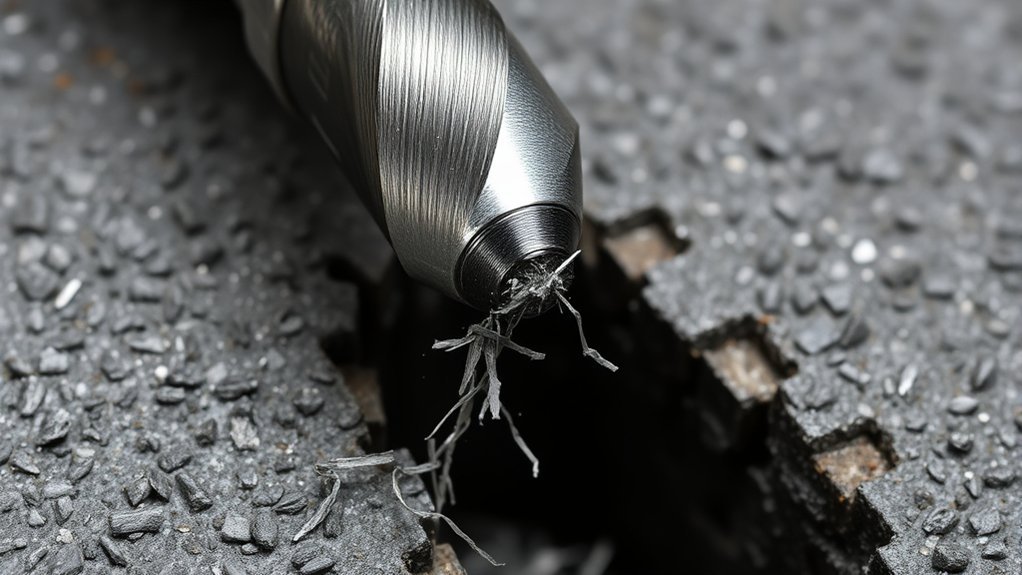
Although cast iron is a durable and widely used material, you need specialized drill bits to work with it effectively because of its unique composition and hardness. Cast iron properties include a high carbon content and brittle microstructure, which make it prone to cracking and chipping under improper drilling methods.
Standard drill bits often fail due to excessive heat and inadequate cutting geometry. To drill cast iron efficiently, you must apply specialized techniques, such as using slower speeds and steady pressure, to reduce heat buildup and prevent material damage.
Additionally, drill bits designed specifically for cast iron have sharper cutting edges and optimized angles that accommodate its abrasive nature. By understanding these factors, you guarantee cleaner holes, prolonged tool life, and safer operation when working with cast iron.
Best Drill Bit Materials for Cast Iron: Carbide, Cobalt, and HSS Compared
To drill cast iron effectively, selecting the right drill bit material plays a significant role in managing heat, wear, and cutting efficiency. Carbide bits excel with superior hardness and heat resistance, offering long-lasting sharpness but require careful handling due to brittleness.
Cobalt bits provide excellent toughness and red-hardness, making them ideal for high-speed drilling with less risk of breakage. High-Speed Steel (HSS) bits are cost-effective and versatile but wear faster on cast iron.
| Material | Hardness | Heat Resistance | Durability | Cost |
|---|---|---|---|---|
| Carbide | Very High | Excellent | High | High |
| Cobalt | High | Very Good | Moderate | Moderate |
| HSS | Moderate | Moderate | Low | Low |
Understanding these carbide benefits and cobalt advantages helps you optimize your drilling performance on cast iron.
Choosing the Right Drill Bit for Your Cast Iron Project
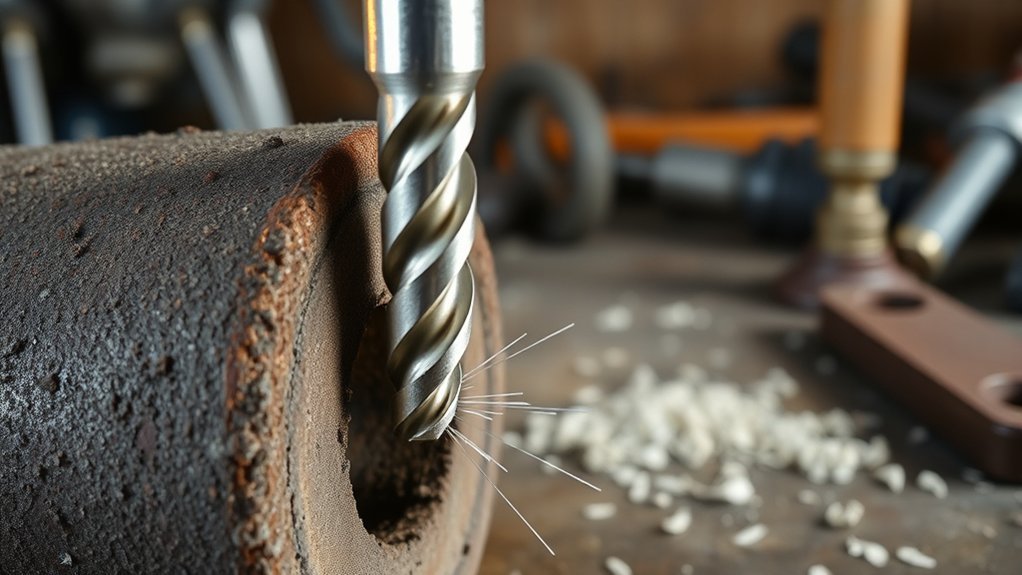
Selecting the right drill bit for your cast iron project depends on factors like the type of cast iron, drill speed, and desired hole quality. Different cast iron applications require specific drill bit types to optimize efficiency and tool life.
Consider these steps:
- Identify the cast iron variety, such as gray, ductile, or malleable, as hardness and brittleness vary.
- Match drill bit types with the material; for example, bits with sharper cutting edges suit brittle gray cast iron.
- Adjust drill speed and feed rate based on bit type and cast iron hardness to minimize heat buildup and prevent chipping.
Carbide vs. Cobalt vs. HSS Drill Bits for Cast Iron
You’ll want to compare carbide, cobalt, and HSS drill bits based on their material composition to understand how each handles cast iron. Carbide offers extreme hardness and wear resistance, cobalt provides a balance of toughness and heat resistance, while HSS is more affordable but less durable.
Evaluating their performance and durability under high-stress conditions will help you choose the best bit for your project.
Material Composition Comparison
Three primary materials, carbide, cobalt, and high-speed steel (HSS), dominate the drill bit market for cast iron applications, each offering distinct advantages tailored to specific performance requirements. Understanding their material properties helps you select the right bit based on performance factors like hardness, heat resistance, and toughness.
- Carbide drill bits feature extreme hardness and wear resistance, excelling in maintaining sharp cutting edges on abrasive cast iron surfaces.
- Cobalt bits, alloyed with 5-8% cobalt, provide superior heat resistance and toughness, allowing effective drilling at higher speeds without rapid wear.
- HSS bits, composed mainly of carbon and steel, offer flexibility and cost-effectiveness but lack the hardness and thermal stability of carbide and cobalt, limiting their lifespan on cast iron.
Selecting based on these material properties guarantees peak drilling efficiency and precision.
Performance and Durability
Understanding the material properties of carbide, cobalt, and HSS drill bits sets the stage for evaluating their performance and durability when working with cast iron. Carbide drill bits excel in hardness and heat resistance, maintaining sharpness longer under high-friction conditions.
Cobalt bits, alloyed with 5-8% cobalt, offer enhanced heat tolerance and toughness, performing well in durability testing against abrasive cast iron surfaces. HSS bits, while cost-effective, demonstrate lower wear resistance and faster dulling, especially under continuous high-speed drilling.
Key performance factors include cutting speed, heat dissipation, and edge retention, where carbide leads but at a higher cost. Cobalt provides a balanced option for moderate drilling demands, and HSS suits occasional use. Your choice should weigh durability testing results against budget and drilling frequency to optimize efficiency and tool lifespan.
Tips for Drilling Cast Iron Without Cracking or Chipping
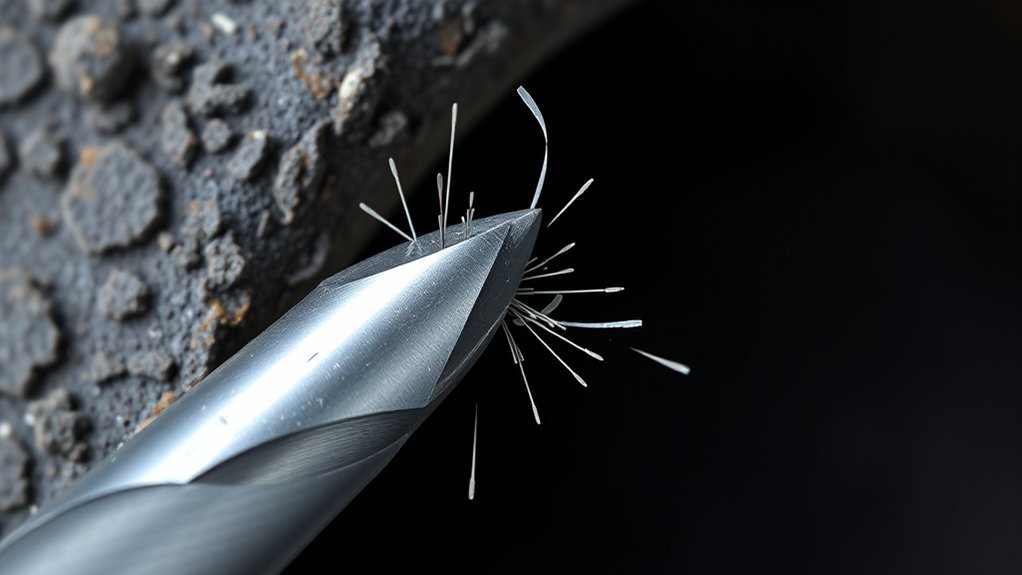
You’ll want to choose a drill bit designed specifically for cast iron, such as a carbide or cobalt bit, to reduce the risk of cracks. Maintain a slow, controlled drilling speed to prevent overheating and stress on the material.
Applying proper lubrication helps dissipate heat and minimize chipping during the drilling process.
Proper Drill Bit Selection
Although cast iron is notoriously brittle, choosing the right drill bit can greatly reduce the risk of cracking or chipping during drilling. You need to take into account the specific cast iron properties, such as hardness and brittleness, when choosing drill bit types.
Carbide-tipped bits excel due to their hardness and heat resistance. Cobalt bits also perform well but wear faster on cast iron. High-speed steel (HSS) bits are less ideal but workable if properly sharpened.
To select the proper drill bit:
- Match the bit material to cast iron hardness; prefer carbide or cobalt for durability.
- Use split-point or 135-degree angle bits to minimize walking and reduce stress.
- Make sure bits have a polished flute to efficiently remove chips and lower heat buildup.
This precise selection minimizes microfractures and guarantees clean, chip-free holes.
Controlled Drilling Speed
Selecting the right drill bit lays the foundation, but controlling the drilling speed directly influences the quality of the hole and the integrity of the cast iron. Excessive drill speed generates heat, causing thermal expansion and increasing the risk of cracks or chips.
Conversely, too slow a speed can lead to material impact damage from prolonged pressure. Balancing drill speed reduces stress and extends bit life.
| Drill Speed (RPM) | Cast Iron Type | Material Impact Risk |
|---|---|---|
| 200-300 | Gray Cast Iron | Low, smooth cutting |
| 300-500 | Ductile Cast Iron | Moderate, watch heat |
| 500+ | All Types | High, cracking risk |
Maintain appropriate drill speed to optimize cutting efficiency while preserving cast iron structure.
Use Lubrication Techniques
When drilling cast iron, applying proper lubrication techniques greatly reduces friction and heat buildup, which helps prevent cracking or chipping. Effective coolant application is essential to maintain tool life and workpiece integrity.
Here are three lubrication methods you should use:
- Use cutting oil: Apply a high-quality cutting oil directly to the drill bit and hole to reduce friction and carry away heat.
- Employ flood coolant: For larger or continuous drilling, flood the area with coolant to maintain a consistent temperature and prevent thermal stress.
- Apply intermittent lubrication: Pause drilling periodically to reapply lubricant, ensuring the bit remains cool and well-lubricated throughout the process.
Signs Your Drill Bit Isn’t Right for Cast Iron (And What to Do)
If your drill bit struggles to penetrate cast iron or produces excessive heat and smoke, it’s likely not suited for the material. Cast iron’s hardness and brittleness demand drill bits with high heat resistance and sharp cutting edges.
Signs of an inappropriate drill bit include rapid dulling, chipping, and inconsistent hole quality. You might also notice excessive vibration due to poor bit geometry. To address this, stop drilling immediately to prevent damage.
Rapid dulling, chipping, and excessive vibration signal the wrong bit—stop drilling to avoid damage.
Assess the bit’s material and design. HSS bits with cobalt or carbide tips are typically best. Avoid bits designed for softer metals or wood, as they won’t handle cast iron’s abrasive properties.
Proper drill bit maintenance will extend bit life, but starting with the right bit tailored to cast iron’s unique properties is essential for efficient, safe drilling.
Caring for Drill Bits Used on Cast Iron
Recognizing the signs that your drill bit isn’t suited for cast iron is only part of the process; maintaining the bit properly guarantees consistent performance and longevity. Effective bit maintenance starts with careful cleaning after each use to remove metal shavings and prevent rust.
Next, employ precise sharpening techniques using a bench grinder or specialized tool to restore the cutting edges, maintaining the original angle and lip geometry. Finally, store drill bits in a dry, organized case to avoid damage and corrosion. Follow these steps:
- Clean bits thoroughly with a wire brush and lubricant.
- Sharpen edges evenly, preserving the bit’s geometry.
- Store in a rust-free environment, separated to prevent dulling.
Regular attention to these details assures your drill bits remain efficient for cast iron tasks.
Recommended Drill Bit Sizes and Speeds for Cast Iron
Although cast iron is a brittle material, selecting the appropriate drill bit size and speed is essential to prevent cracking and guarantee clean holes. For smaller holes, use drill bit sizes ranging from 1/16″ to 1/4″ with speeds between 500 and 1000 RPM.
Larger drill bits, over 1/2″, require slower speeds, typically 150 to 300 RPM, to reduce heat buildup and minimize stress on the material. Employ gradual step drilling when enlarging holes to maintain precision and avoid fractures.
Always apply consistent pressure and use cutting fluid to improve lubrication. By adhering to these drilling techniques and carefully choosing drill bit sizes and speeds, you’ll ensure maximum performance, extend tool life, and maintain the structural integrity of cast iron components during drilling operations.
Conclusion
When drilling cast iron, choosing the right bit—carbide or cobalt—makes all the difference. Remember, “measure twice, cut once” applies here: selecting the proper material, speed, and lubrication prevents cracking and extends tool life.
Use carbide for hardness and cobalt for toughness. Adjust your technique to the cast iron type, and maintain your bits carefully.
With precision and care, you’ll achieve clean, accurate holes. This ensures you maximize your drill bit’s performance every time, making the best drill bit for cast iron an essential part of your toolkit.