Masonry drill bits have a distinctive appearance that sets them apart from other types of drill bits. You might not realize that masonry drill bits have a unique tip design made from tungsten carbide, specifically engineered to endure the extreme wear of drilling into hard surfaces like concrete and brick.
Their thick, spiral-fluted bodies aren’t just for show—they efficiently remove debris to maintain drilling speed and precision.
Understanding these features is essential before selecting the right bit for your project, as their appearance reveals much about their specialized function.
What Masonry Drill Bits Look Like: A Visual Overview
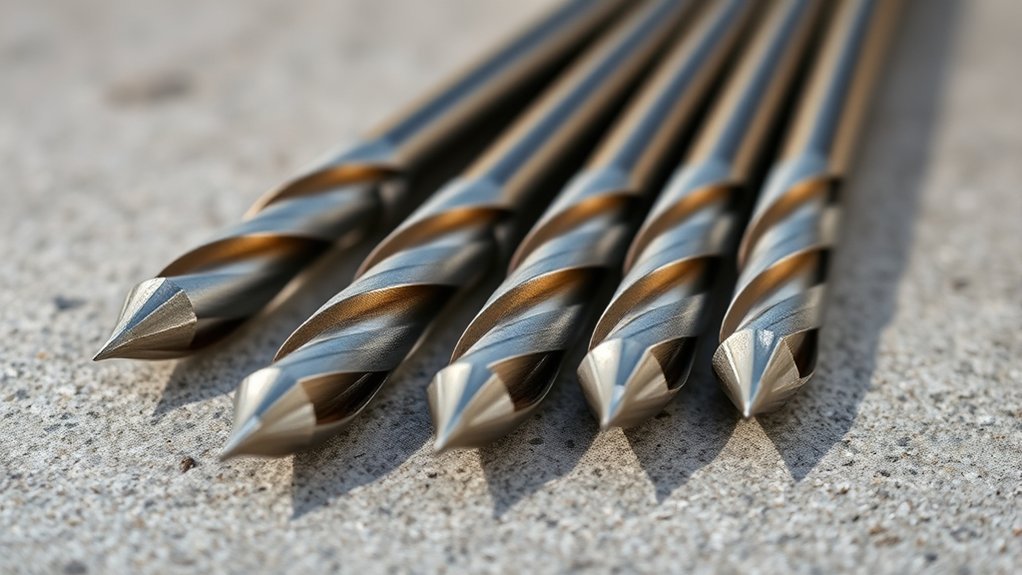
Masonry drill bits feature a distinctive design tailored for penetrating hard materials like brick, stone, and concrete. You’ll notice that these bits have a robust, thick body with a spiral flute pattern optimized for efficient debris removal.
The tip often protrudes slightly, aiding in initial surface contact and stability. For drill bit identification, observe the typical carbide tip and the reinforced shank, which differ from standard metal bits.
These masonry drill bit features include a durable construction that resists heat and wear, guaranteeing longevity when used on abrasive substrates. When selecting a bit, focus on these visual cues to distinguish masonry bits from wood or metal variants. Recognizing these design elements guarantees you choose the right tool for your drilling task.
Masonry Drill Bit Tip Design and Tungsten Carbide Tips
The effectiveness of your drill bit largely depends on the design of its tip, which is engineered to withstand the intense friction and impact involved in drilling hard materials. Masonry drill bits typically feature specialized tip shapes, such as the spear or multi-faceted design, optimized to penetrate brick, stone, and concrete efficiently.
These tip shapes reduce wear and improve cutting action. Tungsten carbide tips are integral, chosen for their exceptional hardness and heat resistance. Different carbide grades tailor the tip’s durability and performance, balancing toughness with brittleness to suit varying masonry applications.
Materials Used in Masonry Drill Bits
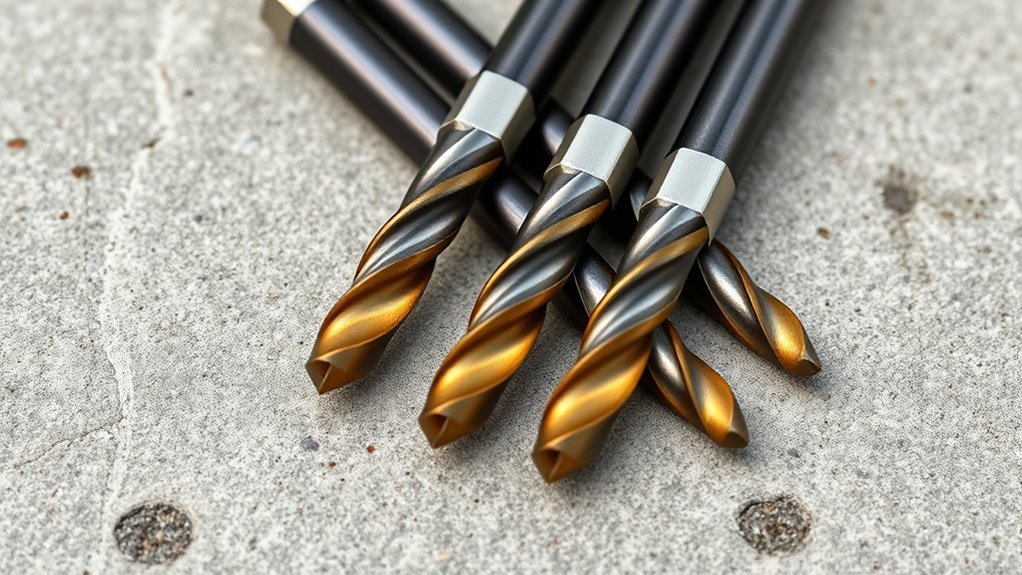
Durability and performance in drill bits stem directly from the materials chosen for their construction. When you select masonry drill bits, understanding drill bit materials is essential because they directly influence cutting efficiency and lifespan.
Typically, the shank and body use high-carbon steel or chromium-vanadium steel, offering strength and resistance to deformation. The cutting tip often incorporates tungsten carbide, a material renowned for its hardness and heat resistance, enabling consistent penetration into abrasive masonry surfaces.
Performance factors such as impact resistance, heat tolerance, and wear rate depend on these material choices. Tungsten carbide tips provide peak hardness, while the steel body balances toughness with flexibility. You must consider these materials to guarantee the drill bit withstands the high stress and friction typical of masonry drilling, ultimately enhancing both durability and operational efficiency.
Flute Design of Masonry Drill Bits Compared to Others
You’ll notice masonry drill bits have a distinct flute design optimized for rapid debris removal from hard materials like concrete and brick. Unlike wood bits, which feature wider, smoother flutes for soft material extraction, masonry bits use narrower, more aggressive flute shapes to maintain cutting efficiency and prevent clogging.
Understanding these differences helps you select the right bit to maximize material removal and drilling performance.
Flute Shape Variations
Although you might assume all drill bits share similar flute designs, masonry drill bits feature distinct flute shapes optimized for their specific applications. Unlike standard twist drill bits with helical flutes designed primarily for metal, masonry bits often exhibit wide, shallow flute shapes that facilitate effective removal of abrasive dust and debris.
These flute shapes are engineered to balance dust extraction with bit stability during high-impact hammering. The flute functions also include aiding in heat dissipation, essential when drilling into dense materials like concrete or brick.
Some masonry bits feature asymmetrical or semi-open flute designs to prevent clogging and maintain consistent drilling performance. Understanding these flute shape variations helps you select the right masonry drill bit tailored to your material and task, ensuring efficiency and tool longevity.
Material Removal Efficiency
The efficiency of material removal in masonry drill bits hinges largely on their specialized flute design, which differs markedly from that of standard metal or wood bits. This design maximizes debris ejection, directly enhancing material performance by reducing clogging and heat build-up.
Efficiency factors include flute depth, angle, and width, tailored to brittle masonry materials. Compared to other bits, masonry flutes are wider and more open, facilitating faster removal of dust and fragments.
| Efficiency Factor | Masonry Drill Bits |
|---|---|
| Flute Depth | Deeper for effective debris flow |
| Flute Angle | Sharper to aid dust ejection |
| Flute Width | Wider to prevent clogging |
| Material Performance | Enhanced by dust clearance |
| Heat Dissipation | Improved via flute design |
Understanding these factors helps you select bits that maintain ideal drilling speed and longevity.
Comparison With Wood Bits
When comparing masonry drill bits to wood bits, their flute designs reveal distinct adaptations tailored to their specific materials. Masonry drill bits feature wide, deep flutes that efficiently remove abrasive dust and debris generated during drilling in hard materials like concrete.
In contrast, wood bits have narrower, shallower flutes refined for swift chip evacuation without damaging the softer wood fibers. Understanding the differences among bit types helps you select the right tool for each job:
- Masonry drill bits: wide, deep flutes for dust removal and durability
- Wood bits: narrow, spiral flutes for smooth chip ejection and cleaner holes
- Metal bits (for comparison): tighter flutes designed to clear metal shavings and reduce heat buildup
These flute design distinctions guarantee each bit type performs effectively within its intended material.
Typical Length and Diameter of Masonry Drill Bits
You’ll find masonry drill bits typically range from 3 to 6 inches in length, balancing reach with stability. Common diameters span from 1/8 inch up to 1 inch, matching various drilling needs.
Understanding these dimensions helps you select the right bit for your specific masonry task.
Standard Length Ranges
Although masonry drill bits come in various sizes, their standard lengths and diameters follow specific industry ranges to secure compatibility with common applications. When selecting a masonry drill bit, you’ll find that standard sizes focus heavily on common lengths to promote efficiency and precision.
Typically, these lengths fall into three main categories:
- 3 to 4 inches – Ideal for light-duty tasks and shallow holes.
- 6 to 8 inches – Most common range, suitable for medium-depth drilling in brick or concrete.
- 10 to 12 inches – Used for deep anchoring and heavy-duty construction work.
Understanding these standard sizes helps you choose the correct bit length for your project, reducing wear and enhancing drilling performance.
Common Diameter Sizes
Selecting the appropriate diameter size is as important as choosing the correct length for your masonry drill bit since both factors directly impact drilling efficiency and accuracy. Masonry drill bits come in common sizes ranging from small 3 mm to larger 16 mm diameters.
These diameter variations allow you to match your bit precisely to the anchor or fastener size. Using an incorrect diameter can cause poor hold or damage to the material.
Here’s a quick reference for common diameters and their typical applications:
| Diameter (mm) | Typical Use |
|---|---|
| 3 | Small anchors, light fixtures |
| 6 | Medium anchors, electrical |
| 10 | Heavy anchors, plumbing |
| 16 | Large bolts, structural work |
Select diameter sizes carefully to guarantee peak performance and material integrity.
Common Color Coding and Coatings on Masonry Drill Bits
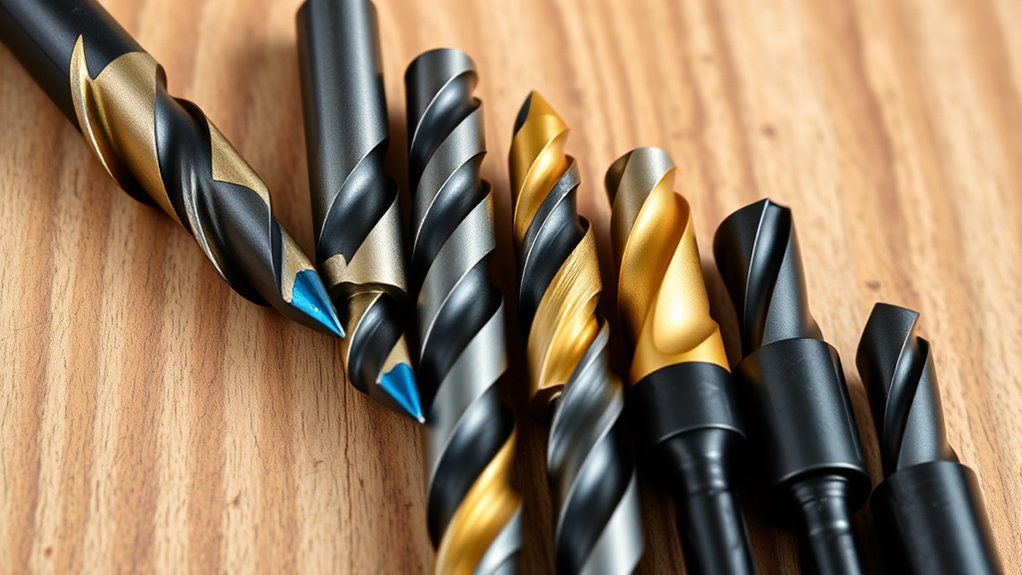
Color coding and specialized coatings on masonry drill bits play a crucial role in identifying their material composition and enhancing performance. You’ll often see specific colors and finishes applied to signal the coating types and intended use. Here’s what to look for:
- Blue or Black Oxide Coating: Provides corrosion resistance and reduces friction, extending bit life during heavy-duty drilling.
- Titanium Nitride (Gold) Coating: Increases hardness and wear resistance, suitable for prolonged use in abrasive materials.
- Plain Metal with Color Bands: Often, a painted band near the shank indicates the bit’s diameter or material grade, aiding quick identification.
How Masonry Drill Bits Differ From Wood and Metal Drill Bits
When you drill into masonry, you need a bit designed to handle the hardness and abrasiveness of materials like concrete and brick. Unlike wood and metal drill bits, masonry drill bits feature a tungsten carbide tip, which resists wear and maintains sharpness against tough surfaces.
Their flute design is optimized for efficient dust removal, preventing clogging during drilling. Wood and metal bits typically have sharper cutting edges suited for softer materials and produce cleaner holes without the need for impact action.
Masonry drill bit applications often require a hammer drill mode to provide percussive force, allowing the bit to chip away at the masonry. Using the correct bit guarantees durability and effective penetration, so you avoid damage or premature wear when working on masonry projects.
Choosing a Masonry Drill Bit for Your Project
Although masonry drill bits share core features, choosing the right one depends on the material hardness, hole diameter, and drill type you’re using. To select effectively, consider these key factors:
- Material Hardness: For concrete or brick, opt for carbide-tipped bits; softer materials may allow standard steel.
- Hole Diameter: Match the bit size to your anchor or fixture specifications to guarantee a secure fit.
- Drill Compatibility: Confirm your drill supports hammer action if using hammer drill compatible masonry drill bit types for peak performance.
Additionally, evaluate drill bit brands known for durability and precision, such as Bosch or DeWalt. High-quality brands often offer better carbide tips and shank designs, improving efficiency and bit longevity. By aligning your choice with these parameters, you’ll guarantee precise, reliable drilling tailored to your project’s specific needs.
Conclusion
When you reach for a masonry drill bit, you’re not just choosing a tool—you’re selecting a steadfast guardian built to conquer stone and concrete. Its tungsten carbide tip symbolizes resilience, while the spiral flutes represent the swift clearing of obstacles.
Understanding these features guarantees you wield precision and durability, turning tough surfaces into conquered ground. Trust in the design, and your project will drill through challenges with unwavering strength and expert control.
Recognizing what masonry drill bits look like ensures you pick the right tool for the job, combining toughness and efficiency for every drilling task.