Using a router bit in a drill might seem like a convenient shortcut, but these tools are engineered for very different purposes.
Router bits are designed to shape edges with precision at high speeds, while a drill primarily drills holes and lacks the necessary stability and control for routing tasks.
Before you try fitting a router bit into your drill, it’s important to understand the mechanical and safety implications involved.
Using a router bit in a drill can cause damage to your tool or workpiece if not handled properly.
Always consider the specific functions and capabilities of each tool to ensure safe and effective use.
How Do Router Bits and Drill Bits Differ?
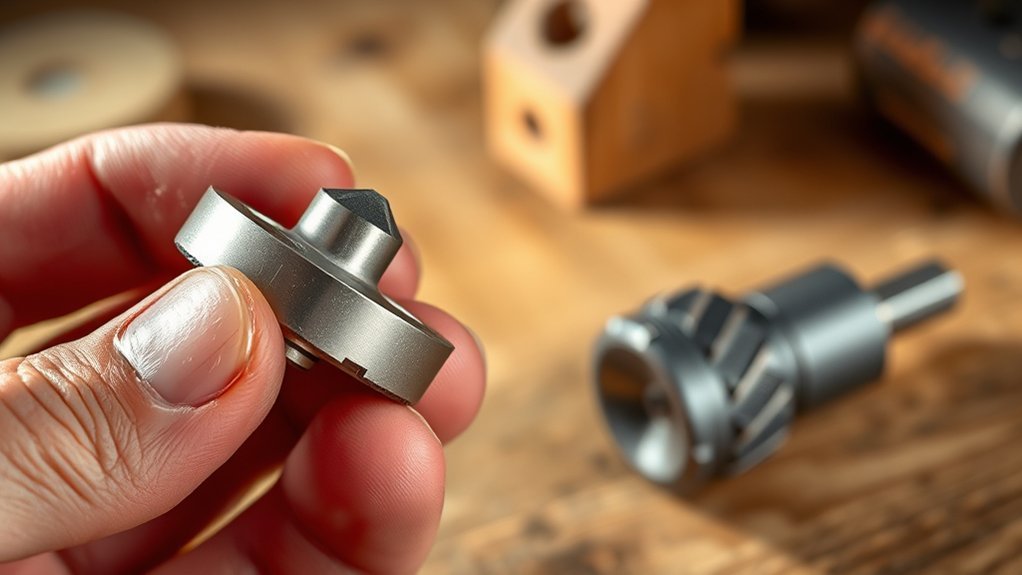
Although both router bits and drill bits are designed to cut into materials, they serve distinct purposes and operate differently. Router bit types vary widely, including straight, round-over, and dovetail bits, each crafted for shaping edges, grooves, or decorative profiles in wood or composites.
In contrast, drill bits primarily create holes, and their materials — such as high-speed steel (HSS), cobalt, or carbide-tipped — are chosen based on the material being drilled. When you use a router bit, it spins laterally at high speeds to carve precise shapes, whereas a drill bit rotates axially to bore holes with concentricity.
Understanding these differences guarantees you select the right tool for your task, optimizing performance and safety.
Can You Safely Use a Router Bit in a Drill?
Knowing that router bits spin laterally at high speeds for shaping and drill bits rotate axially to bore holes helps clarify why using a router bit in a drill requires careful consideration. To use a router bit safely in a drill, you must guarantee strict bit compatibility; the shank size must fit securely into the drill chuck without wobble.
Additionally, you need to implement safety precautions: confirm the drill’s maximum RPM matches the router bit’s rated speed, wear eye and hand protection, and secure the workpiece firmly. Avoid forcing the bit into material, as drills lack the precise speed control and stability routers provide.
What Are the Risks of Using Router Bits With a Drill?
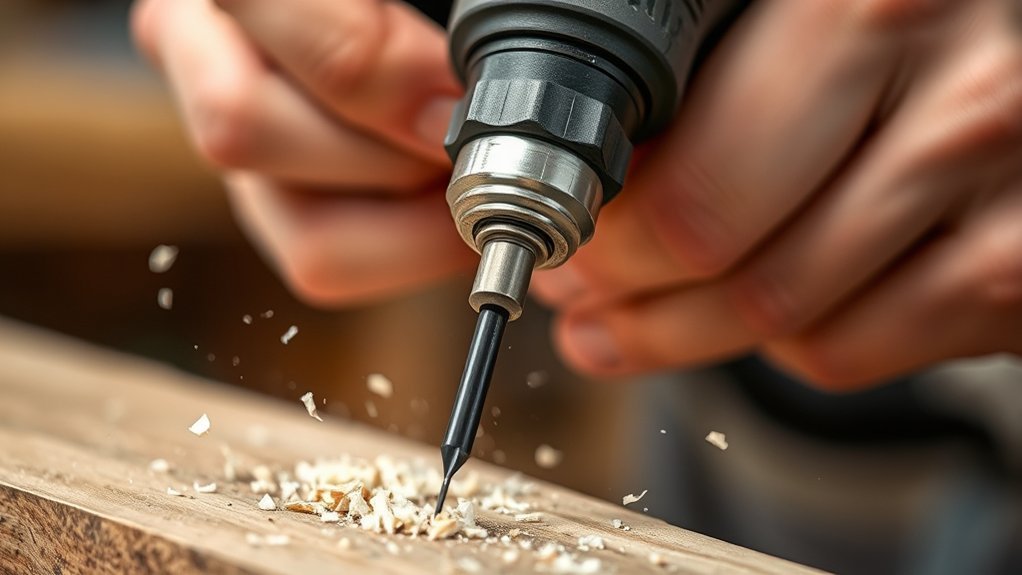
When you use router bits with a drill, you expose yourself to several risks stemming from the drill’s design limitations and the bit’s intended function. Drills lack the necessary collet and speed control designed for router bits, leading to potential hazards such as bit slippage or breakage.
The high rotational speed and torque variations can compromise drill stability, causing wobbling or loss of control. Additionally, the drill’s chuck may not securely hold the router bit, increasing the chance of accidents.
You also risk damaging both the bit and the material due to improper cutting speeds and feed rates. These factors combined create a safety concern, so it’s critical to understand the limitations before attempting to use router bits with a drill.
How Can You Adapt a Drill to Use Router Bits?
How can you safely and effectively adapt a drill to use router bits? To do this, focus on precise drill modifications and guarantee bit compatibility. First, verify the router bit shank fits securely in your drill chuck. Then, follow these steps:
Use a drill with variable speed control to match router bit requirements. Select router bits with shank diameters compatible with your drill’s chuck. Install a collet adapter if needed for better grip and stability. Secure the bit tightly to prevent wobbling during operation. Test the setup at low speed before proceeding with your project.
These adjustments help maintain control and reduce risks, enabling your drill to handle router bits more effectively. Always prioritize safety and tool integrity during modifications.
Which Projects Work With Router Bits in a Drill?

Although a drill isn’t designed specifically for routing tasks, you can effectively use router bits in a drill for light-duty projects such as edge shaping, small groove cutting, and decorative inlays. These woodworking projects and DIY applications require minimal depth and precision, making a drill a suitable tool.
For instance, you can create chamfers, round edges, or shallow dados on softwoods or plywood. Avoid heavy-duty tasks like deep mortising or extensive profile cutting, as drills lack the stability and speed control of routers.
When working on these light tasks, guarantee steady hand control and use slower drill speeds to prevent bit damage or material burning. This approach lets you expand your woodworking projects without investing immediately in specialized routing equipment.
What Are Safer Alternatives to Using Router Bits in a Drill?
To guarantee safety and precision, use dedicated router tools designed for router bits instead of a drill. These routers provide proper speed control and stability, reducing the risk of bit damage and accidents.
Additionally, consider specialized drill attachments made for routing tasks that offer better compatibility and control.
Dedicated Router Tools
Using dedicated router tools guarantees greater control, accuracy, and safety compared to adapting a drill for routing tasks. When selecting router tool types, consider plunge routers, fixed-base routers, trim routers, laminate trimmers, and CNC routers.
Each offers specific router tool benefits such as enhanced stability, precise depth control, and compatibility with various router bits. These tools are engineered to maintain consistent speed and reduce vibration, critical for clean cuts and user safety.
Employing dedicated routers prevents bit slippage and potential motor damage common with drills. To optimize your routing work, prioritize these features:
- Variable speed control
- Ergonomic handles
- Secure collet systems
- Dust collection ports
- Compatibility with standard router bits
Using these specialized tools guarantees professional results and considerably lowers injury risks.
Drill Attachments Alternatives
Whenever you need to perform routing tasks but lack a dedicated router, consider safer alternatives to using router bits in a drill. Instead of risky drill modifications, opt for purpose-built drill attachments like rotary tool adapters or compact laminate trimmers designed for drill compatibility.
These tools maintain proper bit compatibility and offer enhanced control, reducing the risk of bit slippage or uneven cuts. Avoid jury-rigging router bits into drills, as the lack of collet stability and inconsistent speeds compromise safety and precision.
If you must adapt, use commercially available collet adapters specifically made for your drill model, ensuring secure bit fitment. Prioritize tools engineered for routing functions to protect yourself and maintain quality results, rather than forcing incompatible drill-bit combinations.
How to Choose the Right Tool for Your Routing Project
How do you determine the best tool for your routing project? Start by evaluating your project requirements to guarantee compatibility and precision. Proper router bit selection is vital, but equally important is choosing the right tool to maximize efficiency and safety.
Consider these factors:
Evaluate material, cut complexity, tool power, ergonomics, and bit compatibility before selecting your routing tool.
- Material type and thickness
- Required depth and complexity of cuts
- Power and speed control of the tool
- Stability and ergonomics for prolonged use
- Compatibility with the router bit shank size
A dedicated router offers consistent speed and torque, essential for clean cuts and extended use. While drills can handle simple routing tasks with appropriate attachments, they lack the precision and control of routers. Match your tool choice with the demands of your project to achieve ideal results.
Conclusion
Using a router bit in a drill isn’t just risky—it’s like trying to land a rocket with a bicycle brake. You’ll face stability issues, compatibility problems, and safety hazards that no project should endure.
Instead, choose the right tool designed for routing tasks to guarantee precision and control. Don’t compromise your work or safety.
Investing in a proper router will save you time, frustration, and potential accidents every single time. When considering your options, remember that using a router bit in a drill is not recommended for achieving the best results.