You might not realize that simply attaching an extension to your drill bit can drastically reduce its effectiveness if not done correctly.
Extending a drill bit requires careful selection of materials and precise alignment to maintain stability and prevent wobbling during use.
If you’re planning to reach deeper or hard-to-access areas, knowing the right extension methods and securing techniques is essential to avoid damage or injury.
Here’s how to approach this task safely and efficiently.
When You Need To Extend A Drill Bit (And Why)
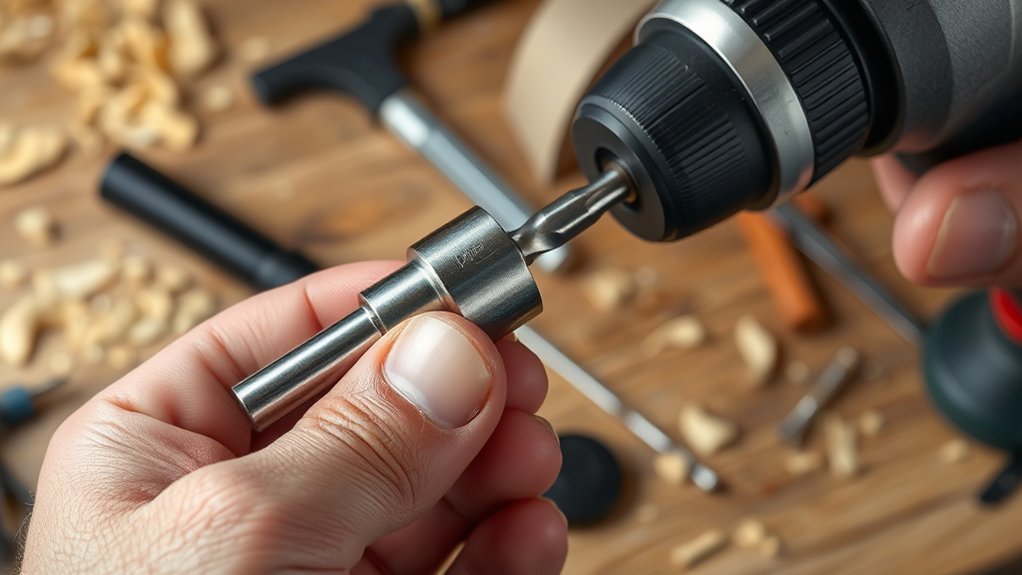
Although standard drill bits suit most tasks, you’ll need to extend a drill bit when working with deep or hard-to-reach holes that exceed the bit’s original length. When the required bit length surpasses the drill’s capacity, extending the bit guarantees proper penetration without compromising stability or control.
In drilling techniques, maintaining alignment and minimizing bit deflection are vital, especially for precise, deep holes. Extending a bit allows you to reach depths while preserving drilling accuracy.
Without extension, you risk incomplete holes or damaging the material. Consequently, understanding when bit length limits your project helps you choose the right extension method.
DIY Drill Bit Extension: How To Make One
To make a DIY drill bit extension, you’ll need a few key materials like a metal rod, a coupler, and secure fasteners. Follow a step-by-step assembly process to guarantee the extension is stable and aligned correctly.
Always prioritize safety by wearing protective gear and verifying all connections before use.
Materials Needed
Gathering the right materials is essential when making a DIY drill bit extension. Start with high-quality drill bit materials, preferably hardened steel, for durability and consistent performance.
You’ll need a metal tube or pipe sized slightly larger than your drill bit’s shank to serve as the extension sleeve. Secure fastening components, such as set screws or hose clamps, are vital to guarantee a tight grip and prevent slippage during use.
Additionally, prepare cutting tools like a hacksaw or metal cutter to trim the extension to the desired length. Fine-grit sandpaper or a file will help smooth rough edges. These materials align with common extension techniques that emphasize stability and precision, ensuring your custom extension functions safely and effectively without compromising the drill bit’s integrity or performance.
Step-by-Step Assembly
When you start assembling your drill bit extension, make certain the metal tube fits snugly over the drill bit’s shank. Begin by selecting the appropriate drill bit type compatible with your extension; this guarantees peak performance.
Insert the drill bit into the metal tube, verifying a tight fit without excessive force. Apply a high-strength adhesive or epoxy inside the tube for secure bonding. Allow curing time as per adhesive instructions.
Next, attach the extension’s opposite end to the drill chuck, ensuring alignment to prevent wobble during operation. Use extension techniques like reinforcing the joint with heat-shrink tubing or metal clamps to enhance stability.
Test the assembly at low speed to confirm alignment and secure fit before full operation. This systematic approach assures a reliable, extended drill bit setup.
Safety Tips
Although extending a drill bit can enhance your tool’s reach, you must prioritize safety to prevent accidents and equipment damage. Always wear appropriate safety gear, including safety glasses, gloves, and hearing protection, to shield yourself from debris and noise.
Secure your workpiece firmly to avoid slippage during operation. Before starting, inspect the extended bit assembly for tightness and alignment to guarantee stable rotation. Keep your hands clear of the drill bit while operating.
Familiarize yourself with emergency procedures, such as how to quickly shut off the drill and handle potential kickbacks. Avoid applying excessive force, which can cause bit breakage or injury. By following these precise safety measures, you’ll protect yourself and maintain tool integrity while using your extended drill bit effectively.
Choosing The Right Drill Bit Extension Method
You need to evaluate different extension types based on your drill bit size and task requirements. Ascertain compatibility between the extension method and your drill bits to maintain secure connections.
Prioritize durability and stability to prevent wobbling or breakage during operation.
Extension Types Overview
Since drill bit extensions come in various designs tailored for specific tasks, selecting the right type depends on factors like reach, torque requirements, and compatibility with your drill. Extension types vary primarily by length, flexibility, and material composition. Extension materials affect durability and torque transmission, commonly including steel, chrome-vanadium, and flexible nylon.
Use this table to guide your choice:
| Extension Type | Extension Materials | Ideal Use |
|---|---|---|
| Rigid Extension | Steel, Chrome-Vanadium | High torque, straight reach |
| Flexible Extension | Nylon, Composite | Tight spaces, curved paths |
| Telescoping Extension | Steel alloys | Adjustable length, variable reach |
Choose based on your specific drilling scenario to optimize performance and tool longevity.
Compatibility With Drill Bits
Selecting the right drill bit extension involves matching your chosen extension type to the specific drill bits you’ll use. Confirm drill bit compatibility by verifying the shank size and type align with the extension tool’s chuck or collet system.
For example, hex shanks require extensions designed to securely hold that shape, while round shanks need straight collets for proper grip. Verify extension tool compatibility with your drill bits to prevent slippage or damage during operation.
Avoid mixing incompatible sizes or shapes, as this can cause imbalance and reduce drilling accuracy. Always consult manufacturer specifications for both the drill bit and extension to confirm compatibility, guaranteeing safe, efficient performance and prolonging tool life.
This step is vital for effective extension use without compromising precision or safety.
Durability And Stability Options
Three key factors determine the durability and stability of a drill bit extension: material quality, locking mechanism, and shaft design. To choose the right extension method, you must evaluate these durability factors and implement effective stability solutions.
Consider these points when selecting or using an extension:
- Use high-grade steel or hardened alloys for enhanced material durability.
- Select extensions with secure locking mechanisms like set screws or quick-release collars.
- Opt for extensions featuring anti-slip or knurled shafts to improve grip and reduce wobble.
- Avoid overly long extensions that compromise stability and increase bit flex.
- Guarantee tight tolerances between the drill bit shank and extension socket to minimize play.
How To Safely Use Drill Bit Extensions
When you use drill bit extensions, ensuring a secure fit between the bit, extension, and drill is essential to maintain stability and prevent slippage. Begin by inspecting all extension tools for wear or damage that could compromise drill safety.
Attach the extension firmly to the drill chuck and insert the drill bit completely into the extension’s socket. Use only extension tools designed for your drill bit type and size to avoid compatibility issues.
Maintain a controlled, steady speed while drilling to reduce stress on the extended bit. Always wear appropriate protective gear and keep hands clear of the rotating assembly.
Securing Extended Drill Bits To Prevent Slippage
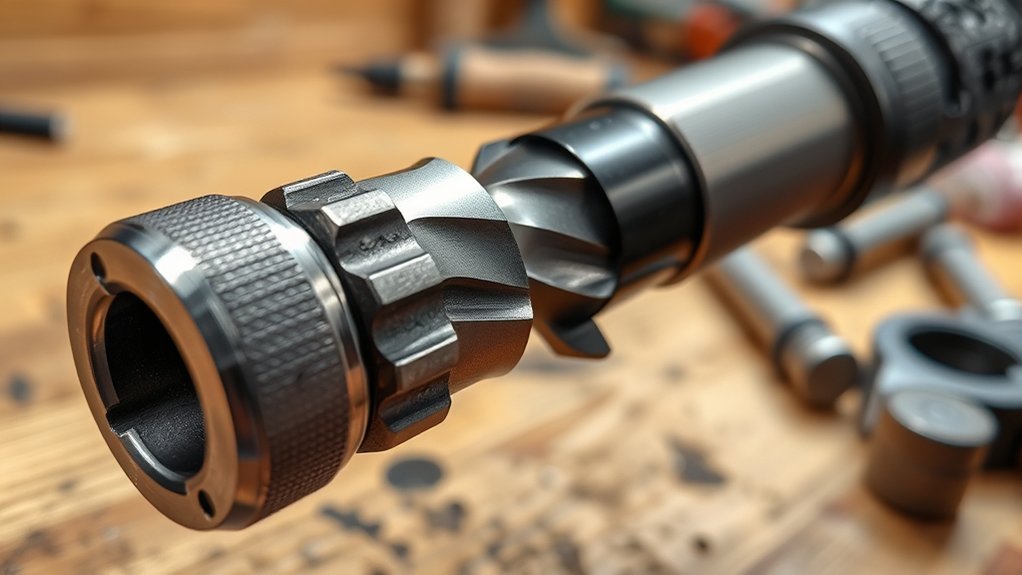
Ensuring a secure connection between the drill bit, extension, and chuck prevents slippage that can compromise your work and safety. You need to apply proper clamping techniques and minimize friction reduction to maintain a firm grip. Follow these steps:
Securely connect your drill bit, extension, and chuck to prevent slippage and ensure safe, accurate work.
Clean all contact surfaces to remove debris and oils. Insert the drill bit fully into the extension and the extension into the chuck.
Tighten the chuck firmly using the drill’s key or built-in mechanism. Use thread-locking compounds sparingly if necessary to enhance grip without increasing friction excessively.
Periodically inspect connections during use to detect and correct any loosening.
Maintaining Stability With Extended Drill Bits
Although extending a drill bit increases reach, it also introduces potential instability that can affect accuracy and safety. To maintain stability, focus on key stability factors such as bit alignment, secure chuck grip, and minimizing vibration.
Proper vibration control reduces wobble and wear, guaranteeing precise drilling.
| Stability Factor | Action Required | Benefit |
|---|---|---|
| Bit Alignment | Verify bit is perfectly straight | Reduces lateral movement |
| Chuck Grip | Tighten chuck firmly | Prevents bit slippage |
| Vibration Control | Use dampening sleeves or slower speeds | Minimizes oscillation |
| Drill Speed | Adjust speed per material | Enhances control |
Risks To Avoid When Extending Drill Bits
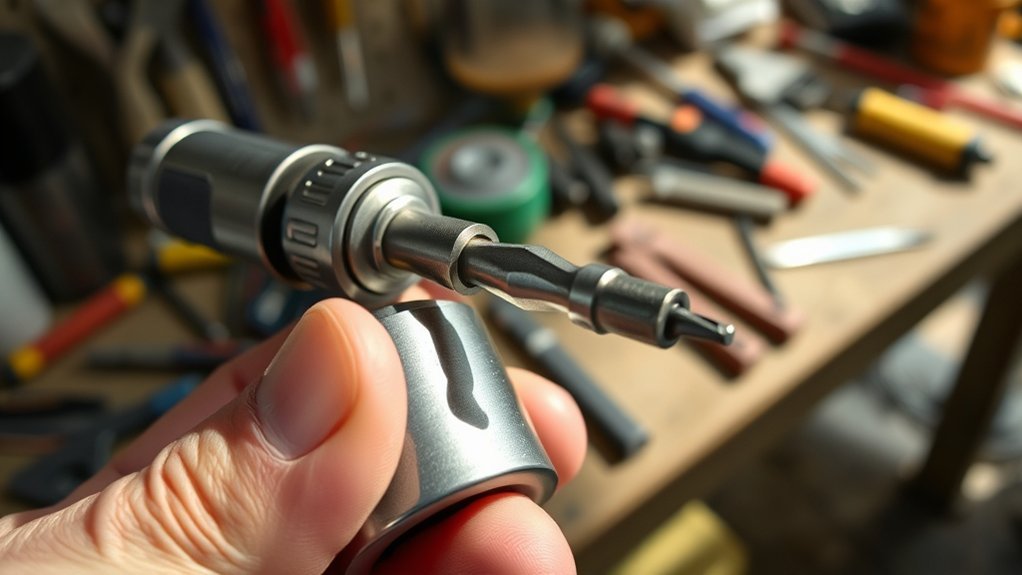
Maintaining stability with an extended drill bit helps prevent common hazards, but you still need to be aware of specific risks that come with increased length. Extending the drill bit length introduces additional safety hazards that can compromise control and precision. You must avoid these to maintain safe operation:
Excessive drill bit length increases flexing, risking breakage and injury.
Long drill bits flex more, increasing the chance of breakage and potential injury.
Inadequate clamping can cause the bit to slip, leading to sudden movements.
Using incompatible extension tools may reduce torque efficiency and stability.
Overlooking debris buildup along the extended bit can cause binding or kickback.
Ignoring recommended speed adjustments for longer bits can generate excessive heat, weakening the bit.
Which Drill Bit Types Work Best For Extension
Selecting the right drill bit type is essential when extending its length to preserve performance and safety. Some drill bit types handle extension materials better, maintaining rigidity and reducing wobble.
High-speed steel (HSS) and cobalt bits provide durability and heat resistance, making them suitable for longer extensions. Carbide-tipped bits are less flexible and risk breakage when extended.
Use extension materials compatible with the bit’s shank design to guarantee secure attachment.
| Drill Bit Type | Extension Material Compatibility | Best Use Case |
|---|---|---|
| HSS | Steel, Aluminum | General purpose |
| Cobalt | Steel, Stainless Steel | High heat applications |
| Carbide-Tipped | Minimal extension recommended | Hard materials |
| Titanium-Coated | Steel, Aluminum | Lightweight drilling |
| SDS Plus | Specific SDS extensions | Hammer drill systems |
Choose accordingly for safe, effective bit extension.
Alternatives To Extending A Drill Bit For Hard-To-Reach Areas
When you face hard-to-reach areas where extending a drill bit isn’t practical, consider using specialized tools designed for tight spaces. Instead of forcing an extension, choose alternatives that provide better control and access.
Flexible shafts allow you to transmit rotary motion through bends and curves, making them ideal for awkward angles. Right angle drill attachments let you drill perpendicular to the drill body, fitting into confined spaces without compromising torque.
Other options include compact drills designed for small areas and magnetic bit holders that improve stability. Here are five effective alternatives:
- Flexible shafts for curved or offset drilling
- Right angle drill attachments for perpendicular access
- Miniature drills for confined spaces
- Magnetic bit holders for enhanced bit retention
- Socket adapters to use with ratchets in tight spots
These tools guarantee precision without risking damage or loss of control.
Conclusion
Extending your drill bit can increase reach by up to 50%, letting you tackle hard-to-reach spots efficiently. Always prioritize alignment and secure fastening to avoid wobble or slippage, which cause up to 30% of drill bit failures.
Remember to test at low speed and wear safety gear every time. By following these precise steps, you’ll maintain performance and safety, ensuring your extended drill bit works reliably for any project that demands extra length.
Proper technique is essential when extending a drill bit to preserve its effectiveness and durability.