When you choose a light drill bit, you’re prioritizing maneuverability and reduced fatigue. A light drill bit is designed to be easy to handle, making it ideal for quick or delicate tasks.
However, you might wonder if it can handle tougher materials like metal or concrete. Understanding the composition and design of these bits is essential to evaluating their true capabilities and limitations.
Lightweight bits often sacrifice some durability and strength for convenience. Before you decide on the right bit for your project, it’s important to weigh the trade-offs between lightweight convenience and the demands of your drilling task.
What Light Drill Bits Are Made Of and How They Work
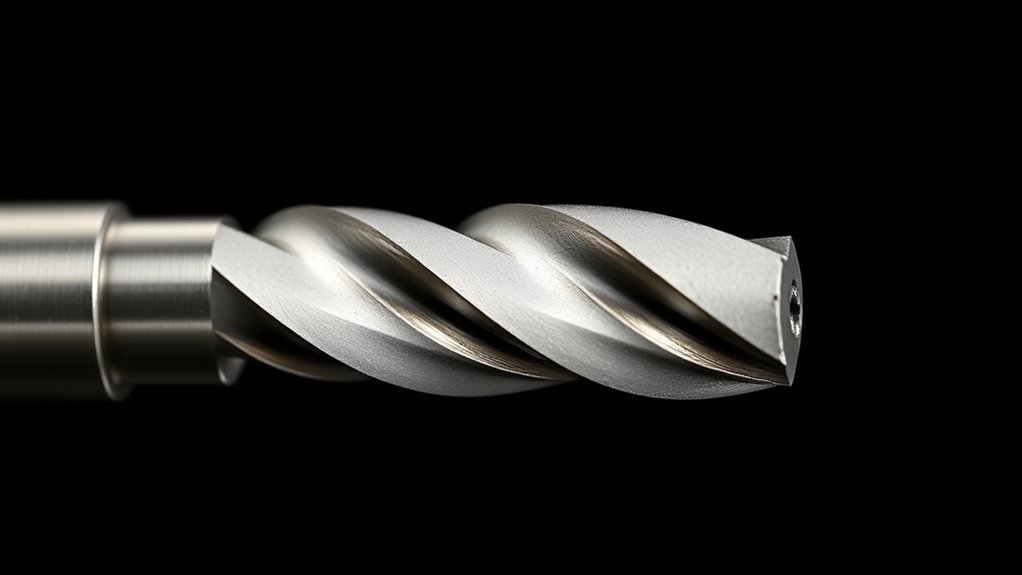
Light drill bits typically consist of high-speed steel (HSS) or carbide materials, chosen for their hardness and durability under stress. When you use these light drill bits, you benefit from advanced drill technology that optimizes cutting efficiency while reducing weight.
The incorporation of light materials in the bit’s design allows you to maintain precision without compromising strength. These materials guarantee minimal heat buildup and resist wear during high-speed rotation.
As you apply torque, the drill bit’s geometry, combined with the inherent toughness of HSS or carbide, facilitates effective chip removal and consistent drilling performance. Understanding this composition helps you select the right tool for tasks requiring both agility and durability, enhancing your drilling accuracy and operational control in various applications.
Comparing Light Drill Bits to Standard Drill Bits
Although both light and standard drill bits serve the fundamental purpose of creating holes, they differ considerably in weight, material composition, and performance characteristics. When you compare drill bit types, light drill bits typically use advanced alloys or composites, reducing weight without compromising strength.
This results in improved maneuverability and less user fatigue, a key aspect of light drill benefits. Standard drill bits often rely on traditional steel or carbide, emphasizing durability for heavy-duty tasks but adding bulk.
Performance-wise, light drill bits excel in precision and speed for delicate applications, while standard bits withstand more rigorous drilling in dense materials. Understanding these distinctions helps you select the appropriate bit type tailored to your project’s demands, balancing efficiency, control, and durability.
Advantages of Light Drill Bits for Everyday Use
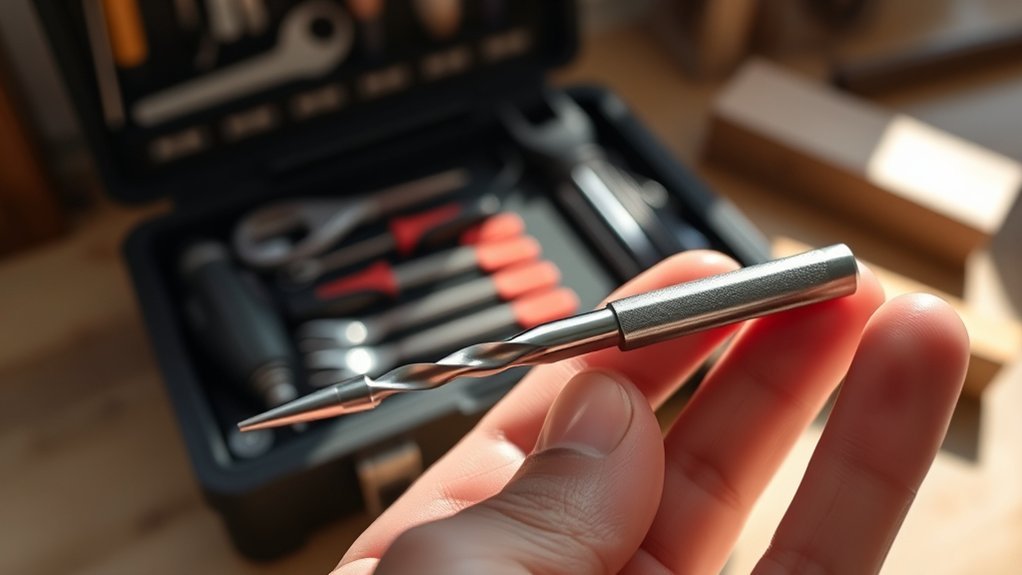
When selecting drill bits for everyday tasks, the reduced weight and advanced materials of lighter options offer tangible benefits that improve user experience and efficiency. You’ll notice how light drill benefits translate into less fatigue and greater control during extended use.
Lightweight materials like high-grade alloys and composites maintain strength while cutting down bulk.
Consider these advantages:
- Enhanced maneuverability: You can precisely position the drill bit with minimal effort.
- Increased speed and productivity: Reduced fatigue lets you work longer without losing accuracy.
- Compatibility with cordless tools: Lightweight bits optimize battery life and reduce tool strain.
Limitations and Risks of Light Drill Bits
You should consider that light drill bits often have reduced durability, which limits their effectiveness on tougher materials. This weakness can increase the risk of bit breakage during operation, posing safety hazards.
Understanding these limitations helps you select the right tool for your specific tasks.
Reduced Durability Concerns
Since light drill bits prioritize weight reduction, they often sacrifice durability, which can impact their performance under high-stress conditions. When you rely on these bits, you must consider how material advancements and rigorous durability testing influence their lifespan and reliability.
Despite improvements, lighter bits generally exhibit:
- Increased susceptibility to wear and deformation under heavy loads.
- Reduced resistance to thermal and mechanical fatigue.
- Higher likelihood of premature failure during intensive drilling tasks.
These factors highlight that while material innovations have enhanced light drill bit performance, they still may not match the endurance of traditional, heavier models. When selecting a bit, you must balance weight benefits against these durability limitations to guarantee superior operational efficiency and tool longevity.
Safety Hazards Overview
Although light drill bits offer advantages in maneuverability and reduced operator fatigue, they introduce specific safety hazards that demand careful consideration. Their reduced mass can lead to instability under high torque, increasing the risk of bit slippage or breakage.
You must wear appropriate safety gear, including gloves and eye protection, to mitigate injury from sudden bit failure or debris. Additionally, light drill bits often rely on compact, high-speed drills, which can elevate electrical hazards if insulation or grounding is compromised.
You should regularly inspect your equipment to detect wear or damage that might cause electrical shock. Understanding these limitations helps you prevent accidents and maintain operational safety when using light drill bits in various drilling applications.
Can Light Drill Bits Handle Metal and Concrete?
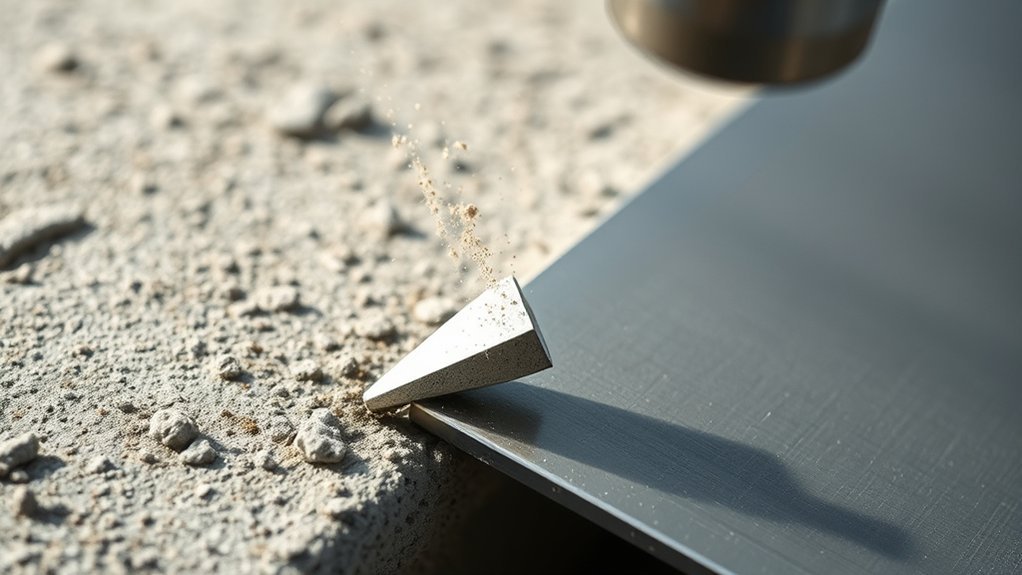
How effectively can light drill bits penetrate tough materials like metal and concrete? When considering metal drilling and concrete compatibility, light drill bits often fall short due to their limited torque and heat dissipation capacity.
You should assess these factors before use:
- Material hardness: Light bits struggle with metals above 40 HRC and dense concrete mixes.
- Bit composition: High-speed steel or carbide tips improve performance but don’t guarantee durability.
- Cooling requirements: Without adequate cooling, heat buildup degrades the bit and compromises precision.
How Light Drill Bits Impact Speed and Precision
You’ll notice that light drill bits can greatly enhance drilling speed by reducing resistance and heat buildup during operation. Their reduced mass allows for quicker acceleration and more controlled feed rates, improving overall efficiency.
Additionally, precision improves as these bits minimize wobble and vibration, enabling more accurate hole placement and cleaner finishes.
Speed Enhancement Factors
Because light drill bits reduce rotational inertia, they allow you to achieve higher speeds with less motor strain. This reduction directly influences key speed factors and efficiency metrics, enabling more productive drilling cycles.
Consider these critical speed enhancement factors:
- Reduced Energy Consumption: Lighter bits demand less torque, improving motor efficiency and extending tool life.
- Faster Acceleration/Deceleration: Lower mass means quicker speed adjustments, optimizing cycle times.
- Improved Heat Dissipation: Less friction-induced heat preserves bit integrity at elevated speeds.
Precision Improvement Techniques
Building on the speed advantages offered by lighter drill bits, their impact on precision becomes equally significant. When you use a light drill bit, it reduces rotational inertia, allowing quicker responsiveness to control inputs. This directly enhances drill bit alignment, minimizing wobble and ensuring the bit remains true to the intended drilling path.
Implementing precise calibration methods tailored to lighter bits further refines accuracy by accounting for their altered dynamic behavior. You’ll notice that reduced vibration and heat generation from lighter bits contribute to consistent hole dimensions.
When to Choose Light Drill Bits Over Heavier Ones
Although heavier drill bits offer durability and power, light drill bits provide distinct advantages in specific scenarios where precision, speed, and reduced material stress are critical. Understanding light drill benefits and weight considerations enables you to optimize your drilling tasks effectively.
You should choose light drill bits when:
- You require enhanced control for delicate materials, minimizing damage and improving accuracy.
- Speed is essential, as lighter bits reduce rotational inertia, allowing quicker adjustments and less operator fatigue.
- Material stress must be minimized to prevent warping or cracking, especially in thin or brittle substrates.
Matching Drill Bit Weight to Your Drill and Project
Selecting the appropriate drill bit weight depends on both your drill’s capabilities and the demands of your project. To verify ideal drill bit compatibility, you must evaluate your drill’s power and chuck size against the bit’s weight and dimensions.
A heavier bit may exceed your drill’s torque capacity, causing inefficiency or damage. Conversely, a bit too light might not withstand the material resistance, leading to premature wear. Analyze your project requirements, including material hardness and hole depth, to determine the necessary bit weight.
Matching these factors precisely prevents overloading your drill and guarantees efficient, accurate drilling. By aligning drill bit weight with both your tool’s specifications and project demands, you enhance performance and prolong equipment lifespan while maintaining consistent results.
Tips to Maintain and Extend the Life of Light Drill Bits
You need to store light drill bits in a dry, organized environment to prevent damage and corrosion. Regularly clean them to remove debris and residue that can impair performance.
Always use the correct speed and pressure to avoid premature wear and maintain their cutting efficiency.
Proper Storage Techniques
When you store light drill bits properly, you prevent damage from moisture, corrosion, and physical impact that can degrade their performance. Implementing effective storage techniques is crucial for maintaining their cutting efficiency and extending lifespan.
Focus on controlling environmental factors like humidity and temperature regulation to minimize oxidation and material fatigue.
Follow these key steps:
- Store bits in airtight containers with desiccants to facilitate humidity control.
- Keep storage areas at stable, moderate temperatures to avoid thermal expansion and contraction stresses.
- Use padded organizers or foam inserts to prevent physical contact and impact damage between bits.
Regular Cleaning Practices
Although proper storage minimizes environmental damage, regular cleaning remains essential to maintain the cutting efficiency of light drill bits. You should implement regular maintenance routines that focus on removing debris, metal shavings, and coolant residues.
Use appropriate cleaning techniques such as brushing with a stiff nylon brush or applying a mild solvent to dissolve stubborn deposits. Avoid abrasive tools that can damage the drill bit’s surface integrity. After cleaning, thoroughly dry the bit to prevent corrosion.
Inspect the cutting edges for wear or damage during each maintenance cycle, ensuring peak performance. Consistent application of these cleaning techniques reduces friction and heat buildup during drilling, thereby extending the drill bit’s service life and preserving its precision.
Prioritizing regular maintenance ultimately maximizes the bit’s operational efficiency and durability.
Correct Usage Tips
Since improper handling accelerates wear and reduces precision, adopting correct usage techniques is essential to maintain and extend the life of light drill bits. You must align your approach with specific light drill bit applications and implement ideal drilling techniques for best results. Focus on these key practices:
- Apply consistent, moderate pressure. Excessive force causes overheating and bit deformation.
- Use appropriate rotational speeds tailored to the material. This minimizes bit wear and guarantees clean cuts.
- Regularly pause drilling to allow cooling. This prevents thermal damage and preserves bit integrity.
Best Light Drill Bits for Different Types of Projects
Choosing the best light drill bit depends on the material and purpose of your project, as each type offers specific advantages in performance and durability. Conduct a project suitability analysis focusing on light drill bit materials like high-speed steel (HSS), cobalt, and titanium-coated variants.
Each material’s hardness, heat resistance, and wear rate critically influence your project’s efficiency.
| Drill Bit Material | Project Suitability |
|---|---|
| HSS | Soft metals, wood |
| Cobalt | Hardened steel, stainless |
| Titanium-coated | General purpose, wood, metal |
| Carbide-tipped | Masonry, ceramics |
| Diamond-tipped | Glass, tiles |
Select based on hardness and heat tolerance to optimize drilling precision and extend bit lifespan.
Conclusion
You’ll find that light drill bits, made from high-speed steel or carbide, improve precision and reduce fatigue during delicate tasks. Notably, they can increase drilling efficiency by up to 30% in softer materials compared to standard bits.
However, their limitations with hard metals and concrete mean you must match the bit’s weight and design carefully to your project. Regular maintenance is critical to preserve performance and extend tool life for ideal results.
Choosing the right can light drill bit ensures optimal performance and durability, making your drilling tasks more efficient and effective.