Just like a Swiss Army knife needs the right attachment, your drill demands compatible bits to perform well. You might wonder if you can use rotary bits in a drill, given their versatility.
The answer isn’t always straightforward—it hinges on factors like chuck size, bit shank, and drill type.
Understanding these details can save you from damaging your tools or compromising your work quality. Always check the specifications of both your drill and the rotary bits before making a swap.
This ensures optimal performance and safety during your projects.
What Are Rotary Bits and How Do They Work?
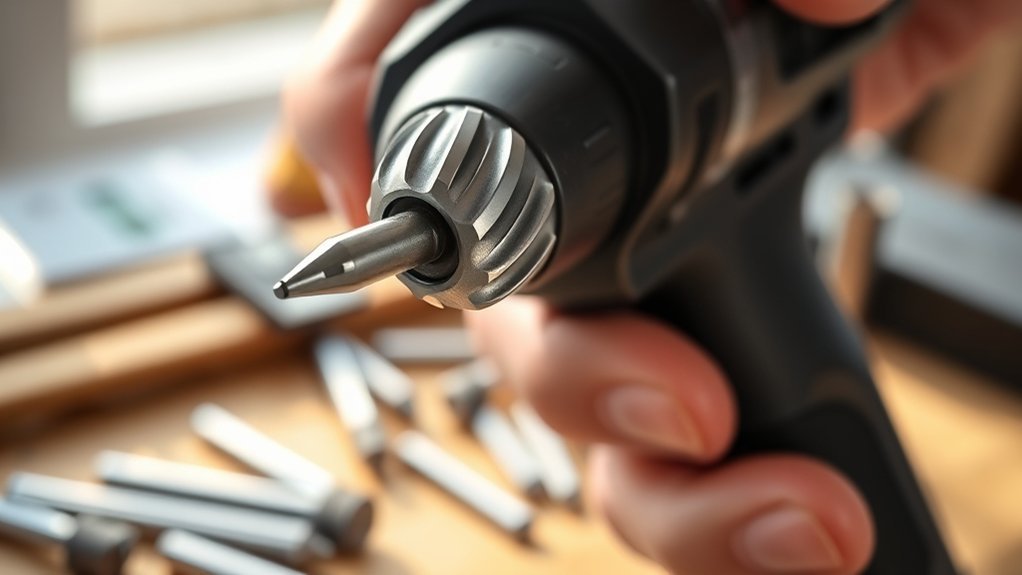
Rotary bits are specialized cutting tools designed to attach to drills for creating holes in various materials. You’ll find rotary bit applications spanning wood, metal, plastic, and masonry, each requiring specific bit types like spade, twist, or masonry bits.
When you use a rotary bit, it rotates at high speeds to cut through material efficiently, relying on sharp cutting edges and proper torque from the drill. To guarantee consistent performance and longevity, you must prioritize rotary bit maintenance. This includes regularly cleaning debris, checking for wear, and sharpening or replacing dull bits.
Proper maintenance prevents overheating and material damage, keeping your drilling precise. Understanding these fundamentals helps you optimize your rotary bit’s effectiveness across diverse drilling tasks.
How Are Rotary Bits Different From Drill Bits?
You’ll notice rotary bits have a distinct design compared to standard drill bits, optimized for impact and rotary motion. Their functionality varies, as rotary bits can handle tougher materials and offer different cutting actions.
Understanding their material compatibility helps you choose the right bit for each drilling task.
Design Differences Explained
Understanding the design differences between rotary bits and standard drill bits is essential for selecting the right tool for your task. Rotary bit types vary widely, each engineered for specific materials and applications, affecting their design compatibility with different drills.
Here’s what sets them apart:
- Rotary bits often feature specialized shanks for secure fitting in rotary hammers or SDS chucks.
- Drill bits usually have a straight or hex shank compatible with standard drill chucks.
- The cutting edges on rotary bits are designed to handle impact and rotation simultaneously.
- Standard drill bits focus primarily on rotational cutting without impact considerations.
- Material construction differs; rotary bits tend to use tougher alloys to withstand hammering forces.
Understanding these design aspects helps you avoid mismatches that can reduce efficiency or damage your tools.
Functionality Variations
Although both rotary bits and drill bits serve to bore holes, their operational mechanisms differ markedly to suit distinct tasks. Drill bits primarily rely on rotational force to cut through materials, making them ideal for straightforward drilling.
In contrast, rotary bits combine rotation with rapid hammering or pulsating actions, enhancing efficiency in rotary applications like masonry or concrete drilling. This dual-action mechanism allows rotary bits to break up tough surfaces more effectively than standard drill bits.
When you select bits, keep in mind that bit versatility varies; rotary bits excel in specialized tasks demanding impact and rotation, while drill bits provide consistent performance in general-purpose drilling. Understanding these functionality variations helps you choose the right bit for your specific project needs, optimizing tool performance and extending bit lifespan.
Material Compatibility
Selecting the appropriate bit depends heavily on the materials you’ll be working with, as rotary bits and drill bits are engineered for different substrates. Understanding rotary bit materials and drill compatibility factors is essential to avoid tool damage or poor performance. Rotary bits typically handle softer or composite materials, while drill bits are designed for harder surfaces.
Consider these compatibility points:
- Rotary bit materials often include tungsten carbide or diamond grit for abrasion resistance
- Drill bits are usually high-speed steel or cobalt for metal penetration
- Rotary bits excel on plastics, softwoods, and drywall
- Drill bits suit metals, hardwoods, and masonry
- Using a rotary bit on metal risks rapid wear and inefficient cutting
Will Rotary Bits Fit in Your Standard Drill?
How do you know if your standard drill can accommodate rotary bits? First, check the chuck size; most rotary bits require a 1/4-inch or smaller chuck. Assess rotary bit compatibility by verifying the shank diameter matches your drill’s chuck capacity.
Next, consider drill type considerations: cordless drills with variable speed settings often handle rotary bits well, while hammer drills might not provide ideal control. Also, examine the drill’s torque and RPM range. Rotary bits need moderate speed and torque to operate effectively without damage.
If your drill uses a keyless chuck, it’s usually easier to swap rotary bits in and out. Confirming these factors guarantees your standard drill can securely hold rotary bits, enhancing performance and preventing safety issues during use.
Are Rotary Bits Safe to Use in Drills?
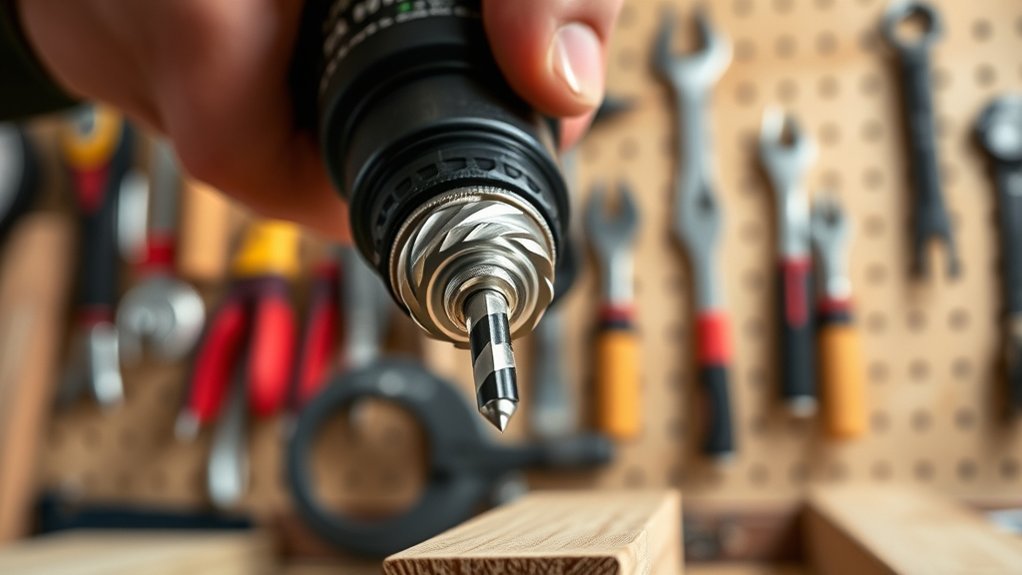
You need to guarantee your drill type is compatible with rotary bits to maintain safe operation. Always follow safety precautions like securing the bit properly and wearing protective gear.
Understanding potential risks, such as bit slippage or overheating, helps you apply the right solutions and avoid accidents.
Compatibility With Drill Types
Although rotary bits are designed primarily for rotary tools, they can be safely used in many standard drills if the chuck size and bit shank are compatible. Evaluating drill compatibility with various rotary bit types is essential to guarantee efficient performance and avoid damage.
Most rotary bits feature shanks sized for rotary tools, but some match common drill chuck sizes (1/4″, 3/8″, or 1/2″). Consider these points when selecting rotary bits for your drill:
- Confirm your drill’s chuck size matches the bit shank diameter.
- Opt for rotary bits with straight shanks for secure fit.
- Avoid bits intended exclusively for high-speed rotary tools.
- Check material compatibility; some bits suit only specific drill motors.
- Use variable-speed drills to control torque and prevent bit wear.
Proper matching guarantees peak functionality and tool longevity.
Safety Precautions To Follow
When using rotary bits in drills, taking specific safety precautions guarantees both your protection and the tool’s durability. Always wear appropriate safety gear, including safety glasses and gloves, to shield yourself from debris and accidental slips.
Before starting, verify the rotary bit is securely fastened in the chuck to prevent wobbling or detachment. Use proper technique by maintaining a firm grip and applying steady, controlled pressure. Avoid forcing the bit, which can cause breakage or kickback.
Work at recommended speeds for the material and bit type to minimize wear and overheating. Keep your workspace clean and well-lit to reduce hazards. Following these precise safety measures helps you operate efficiently while minimizing risks associated with rotary bit usage in drills.
Potential Risks And Solutions
Following proper safety precautions greatly reduces hazards, but rotary bits still carry inherent risks during use. Ensuring drill compatibility is essential to prevent bit slippage or breakage. You must maintain rotary bit safety by recognizing these potential risks and applying practical solutions:
- Bit overheating causing material damage or user injury
- Excessive vibration leading to loss of control
- Incompatible drill chuck sizes causing unstable bit mounting
- Rapid bit wear reducing effectiveness and increasing breakage risk
- Unexpected bit kickback during operation
To mitigate these, always verify drill and bit specifications, use appropriate speed settings, and wear protective gear. Regularly inspect bits for wear and replace damaged ones promptly. By addressing these risks, you maintain safety and optimize performance when using rotary bits in your drill.
Which Types of Drills Can Safely Use Rotary Bits?
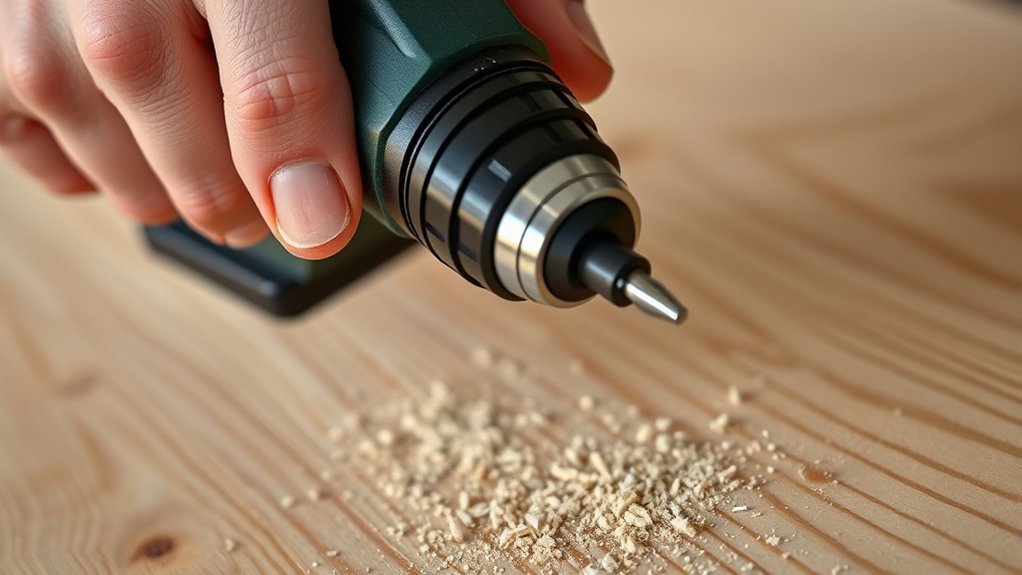
Since rotary bits require consistent rotational speed and torque, not all drills are suitable for their use. To guarantee ideal drill compatibility, you should use drills with adjustable speed settings and sufficient torque control.
Corded drills and high-quality cordless models with brushless motors typically offer the stable power delivery needed for effective bit performance. Hammer drills or impact drivers, designed for percussive action, generally aren’t ideal because their variable impact can damage rotary bits.
When selecting a drill, verify its clutch settings and speed ranges align with the rotary bit’s specifications. Using a compatible drill prevents premature bit wear and guarantees precise, efficient operation.
Always match your drill’s capabilities to the bit’s requirements to maximize safety and performance during your rotary drilling tasks.
How to Pick the Right Bit for Your Drill Project
You’ll want to start by selecting a bit material that matches your work surface: high-speed steel for wood, carbide for masonry, or cobalt for metal.
Next, pick the correct bit size to guarantee a clean hole and secure fit for your fastener or anchor. Using the right combination prevents damage to both your drill and the material.
Bit Material Types
How do you choose the right bit material for your drill project? Selecting the correct bit depends on the material you’re drilling and the durability you need. Here’s a quick guide:
- High speed steel (HSS): Ideal for wood, plastic, and soft metals; affordable and versatile.
- Cobalt steel: Offers higher heat resistance for tougher metals like stainless steel.
- Carbide tipped & diamond coated: Best for extremely hard materials such as masonry and glass. Diamond coating excels in glass drills.
- Titanium coated: Enhances HSS bits by reducing wear and increasing lifespan, suitable for general metal drilling.
- Ceramic bits & aluminum oxide: Used primarily for non-metal materials. Ceramic bits excel in glass and tile drilling.
Match bit material to your project’s demands to optimize performance and bit longevity.
Matching Bit Size
Selecting the correct bit size directly affects the accuracy and effectiveness of your drilling project. When choosing a rotary bit, make sure the bit size matches the hole diameter required. Using a bit too large can damage the material or over-enlarge the hole, while too small a bit may require multiple passes or cause misalignment.
Consider the drill selection carefully: your drill’s chuck capacity must accommodate the shank diameter of the rotary bit. For precision tasks, measure the bit size with calipers to confirm exact dimensions.
Additionally, verify compatibility between the bit’s design and your drill’s speed and torque capabilities. Proper matching of bit size and drill selection guarantees clean, accurate holes and prolongs both bit and drill life, optimizing your project’s outcome.
Adapting Rotary Bits to Fit Drill Chucks Safely
Although rotary bits come in various shank sizes, adapting them to fit your drill chuck safely requires using the correct adapters or collets. Confirming rotary bit compatibility prevents slippage and damage during operation. Avoiding improper drill chuck modifications is essential to maintain tool integrity and user safety.
Here’s how you can adapt rotary bits effectively:
Identify the shank diameter of your rotary bit
Select an adapter or collet matching both the bit and chuck size
Verify the adapter’s material is durable and fits snugly
Avoid forcing bits into chucks, which risks damage
Regularly inspect the adapter and chuck for wear or looseness
Following these steps confirms a secure fit, optimizing performance without compromising safety or tool lifespan.
Best Materials and Uses for Rotary Bits in Drills
Rotary bits come in a variety of materials designed to tackle specific tasks efficiently, so choosing the right one directly impacts your drill’s performance and the quality of your work. The main material types include high-speed steel (HSS), carbide-tipped, and diamond-coated bits.
HSS bits offer durability for general metal and wood drilling, making them versatile for most applications. Carbide-tipped bits excel in harder materials like masonry and stainless steel, providing superior wear resistance.
Diamond-coated bits are ideal for precision work on glass, ceramics, and stone due to their hardness and longevity. This applications overview helps you select the appropriate rotary bit material, ensuring peak cutting speed, bit life, and surface finish.
Matching bit material to your task prevents premature wear and improves drilling accuracy.
Top Alternatives to Rotary Bits for Drill Users
Several effective alternatives to rotary bits can enhance your drill’s versatility depending on the task at hand. When rotary bit alternatives are necessary, choosing the right drill bit options guarantees peak performance and material compatibility. Consider these top alternatives:
Explore alternatives to rotary bits to boost your drill’s versatility and ensure optimal performance for any project.
Spade bits for fast, rough wood boring
Auger bits providing deep, clean holes in wood
Masonry bits designed specifically for drilling into concrete and brick
Hole saws ideal for large-diameter holes in wood, metal, or plastic
Step drill bits effective for drilling incremental hole sizes in thin sheet metal
Each option serves a distinct function and material, allowing you to adapt your drill for precision and efficiency beyond standard rotary bits.
How to Protect Your Tools and Workpieces When Mixing Bits
When you switch between different types of drill bits, you need to take specific steps to protect both your tools and the materials you’re working on. First, verify the drill is powered off before changing bits to prevent damage or injury.
Use the correct collet size to secure each bit firmly, minimizing wobble that can harm the tool or workpiece. Clean bits and the chuck regularly to avoid debris buildup, which affects performance and accelerates wear. This is critical for tool maintenance.
When working on delicate materials, start at lower speeds and use appropriate pressure to prevent cracking or deformation, guaranteeing workpiece protection. Finally, store bits properly to maintain sharpness and prevent damage, extending their lifespan and preserving the integrity of your projects.
Conclusion
Using rotary bits in your drill can transform you into a precision powerhouse, tackling tasks with surgical accuracy—if you pick the right bit, match the chuck size, and control speed perfectly. Ignore these details, and you might as well be wielding a wild beast instead of a tool.
Stick to compatible drills, respect torque limits, and protect your workpiece to release rotary bits’ full potential without disaster. Your drill will thank you for careful handling.
In conclusion, yes, you can use rotary bits in a drill, but success depends on the right combination of bit choice, drill compatibility, and proper technique.