You might wonder, can I use pliers to crimp wires? While it might seem like a quick and easy solution, the reality is more complicated.
Pliers can apply pressure, but they often lack the precision and consistency required for secure electrical connections. This can result in unreliable crimps that compromise both safety and performance.
The uneven pressure from pliers might not create a strong enough bond, leading to potential failures over time.
Before deciding to use pliers, consider the specific requirements of your project. Using the right crimping tool ensures a lasting, professional result that keeps your connections safe and efficient.
When Can You Safely Use Pliers to Crimp Wires?
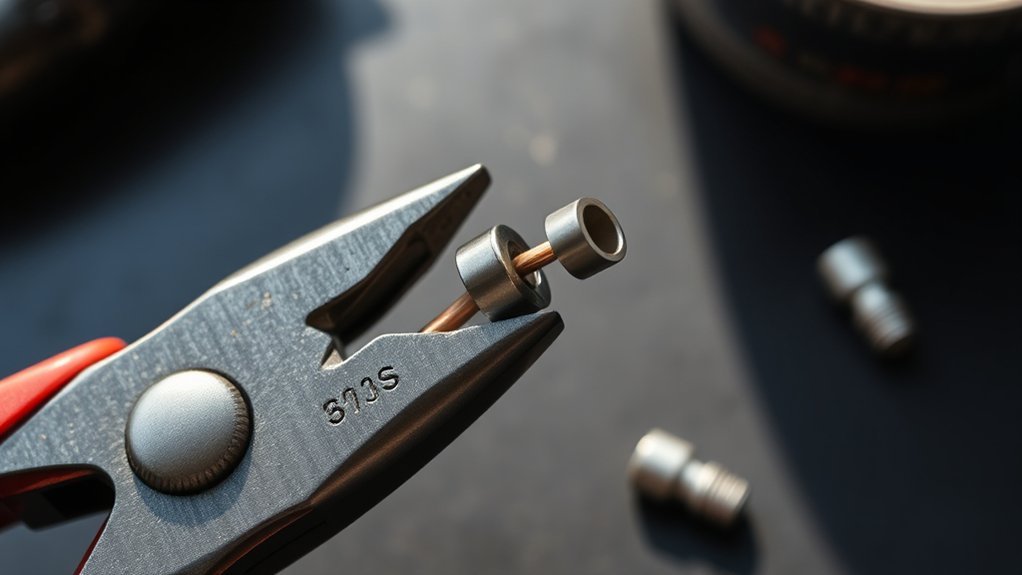
When can you safely use pliers to crimp wires? You can consider using pliers for crimping only with small wire gauges, typically 22 to 18 AWG, where precise pressure and shape control are less critical. Ascertain the wire gauge matches the terminal size to avoid weak connections.
Use pliers when the connection strength requirements are low, such as in temporary setups or non-critical circuits. Apply firm, even pressure to compress the terminal without damaging the wire or insulation.
Avoid pliers for larger gauges or high-vibration environments, as inconsistent pressure can cause loose or unreliable connections. Always inspect the crimp visually and test its mechanical strength to confirm a secure bond.
Pliers are a practical last resort but only under limited, controlled conditions.
Why Crimping Tools Work Better Than Pliers
Although pliers can handle some basic crimping tasks, crimping tools provide consistent pressure and precise shaping that pliers simply can’t match. Their design optimizes crimping mechanics, ensuring reliable electrical and mechanical connections.
When you use a dedicated crimping tool, you benefit from:
- Controlled force application. Crimping tools deliver uniform pressure critical for secure crimps, unlike the uneven grip of pliers.
- Enhanced tool durability. Crimping tools are engineered to withstand repeated stress, maintaining accuracy over time.
- Precise die alignment. Specialized dies shape crimps perfectly, reducing the risk of wire damage and connection failure.
Choosing crimping tools over pliers improves connection integrity and extends tool life, making your work both safer and more efficient.
Types of Crimps You Can Make With Pliers vs. Tools
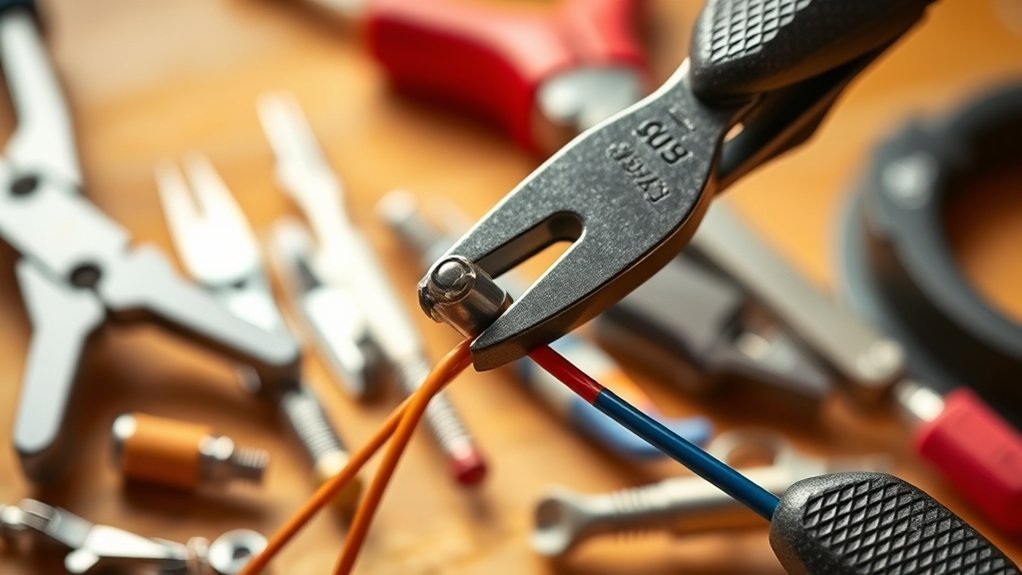
Since pliers lack specialized dies, they limit you to simple, basic crimps like quick splices or informal wire twists. These crimping techniques provide minimal mechanical strength and electrical reliability.
In contrast, dedicated crimping tools offer precise, uniform compression for various connector types: insulated terminals, non-insulated terminals, coaxial connectors, and more. When comparing tools, specialized crimpers guarantee consistent deformation of metal sleeves, optimizing contact and reducing resistance.
Pliers simply can’t replicate this precision, often resulting in loose or uneven crimps. If your project demands professional-grade crimps, relying on proper crimping tools is critical.
While pliers might suffice for quick fixes or low-stress applications, tool comparisons clearly show their inadequacy for standardized, durable crimps required in electrical and networking installations.
Risks of Crimping Electrical Connectors With Pliers
Crimping electrical connectors with pliers exposes you to several risks that can compromise both safety and performance. Unlike specialized tools, pliers often lack consistent pressure control, which affects connector durability and the integrity of your crimps.
Here are three key risks to take into account:
- Inconsistent Crimping Pressure: Pliers don’t apply uniform force, leading to weak or uneven crimps that may fail under load.
- Damaged Connectors: Improper crimping techniques can deform or crack connectors, reducing their lifespan and electrical reliability.
- Poor Electrical Contact: Inadequate compression can result in high resistance points, causing overheating or signal loss.
Using the correct crimping tools guarantees consistent application of crimping techniques, preserving connector durability and maintaining safe, efficient electrical connections.
How Can You Test if a Pliers Crimp Is Reliable?
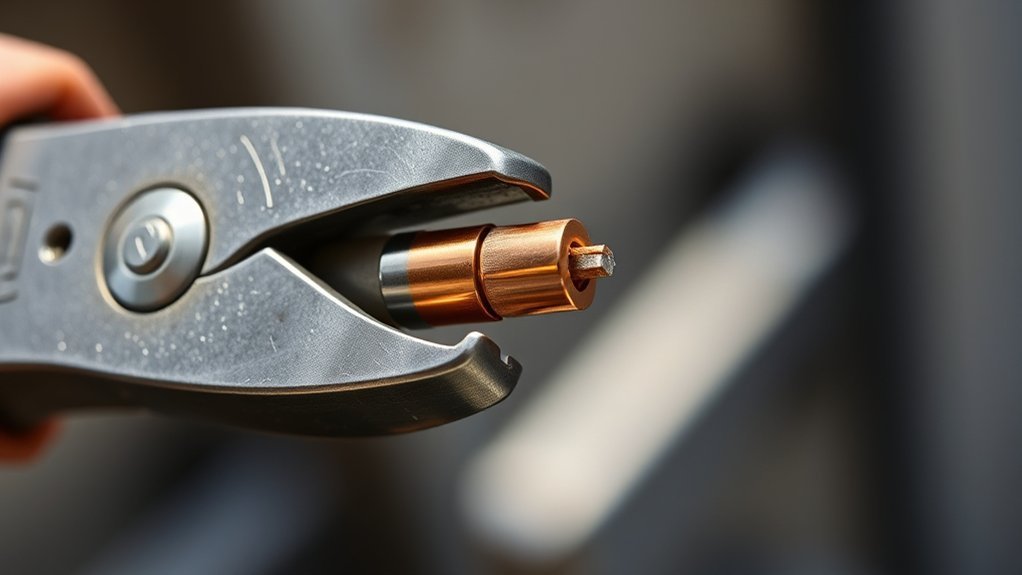
Assuring that a crimp made with pliers holds up under electrical and mechanical stress requires careful inspection and testing. Start by visually examining the crimp for uniform compression and absence of cracks or deformation.
Next, perform a pull test by applying steady force to the wire and terminal; a reliable connection won’t loosen or separate. For electrical integrity, use a multimeter to check continuity and measure resistance. Low resistance indicates a solid electrical path.
Additionally, if available, a crimp testing device can quantify the mechanical strength, offering precise data on the crimp’s durability. By combining these steps, you assure your crimp meets safety and performance standards.
Proper crimp testing is essential to confirm that your pliers-produced crimps form reliable connections.
Simple Alternatives to Pliers for Crimping Without Pro Tools
If you don’t have professional crimping tools, you can use common household items like a flathead screwdriver or a pair of locking pliers to compress connectors.
Applying steady pressure with these tools can create a secure crimp when done carefully. You’ll need to practice manual techniques to guarantee the connection is tight and reliable without damaging the materials.
Household Items for Crimping
Although professional pliers are ideal for crimping, you can rely on several common household items when you don’t have access to specialized tools. These household items serve as effective crimping alternatives by applying sufficient pressure to secure connectors or terminals.
Here are three practical options:
1. Flat-nose or needle-nose pliers
While not designed specifically for crimping, their firm grip can compress connectors adequately if you apply even pressure.
2. Hammer and flat metal surface
Position the connector on a sturdy, flat surface and gently tap with a hammer to achieve a crimp-like effect.
3. Adjustable wrench
Tighten the jaws around the connector carefully to compress it without damaging the material.
Each tool requires caution to avoid over-compression or damage, but they’re reliable household items for crimping alternatives in a pinch.
Manual Crimping Techniques
When you don’t have access to pliers or specialized crimping tools, you can still achieve secure crimps using simple manual techniques that rely on controlled pressure and proper positioning. Manual crimping techniques involve pressing the connector firmly around the wire with consistent force, often using your fingers or a sturdy flat object like the edge of a screwdriver handle.
As a tool alternative, you can also use a bench vise or clamp to apply even pressure without slipping. Verify the wire sits fully inside the connector before applying pressure to maintain electrical integrity. While these methods require patience and precision, they serve as reliable tool alternatives when professional crimpers aren’t available, providing a firm mechanical and electrical connection in emergency or low-volume situations.
Tips to Improve Crimping Quality When Using Pliers
Mastering three key techniques can greatly enhance your crimping quality when using pliers. While pliers serve as a common tool alternative for crimping, applying precise crimping techniques guarantees stronger, reliable connections.
- Positioning: Align the terminal and wire correctly in the pliers’ jaws to avoid uneven pressure and weak crimps. Consistent placement is critical.
- Pressure Control: Apply steady, firm pressure without over-crushing. Excessive force can damage the terminal, while insufficient force leads to poor contact.
- Jaw Selection: Use pliers with smooth, flat jaws or consider adding soft jaw covers. This minimizes deformation and improves grip uniformity.
When Should You Invest in a Proper Crimping Tool?
You should invest in a proper crimping tool when your projects demand precise and consistent connections that pliers can’t reliably deliver. Using the right tool also enhances safety by reducing the risk of damaging components or injuring yourself.
For improved efficiency and professional results, a dedicated crimper is essential.
Precision and Consistency
Although pliers can handle basic crimping tasks, they often fall short in delivering the precision and consistency required for reliable electrical connections. When you rely on pliers, crimping accuracy suffers due to uneven pressure and inconsistent deformation of connectors.
Proper crimping tools are engineered with tool precision that guarantees uniform crimps every time. You should invest in a dedicated crimping tool when:
- You require consistent electrical contact and mechanical stability.
- The application demands strict adherence to industry standards.
- You frequently crimp connectors and need to reduce variability in results.
Safety and Efficiency
When working with electrical connections, using proper crimping tools enhances both safety and efficiency by ensuring secure, reliable joints that reduce the risk of electrical faults and physical injuries. You should invest in a dedicated crimping tool when consistent, high-quality crimps become essential, especially in critical applications.
Safety precautions are paramount; pliers may slip or apply uneven pressure, increasing injury risk and connection failure. Efficiency tips include selecting a tool matched to your connector types and wire gauges, which minimizes rework and speeds up your workflow.
Proper crimpers maintain uniform pressure and alignment, preventing damage to conductors and insulation. Ultimately, investing in the right crimping tool saves time, improves connection integrity, and upholds safety standards, benefits pliers cannot reliably provide.
Summary: Choosing Between Pliers and Crimping Tools
How do you determine whether pliers or a dedicated crimping tool best suits your project? You need to weigh the pliers advantages against the crimping limitations carefully. Pliers offer versatility and immediate availability but lack the precision and uniformity of dedicated crimping tools.
To decide effectively, consider these points:
Consider project needs, usage frequency, and tool availability to choose the right crimping method.
- Project Requirements: For consistent, high-quality crimps, especially in electrical work, a crimping tool is essential.
- Frequency of Use: If you crimp regularly, investing in a crimping tool improves safety and efficiency.
- Tool Accessibility: Pliers can suffice for occasional, non-critical crimps where precision is less critical.
Ultimately, for reliable, standardized crimps, dedicated tools outperform pliers, which serve better in less demanding scenarios.
Conclusion
While pliers can serve as a quick fix for crimping, they often fall short of delivering the consistent pressure and precision needed for truly reliable connections.
If you’re aiming for lasting electrical integrity without unexpected hiccups, consider upgrading to a dedicated crimping tool. It’s a subtle investment that can save you from subtle but costly frustrations down the line.
For the best results and to ensure your work meets professional standards and stands the test of time, it’s important to understand when and how you can use pliers to crimp effectively.