You might not realize that when you say “a pair of pliers,” you’re referring to more than just the tool’s shape—it’s about how the two connected parts work together to multiply your grip and force.
The term “pair of pliers” highlights this unique function. This dual mechanism is why pliers, unlike many tools, are always described as a pair, a detail rooted in both their design and linguistic history.
Understanding this reveals something surprising about common tool names you use every day.
What Does “A Pair of Pliers” Mean?
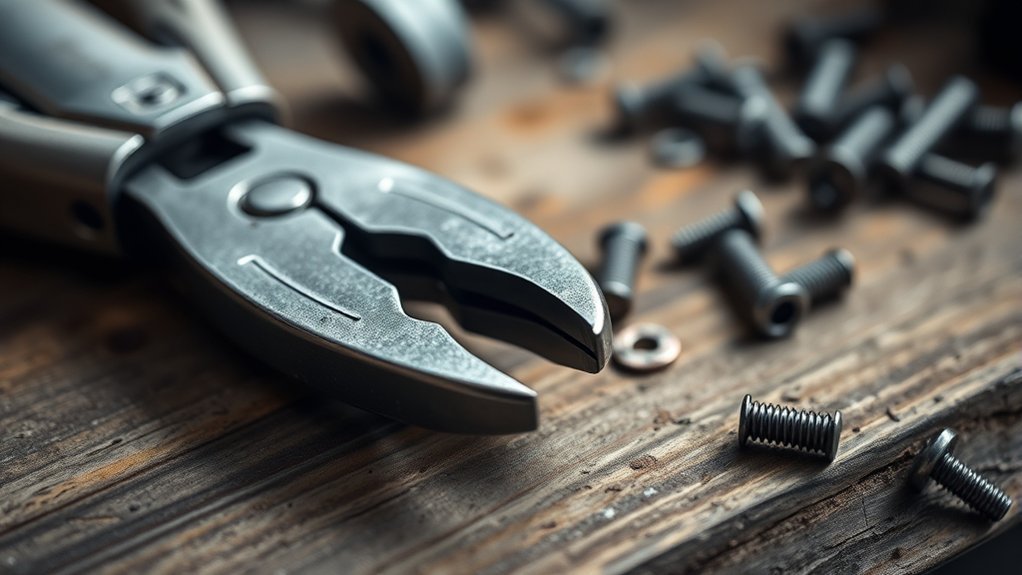
When you hear the phrase “a pair of pliers,” it might seem odd since pliers are a single tool. However, in pliers terminology, the word “pair” refers to the two connected parts that form the tool.
Each half functions as a lever, joined at a pivot point, working together to grip, bend, or cut materials. Understanding this term helps clarify tool usage, as the dual components allow for a mechanical advantage, enabling you to apply greater force.
The phrase “a pair” emphasizes the tool’s duality rather than quantity, highlighting its design principle. So, when you say “a pair of pliers,” you’re acknowledging the two-part construction essential to its operation, not implying multiple tools.
This precision in language reflects the tool’s functional anatomy.
How Pliers’ Two-Part Design Works
Although pliers may look like a single tool, their effectiveness relies on the precise interaction between two linked levers joined at a pivot point. When you squeeze the handles, the pivot acts as a fulcrum, multiplying your input force through mechanical advantage.
This allows you to grip, twist, or cut materials with far greater strength than your bare hands. The ergonomic design of each handle provides comfort and reduces fatigue, enabling you to apply sustained pressure without strain.
The jaws at the opposite end translate this amplified force into a secure grip on objects of various shapes and sizes. Understanding this two-part mechanism helps you appreciate why pliers function efficiently as a “pair” rather than a single unit, enhancing both control and power in your tasks.
How History Shaped the Name “Pair of Pliers
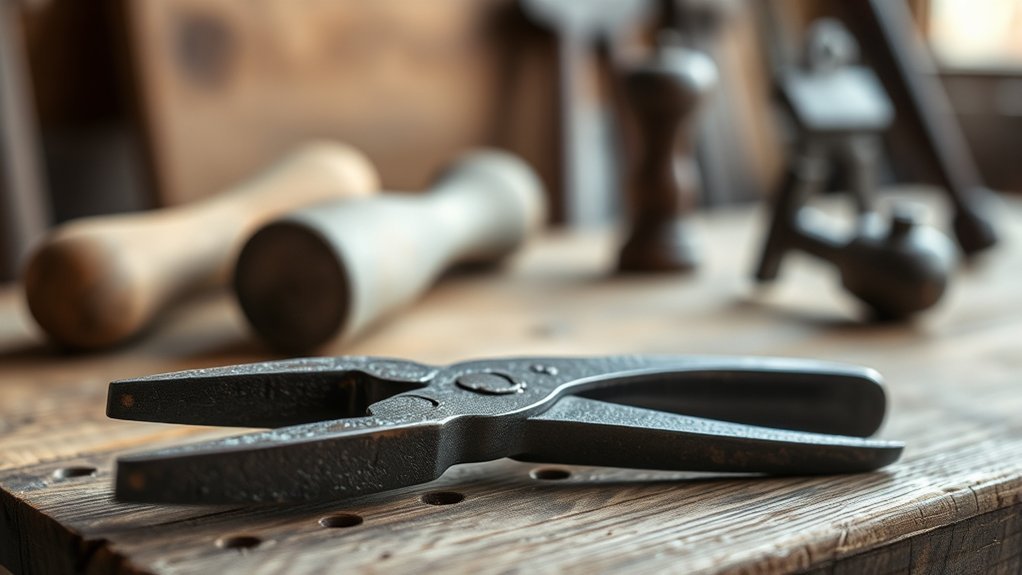
You might wonder why we call pliers a “pair” despite it being a single tool. This term traces back to the tool’s two connected parts that work together, reflecting a historical naming pattern for items made of dual components.
Understanding this helps clarify how the tool’s dual functionality influenced its distinctive name over time.
Origins Of Tool Naming
Because language often reflects practical realities, the term “pair of pliers” traces back to the tool’s design and function as two connected components working in unison. In tool terminology, naming conventions typically highlight distinctive features or operational characteristics.
For pliers, the “pair” emphasizes the dual-lever construction joined at a pivot, essential for gripping and manipulating objects. This naming convention aligns with how other tools like “scissors” or a “pair of tongs” are identified, focusing on their bifurcated structure.
Understanding these origins helps you appreciate how historical language development in tool naming aimed to communicate both form and function effectively. By recognizing the logic behind such terms, you grasp how practical design influenced the way tools were linguistically categorized and described throughout history.
Dual Functionality Explained
When you examine the design of pliers, their dual functionality becomes clear: two arms work together to grip, twist, or cut with precision. The name “pair of pliers” reflects this essential collaboration.
Each arm provides dual leverage, multiplying your input force and enhancing gripping power. This design allows you to:
- Apply significant force without strain
- Control small or delicate objects accurately
- Execute twisting motions effectively
- Cut wires by leveraging opposing jaws
- Adjust grip strength through arm positioning
Historically, this two-part mechanism defined the tool’s identity. The term “pair” doesn’t denote just a single piece but highlights the indispensable relationship between the two arms.
The Language Roots Explaining “Pair” in Tool Names
The term “pair” in tool names like pliers reflects a deep linguistic history rooted in how objects with two connected parts have been described across languages. You’ll notice that “pair” originally stems from the Latin word “paria,” meaning equal or matched items, which influenced Old French and then English.
This linguistic evolution shaped tool terminology by emphasizing the concept of two complementary components functioning together. When you consider pliers, the two metal arms are joined at a pivot, working in unison, hence the use of “pair” to denote their dual but connected nature.
Understanding this history highlights how language and practical design intersect, showing that “pair” isn’t arbitrary but a precise descriptor embedded in centuries of linguistic and functional development.
Why Only Pliers Are Called a “Pair
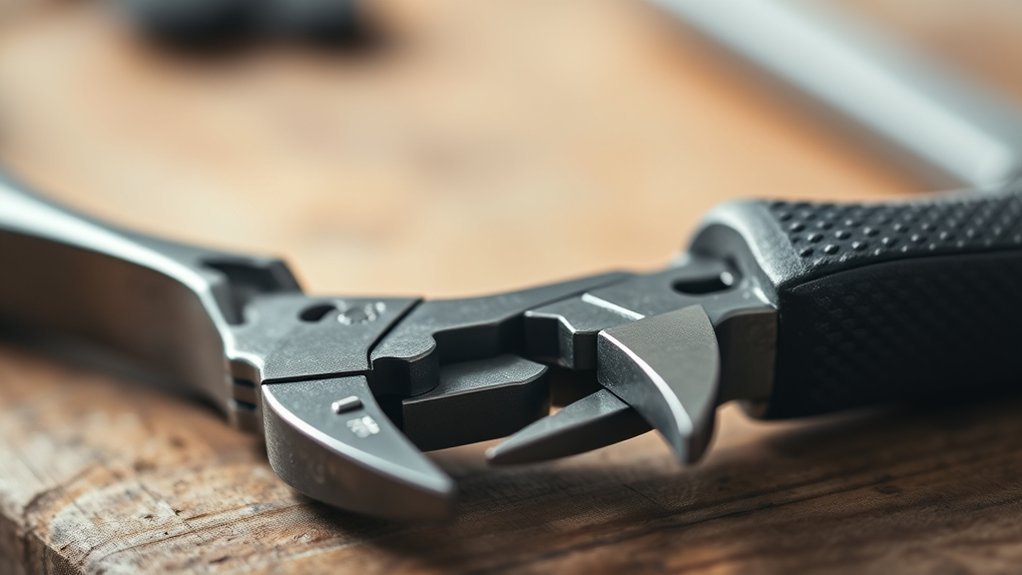
Although many tools feature two connected parts, pliers uniquely earn the designation “a pair” due to their specific design and functional interdependence. When you study pliers terminology and tool classification, you’ll see why only pliers get this label:
- Each half of the pliers can’t function independently; they work as a synchronized unit.
- The pivot point unites the two handles and jaws, emphasizing duality.
- The gripping action requires simultaneous movement of both parts.
- Historically, “pair” described tools with symmetrical, joined elements.
- Unlike scissors or tongs, pliers’ usage and mechanics are inseparable.
This combination of design and function distinguishes pliers in tool classification, making “a pair” an accurate and enduring term in pliers terminology.
Debunking Myths About “Pair of Pliers
You might think “pair of pliers” refers to two separate tools, but it actually points to the tool’s two connected handles. Understanding the term’s origin helps clear up this common misconception and explains why only pliers use “pair” in their name.
Let’s examine the facts behind these myths to clarify the true meaning.
Origin Of The Term
When you hear the term “pair of pliers,” you might assume it refers to two separate tools, but this isn’t the case. The term originates from pliers terminology that classifies it as a singular tool made of two joined parts. Understanding this in tool classification helps clear the confusion.
Here’s what you need to know about the origin of the term:
- The word “pair” reflects the two connected arms forming one functional unit.
- Historically, many tools with two joined components adopted the “pair” designation.
- Pliers evolved from pincers, which were also called “pairs” due to their dual-arm design.
- The term emphasizes the tool’s dual-action mechanism working in tandem.
- This terminology distinguishes pliers from single-component hand tools in classifications.
Common Misconceptions Explained
Misunderstandings around the phrase “pair of pliers” often stem from its misleading appearance, causing many to think it refers to two separate tools rather than one.
In tool terminology, “pair” traditionally denotes an object composed of two connected parts functioning as a single unit. Historically, many hand tools like scissors or tongs follow this naming convention, reflecting their dual-component design.
You might assume “pair” means two distinct tools, but in this situation, it highlights the pliers’ two handles joined by a pivot. Recognizing this historical situation clarifies why the term persists despite seeming counterintuitive.
Using Pliers: What Their Name Reveals About Their Function
Although pliers may seem like a simple tool, their name reveals essential insights into their design and function. The term “pair” highlights the dual components working in unison, which directly ties into pliers mechanics and tool ergonomics.
The word “pair” in pliers emphasizes their dual components working together for efficient function.
When you use pliers, you engage both handles simultaneously, amplifying your grip force efficiently. This dual-action design offers:
- Enhanced leverage for gripping, bending, or cutting
- Balanced force distribution to minimize hand strain
- Precise control over small or tough objects
- Improved safety by reducing slippage
- Adaptability across various tasks through interchangeable jaws
Understanding that pliers function as a paired mechanism helps you appreciate how their design optimizes power and control, making them indispensable for detailed mechanical work and everyday repairs.
Conclusion
You might think pliers are just one tool, but calling them a “pair” highlights their dual nature—two connected parts working as one. Unlike single-piece tools, their strength comes from this cooperative design, amplifying your grip through a pivot.
Understanding this contrast between singular and paired tools reveals why language captures their function so precisely. So next time you use pliers, remember: their name isn’t just tradition, it’s a reflection of their unique, joint action. This is exactly why pliers are called a pair.