If your zipper isn’t working smoothly, knowing how to fix a zipper with pliers can save you time and money. You don’t have to replace the entire zipper right away.
With a pair of pliers and a careful eye, you can address common issues like misaligned teeth or a loose slider. The key is to make precise adjustments without damaging the zipper components.
Before you reach for a new zipper, learn how to identify the problem and apply targeted fixes. This approach helps restore function quickly and efficiently.
How to Identify the Problem With Your Zipper
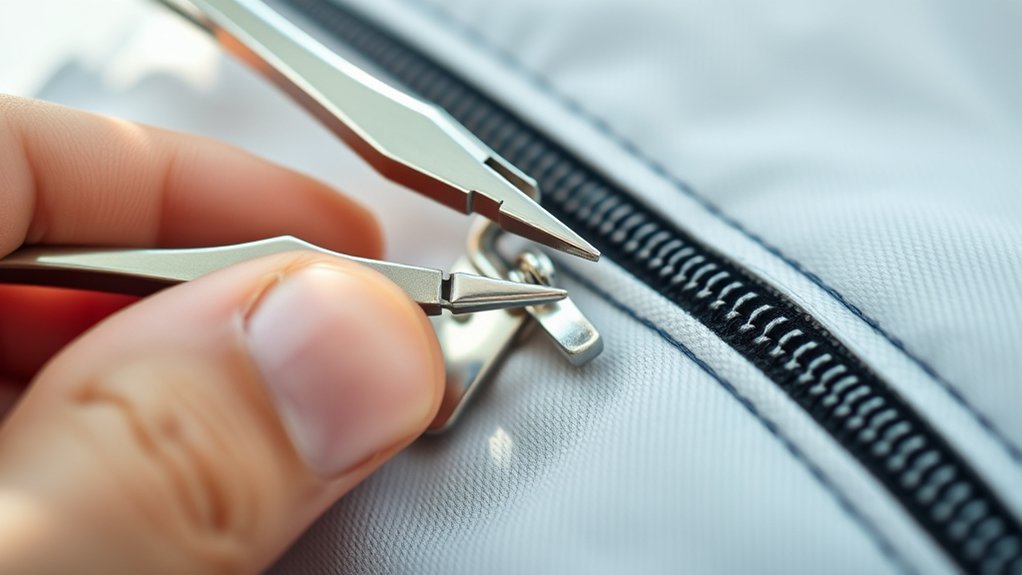
How do you pinpoint what’s wrong with your zipper? Start by examining the zipper teeth for misalignment, missing parts, or debris. These are common zipper issues that cause snagging or jamming.
Next, test the slider: if it’s loose or doesn’t glide smoothly, the problem often lies there. Check if the slider has separated the teeth properly when zipped.
Test the slider for smooth movement and proper teeth separation to identify zipper issues.
Look for a broken or missing pull tab, which can hinder operation. Also, inspect the stopper at the top and bottom; damaged stoppers can cause the slider to come off track.
Identifying the exact fault lets you apply the right zipper repair techniques, like realigning teeth or tightening the slider with pliers. Being methodical here saves time and guarantees effective fixes.
Tools You’ll Need Besides Pliers for Zipper Repair
Once you’ve identified issues like misaligned teeth or a loose slider, gathering the right tools beyond pliers can make repairs more efficient and durable. Besides pliers, you’ll want specific zipper repair tools and alternative tools that address common zipper problems precisely.
| Tool | Purpose |
|---|---|
| Needle and Thread | Reinforce fabric around zipper |
| Replacement Slider | Swap out damaged sliders |
| Tweezers | Remove stuck debris or fabric |
| Sewing Scissors | Trim loose threads or fabric |
| Lubricant (e.g., wax) | Smooth zipper movement |
Using these zipper repair tools alongside pliers guarantees a thorough fix. Alternative tools like tweezers and lubricants tackle minor snags, while sewing items help secure the zipper’s base. Having this kit ready streamlines your zipper repair process effectively.
How to Realign Misaligned Zipper Teeth With Pliers
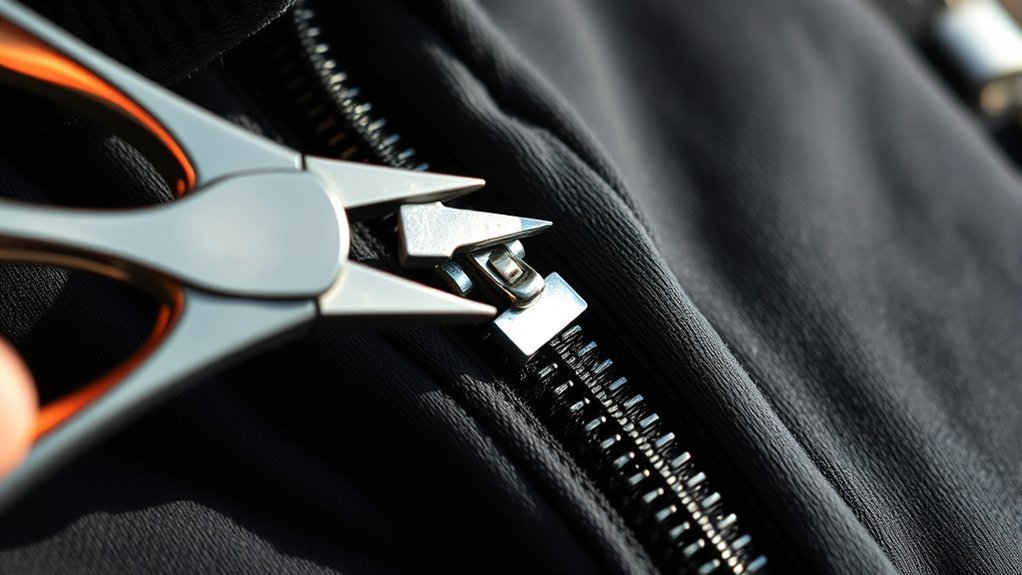
First, locate the misaligned zipper teeth by carefully inspecting the zipper line. Then, use your pliers to gently bend the teeth back into their proper position without applying too much pressure.
This precise adjustment helps restore smooth zipper function and prevents further damage.
Identify Misaligned Teeth
Misaligned zipper teeth can prevent your zipper from closing properly, but you can often fix this issue with a pair of pliers. First, examine the zipper closely, whether it’s a coil, metal, or plastic molded type. Look for teeth that are bent, twisted, or unevenly spaced.
Common issues include teeth that don’t interlock or gaps where the slider won’t catch. Run your fingers along both sides to feel for irregularities. Use good lighting or a magnifying glass to spot subtle misalignments.
Identifying these specific problem teeth is vital before attempting any adjustments. Once you pinpoint the misaligned teeth, you’ll know exactly where to apply gentle pressure with the pliers to realign them, ensuring smooth zipper operation.
Gently Adjust Teeth Alignment
Grab a pair of needle-nose pliers to carefully realign the zipper teeth you identified earlier. Pinch each misaligned tooth gently, applying slight pressure to nudge it back into the correct position. Avoid squeezing too hard to prevent damaging the teeth or fabric.
Work systematically, adjusting one tooth at a time, moving along the zipper’s length. After each teeth adjustment, check the zipper slider’s movement to guarantee smooth operation. If the teeth remain stubborn, slightly widen or narrow their alignment with subtle plier movements.
Consistent, precise teeth adjustment is crucial for effective zipper maintenance and prolongs the zipper’s lifespan. Once aligned, test the zipper fully to confirm it closes without snagging. Proper realignment guarantees your zipper works reliably without requiring frequent repairs.
How to Tighten a Loose Zipper Slider With Pliers
If your zipper slider feels loose and fails to close the teeth properly, tightening it with pliers can restore its grip. First, locate the slider on the zipper chain.
Use needle-nose pliers to gently squeeze the slider’s sides closer together; this will tighten the slider and improve its hold on the teeth. Apply even pressure, avoiding excessive force that might damage the slider.
After tightening, test the zipper by moving the slider up and down to verify it closes the teeth securely. This simple step is essential for effective zipper maintenance, preventing further wear or splitting.
Regularly check and tighten the slider as needed to keep your zipper functioning smoothly and extend its lifespan.
How to Reattach a Detached Zipper Pull Tab With Pliers
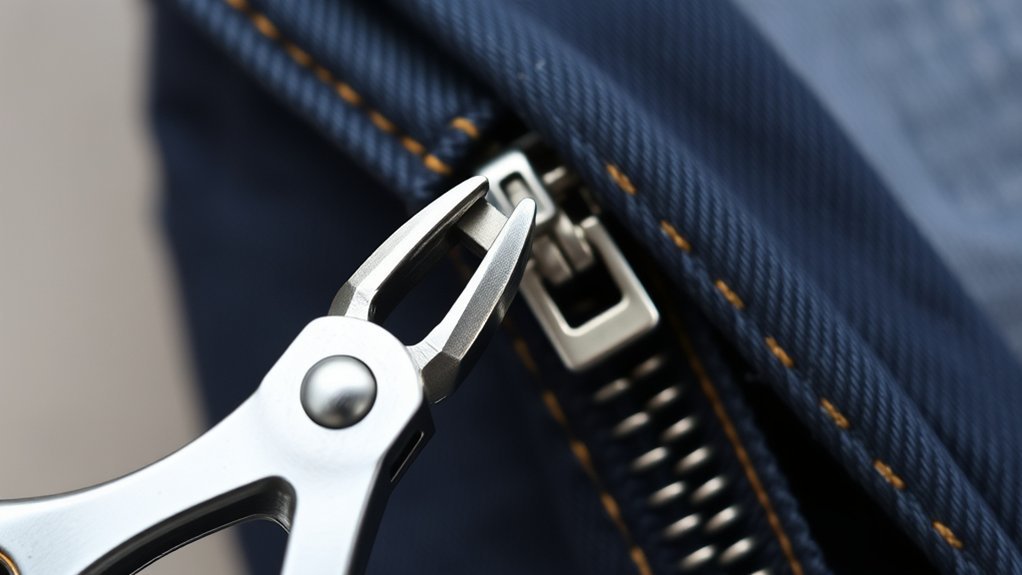
First, examine the pull tab to check for any cracks or bends that could affect its function. Next, align the tab with the slider carefully to guarantee a proper fit.
Finally, use pliers to firmly press the tab back onto the slider, securing it without applying excessive force.
Assess Pull Tab Damage
A detached zipper pull tab can make your zipper difficult to operate, but reattaching it is straightforward with a pair of pliers. Begin by closely inspecting the pull tab for any visible damage. Perform a thorough damage assessment, checking for bends, cracks, or breaks that might affect its functionality.
Examine the hole or loop where the tab connects to the zipper slider; it should be intact and not excessively worn. If the pull tab is severely damaged or deformed, reattachment might not hold, and replacement could be necessary. Also, verify that the slider’s attachment point is undamaged to guarantee a secure reattachment.
A precise damage assessment at this stage will save you time and prevent further zipper issues down the line.
Secure Tab With Pliers
Two small tools, a pair of needle-nose pliers and steady hands, are all you need to securely reattach a detached zipper pull tab. First, align the pull tab with the zipper slider’s hole carefully. Position the tab so it sits flush without twisting.
Then, use the pliers to grasp the base of the tab firmly, ensuring a strong pliers grip. Apply steady pressure to close the opening on the tab’s end, locking it tightly onto the slider. Avoid squeezing too hard to prevent bending or breaking the metal.
Once the tab is snug, gently test the secure zipper by moving the pull up and down a few times. If it holds without slipping off, you’ve successfully restored the pull tab’s function using just your pliers.
Removing a Stuck Zipper Stop With Pliers
Before you can free a stuck zipper, you’ll need to carefully remove the zipper stop using a pair of pliers. Locate the metal or plastic stopper at the zipper’s end that prevents the slider from coming off.
Grip the stopper firmly with needle-nose pliers, applying gentle pressure to avoid damaging the fabric or zipper teeth. Slowly wiggle the stopper back and forth until it loosens and can be pulled off.
Removing this stop is an essential step in zipper maintenance, as it allows you to address jams or replace faulty parts. Once the stop is removed, you can work on freeing the stuck zipper without obstruction.
Removing the zipper stop is crucial for fixing jams or replacing parts without obstruction.
Remember to keep the removed stop safe for reattachment after you complete your zipper repairs.
How to Repair Zipper Teeth That Don’t Close With Pliers
If zipper teeth don’t close properly, you can often fix the issue by realigning them with pliers. First, identify the misaligned or bent teeth causing the problem, a common zipper issue.
Gently grip the affected teeth with needle-nose pliers and carefully squeeze them back into alignment, ensuring they mesh smoothly when zipped. Avoid applying excessive force to prevent further damage.
After realigning, test the zipper several times to confirm the teeth close evenly. Incorporate these zipper maintenance tips regularly to prevent tooth misalignment: keep the zipper clean and free of debris, and avoid forcing it when stuck.
Addressing misaligned teeth promptly with pliers can extend your zipper’s lifespan and save you from more extensive repairs later.
When to Replace Zipper Parts Instead of Repairing Them
Although minor zipper issues can often be fixed with simple repairs, you should replace parts when damage prevents smooth operation or threatens the zipper’s integrity. Knowing when to replace is vital for effective zipper replacement.
For instance, if the slider is bent, missing teeth, or the fabric tape is torn beyond repair, fix attempts won’t hold. Also, if the zipper frequently gets stuck or the teeth misalign repeatedly, replacement is a better solution.
Instead of wasting time on temporary fixes, assess the damage carefully. Replace the slider, pull tab, or the entire zipper if necessary to restore full function.
Prioritize durable zipper replacement to avoid recurring problems and maintain the garment’s usability. Accurate judgment on when to replace saves effort and guarantees lasting results.
Tips to Prevent Future Zipper Problems
To keep your zipper working smoothly, you should regularly clean and lubricate it to prevent dirt buildup and reduce friction. Use a soft brush to remove debris and apply a zipper lubricant or a small amount of beeswax along the teeth.
For effective zipper care, avoid forcing the zipper if it gets stuck. Gently wiggle it instead. Always align the zipper teeth properly before zipping to prevent misalignment.
When washing garments, close zippers to protect teeth from snagging. Store items with zippers in a way that prevents bending or pressure on the zipper area.
These maintenance tips will extend your zipper’s lifespan and reduce the need for repairs. Consistent attention to zipper care helps you avoid common problems, keeping your zippers functional and reliable.
Conclusion
Now that you know how to use pliers to fix your zipper, you can handle common issues like misaligned teeth or a loose slider with confidence.
For example, imagine your jacket zipper stuck halfway—by carefully squeezing the slider sides with needle-nose pliers, you restore smooth movement without replacing parts.
With these precise fixes, you’ll save time and avoid costly replacements while keeping your zippers working reliably.
Just remember to test after each adjustment to ensure everything functions properly. Using pliers to fix a zipper is a simple skill that can extend the life of your clothing and gear.