Did you know that over 580 million people speak Spanish worldwide, yet the word for “pliers” in Spanish varies greatly across regions?
If you’re looking to buy or discuss this common tool, knowing the right term can make a big difference.
You might expect a single translation for pliers, but the reality is more complex.
Understanding these nuances will help you communicate more effectively in any Spanish-speaking context.
How Do You Say “Pliers” in Spanish?
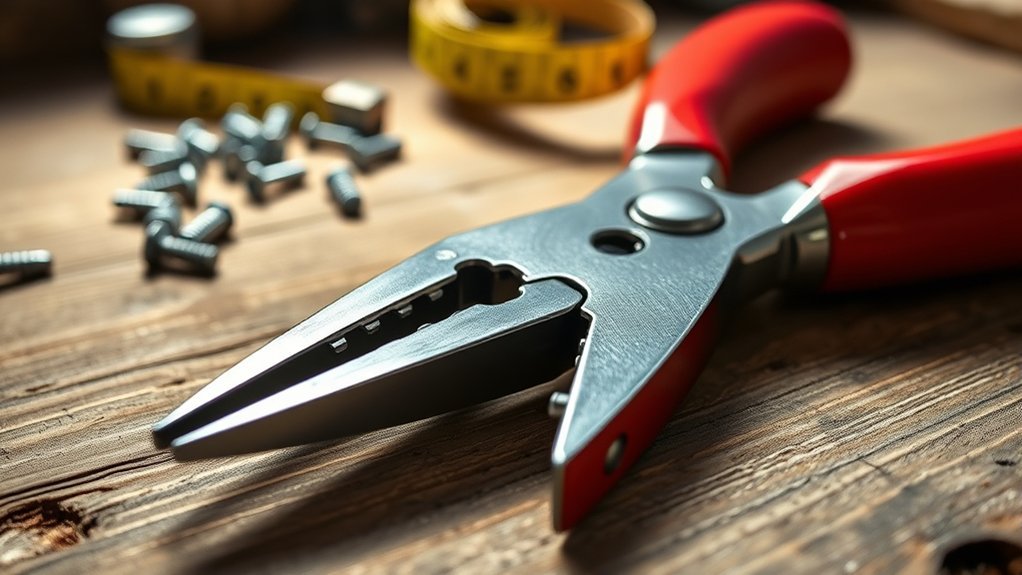
When you need to refer to “pliers” in Spanish, the most common term you’ll use is “alicates.” This word specifically denotes the hand tool used for gripping, bending, or cutting.
In Spanish vocabulary related to tools, “alicates” is vital for clear communication, especially in technical or mechanical contexts. Understanding this key term guarantees you accurately convey tool terminology when discussing repairs, construction, or DIY projects in Spanish.
While regional variations might exist, “alicates” remains the standard and widely recognized term across Spanish-speaking countries. By integrating this vocabulary precisely, you demonstrate a solid grasp of tool-related language, which is important for professional or educational exchanges involving hand tools like pliers.
What Types of Pliers Are There and How Do You Say Them in Spanish?
Knowing the general term “alicates” helps you identify pliers in Spanish, but it’s equally important to recognize the various types you might encounter. Common types of pliers include “alicates de punta” (needle-nose pliers), “alicates de corte” (cutting pliers), and “alicates universales” (combination pliers).
Each type serves a specific function, so using the correct phrase for tools is crucial for clear communication. For example, “alicates de presión” refers to locking pliers, and “alicates de presión ajustable” means adjustable locking pliers.
Familiarizing yourself with these types of pliers allows you to accurately describe tools in Spanish, whether you’re shopping, repairing, or discussing hardware. Mastering precise phrases for tools guarantees you convey your needs effectively and understand instructions without confusion.
What Regional Variations Exist for “Pliers” in Spanish?
Regional differences play a significant role in how the term for “pliers” varies across Spanish-speaking countries. Understanding these vocabulary differences helps you communicate more effectively within diverse regional dialects. Here are three notable variations:
- Alicates – Commonly used in Spain, this term is widely recognized and understood.
- Pinzas – Mainly used in Latin American countries such as Mexico and Argentina, emphasizing the gripping function.
- Tenazas – Found in parts of Central America and the Caribbean, this word also describes heavier or larger pliers.
How Do You Pronounce “Pliers” in Spanish Correctly?
Although the pronunciation of “pliers” in Spanish varies depending on the term used: alicates, pinzas, or tenazas, mastering the correct pronunciation is crucial for clear communication. To help you, focus on Spanish phonetics, emphasizing syllable stress and vowel clarity.
Here are pronunciation tips for each term:
| Term | Syllables | Pronunciation Guide |
|---|---|---|
| Alicates | A-li-ca-tes | ah-lee-KAH-tes |
| Pinzas | Pin-zas | PEEN-thas (Spain) / PEEN-sas (Latin America) |
| Tenazas | Te-na-zas | teh-NAH-thas (Spain) / teh-NAH-sas (Latin America) |
Practice stressing the capitalized syllable and use clear vowel sounds to guarantee you pronounce “pliers” correctly in Spanish.
How Do You Ask for Pliers in a Hardware Store in Spanish?
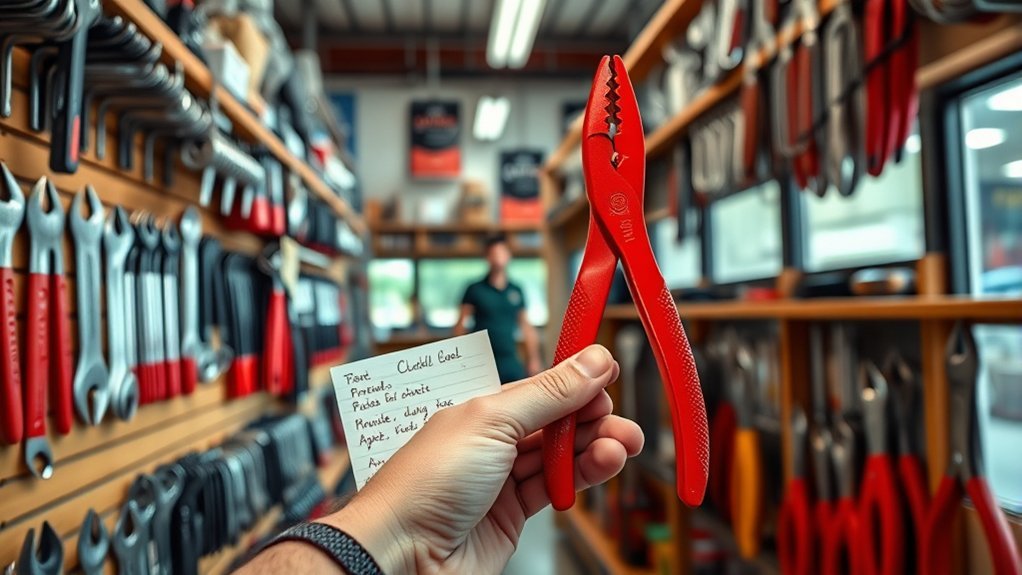
When you need to ask for pliers in a hardware store in Spanish, it’s important to use clear and polite phrases to guarantee the staff understands you. Mastering the right hardware vocabulary and asking directions effectively will make your request smooth.
Here are three useful examples:
- ¿Dónde puedo encontrar las pinzas? (Where can I find the pliers?)
- ¿Tiene pinzas para trabajos eléctricos? (Do you have pliers for electrical work?)
- Estoy buscando pinzas, ¿me puede ayudar? (I’m looking for pliers, can you help me?)
Using these phrases helps you communicate your needs precisely and politely. Incorporate hardware vocabulary accurately while asking directions to navigate the store efficiently and obtain the right tool.
How Do You Use “Pliers” in Everyday Spanish Sentences?
Now that you know how to ask for pliers in a hardware store, you can start using the word “pinzas” in everyday Spanish sentences. Understanding pliers usage helps you communicate effectively when discussing tools or repairs.
For example, you might say, “Necesito unas pinzas para sujetar este cable” (I need pliers to hold this cable). Another practical pliers example is, “Usa las pinzas para cortar el alambre” (Use the pliers to cut the wire).
By incorporating such sentences, you demonstrate clear knowledge of the term in context. Remember, precision in pliers usage guarantees your message is understood, especially in technical or DIY situations.
Practice these pliers examples to enhance your Spanish fluency related to tools and hardware tasks efficiently.
What Common Phrases and Idioms Use “Pliers” in Spanish?
You’ll find that pliers appear in several Spanish idiomatic expressions conveying strength or control. Some common sayings use pliers metaphorically to describe tough situations or holding on firmly.
Additionally, regional variations may influence how these phrases are used across Spanish-speaking areas.
Idiomatic Expressions With Pliers
Although pliers are primarily known as a practical tool, they also feature in several Spanish idiomatic expressions that convey specific meanings beyond their literal use. Understanding these idiomatic expressions enriches your grasp of tool terminology and everyday language.
Here are three common examples:
- “Estar entre la espada y las pinzas” Similar to “between a rock and a hard place,” it refers to being caught in a difficult situation.
- “Tener mano de pinza” Describes someone with a firm grip or control over a matter.
- “Sacar las pinzas” Means to intervene decisively or take control of a challenging scenario.
Common Pliers-Related Sayings
When you explore common sayings involving pliers in Spanish, you’ll find that these expressions often reflect practical wisdom or vivid imagery related to control, pressure, and difficult choices. Pliers usage in idioms typically symbolizes the need to grasp or manage challenging situations firmly.
For example, phrases like “estar entre la espada y las pinzas” (to be between the sword and the pliers) highlight a dilemma where you face tough decisions, emphasizing the cultural significance of pliers as tools representing constraint and pressure.
Understanding these sayings enriches your comprehension of how everyday objects like pliers convey deeper meanings in Spanish-speaking cultures. By recognizing these expressions, you gain insight into the nuanced ways language captures human experience through practical tools.
Regional Uses Of Pliers
Since regional variations shape language deeply, understanding how pliers appear in local Spanish idioms reveals cultural nuances you might otherwise miss. Pliers, as essential regional tools, often symbolize control, precision, or constraint in various expressions. Recognizing these cultural variations enhances your grasp of Spanish’s rich linguistic landscape.
- In Mexico, the phrase “tener al enemigo con las pinzas” means to keep an adversary tightly controlled, reflecting the gripping function of pliers.
- In some parts of Spain, “trabajar con pinzas” implies handling a delicate situation carefully, akin to maneuvering with precision tools.
- In Argentina, “quedarse sin pinzas” suggests losing one’s ability to manage or fix problems, metaphorically referencing the loss of essential tools.
How Can You Remember and Practice the Spanish Word for “Pliers”?
You can strengthen your recall of the Spanish word for “pliers” by using visual memory techniques, such as associating the image of pliers with the word “alicates.”
Make it a habit to practice the term daily within your vocabulary exercises. Additionally, try incorporating “alicates” into contextual sentences to enhance your understanding and retention.
Visual Memory Techniques
Visual memory techniques greatly enhance your ability to recall the Spanish word for “pliers,” which is “alicates.” Associating the word with a vivid mental image of the tool itself or a scenario where you frequently use pliers helps solidify the vocabulary in your mind.
Visual learning taps into your brain’s natural preference for images, making memory techniques highly effective.
Try these approaches:
- Picture a pair of “alicates” gripping a wire, emphasizing the word’s function.
- Create a mental scene of yourself using “alicates” during a home repair.
- Draw or find an image labeled “alicates” and study it regularly to reinforce recognition.
Daily Vocabulary Practice
Although consistently practicing new vocabulary can be challenging, incorporating the Spanish word for “pliers,” alicates, into your daily routine greatly improves retention. To enhance your language learning, allocate specific time each day to review and use alicates alongside other daily vocabulary.
Repetition is critical; write the word, say it aloud, and mentally associate it with the object. You can also label your tools or workspace with the word alicates to reinforce memory through visual cues.
Utilize flashcards or language apps that focus on daily vocabulary practice to maintain consistent exposure. By embedding alicates into your regular study habits, you guarantee steady progress and solidify your grasp of practical terms, which is essential for effective language acquisition.
Contextual Sentence Usage
Incorporating the word alicates into meaningful sentences helps you remember and apply it effectively. To enhance your pliers usage, focus on crafting sentence examples that reflect real-life scenarios. This approach solidifies your understanding and improves recall.
Here are three practical methods:
- Write sentences describing tasks involving pliers, such as “Uso los alicates para apretar la tuerca” (I use the pliers to tighten the nut).
- Practice dialogues that include requests or instructions involving pliers, e.g., “¿Me pasas los alicates, por favor?” (Can you pass me the pliers, please?).
- Create flashcards featuring sentence examples to test and reinforce your knowledge regularly.
Conclusion
Now that you know “alicates,” “pinzas,” and “tenazas” all mean pliers in Spanish, you might worry about mixing them up. Don’t—each term fits different regions, so you’ll sound natural wherever you are.
Learning these variations not only improves your vocabulary but also helps you connect better with Spanish speakers. Keep practicing the pronunciations and phrases.
You’ll confidently ask for pliers in any Spanish-speaking hardware store, mastering how to say pliers in Spanish with ease.