Using pliers is like steering a ship through narrow channels—you need steady hands and the right tools to navigate safely. When you pick up a pair of pliers, your grip and wrist positioning immediately affect how well you control the tool.
Mastering these basics can save you from common mistakes and improve your work’s precision.
Before you start bending, gripping, or cutting, it’s important to understand the nuances that make pliers more than just a simple hand tool.
Hold Pliers for Better Control and Safety
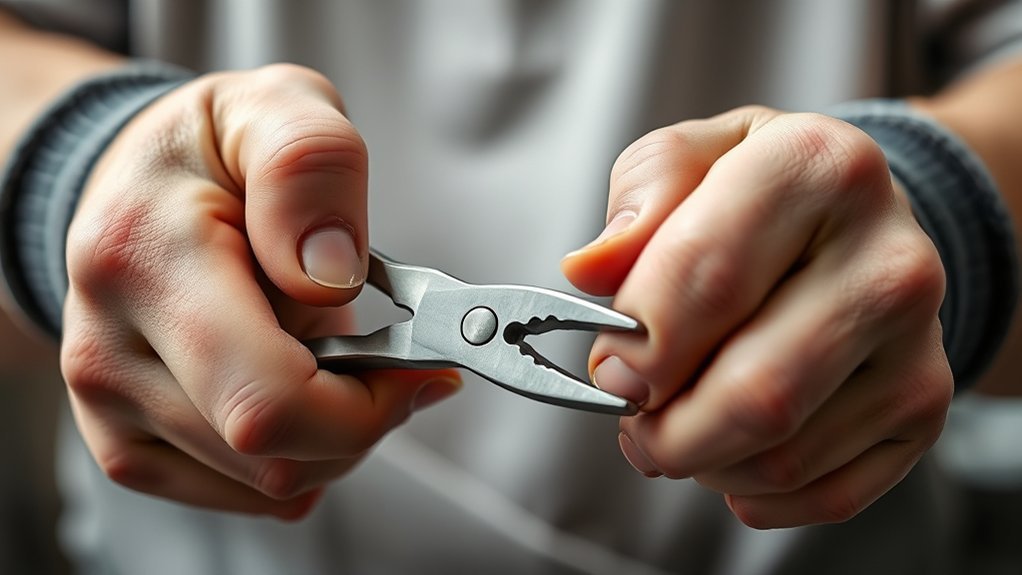
To hold pliers for better control and safety, grip the handles firmly but without excessive force to maintain dexterity. Proper hand positioning is essential; place your dominant hand around the handles so your thumb and fingers wrap evenly, allowing balanced pressure.
Avoid holding the pliers too close to the pivot point, as this reduces leverage and control. When you position your hand correctly, you minimize strain and enhance precision.
As a safety tip, make sure your wrist stays straight to prevent fatigue and injury during use. Also, keep your fingers away from the jaws to avoid pinching. By following these safety tips and maintaining proper hand positioning, you’ll handle pliers more effectively, reducing the risk of accidents and improving your overall efficiency.
Grip and Bend Materials With Pliers: Step-By-Step
To grip and bend materials effectively, start by selecting the right type of pliers for your task, such as needle-nose or slip-joint. Next, position your hand to maintain a firm but controlled grip, ensuring the jaws align properly with the material.
These steps will help you apply the necessary force without damaging the tool or the workpiece.
Choosing The Right Pliers
Although pliers may look similar, selecting the right type is crucial for effectively gripping and bending different materials. Start by identifying the plier types best suited to your task. Needle-nose pliers excel at precision work, while slip-joint pliers offer adjustable jaws for varied sizes.
Consider material selection carefully; softer metals require pliers with smooth jaws to prevent marring, whereas hardened materials demand serrated jaws for a secure grip. In addition, diagonal cutting pliers are ideal if you need to trim wire as part of your work.
Matching the plier type to the material guarantees you apply the right force without damaging either the tool or the workpiece. By choosing appropriately, you’ll improve both efficiency and accuracy in your gripping and bending tasks.
Proper Grip Techniques
Selecting the right pliers sets you up for success, but mastering your grip technique guarantees you apply force effectively without slipping or damaging the material.
Start by positioning your fingers carefully: place your thumb on one handle and your index and middle fingers on the other for balanced control. Adjust finger placement as needed for comfort and leverage.
Apply steady grip pressure, enough to hold the material firmly but not so much that you risk crushing or deforming it. Avoid gripping too tightly, which fatigues your hand and reduces precision.
Maintain a firm, controlled hold throughout the task, allowing the pliers to do the work rather than forcing them. Proper grip techniques secure both safety and efficiency when bending or gripping materials.
Cut Wires and Small Objects With Pliers
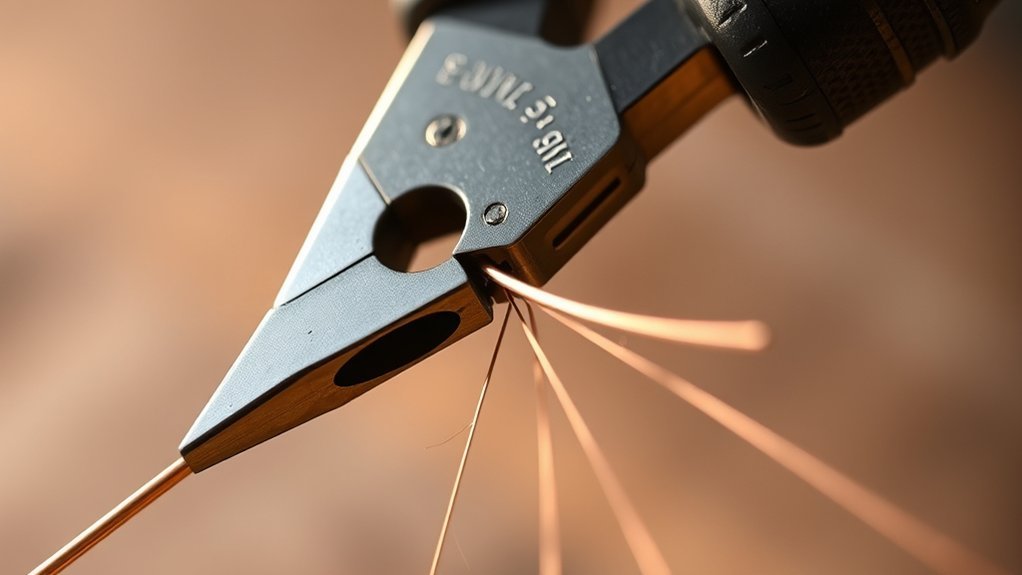
To cut wires and small objects effectively, you need to choose pliers designed with sharp cutting edges, like diagonal or wire cutters. Position the material close to the pivot for maximum leverage and apply steady pressure to make a clean cut.
Always guarantee your cutting technique matches the pliers’ design to avoid damaging the tool or the workpiece.
Choosing The Right Pliers
How do you determine which pliers are best for cutting wires and small objects? Start by understanding different plier types and choosing materials suited for your task. You want pliers with sharp, durable cutting edges and comfortable grips.
Here’s a quick guide:
| Pliers Type | Best For | Material |
|---|---|---|
| Diagonal Cutters | Cutting wires and pins | Hardened steel |
| Needle-nose | Precision cutting/gripping | Chrome vanadium steel |
| Lineman’s | Heavy-duty cutting | Forged alloy steel |
| Wire Strippers | Stripping and cutting | Steel with insulated grips |
| End-cutters | Flush cutting | High carbon steel |
Choose pliers based on wire thickness and material hardness to guarantee clean cuts and tool longevity.
Proper Cutting Techniques
When you cut wires or small objects with pliers, applying steady pressure and positioning the cutting edges correctly are essential for a clean cut. First, identify the material type. Harder metals require sharper, more robust cutting edges.
Align the wire or object at the best cutting angle, usually perpendicular to the blades, to minimize bending or fraying. Avoid cutting at shallow angles, which can damage both the tool and the material.
Use the pliers’ cutting edge closest to the pivot for maximum leverage and efficiency. For tougher materials, make smooth, deliberate cuts rather than forcing the tool, which risks dulling the blades.
Regularly inspect your pliers for wear and sharpen them as needed to maintain clean, precise cuts across various material types.
Types of Pliers and What They’re For
Although pliers may look similar at first glance, each type serves a specific purpose that can make your work more efficient and precise. Understanding the main types helps you apply the right tool quickly.
- Needle nose pliers are perfect for gripping small objects or reaching tight spaces. Their long, slender jaws give you excellent control and precision.
- Locking pliers clamp firmly onto objects, freeing your hands and providing a secure grip for turning or twisting tasks.
- Slip-joint pliers offer adjustable jaw sizes, making them versatile for gripping various shapes and sizes.
Choose the Right Pliers for Your Project
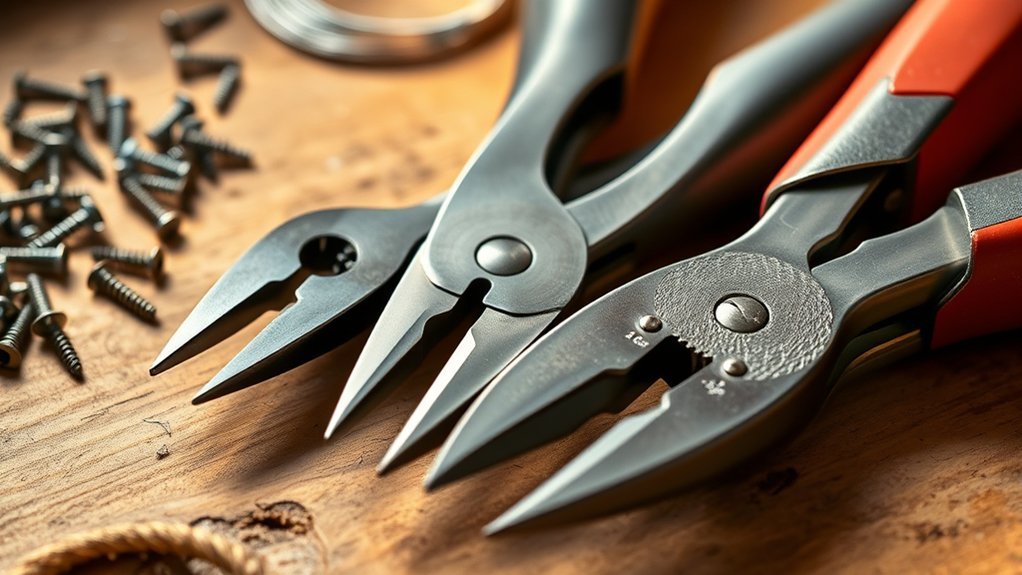
Since each type of pliers serves a specific function, you’ll want to match the tool to your project’s requirements. Start by identifying the task: gripping, cutting, bending, or twisting, and choose pliers designed for that purpose.
Consider pliers materials; high-quality steel with ergonomic handles guarantees durability and comfort during use. For electrical work, insulated pliers offer safety, while needle-nose pliers excel in tight spaces.
Slip-joint pliers provide adjustable grip sizes, suitable for general tasks. Always assess project suitability by matching pliers’ jaw shape and size to the components you’re working with.
Using the right pliers reduces effort and prevents damage to materials or the tool itself. Selecting pliers thoughtfully enhances precision and safety throughout your project.
How to Keep Your Pliers Clean and Working Well
To keep your pliers functioning smoothly, you need to clean them regularly and lubricate the moving parts. Proper cleaning techniques and maintenance tips will extend their lifespan and improve performance. Follow these steps:
- Wipe down your pliers after each use with a clean cloth to remove dirt, grease, and debris.
- Use a small brush or toothbrush to clean hard-to-reach areas, especially around the pivot joint.
- Apply a light machine oil or lubricant to the pivot and moving parts to prevent rust and maintain smooth operation.
Perform this routine consistently to avoid buildup and corrosion. Store your pliers in a dry place to further protect them. By applying these cleaning techniques and maintenance tips, you’ll keep your pliers in top working condition for any project.
Mistakes to Avoid When Using Pliers
Keeping your pliers clean and well-lubricated helps maintain their performance, but using them incorrectly can still cause damage or injury. To avoid common plier mistakes, never use them as a hammer or pry bar, as this stresses the tool and can damage materials.
Avoid applying excessive force, which can slip and injure you or ruin the workpiece. Also, don’t use pliers on hardened materials that require specialized tools.
| Mistake | Consequence | How to Avoid |
|---|---|---|
| Using as hammer/pry bar | Tool damage, injury | Use appropriate tools |
| Excessive force | Slippage, material damage | Apply correct grip pressure |
| Wrong material use | Tool wear, inefficiency | Match pliers to material type |
Follow these guidelines to use pliers safely and effectively without damaging materials.
Conclusion
So, now you’re practically a plier pro—just remember, it’s not rocket science, it’s just metal and muscle. Grip those handles like your DIY sanity depends on it, keep your wrist straight unless you enjoy pain, and don’t let your fingers play hide-and-seek near the jaws.
Pick the right pliers, maintain them like a prized pet, and avoid rookie mistakes. Follow these tips, and you’ll cut, bend, and grip like a champ—no superhero cape required.
With these basics down, mastering how to use pliers will become second nature in no time.