Just as a scalpel is essential for a surgeon, choosing the right pliers is vital when cutting metal. Knowing what pliers cut metal effectively can make all the difference in your project.
You’ll find that not all pliers handle metal the same way—some excel at slicing wire, while others grip and trim sheet metal with precision.
Understanding their differences will help you avoid damaging tools or your project.
Let’s explore which types are best suited for various metal-cutting tasks and why.
How to Choose Pliers for Cutting Metal Safely
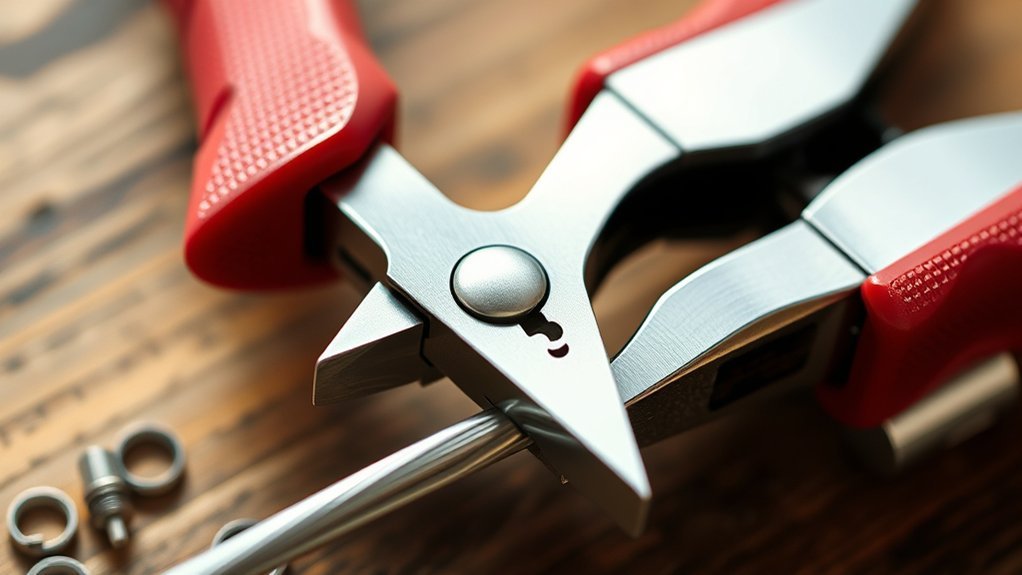
When selecting pliers for cutting metal, you need to take into account the material’s hardness and thickness to confirm the tool can handle the task without damage. Assess the metal’s material thickness carefully, as exceeding the pliers’ capacity can cause blade deformation or breakage.
Apply appropriate cutting techniques, such as positioning the metal close to the pivot point for maximum leverage and clean cuts. Verify the pliers’ cutting edges are hardened and sharp to reduce the effort and risk of slipping.
You should also consider the tool’s ergonomic design to maintain control and minimize hand fatigue during repetitive cuts. By systematically evaluating these factors, you can choose pliers that maintain structural integrity, confirm safety, and deliver precise, efficient cuts tailored to your metalworking requirements.
Types of Pliers That Cut Metal: Wire Cutters, Combination, and Diagonal
Selecting the right pliers involves understanding the specific cutting capabilities of wire cutters, combination pliers, and diagonal pliers. Each type employs distinct cutting techniques optimized by their design and plier materials. Here’s what you need to know:
- Wire Cutters: Specialized for cleanly slicing through soft to medium-hard wires using sharp, hardened steel blades that maximize precision.
- Combination Pliers: Versatile tools that combine gripping and cutting functions, relying on robust, forged steel for moderate cutting tasks.
- Diagonal Pliers: Designed with angled jaws to apply shearing forces efficiently, ideal for cutting close to surfaces with hardened steel edges.
Why Wire Cutters Are Ideal for Cutting Metal
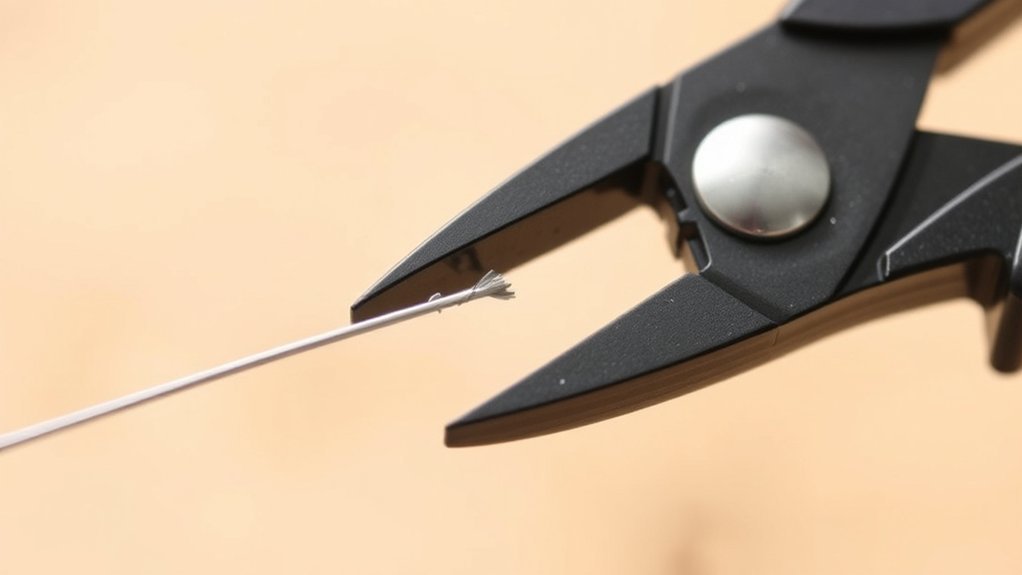
You’ll find wire cutters excel at cutting metal due to their precision cutting edges, which deliver clean, accurate cuts. Their hardened steel jaws resist wear and maintain sharpness for consistent performance.
Plus, the ergonomic handle design reduces hand fatigue, allowing you to apply controlled force efficiently.
Precision Cutting Edges
Because wire cutters feature finely honed, precision cutting edges, they excel at slicing through metal with minimal deformation. This precision design guarantees cutting accuracy, allowing you to make clean, controlled cuts every time.
The sharp edges align perfectly, reducing material stress and preventing jagged edges. Here’s why precision cutting edges matter:
- Enhanced Cutting Accuracy – You get exact cuts without damaging surrounding metal.
- Reduced Material Deformation – The edges minimize bending or crushing during cutting.
- Consistent Performance – Precision edges maintain sharpness longer, guaranteeing reliable results.
When you rely on these cutters, you leverage engineering that prioritizes fine tolerances and edge geometry, essential for efficient metal cutting. This technical advantage makes wire cutters indispensable for tasks demanding precision and clean results.
Hardened Steel Jaws
The precision cutting edges of wire cutters rely heavily on the strength and durability of hardened steel jaws to perform effectively. When you use wire cutters, you benefit from jaws engineered for maximum jaw durability, enabling clean cuts through tough metal without deformation.
Hardened steel resists wear and maintains sharpness, ensuring consistent performance over time. Here’s a concise comparison:
| Property | Hardened Steel Jaws | Regular Steel Jaws | Soft Metal Jaws |
|---|---|---|---|
| Jaw Durability | High | Medium | Low |
| Cutting Precision | Precise | Moderate | Poor |
| Wear Resistance | Excellent | Fair | Low |
Ergonomic Handle Design
While cutting through tough metal demands strength, the ergonomic handle design of wire cutters markedly reduces user fatigue and enhances control. You’ll notice the ergonomic benefits immediately, especially during extended use.
The choice of handle materials plays an essential role, combining durability with comfort to optimize grip and reduce slippage. Consider these three key aspects:
- Shock Absorption: Soft, non-slip handle materials absorb impact, minimizing strain on your hands.
- Shape and Contour: Ergonomically contoured handles conform to your hand’s natural shape, improving leverage.
- Weight Distribution: Balanced handle weight reduces effort, allowing precise cutting without excessive force.
When to Use Combination Pliers for Metal Cutting
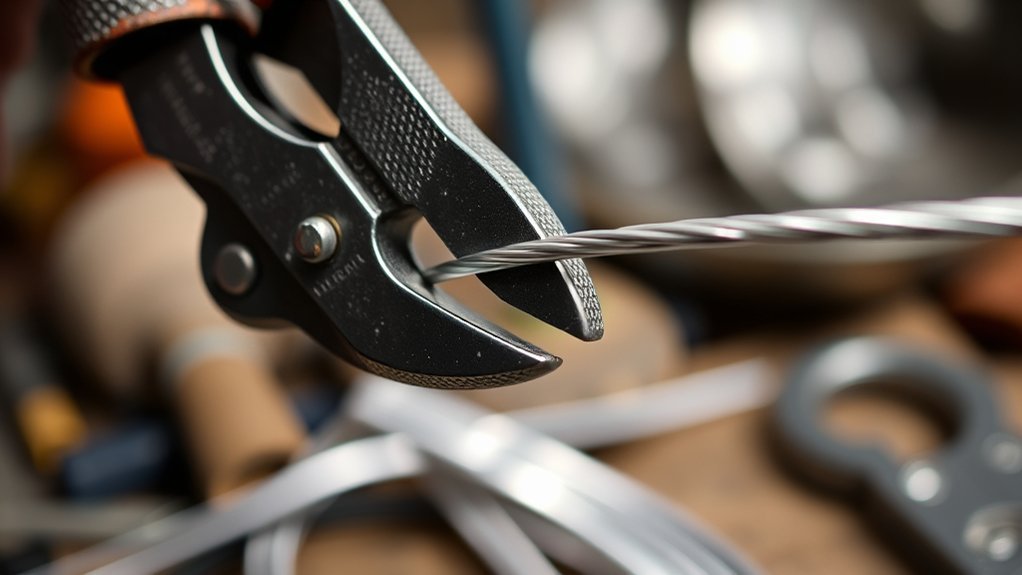
You should use combination pliers for cutting softer metals like copper or aluminum within their specified capacity limits to avoid damaging the tool. Always verify the thickness of the metal to ascertain it falls within the pliers’ cutting range.
Additionally, follow safety precautions such as wearing protective gloves and eye protection to prevent injuries during cutting.
Ideal Metal Types
When should you reach for combination pliers to cut metal? Focus on the metal thickness and the cutting techniques required. Combination pliers excel with thinner, softer metals where precision is key.
Consider these ideal metal types:
- Copper wires – Their softness and moderate thickness make them perfect for combination pliers.
- Aluminum sheets – Thin gauges can be trimmed efficiently without damaging the tool.
- Steel wires – Low-carbon steel wires with smaller diameters suit these pliers when you need a clean cut.
Using combination pliers outside these parameters risks tool damage or imprecise cuts. Always match your cutting techniques to the metal’s hardness and thickness to guarantee peak performance and tool longevity.
Cutting Capacity Limits
Combination pliers handle cutting tasks best within specific metal thickness and hardness parameters established by their design. When you evaluate their cutting strength, you should recognize that these pliers excel at slicing through soft to moderately hard metals up to approximately 1.5 to 2 millimeters thick.
Exceeding this metal thickness compromises the tool’s efficiency and may damage the cutting edges. You need to take into account the alloy composition and tempering of the metal, as harder metals require greater cutting force beyond typical combination pliers’ capacity.
For dense or thicker metals, alternative cutting tools with higher cutting strength are more suitable. Using combination pliers within their intended cutting capacity guarantees precise, clean cuts and preserves the tool’s longevity, preventing premature wear or mechanical failure.
Safety Precautions
Although combination pliers are versatile, you should only use them for metal cutting tasks within their specified capacity to guarantee safety. Improper use increases the risk of tool damage and personal injury.
When employing cutting techniques with combination pliers, follow these safety precautions:
- Always wear appropriate safety gear, including gloves and eye protection, to prevent injury from metal shards or tool slip.
- Inspect the pliers for wear or damage before use to confirm peak performance and avoid unexpected failures.
- Apply controlled force; excessive pressure can deform the pliers or cause metal pieces to fly unpredictably.
Adhering to these guidelines confirms effective cuts and minimizes hazards during metal cutting operations with combination pliers.
How Diagonal Cutting Pliers Handle Different Metals
Diagonal cutting pliers excel at slicing through a range of metals by applying focused shear force on the material. When you use diagonal pliers, the metal thickness directly influences their effectiveness.
Thin wires, such as copper or aluminum, are easily severed with minimal effort, as the cutting edges concentrate force efficiently. However, as metal thickness increases, you’ll notice the pliers require greater hand strength to achieve a clean cut, especially with harder metals like steel.
The cutting angle and blade sharpness also impact performance, so ensuring your diagonal pliers are designed for the specific metal type is essential. Understanding these variables helps you select the right tool and apply appropriate force, maximizing precision and prolonging tool life when handling diverse metals.
Tips for Maintaining and Using Metal-Cutting Pliers
Proper maintenance and usage of metal-cutting pliers greatly extend their lifespan and guarantee peak performance. To guarantee your tools operate efficiently, focus on these maintenance tips and usage techniques:
- Clean and lubricate the joints regularly to minimize friction and prevent rust, using light machine oil.
- Inspect cutting edges for nicks or dullness; sharpen them with a fine file or replace the tool if damage is severe.
- Use the pliers strictly within their designed capacity. Avoid cutting hardened steel or materials exceeding their rated thickness to prevent premature wear.
Conclusion
Think of choosing the right pliers like picking a scalpel for surgery—precision matters. Just as a surgeon wouldn’t use a dull blade, you shouldn’t use the wrong pliers on metal. Wire cutters slice through softer wires cleanly, while diagonal pliers shear thin metals efficiently.
Combination pliers add versatility but suit softer metals best. Using the right tool not only guarantees clean cuts but also extends your tool’s lifespan and keeps your work safe and precise.
When it comes to what pliers cut metal, selecting the correct type ensures efficiency and accuracy in your projects.