Just like a mechanic trusts their wrench, you rely on your pliers for precision and strength. Knowing how to clean pliers properly is essential to maintain their performance and durability.
Without proper cleaning, even the best tools can lose their edge. You might think wiping them down is enough, but dirt, grease, and rust can silently degrade performance. These contaminants build up over time and affect how smoothly your pliers operate.
Before you reach for your next project, consider how a thorough cleaning can restore your pliers’ reliability and extend their lifespan. Taking a few extra minutes to clean your pliers will keep them working like new for years to come.
How to Prepare Your Pliers for Cleaning
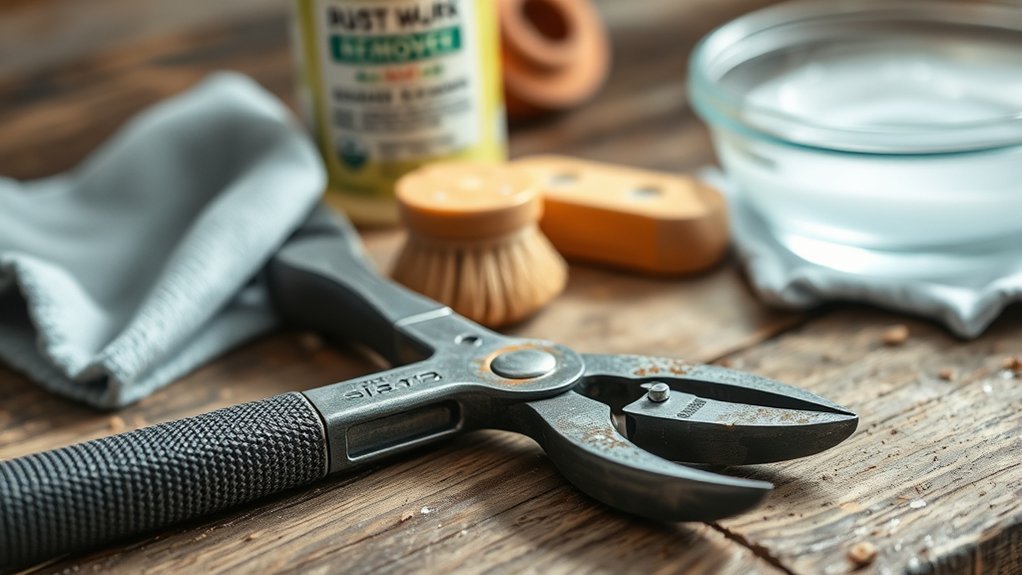
Before you start cleaning your pliers, gather all necessary tools and materials, such as a wire brush, cleaning solution, and a cloth. Begin by inspecting the plier materials; steel or chrome-plated surfaces require different cleaning techniques than rubber handles.
Remove any loose debris or dirt using a dry brush. Next, disassemble any removable parts if possible to access hidden areas. Avoid soaking rubber or plastic components to prevent damage.
Clear loose dirt with a dry brush and carefully disassemble parts, avoiding soaking rubber or plastic components.
Identify any rust or corrosion spots to treat with appropriate cleaning agents. Ascertain your workspace is well-ventilated and protected from spills.
Preparing your pliers systematically maximizes cleaning efficiency and prolongs tool life. Proper preparation sets the foundation for effective cleaning techniques tailored to the specific plier materials you’re working with.
Best Household Supplies for Cleaning Pliers
A few common household supplies can effectively remove dirt, grease, and rust from your pliers without damaging their surfaces. Selecting the right cleaning materials guarantees you maintain your tools’ functionality and extend their lifespan. Adjust your cleaning frequency based on usage intensity and exposure to contaminants.
Essential supplies include:
- White vinegar: dissolves rust and mineral deposits.
- Baking soda: serves as a gentle abrasive for grime removal.
- Dish soap: cuts through grease and oils.
- Soft-bristle brush: reaches crevices without scratching metal.
Using these materials regularly prevents buildup and corrosion. Always rinse and dry your pliers thoroughly after cleaning to avoid moisture retention, which accelerates rust. By choosing appropriate household supplies and setting a proper cleaning frequency, you keep your pliers in ideal working condition with minimal effort.
How to Remove Dirt and Grime From Pliers
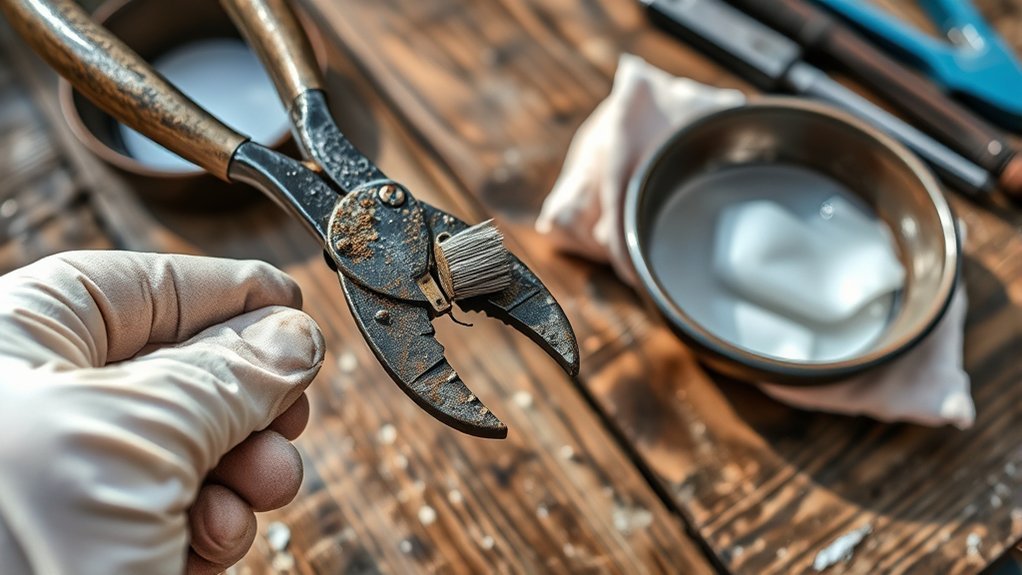
You’ll need basic tools like a brush and cloth, plus effective cleaning solutions such as soapy water or degreasers. Start by loosening dirt with the brush, then apply the solution to break down grime.
Follow a systematic step-by-step process to guarantee thorough cleaning without damaging the pliers.
Tools Needed
Three vital tools will help you effectively remove dirt and grime from pliers: a stiff-bristled brush, a degreasing agent, and a clean cloth. These tools support efficient cleaning techniques and maintenance tips important for prolonging tool life.
Here’s what you’ll need:
- Stiff-bristled brush: Removes embedded dirt without damaging the metal.
- Degreasing agent: Breaks down grease and oily residues efficiently.
- Clean cloth: Wipes away loosened grime and moisture.
- Optional toothpick or small pick: Clears debris from tight joints and crevices.
Using these tools guarantees thorough grime removal and prepares your pliers for further cleaning steps. Proper selection and use of cleaning tools are fundamental to maintaining peak function and preventing rust or wear. Stick to these essentials for effective and precise pliers maintenance.
Cleaning Solutions
When removing dirt and grime from pliers, selecting the right cleaning solution is essential to dissolve residues without harming the metal surface. You can choose between natural cleaners and chemical solutions depending on the contamination type and metal sensitivity.
Natural cleaners like vinegar or baking soda are gentle yet effective for light grime. Chemical solutions, such as degreasers or rust removers, provide stronger action for stubborn residues but require cautious use.
| Solution Type | Examples | Best Use |
|---|---|---|
| Natural Cleaners | Vinegar, Baking Soda | Light dirt, mild rust |
| Chemical Solutions | Degreasers, Rust Removers | Heavy grease, corrosion |
| Solvent-Based | Mineral spirits | Oil and grease removal |
| Abrasive Pastes | Toothpaste, Baking Soda Paste | Surface stains, polishing |
Choose a solution based on residue type and plier material to avoid damage.
Step-by-Step Process
Selecting the appropriate cleaning solution sets the foundation for an effective plier cleaning process. To remove dirt and grime efficiently, follow these cleaning techniques for proper pliers maintenance:
Submerge the pliers in a degreasing agent or mild detergent solution for 10-15 minutes to loosen contaminants. Use a stiff nylon brush to scrub away residual dirt, focusing on the joints and teeth.
Rinse thoroughly under warm water to eliminate any cleaning solution residue. Dry completely with a lint-free cloth to prevent rust formation and corrosion.
Adhering to this step-by-step process guarantees peak tool performance and longevity. Regularly applying these cleaning techniques will maintain your pliers in prime condition, reducing wear and extending their service life.
How to Get Rid of Rust on Your Pliers Safely
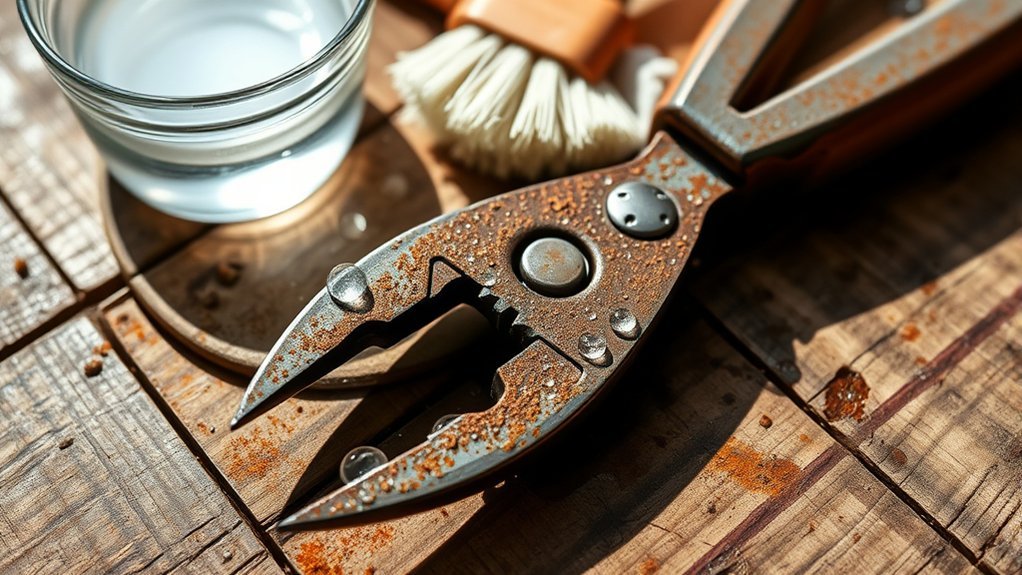
Although rust can compromise the functionality of your pliers, you can safely remove it using appropriate methods and materials. Start by submerging the rusted areas in white vinegar for several hours to dissolve corrosion.
Next, scrub with a wire brush or steel wool to eliminate residue. Rinse thoroughly and dry immediately to avert further oxidation. For stubborn rust, apply a rust remover gel following the manufacturer’s instructions, then clean and dry as before.
After rust removal, lubricate the joints with a light machine oil to restore smooth operation. To maintain rust prevention, store your pliers in a dry environment with controlled humidity, ideally in a toolbox or case designed for plier storage.
Regular inspection and cleaning will extend their lifespan and guarantee reliable performance.
Cleaning Different Types of Pliers
You’ll need tailored cleaning methods for needle-nose, slip-joint, and lineman’s pliers due to their distinct designs and uses. Needle-nose pliers require careful debris removal from narrow tips, while slip-joint pliers need attention to their adjustable mechanism.
For lineman’s pliers, focus on maintaining cutting edges and joint lubrication to guarantee peak performance.
Cleaning Needle-Nose Pliers
Anyone working with needle-nose pliers knows these tools require careful cleaning to maintain their precision tips and joint function. Given their frequent use in delicate tasks, preserving pliers durability is essential.
To clean needle-nose pliers effectively, focus on these steps:
Wipe tips with a soft cloth to remove debris from needle nose uses like gripping small objects.
Use a small brush or toothpick to clear dirt from the joint and serrations.
Apply a light lubricant to the pivot to guarantee smooth movement without compromising precision.
Dry thoroughly to prevent rust, especially around the joint and tips.
Maintaining Slip-Joint Pliers
Maintaining slip-joint pliers requires careful attention to both the gripping surfaces and the adjustable pivot. Start by cleaning the jaws with a stiff brush or cloth to remove debris that could impair slip joint usage. Use a mild solvent to dissolve grease and grime, then dry thoroughly.
Next, focus on the slip joint adjustments; apply a few drops of penetrating oil to the pivot area to guarantee smooth movement. Work the joint back and forth to distribute the lubricant evenly, preventing rust and stiffness. Avoid over-tightening the slip joint, as this can reduce the tool’s versatility.
Regular maintenance guarantees your slip-joint pliers operate efficiently and last longer, giving you reliable performance whether you’re gripping or adjusting components during tasks.
Caring For Lineman’s Pliers
Handling lineman’s pliers with care guarantees their cutting edges and gripping surfaces stay sharp and functional. To maintain peak performance, follow these lineman’s pliers maintenance tips:
Clean blades after each use with a wire brush to remove debris and prevent rust. Apply a light machine oil to the pivot joint regularly for smooth operation. Inspect handles for insulation damage and replace grips if worn to guarantee safety.
Store pliers in a dry environment, ideally in a tool pouch, to avoid moisture exposure. Adhering to these maintenance tips extends the life of your lineman’s pliers and preserves their precision.
Avoid using the pliers for tasks beyond their design, as this can dull cutting edges and compromise grip strength. Consistent care guarantees reliable functionality in demanding electrical and mechanical applications.
How to Lubricate Pliers After Cleaning
Once you’ve thoroughly cleaned your pliers, lubricating the pivot joint is essential to guarantee smooth operation and prevent rust. Start by applying a small amount of light machine oil or penetrating lubricant directly into the joint.
After cleaning, apply light oil to the pivot joint to ensure smooth, rust-free operation.
Use a cloth or paper towel to spread the lubricant evenly, then open and close the pliers several times to work it into the mechanism. Avoid over-lubrication, as excess oil can attract dirt and grime.
Incorporating proper lubrication techniques into your routine assures longevity and peak performance. Remember, targeted application at the pivot point is key.
Following these maintenance tips after each cleaning cycle will keep your pliers functioning smoothly and protect against corrosion, maximizing their lifespan and reliability during use.
How Often to Clean and Maintain Your Pliers
Although the frequency depends on usage and environment, you should clean and maintain your pliers regularly to secure peak performance. Establishing a clear cleaning frequency and maintenance schedule prevents rust, guarantees smooth operation, and extends tool lifespan. Consider these guidelines:
Clean after each use if exposed to dirt, moisture, or corrosive materials. For occasional use, perform thorough cleaning and lubrication monthly. Inspect joints and cutting edges weekly for wear or debris buildup.
Adjust your maintenance schedule based on working conditions, such as humidity or heavy-duty tasks.
Common Mistakes to Avoid When Cleaning Pliers
Regular cleaning and maintenance keep your pliers functioning smoothly, but certain mistakes can undermine your efforts. One common error is neglecting the appropriate cleaning frequency; avoid waiting until dirt and rust accumulate heavily, as this can damage the tool’s precision. Stick to a consistent schedule based on usage intensity.
Another frequent mistake is using improper tools, such as abrasive brushes or harsh chemicals, which can scratch or corrode the metal. Instead, use soft brushes and mild solvents designed for hand tools.
Additionally, don’t soak pliers for extended periods, as this promotes rust. Avoid forcing debris out with sharp objects that may damage joint mechanisms. By steering clear of these errors, you’ll preserve your pliers’ functionality and extend their service life effectively.
Conclusion
Keeping your pliers clean isn’t just about appearance—it’s about performance and longevity. Think of your tools as trusted partners; neglecting them invites rust, stiffness, and frustration.
By regularly removing grime, rust, and lubricating the pivot, you guarantee smooth operation every time. Don’t let dirt dull your efficiency—clean your pliers promptly and properly.
They’ll reward you with years of reliable service. After all, sharp tools make sharp work. Remember, how to clean pliers is essential knowledge for maintaining their effectiveness and durability.