Linseed oil drying time depends on several factors including temperature, humidity, wood type, and the specific oil used. Higher temperatures and lower humidity levels speed up the drying process by promoting oxidation and solvent evaporation.
The type of wood also plays a significant role. Porous woods absorb more oil, which can extend the cure time, while smoother, denser woods tend to dry faster.
Regarding oil types, raw linseed oil dries the slowest, boiled linseed oil dries the fastest, and polymerized linseed oil falls somewhere in between.
Applying thin coats and ensuring good airflow are effective ways to safely accelerate drying.
Understanding these variables helps optimize your finish’s cure time—and more details on managing them follow.
What Factors Affect Linseed Oil Drying Time?
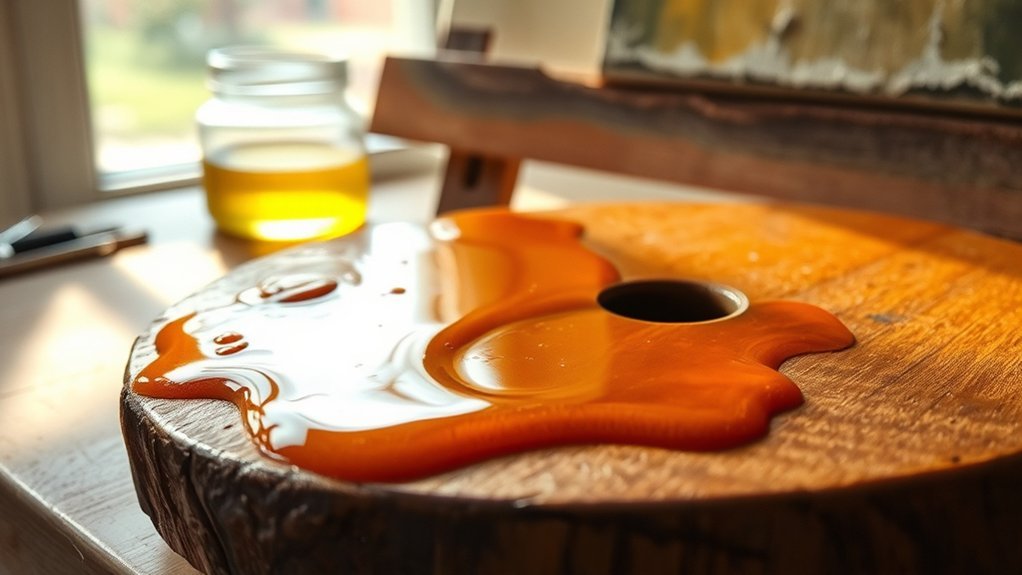
Although linseed oil is prized for its protective qualities, its drying time can vary considerably depending on several key factors. You need to understand temperature effects, as higher temperatures accelerate the polymerization process, reducing drying time by increasing molecular activity.
Conversely, lower temperatures slow this reaction, prolonging drying. Humidity levels also play a critical role; elevated humidity can inhibit oxidation by limiting oxygen availability on the oil’s surface, extending drying periods.
Conversely, low humidity facilitates faster curing by promoting solvent evaporation and oxidation. These environmental variables interact complexly, so precise control of temperature and humidity is essential for predicting linseed oil’s drying behavior.
Linseed Oil Drying Time on Wood
When applying linseed oil to wood, you’ll find that drying time depends heavily on the wood’s porosity and surface condition. Porous woods like pine absorb linseed oil rapidly, which can extend drying times as the oil penetrates deeply, requiring more oxygen for polymerization.
Conversely, dense hardwoods absorb less oil, allowing the surface film to dry faster. Surface smoothness also influences drying; rough or untreated surfaces increase oil uptake, prolonging curing.
In your linseed oil application, verify the wood is clean and free of contaminants to promote even absorption and ideal wood finish. Environmental factors such as temperature and humidity further impact drying but are secondary to wood characteristics.
Understanding these variables allows you to predict and control linseed oil drying time effectively for a durable, high-quality wood finish.
How Raw, Boiled, and Polymerized Linseed Oil Differ in Drying
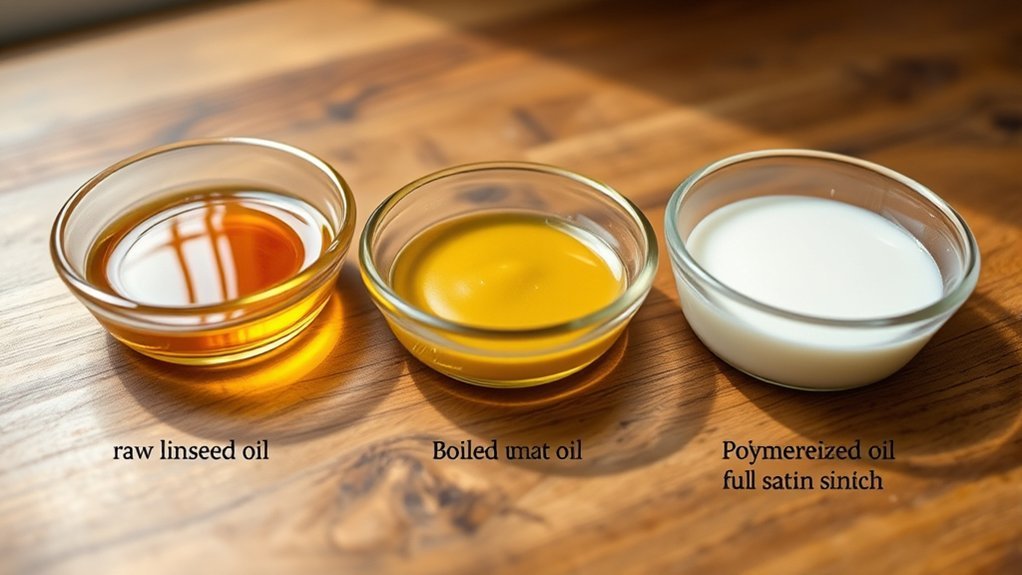
Because raw, boiled, and polymerized linseed oils undergo different processing methods, their drying times and curing behaviors vary greatly. Raw oil properties include a slower oxidation rate due to minimal processing, resulting in extended drying times that can span several days.
In contrast, boiled linseed oil contains added metallic dryers, which catalyze polymerization and markedly reduce drying time. These boiled oil advantages make it preferable when quicker curing is essential.
Polymerized linseed oil, produced by heat-treating raw oil to induce partial polymerization before application, offers intermediate drying times with enhanced film formation and durability.
When you choose between these oils, consider that raw oil’s slow curing suits projects where extended working time is acceptable, while boiled and polymerized oils deliver faster drying and more robust finishes, tailored to different application demands and environmental conditions.
Tips for Applying Linseed Oil for Even Drying
Selecting the appropriate type of linseed oil sets the stage for achieving consistent drying, but how you apply the oil greatly influences the uniformity of the curing process. Proper surface preparation is essential; verify the substrate is clean, dry, and smooth to promote even absorption.
Employ precise application techniques to avoid pooling or streaking, which cause uneven drying rates. Use a high-quality brush or lint-free cloth to distribute the oil uniformly. Here are key tips for application:
- Apply thin, consistent coats to facilitate balanced oxidation.
- Allow adequate penetration time before wiping off excess oil.
- Maintain ambient temperature and humidity within recommended ranges.
- Avoid reapplying oil to partially dried areas to prevent tackiness.
Mastering these techniques optimizes drying uniformity and enhances finish durability.
How to Safely Speed Up Linseed Oil Drying

Although linseed oil naturally requires several hours to days to dry thoroughly, you can employ specific controlled methods to accelerate this process without compromising the finish quality. Ideal drying techniques focus on environmental control and proper oil application thickness.
Increasing airflow and maintaining moderate humidity between 40-60% reduces drying time by promoting oxidation. Additionally, applying thinner oil layers encourages faster curing by facilitating oxygen penetration.
| Drying Technique | Impact on Drying Time |
|---|---|
| Increased Airflow | Speeds oxidation rate |
| Controlled Humidity | Prevents surface tackiness |
| Thin Oil Application | Enhances oxygen absorption |
| Warm Ambient Temperature | Accelerates chemical reaction |
Frequently Asked Questions
Can Linseed Oil Be Used on Metal Surfaces?
Yes, you can use linseed oil on metal surfaces, but its effectiveness against metal corrosion is limited. Proper oil application creates a protective barrier, yet it’s less durable than specialized coatings designed specifically for metal protection.
Is Linseed Oil Food-Safe for Cutting Boards?
While raw linseed oil isn’t food-safe, boiled linseed oil often contains harmful additives, so you shouldn’t use it on cutting boards. For food safety, opt for pure food-grade oils like mineral or walnut oil instead.
How Should Linseed Oil Be Stored to Prevent Spoilage?
You should store linseed oil in airtight, opaque containers to prevent oxidation. Maintain a cool, stable storage temperature between 50-70°F (10-21°C) to slow spoilage and preserve its chemical integrity effectively.
What Are the Environmental Impacts of Using Linseed Oil?
Using linseed oil is like planting seeds for tomorrow; its sustainable sourcing reduces environmental strain. However, you should consider biodegradability concerns since improper disposal can impact ecosystems despite its generally eco-friendly profile and renewable nature.
Can Linseed Oil Cause Allergic Reactions?
Yes, linseed oil allergies can cause allergic reactions in sensitive individuals. You might experience skin irritation, redness, or itching upon contact due to allergenic compounds.
Conclusion
Think of linseed oil drying like waiting for a loaf of bread to rise—it’s all about the right conditions. Just as yeast needs warmth and time, linseed oil requires proper temperature, ventilation, and application thickness to cure effectively.
Remember, boiled linseed oil dries faster than raw, but rushing it risks tackiness. By understanding these factors and applying oil thoughtfully, you’ll achieve a smooth, durable finish without the frustration of endless waiting.
In conclusion, mastering linseed oil drying time ensures your project looks great and stands the test of time.