Yes, you can put polyurethane over boiled linseed oil, but only after the oil is fully cured. This curing process may take several days to weeks depending on environmental conditions.
Ensuring the oil is completely dry guarantees good adhesion and prevents tackiness or peeling.
Before applying polyurethane, lightly sand the surface to promote bonding. Be sure to clean off any dust thoroughly to achieve a smooth finish.
Choosing the right type of polyurethane finish will also affect both durability and appearance.
If you want to understand the best preparation steps and how to avoid common issues, there’s more to explore. Proper technique can make a significant difference in the final result.
What Is Boiled Linseed Oil and How It Protects Wood

Although you might be familiar with raw linseed oil, boiled linseed oil differs by containing drying agents that accelerate curing, allowing it to penetrate wood fibers more effectively and form a protective, water-resistant layer. Historically, boiled linseed oil has been employed in woodworking and shipbuilding due to its superior ability to preserve and enhance wood durability.
Its application techniques typically involve multiple thin coats applied with a brush or cloth, ensuring deep absorption and even coverage. The oil polymerizes within the wood, creating a flexible yet robust barrier against moisture and environmental damage.
Understanding these properties helps you appreciate why boiled linseed oil remains a preferred choice for protecting wood surfaces before any additional finishes, especially when aiming for both preservation and aesthetic enhancement.
How Polyurethane Seals and Protects Wood Surfaces
When you apply polyurethane over wood, it forms a durable protective barrier that shields the surface from damage. This coating greatly enhances wood’s resistance to moisture and scratches, extending its lifespan.
Understanding how polyurethane interacts with the wood surface helps you choose the right finish for lasting protection.
Polyurethane Protective Barrier
One key function of polyurethane is its ability to form a durable protective barrier that effectively seals wood surfaces. This barrier prevents moisture, dirt, and wear from penetrating the wood, preserving its integrity and appearance.
When applying polyurethane over boiled linseed oil, understanding proper application techniques is essential to achieve peak adhesion and finish quality. You can select from various finish options, such as glossy, satin, or matte, depending on your aesthetic preference and the desired level of protection.
Key benefits of polyurethane’s protective barrier include:
- Resistance to water and chemical damage, enhancing longevity
- Prevention of physical abrasion and scratches on the wood surface
- Maintenance of the wood’s natural look by creating a clear, hard film
Proper technique guarantees the polyurethane layer bonds well over the oil-treated wood.
Enhancing Wood Durability
Building on polyurethane’s role as a protective barrier, its ability to enhance wood durability lies in how it effectively seals the surface against environmental factors. When you apply polyurethane over boiled linseed oil, it creates a robust layer that fortifies wood finishings by preventing contaminants and air from penetrating.
This sealing action directly influences durability factors such as resistance to wear and degradation. Polyurethane’s film-forming properties guarantee that the wood beneath remains stable, reducing the risk of cracks, warping, and surface erosion over time.
Moisture and Scratch Resistance
Although boiled linseed oil penetrates and nourishes wood fibers, it doesn’t provide sufficient surface protection against moisture or scratches. That’s where polyurethane excels. When applied over boiled linseed oil, polyurethane forms a durable, transparent film that greatly enhances moisture resistance and scratch resistance.
This protective layer prevents water infiltration and reduces surface abrasion, preserving the wood’s integrity.
Here’s how polyurethane safeguards your wood:
- Creates a hard, impermeable barrier that blocks moisture penetration
- Increases surface hardness to resist scratches and dents
- Maintains clarity, ensuring the wood’s natural beauty remains visible
Is It Safe to Apply Polyurethane Over Boiled Linseed Oil?
How does polyurethane interact with boiled linseed oil when applied together? When you apply polyurethane over boiled linseed oil, the key factor is ensuring the oil has fully cured. Boiled linseed oil undergoes an oxidative curing process, which can take several days to weeks, depending on conditions.
If the oil isn’t completely dry, trapping it under polyurethane can lead to adhesion failure or a tacky finish. From a safety precautions standpoint, applying polyurethane too soon risks solvent entrapment and improper film formation.
Once the oil is fully cured, polyurethane forms a durable protective layer without chemical incompatibility. So, it’s safe to apply polyurethane over boiled linseed oil as long as you confirm the oil’s curing stage to avoid compromising the finish’s integrity and longevity.
Preparing Boiled Linseed Oil–Treated Wood for Polyurethane
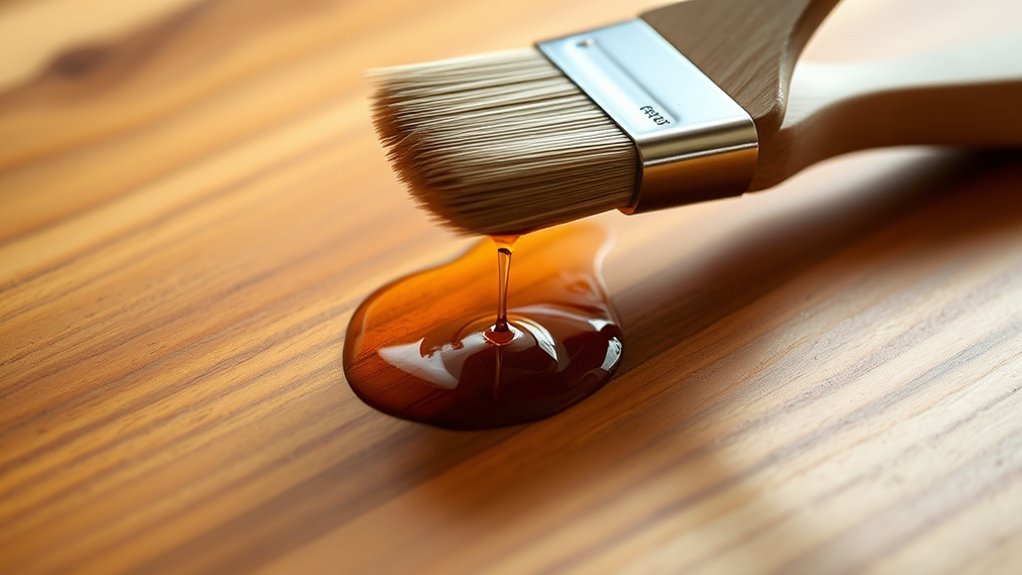
Before applying polyurethane over boiled linseed oil, you need to verify the wood surface is properly prepared to achieve ideal adhesion and finish quality. Effective wood treatment involves confirming the boiled linseed oil has fully cured. This can take several days to weeks depending on conditions.
Once cured, lightly abrade the surface to promote mechanical bonding. Follow these steps for prime application techniques:
- Sand the surface with fine-grit sandpaper (220-grit) to remove gloss and create a uniform texture.
- Clean the wood thoroughly with a tack cloth or mineral spirits to eliminate dust and residue.
- Confirm the wood is completely dry and free from any oily or sticky spots before applying polyurethane.
Proper preparation prevents adhesion failures and guarantees a smooth, durable polyurethane finish over your boiled linseed oil-treated wood.
Best Polyurethane Types for Boiled Linseed Oil Finishes
Choosing the right polyurethane type is critical when finishing boiled linseed oil-treated wood, as compatibility affects adhesion, durability, and appearance. Oil-based polyurethanes bond well with boiled linseed oil, providing robust protection and a warm amber tone.
Water-based polyurethanes dry faster and remain clear but may require thorough curing of the linseed oil to avoid adhesion issues.
| Polyurethane Type | Key Characteristics |
|---|---|
| Oil-Based | Superior adhesion, amber hue |
| Water-Based | Fast drying, clear finish |
| Satin vs Gloss | Choose finish based on sheen preference |
Selecting the best polyurethane type guarantees your boiled linseed oil finish is effectively sealed, enhancing longevity and maintaining wood aesthetics.
Step-by-Step Guide: Applying Polyurethane Over Boiled Linseed Oil

Several critical steps assure a durable and smooth polyurethane finish over boiled linseed oil. First, verify the linseed oil has fully cured. This can take several days to weeks depending on conditions.
Next, lightly sand the surface with fine-grit sandpaper to promote adhesion. When ready, select your polyurethane finish options: water-based for clarity or oil-based for warmth.
Use proper application techniques: apply thin, even coats using a high-quality synthetic brush or foam applicator. Allow each coat to dry completely, sanding lightly between coats to remove imperfections. Apply multiple coats (typically 2-3) for ideal durability and appearance.
Following these steps precisely will help you achieve a smooth, long-lasting polyurethane topcoat over boiled linseed oil.
Troubleshooting Polyurethane Over Boiled Linseed Oil
When applying polyurethane over boiled linseed oil, you need to guarantee the surface is properly prepared to avoid adhesion problems. Understanding compatibility issues between the two finishes is vital to prevent peeling or cloudiness.
Also, don’t underestimate the importance of allowing sufficient drying time for the linseed oil before applying polyurethane.
Surface Preparation Tips
Proper surface preparation is critical to confirm polyurethane adheres well over boiled linseed oil and prevents issues like peeling or uneven drying. Before application, assess the wood condition carefully; the surface must be completely dry and free from excess oil.
Follow these essential steps for ideal surface preparation:
- Verify the boiled linseed oil has fully cured. This can take several days to weeks depending on conditions.
- Lightly sand the surface with fine-grit sandpaper (220-grit) to create a slight texture that promotes adhesion without removing the cured oil layer.
- Clean the surface thoroughly to remove dust, dirt, or residues using a tack cloth or lint-free rag.
Compatibility Issues Explained
Although polyurethane can be applied over boiled linseed oil, you might encounter compatibility issues if the oil hasn’t fully cured or if the surface wasn’t prepared correctly. Incomplete oil curing leaves a tacky, reactive layer that impedes polyurethane adhesion, causing bubbling or peeling.
To avoid this, perform compatibility testing on a small, inconspicuous area to verify proper bonding before full application. Surface contamination, such as dust or residual oils, further compromises adhesion, so thorough cleaning and light sanding are critical.
Additionally, cured linseed oil forms a polymerized film that must be intact; any disruption can lead to uneven polyurethane drying. Understanding these factors guarantees you troubleshoot effectively and achieve a durable, stable finish when combining these materials.
Drying Time Importance
Since polyurethane requires a fully cured substrate for ideal adhesion, ensuring the boiled linseed oil has dried completely is critical before application. Inadequate drying time of the oil finish can lead to improper bonding, resulting in peeling or uneven surfaces. You need to account for the oil’s drying time, which varies based on factors like temperature, humidity, and application thickness.
Key considerations include:
- Allowing at least 72 hours for the oil finish to cure thoroughly under best conditions
- Testing dryness by lightly pressing a finger to confirm no tackiness remains
- Avoiding rushing polyurethane application, as residual oil solvents can trap moisture and inhibit adhesion
Alternatives to Polyurethane for Protecting Oiled Wood
When protecting wood treated with boiled linseed oil, you might want to evaluate alternatives to polyurethane that offer different levels of durability, appearance, and ease of application. Natural oils such as tung oil or walnut oil penetrate deeply, enhancing the wood’s grain while providing moderate protection without forming a surface film.
These wood finishes maintain a more natural look but require reapplication more frequently than polyurethane. Water-based varnishes are another option, offering quicker drying times and lower toxicity, with a clear, non-yellowing finish.
For high-traffic surfaces, epoxy coatings provide superior durability but may alter the wood’s appearance considerably. Selecting the right finish depends on your project’s functional demands and aesthetic goals, ensuring the boiled linseed oil base is compatible with the chosen protective layer.
Frequently Asked Questions
Can Boiled Linseed Oil Be Used on Outdoor Furniture?
Yes, you can use boiled linseed oil on outdoor furniture, but it offers limited outdoor protection and weather durability.
You’ll need to reapply frequently or combine it with a topcoat to guarantee longer-lasting protection against the elements.
How Long Does Boiled Linseed Oil Take to Dry?
While boiled linseed oil feels dry to touch within 6-8 hours, its full drying times depend on temperature and humidity. The complete curing process can take up to 7 days, ensuring deep, durable protection for your wood.
Does Polyurethane Yellow Over Time?
Yes, polyurethane tends to yellow over time, especially oil-based types. When applying polyurethane over oil finishes, consider this discoloration, as it may affect your project’s final appearance and color stability after application.
Can Boiled Linseed Oil Darken Wood?
Yes, boiled linseed oil can darken wood during wood finishing. Its oil application deepens grain contrast and enriches color, which some might mistake for staining.
However, it’s a natural enhancement of the wood’s appearance over time.
Is Boiled Linseed Oil Food Safe for Cutting Boards?
Boiled linseed oil isn’t food safe for cutting boards because it often contains chemical additives. For food safety, you should use pure raw linseed oil or food-grade finishes specifically designed for cutting boards to avoid health risks.
Conclusion
Now that you’ve learned how polyurethane can form a clear, durable shield over the warm, rich glow of boiled linseed oil, imagine your wood surface sealed like glass—resistant to scratches and moisture yet showcasing its natural grain.
With proper preparation and the right polyurethane type, you’ll enhance both protection and beauty. This layered finish combines the deep nourishment of oil with the toughness of varnish, giving your wood long-lasting resilience and a polished, professional look.
In conclusion, you can put polyurethane over boiled linseed oil to achieve a finish that is both protective and visually stunning.