Using linseed oil on your deck helps protect the wood by penetrating deep to resist moisture, while giving it a warm, natural appearance.
This natural oil soaks into the wood fibers, enhancing durability and preventing cracking or warping over time.
Before applying, you’ll need to clean, sand, and dry the deck thoroughly.
Then, apply thin coats of linseed oil with a brush or cloth, allowing each coat to dry for 24–48 hours.
Linseed oil requires more frequent upkeep compared to synthetic sealers but offers the advantage of easy spot repairs.
If you want to know how to prep, apply, and maintain your deck properly, keep exploring these steps.
What Is Linseed Oil? Benefits for Your Deck
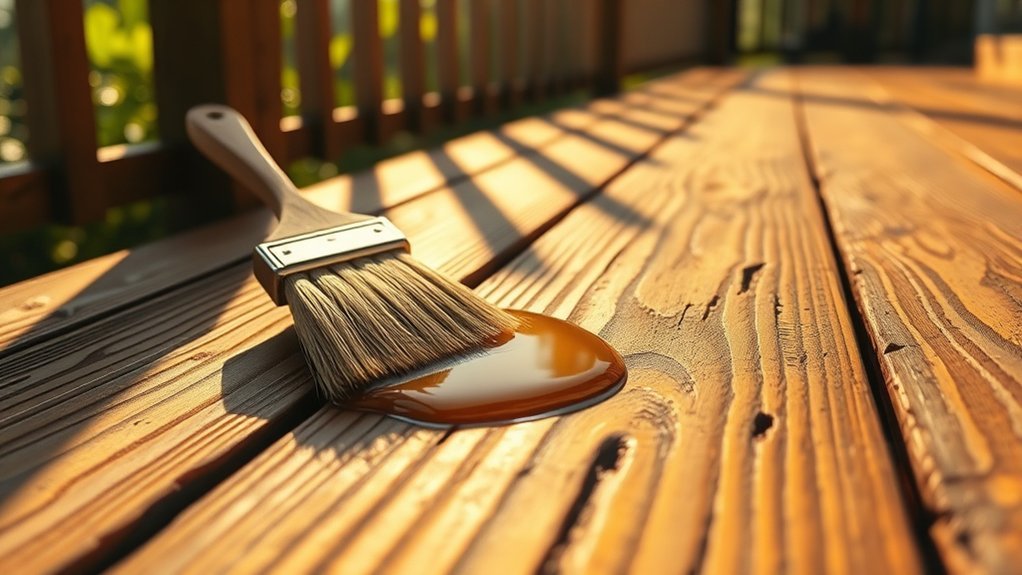
Linseed oil is a natural oil extracted from flax seeds that’s commonly used to protect and preserve wood surfaces like your deck. When you apply linseed oil, it penetrates deeply into the wood fibers, providing a durable barrier against moisture and reducing the risk of cracking or warping.
This oil enhances the wood’s appearance by giving it a warm, rich natural finish that highlights the grain without masking it. Unlike synthetic sealers, linseed oil is breathable, allowing the wood to expand and contract with changing weather conditions.
Using linseed oil also means you’re opting for a non-toxic solution, making it safer for your family and pets. Regular application helps maintain your deck’s structural integrity and visual appeal over time.
Comparing Linseed Oil to Other Deck Sealers
While there are many options for protecting your deck, choosing the right sealer can make a big difference in maintenance and durability. Linseed oil advantages include deep wood penetration and natural water resistance, which helps preserve the wood without forming a surface film that can peel.
Compared to alternative sealers like polyurethane or acrylic finishes, linseed oil requires more frequent applications but offers easier spot repairs and a more natural appearance. Synthetic sealers often provide longer-lasting protection and stronger UV resistance, but they can trap moisture if not applied correctly, leading to potential wood damage.
If you prefer an eco-friendly, easy-to-apply option that enhances wood grain, linseed oil is practical. However, if durability and low maintenance are your priorities, consider alternative sealers better suited for harsh conditions.
Preparing Your Deck for Linseed Oil
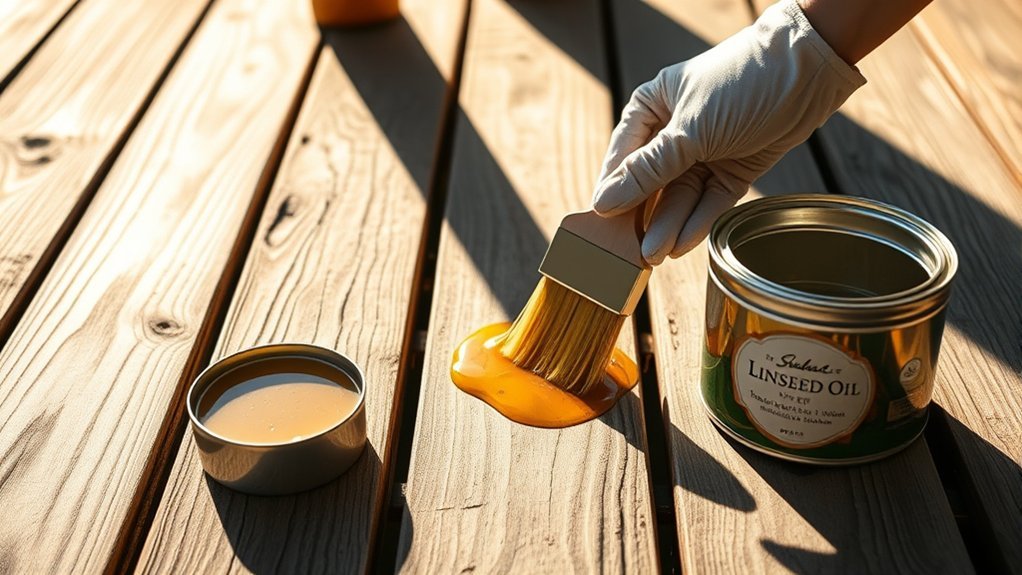
Before applying linseed oil, you need to thoroughly clean and sand your deck to remove dirt, old finishes, and rough spots. Make certain the wood is completely dry, and check that the temperature is between 50°F and 85°F for ideal absorption.
Proper preparation guarantees the oil penetrates well and provides lasting protection.
Cleaning and Sanding
A clean, smooth surface is essential when preparing your deck for linseed oil. Start your deck prep by thoroughly sweeping away dirt and debris. Use a deck cleaner or mild detergent with water to remove grime and mildew. Rinse well and let it dry completely before moving on.
For surface preparation, sanding is vital. Sand your deck with medium-grit sandpaper to smooth rough spots and open the wood grain, ensuring better oil absorption. Pay special attention to any splintered or weathered areas.
After sanding, vacuum or sweep away all dust to prevent it from interfering with the linseed oil finish. Proper cleaning and sanding set the foundation for a durable, even coating, helping your deck look its best and last longer.
Moisture and Temperature Conditions
Once your deck is clean and sanded, you’ll want to take into account moisture and temperature conditions to guarantee the linseed oil cures properly. Proper curing depends on stable environmental factors to avoid issues like uneven absorption or prolonged drying times. Keep these points in mind:
Apply linseed oil when the temperature is between 50°F and 85°F to prevent temperature fluctuations from affecting curing.
Avoid applying oil if rain is forecasted within 24 hours to reduce moisture retention on the wood.
Verify the deck surface is dry; moisture trapped in wood can cause poor adhesion.
Choose a day with low humidity to speed drying and minimize moisture retention.
Apply linseed oil during daylight hours for ideal warmth and drying conditions.
Following these steps will help the oil penetrate evenly and protect your deck effectively.
Applying Linseed Oil: Step-by-Step
You’ll need three basic tools to apply linseed oil effectively: a clean brush or cloth, a well-ventilated workspace, and protective gloves. Begin by thoroughly cleaning the deck surface to remove dirt and old finishes.
Essential tools include a clean brush or cloth, a ventilated space, and gloves; start by cleaning the deck thoroughly.
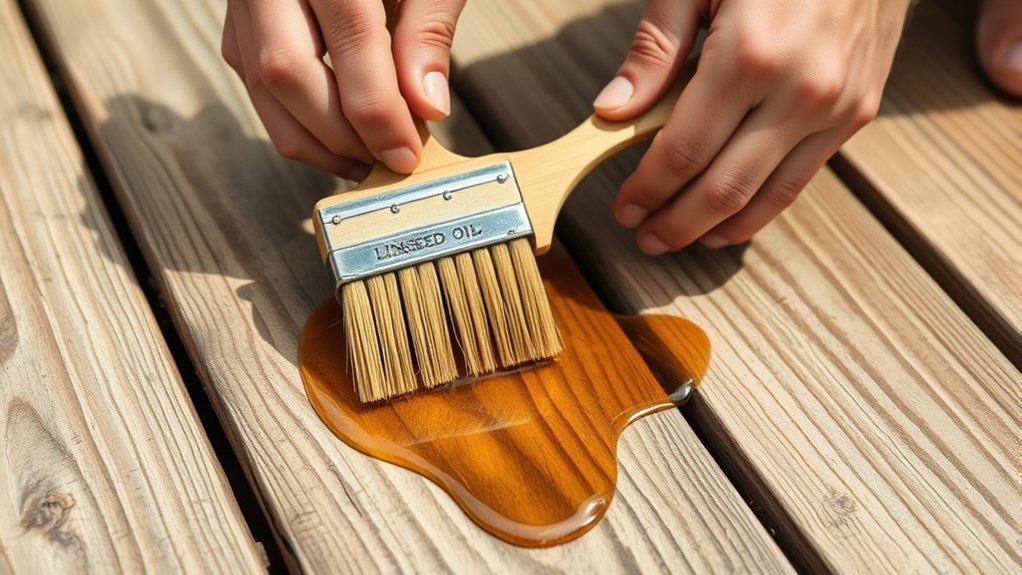
Dip your brush or cloth into the oil, then apply it evenly using smooth, long strokes following the wood grain. This guarantees consistent penetration. Avoid overloading the brush to prevent pooling.
Let the oil soak in for 15-30 minutes, then wipe off any excess to prevent sticky residue. Allow adequate drying time, typically 24 to 48 hours, before applying additional coats.
Multiple thin layers improve protection better than one thick coat. Proper application techniques combined with patience during drying time will yield a durable, attractive finish that protects your deck effectively.
Mistakes to Avoid When Using Linseed Oil
Getting a good finish with linseed oil depends on more than just following the application steps. Avoiding common misconceptions and application errors is key to a durable, attractive deck finish.
Here are mistakes you should steer clear of:
- Applying too much oil at once, causing a sticky, uneven surface
- Using raw linseed oil instead of boiled, which dries slowly and attracts dirt
- Skipping surface preparation, like cleaning and sanding, leading to poor absorption
- Ignoring drying times between coats, resulting in a blotchy finish
- Storing linseed oil improperly; it can spontaneously combust if left in oily rags
Maintenance Tips After Applying Linseed Oil
Three key maintenance practices will keep your deck looking its best after applying linseed oil. First, respect the drying time. Avoid foot traffic or placing items on the deck for at least 24-48 hours. Second, regularly inspect for wear or dullness. Third, establish a reapplication schedule based on exposure; typically, every 6-12 months is ideal.
| Maintenance Task | Frequency | Notes |
|---|---|---|
| Cleaning | Monthly | Use mild soap; avoid pressure washing |
| Reapplication | Every 6-12 months | Apply thin coats after cleaning |
| Inspection | Quarterly | Check for cracks, peeling, or dull areas |
Frequently Asked Questions
Can Linseed Oil Be Used on Indoor Wood Flooring?
Yes, you can use linseed oil on indoor wood flooring. Its linseed oil benefits include enhancing wood grain and providing protection.
Just guarantee proper linseed oil application by applying thin, even coats and allowing ample drying time between layers.
Is Linseed Oil Safe for Pets and Children?
Think of linseed oil like a fresh paint smell; it can irritate pets and kids. For pet safety and children exposure, avoid contact until fully dried and cured to prevent any harmful effects or allergic reactions.
How Long Does Linseed Oil Take to Dry Completely?
Linseed oil’s drying time typically ranges from 24 to 72 hours, depending on temperature and humidity. After oil application, make sure to allow adequate ventilation and avoid heavy use until the surface feels fully dry and tack-free.
Can Linseed Oil Be Mixed With Other Oils or Finishes?
Like mixing colors on a palette, you can blend linseed oil with other oils using proper oil blending techniques. This enhances linseed oil benefits, but you must test compatibility and drying times before applying to avoid finish issues.
What Is the Shelf Life of Unopened Linseed Oil?
Unopened linseed oil typically has a shelf life of about 1 to 2 years. To maximize this, you should store it in a cool, dry place away from direct sunlight and tightly seal the container to maintain quality.
Conclusion
Using linseed oil on your deck is like giving it a deep, nourishing drink that keeps it healthy and vibrant. By preparing properly, applying carefully, and avoiding common mistakes, you’ll protect your deck from wear and weather.
Remember, regular maintenance is key to keeping that rich finish glowing season after season. Stick to these practical steps, and your deck will stand strong and beautiful, ready for countless memories ahead. Using linseed oil on deck ensures long-lasting protection and a stunning appearance.