When you’re working with a 10 screw, picking the right drill bit size is essential to avoid splitting material or stripping threads.
You’ll want a bit that matches the screw’s core diameter, but this varies depending on whether you’re drilling into wood or metal.
Using the wrong size can compromise your hold or damage your workpiece.
Understanding the specific bit dimensions for different materials will save you time and effort on the job.
Recommended Drill Bit Sizes for 10-Gauge Screws: A Quick Guide
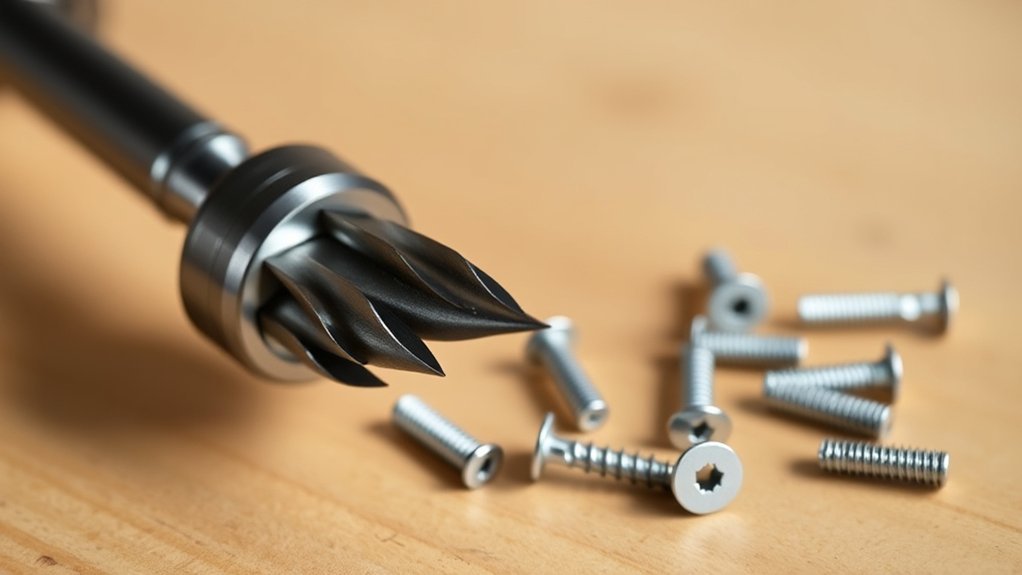
When working with 10-gauge screws, selecting the right drill bit size is crucial for ensuring a secure fit and preventing material damage. You’ll want to match your drill bit type to the screw threading to avoid splitting or stripping.
For 10-gauge screws, a common recommendation is a 7/64-inch bit for pilot holes in hardwood, which accommodates the core diameter of the screw threading. If you’re using coarse-thread screws, slightly larger bits may be necessary, whereas fine-thread screws demand tighter tolerances.
Always choose drill bit types designed for your material. Twist bits work well for metal and hardwood, while brad-point bits excel in softwood. Precision here means your screws drive in cleanly, maintaining structural integrity without over-stressing the material or the fastener.
Drill Bit Sizes for Wood With 10-Gauge Screws
Selecting the right drill bit size for wood with 10-gauge screws hinges on matching the pilot hole diameter to the screw’s core to prevent splitting and guarantee ideal grip. For softer woods with low density, you can use a slightly smaller pilot hole, typically between 3/32” and 7/64”, to maximize thread engagement.
Denser hardwoods demand a bit closer to the screw’s minor diameter, around 7/64” to 1/8”, to reduce insertion torque and avoid wood fiber damage. Screw length also factors in. Longer screws require deeper pilot holes to maintain structural integrity and prevent stress fractures.
Always measure the screw’s core diameter, not the outer thread, and adjust your drill bit size based on wood density and screw length for peak fastening performance.
Drill Bit Sizes for Metal With 10-Gauge Screws
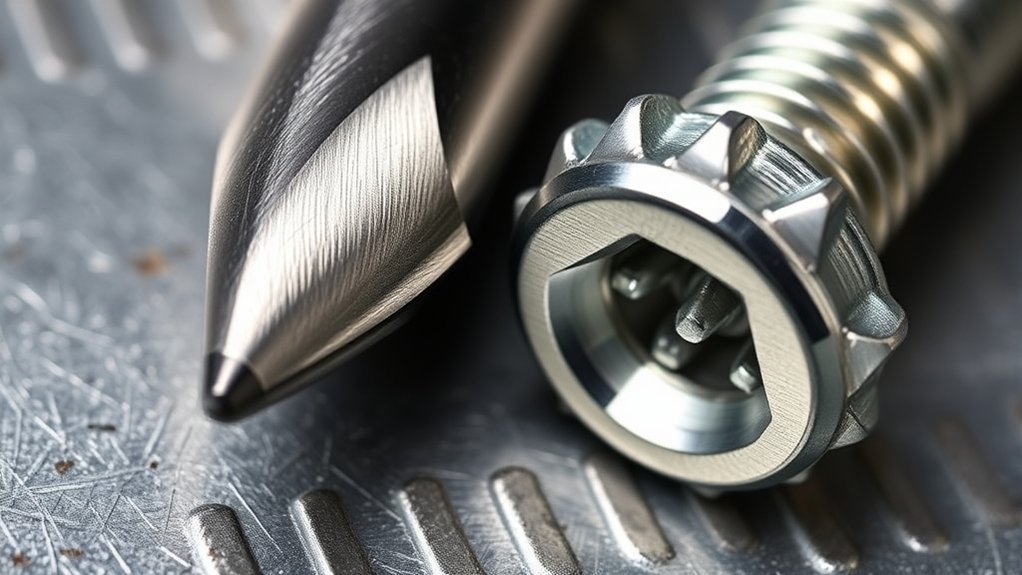
Drill bit sizing for metal with 10-gauge screws demands precision to confirm secure fastening without compromising material integrity. When selecting your drill bit, consider metal thickness and screw length critically to prevent stripping or inadequate grip.
For 10-gauge screws, the pilot hole diameter typically matches the screw’s core diameter, not the outer thread.
- Use a 7/64″ or #21 drill bit for thinner metal (up to 1/8″ thickness).
- For moderate metal thickness (1/8″ to 1/4″), opt for a 1/8″ drill bit.
- Match the drill bit length to at least the screw length for full engagement.
- Prefer cobalt or titanium-coated bits for durability against hardened metals.
Choosing the right size guarantees ideal torque transfer and reduces material stress.
When and How to Drill Pilot Holes for 10-Gauge Screws
Knowing the right drill bit size for your 10-gauge screws sets the stage for accurately creating pilot holes that prevent material splitting and guarantee firm anchoring. You should drill pilot holes whenever working with hardwoods, brittle materials, or when precise alignment is critical.
The pilot hole importance lies in reducing insertion torque, minimizing wood fiber displacement, and ensuring the screw threads engage effectively without stressing the substrate. Use a drill bit slightly smaller than the screw’s core diameter to maintain thread grip.
Implementing proper screw installation techniques means drilling straight, consistent-depth pilot holes aligned with the screw’s trajectory. This approach avoids binding and maximizes holding strength.
Expert Tips for Drilling Accurate Holes With 10-Gauge Screws
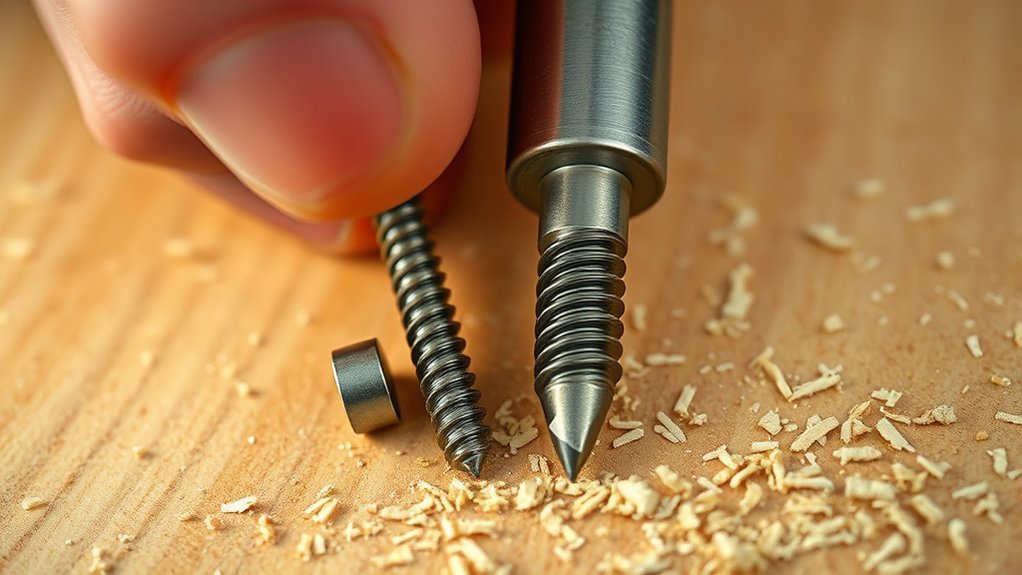
Although 10-gauge screws offer robust fastening, achieving accurate holes requires you to match the drill bit diameter precisely to the screw’s core size and maintain steady hand control to prevent wobble. Use a drill bit slightly smaller than the screw’s outer thread diameter to guarantee a tight fit without splitting the material.
Monitor hole depth carefully; drill slightly deeper than the screw length to accommodate full thread engagement. Maintain perpendicular drilling to avoid angled holes, which compromise holding strength.
Select a drill bit sized to the screw thread’s minor diameter
Use a depth stop or tape on the bit for consistent hole depth
Stabilize your drill with a guide or jig to minimize wobble
Drill pilot holes slowly to reduce material tear-out and heat buildup
Conclusion
Now that you know the exact drill bit sizes for 10-gauge screws—7/64” for hardwood, 3/32” to 7/64” for softwood, and up to 1/8” for metal—you’re almost set. But here’s the catch: picking the wrong pilot hole size can ruin your workpiece or strip your screw.
So, before you start drilling, double-check your bit’s diameter against your screw’s core. Get this right, and you’ll save time, torque, and frustration every time.
Choosing the correct size drill bit for 10 screw is essential to ensure a clean, secure fit and avoid damage.