Are drill bits universal? You might assume all drill bits fit any drill, but that’s not the case.
Factors like shank size, bit type, and material can limit compatibility more than you realize.
Understanding these details is essential to avoid damaging your tools or wasting time.
Before you pick up a new bit, consider how these technical aspects influence whether it will truly work with your drill.
So, Are Drill Bits Really Universal?
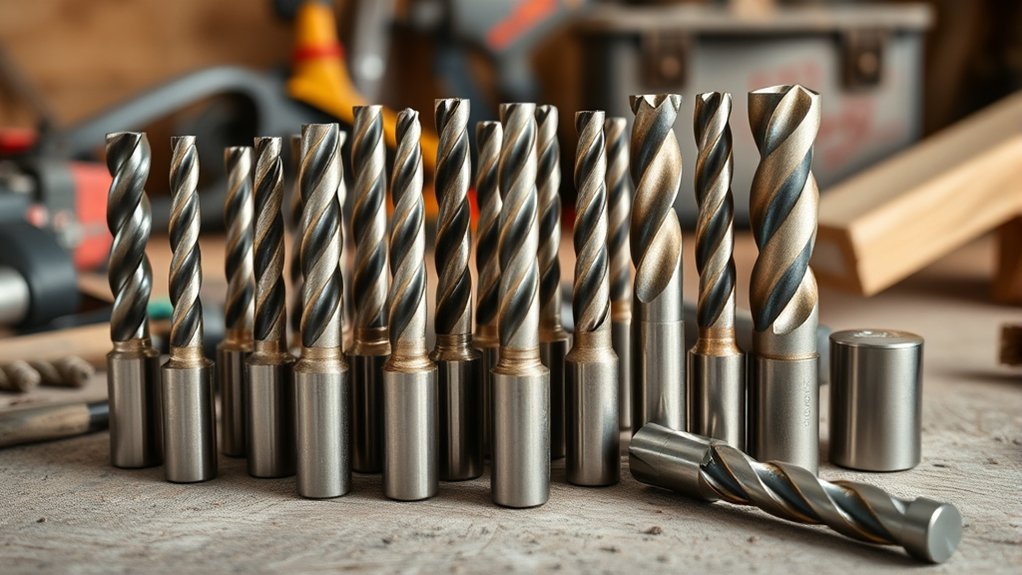
How universal are drill bits, really? When evaluating drill bit universality, you must consider critical compatibility factors such as shank size, material composition, and intended application.
Drill bit types—twist, spade, masonry, or Forstner—have distinct designs tailored for specific materials and tasks. These variations mean you can’t assume one bit fits all drills or purposes.
Different drill bit types have unique designs for specific materials, so one bit doesn’t fit all drills or tasks.
For example, a masonry bit’s carbide tip suits concrete but won’t perform effectively on wood. Similarly, shank dimensions determine if a bit fits your drill’s chuck. Ignoring these compatibility factors risks tool damage or inefficient drilling.
Consequently, while some drill bits may appear interchangeable, true universality is limited by precise engineering specifications and application requirements. You need to assess these factors carefully before assuming universal compatibility.
Which Drill Bits Are Universal and Why?
Certain drill bits stand out as more universally compatible due to standardized shank sizes and versatile material construction. You’ll find that twist drill bits, especially those with round or hex shanks, offer broad universal compatibility across most power drills.
Their design allows them to fit securely in various chucks without additional adapters. Additionally, high-speed steel (HSS) bits provide durability and adaptability, making them suitable for drilling into wood, plastic, and metal.
Spade bits and brad-point bits, while effective, lack this universality due to specialized shanks or applications. Understanding these drill bit types helps you select tools that maximize compatibility, reducing the need for multiple bit sets.
How Do Drill Bit Sizes and Shanks Affect Universal Compatibility?
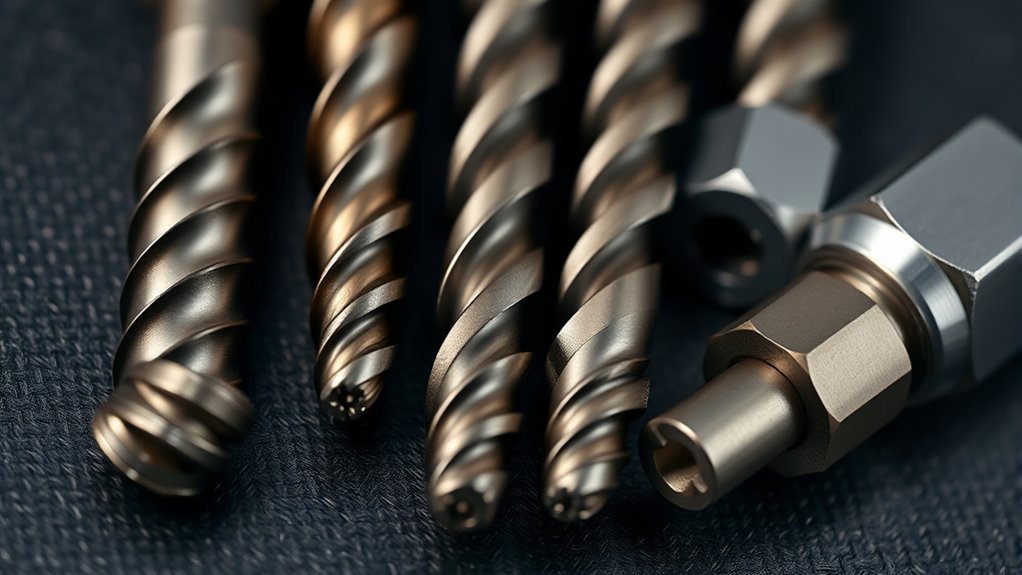
Why do drill bit sizes and shank types play an essential role in compatibility? Because they directly determine whether a bit can fit securely in your drill’s chuck. Size standards vary internationally, with metric and imperial measurements coexisting, so you must confirm the bit diameter matches your tool’s specifications.
Shank types, such as round, hex, and SDS, further impact universal compatibility. A round shank is common but may slip in high-torque applications, whereas hex shanks provide better grip for quick-change chucks. SDS shanks, designed for hammer drills, aren’t compatible with standard chucks.
Ignoring these distinctions risks improper fit, reducing efficiency and potentially causing damage. Understanding size standards alongside shank types confirms you select drill bits that fit your equipment precisely, maintaining peak performance across different tools and tasks.
How to Pick the Right Drill Bit Material
Selecting the proper drill bit material depends on the workpiece and drilling conditions, complementing the correct size and shank type for ideal tool performance. You must analyze the material properties, such as hardness, thermal conductivity, and toughness, of both the bit and the substrate.
For example, high-speed steel (HSS) suits general-purpose drilling in softer metals and wood due to good toughness. Cobalt alloys excel in high-temperature resistance, ideal for stainless steel and harder alloys. Carbide bits, extremely hard and wear-resistant, fit abrasive materials but are brittle under impact.
You should match the drill bit material to the drilling applications to optimize durability and efficiency. Understanding these material properties helps you avoid premature wear or failure, ensuring precise, reliable hole-making in your specific project environment.
How to Match Drill Bits With Your Drill
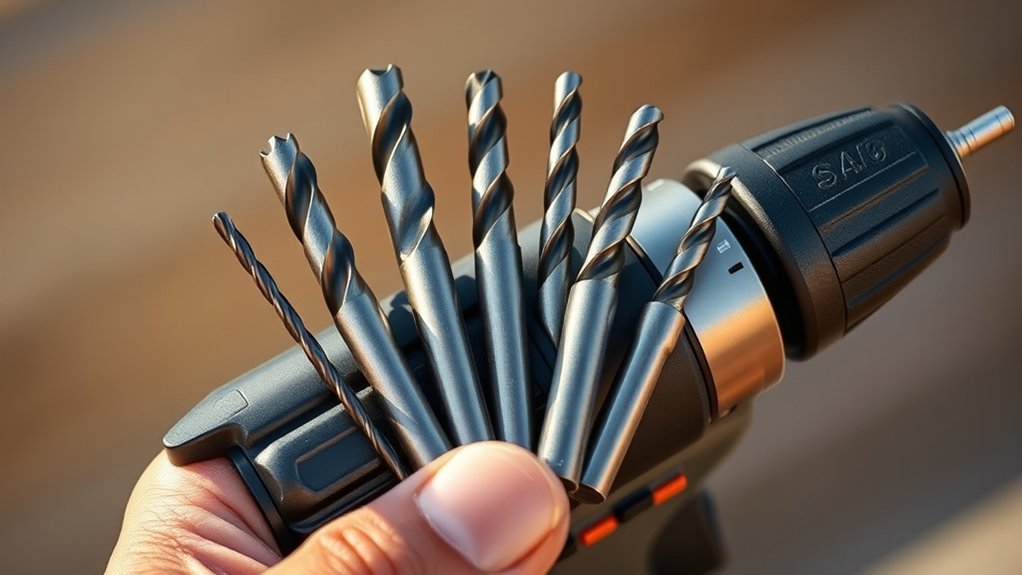
Although choosing the right drill bit material is essential, guaranteeing compatibility between your drill and the bit is equally critical for performance and safety. First, identify your drill’s chuck type: keyed, keyless, or SDS, as drill bit types must match the chuck design for secure mounting.
Next, assess the drill speed range; high-speed drills require bits rated for such RPMs to avoid premature wear or failure. For example, masonry bits differ from metal bits not only in tip design but also in ideal drill speed.
Additionally, make sure the shank size of the bit fits your chuck to prevent slippage. By aligning drill bit types with your drill’s chuck system and operating speeds, you’ll maximize efficiency and maintain safety during operation.
Conclusion
So, are drill bits really universal? Not quite. While some shank shapes show surprising compatibility, specific sizes, materials, and specialized styles strictly shape suitability.
To secure seamless, safe, and sturdy drilling, you’ll need to scrutinize shank size, select suitable substances, and synchronize your bit with your specific drill.
By balancing these basics, you’ll boost both bit behavior and drill durability, preventing problems and promoting precision in every project you pursue. Ultimately, understanding that drill bits are not universal is key to achieving the best results.