Choosing the right drill bit for metal is like picking the perfect key to open a stubborn lock—you need precision and the right material.
When drilling into metal, matching the drill bit to the metal’s hardness and heat tolerance is crucial to avoid damaging both the tool and the workpiece.
Understanding the differences between high-speed steel, cobalt, and carbide drill bits is essential.
Each type offers unique advantages depending on the metal you’re working with and the conditions of your project.
This knowledge is just the beginning of making the best choice for your drilling needs.
How To Choose The Best Drill Bit For Metal
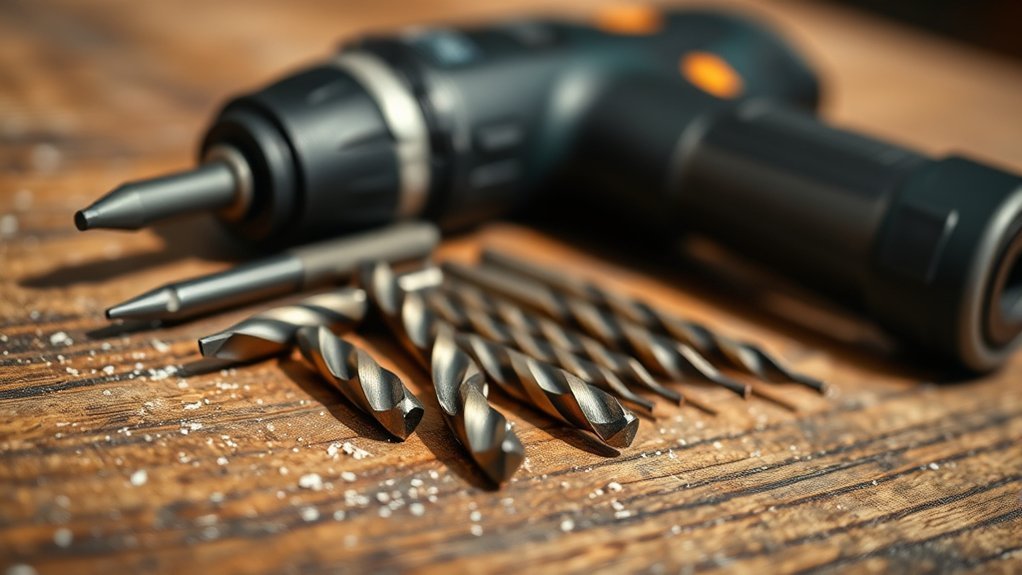
How do you determine the best drill bit for metal? Start by analyzing drill bit shapes and cutting angles, as these directly affect drilling efficiency and accuracy. Twist bits, with a 118-degree cutting angle, offer versatility for general metal drilling.
For harder metals, choose bits with a 135-degree split point; their flatter cutting angle reduces walking and improves penetration. Drill bit shapes influence chip removal; a parabolic flute design enhances debris evacuation, preventing overheating.
Also, consider the bit’s tip geometry. Point angles impact how force transfers during drilling. You’ll want a bit that balances sharpness with durability to maintain precision. By focusing on these technical aspects, you guarantee ideal performance, reducing wear and improving hole quality in metalwork.
Why Drill Bit Material Matters For Metal Drilling
You need to understand how different drill bit materials affect drilling efficiency and durability when working with metal. Each material, such as high-speed steel, cobalt, or carbide, offers distinct hardness and heat resistance properties that influence cutting performance.
Choosing the right bit material directly impacts your drilling accuracy, speed, and tool lifespan.
Drill Bit Material Types
Although selecting the right drill bit shape is important, understanding drill bit material types is crucial when working with metal. Drill bit coatings and bit size selection depend heavily on the base material, affecting durability and heat resistance.
Here’s a concise overview:
| Material Type | Characteristics |
|---|---|
| High-Speed Steel | Versatile, affordable, good for soft metals |
| Cobalt Steel | Heat-resistant, ideal for stainless steel |
| Carbide | Extremely hard, brittle, best for abrasive metals |
| Titanium Coated | Enhanced durability, reduces friction |
Choosing the correct material optimizes cutting efficiency and prevents premature wear. Your bit size selection will also interact with these materials; smaller bits may require different coatings to maintain integrity.
This precision guarantees clean holes and extends the lifespan of your drill bits.
Material Impact On Performance
Since drill bit materials directly influence cutting speed, heat tolerance, and wear resistance, selecting the appropriate material is critical for efficient metal drilling. The right choice depends on your specific metal thickness and operational demands. Consider these factors:
- High-Speed Steel (HSS) offers versatility but lower heat resistance, suitable for thin metals.
- Cobalt alloys excel in heat tolerance, ideal for thicker or harder metals.
- Carbide-tipped bits provide maximum hardness and durability for abrasive conditions.
- Drill bit coatings such as titanium nitride enhance surface hardness and reduce friction, extending bit life.
Understanding how these materials affect performance helps you optimize drilling efficiency, avoid premature wear, and guarantee cleaner holes. Adjust your selection based on the metal’s properties and thickness to achieve reliable, precise results.
High-Speed Steel (HSS) Bits For Metal Drilling
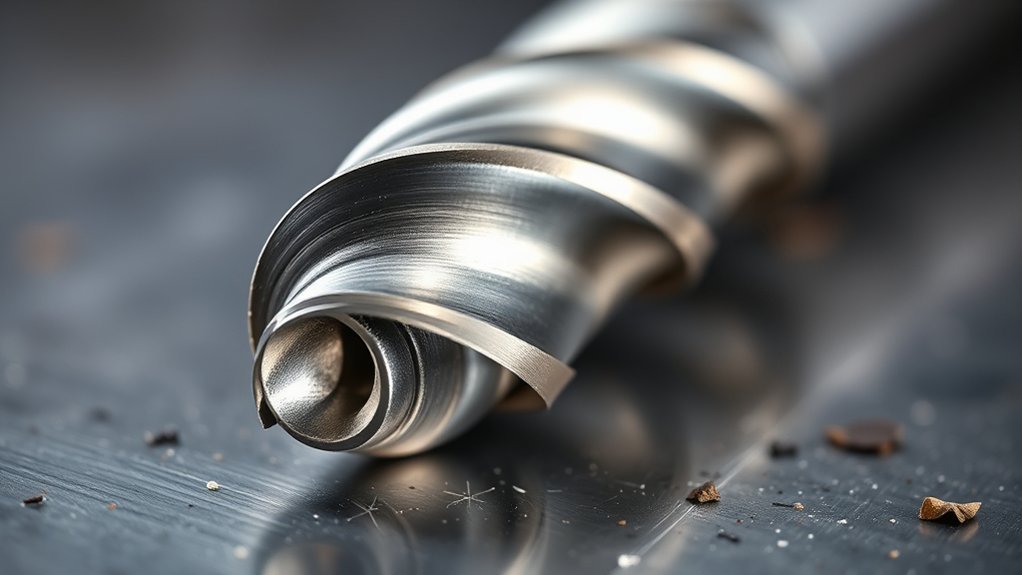
When you choose high-speed steel (HSS) bits, you get durability and strength suitable for various metal types. These bits maintain hardness at elevated temperatures, making them ideal for drilling mild steel, aluminum, and non-ferrous metals.
Understanding their performance limits helps you select the right bit for your specific metal project.
HSS Durability and Strength
Because durability and strength are critical in metal drilling, High-Speed Steel (HSS) bits stand out for their ability to maintain hardness at elevated temperatures. This makes HSS bits highly reliable across various HSS applications where heat buildup is inevitable.
You’ll find these HSS advantages essential for consistent performance and tool longevity. Consider these key points:
- HSS retains hardness up to 600°F (316°C), preventing premature wear.
- Its toughness resists chipping and fracturing under mechanical stress.
- The alloy composition balances hardness with flexibility for diverse metal types.
- HSS’s heat resistance reduces the need for frequent cooling, improving efficiency.
Ideal Metal Types
High-Speed Steel (HSS) drill bits excel in applications involving a variety of metals due to their balanced hardness and toughness. When selecting drill bits, you must match metal types with drill bit compatibility to guarantee efficient cutting and durability.
HSS bits perform well on low to medium hardness metals such as mild steel, aluminum, brass, and copper. Their heat resistance allows them to maintain sharpness at higher drilling speeds, making them ideal for ferrous and non-ferrous metals alike.
However, for harder metals like stainless steel or hardened alloys, you might need coated or specialized bits to prevent premature wear. Understanding the specific metal types you’re working with helps you optimize drill bit choice, reducing tool failure and improving precision in metalworking projects.
Cobalt Drill Bits For High Heat And Tough Metals
Cobalt drill bits excel in maintaining hardness and cutting efficiency under extreme temperatures, making them ideal for drilling through tough metals like stainless steel and titanium. You’ll find cobalt advantages essential in applications where heat buildup is significant, as they resist wear and maintain sharpness longer than standard high-speed steel bits.
Cobalt drill bits maintain sharpness and hardness under heat, perfect for tough metals like stainless steel and titanium.
Consider these points when selecting cobalt bits for your projects:
- Their alloy composition (5-8% cobalt) enhances heat resistance and durability.
- They’re specifically designed for hard metals, reducing the risk of bit breakage.
- You can use them at higher speeds without compromising performance.
- They excel in heavy-duty industrial and automotive cobalt applications requiring precision and longevity.
Choosing cobalt drill bits guarantees peak performance in demanding metalworking tasks.
Carbide-Tipped Bits For Hard And Abrasive Metals
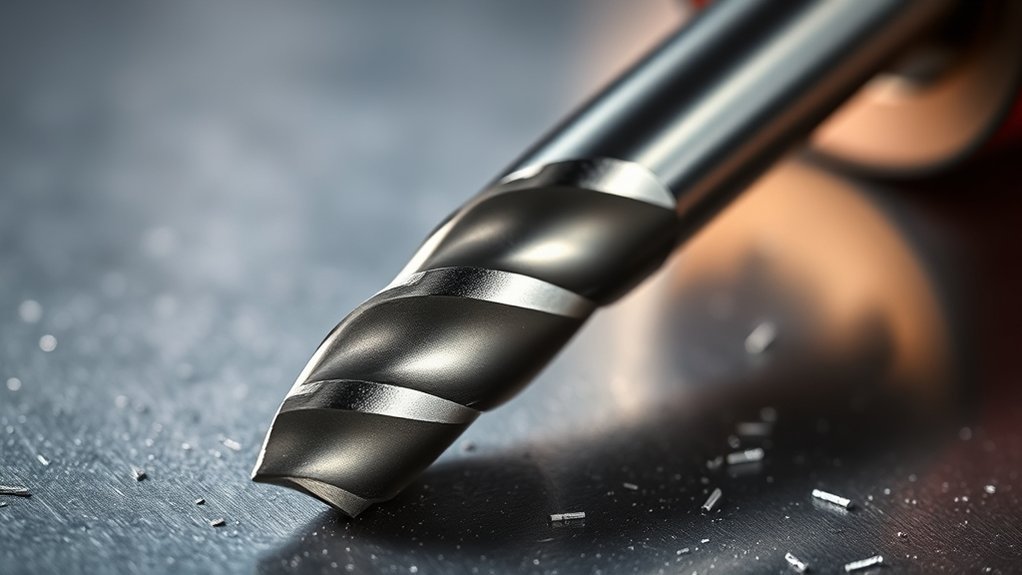
While cobalt bits handle heat and toughness well, carbide-tipped bits push performance further when working with extremely hard and abrasive metals. You’ll find these bits incorporate carbide properties that greatly enhance hardness and wear resistance compared to conventional high-speed steel.
Their exceptional abrasive resistance lets you drill through materials like hardened steel, cast iron, and non-ferrous metals without rapid dulling. The carbide tip, typically brazed onto a steel shank, delivers a precise cutting edge that maintains sharpness under intense friction and heat.
When selecting a drill bit for abrasive metals, carbide-tipped bits offer superior longevity and consistent performance, reducing downtime and tool replacements. However, you should handle them carefully since their brittleness makes them susceptible to chipping if misused or dropped.
Titanium-Coated Bits: Benefits And Drawbacks
When you choose titanium-coated drill bits, you benefit from enhanced durability and improved wear resistance compared to standard bits. Their ability to dissipate heat efficiently reduces thermal damage during metal drilling, extending bit life.
However, you should weigh these advantages against their higher cost to determine if the performance gain justifies the investment.
Durability And Wear Resistance
Titanium-coated drill bits offer a significant improvement in durability and wear resistance compared to standard high-speed steel bits. When you choose these bits, you enhance bit longevity, reducing the frequency of replacements.
Here’s how their durability and wear resistance stand out:
- Titanium nitride coating forms a hard surface layer, resisting abrasion and extending tool life.
- Wear indicators on the coating help you monitor degradation before full failure, enabling timely bit changes.
- The coating reduces friction, minimizing surface wear during drilling operations.
- Despite high durability, titanium-coated bits may wear unevenly if used improperly, requiring careful application to maximize lifespan.
Heat Dissipation Properties
Although titanium nitride coatings improve durability, they also influence heat dissipation during drilling. These coatings alter the drill bit’s surface characteristics, affecting heat transfer between the bit and the metal workpiece.
Titanium coatings tend to reduce thermal conductivity compared to uncoated high-speed steel bits, which can cause localized heat buildup. This requires you to be mindful of cooling methods to prevent overheating and preserve the bit’s lifespan.
Using appropriate lubricants or coolant fluids enhances heat transfer away from the cutting edge, mitigating thermal stress. However, the coating’s heat retention properties can be advantageous in some applications by maintaining cutting efficiency at elevated temperatures.
Understanding this balance helps you optimize drilling performance without compromising tool integrity.
Cost Versus Performance
Since you’re balancing budget constraints with drilling demands, understanding the cost versus performance of titanium-coated drill bits is essential. A rigorous cost analysis paired with a performance comparison helps you justify the investment. Here’s what to evaluate:
- Initial Cost: Titanium-coated bits typically cost more upfront than standard high-speed steel bits.
- Durability: Their coating reduces wear, extending bit life and lowering replacement frequency.
- Drilling Efficiency: They maintain sharpness longer, improving cutting speed and precision on metal.
- Material Limitations: They perform well on softer metals but may not justify cost on harder alloys.
Step Drill Bits For Thin Metal Sheets
When working with thin metal sheets, step drill bits provide an efficient solution by allowing you to drill multiple hole sizes with a single bit. Their conical design features incremental diameters, enabling precise hole size adjustments without changing tools. This versatility considerably reduces setup time and tool wear.
Step drill advantages include smooth cutting action and reduced burr formation, which is critical in thin metal applications to maintain material integrity. Additionally, the stepped geometry improves chip evacuation, minimizing heat buildup and extending bit lifespan.
When selecting a step drill bit, ascertain it has a sharp, hardened tip, often cobalt or titanium-coated, to handle thin metals like aluminum or sheet steel effectively. Overall, these bits optimize workflow efficiency and accuracy when working with various thin metal gauges.
How Different Metals Affect Your Drill Bit Choice
Choosing the right drill bit goes beyond the metal’s thickness and design considerations like those in step drill bits. You must factor in the metal type as it directly affects your drill bit choice and drill speed. Here’s how different metals influence your decision:
- Soft metals (aluminum, brass): Use high-speed steel bits; moderate drill speed prevents material distortion.
- Hard metals (stainless steel, titanium): Opt for cobalt or carbide bits; reduce drill speed to avoid overheating.
- Cast iron: Choose carbide-tipped bits; apply slow drill speed due to brittleness.
- Thin metals: Regardless of type, use sharp bits and adjust drill speed carefully to avoid tearing.
Tips To Extend The Life Of Metal Drill Bits
Proper maintenance greatly prolongs the lifespan of your metal drill bits and guarantees consistent performance. Focus on drill bit maintenance by routinely inspecting for wear and sharpening dull edges with appropriate tools.
Use lubrication techniques, such as applying cutting oil or specialized coolants, to reduce friction and heat buildup during drilling. This minimizes material stress and preserves bit hardness.
Always clean your drill bits after use to remove metal shavings and debris that cause corrosion or blunt cutting surfaces. Store bits in a dry, organized container to prevent damage and rust.
Common Drilling Mistakes To Avoid
Maintaining your metal drill bits is only part of achieving accurate, efficient drilling; avoiding common errors during operation plays an equally important role. Drilling technique errors and drill speed mistakes often compromise bit performance and workpiece quality.
Proper technique and correct speed are just as crucial as maintenance for effective drilling results
To prevent this:
- Don’t apply excessive pressure; let the drill bit do the cutting to avoid overheating and premature wear.
- Avoid incorrect drill speed. Too fast generates heat, too slow reduces efficiency. Match speed to metal type.
- Refrain from starting without a pilot hole on thicker metals to guarantee precision and reduce bit wandering.
- Never neglect proper lubrication; it minimizes friction and heat buildup, extending bit life and improving finish.
Conclusion
Choosing the right drill bit for metal means matching the material hardness with the bit composition. For softer metals, high-speed steel (HSS) bits are ideal. Cobalt bits offer better heat resistance, making them suitable for tougher metals.
Carbide bits are best for abrasive materials due to their durability. Design features also matter; for example, a 135-degree split point helps reduce walking and improves precision during drilling. Proper maintenance of your drill bits is essential to extend their lifespan.
Avoiding common mistakes, such as using incorrect speeds or applying excessive pressure, will help you work more efficiently. By understanding these factors, you’ll drill smarter, work cleaner, and achieve precise, efficient metalwork every time. Selecting the right type of drill bit for metal is key to successful drilling projects.