When you examine a metal drill bit, you’ll notice its cylindrical shape with spiraled flutes running along its length, designed to remove metal shavings efficiently.
The tip varies in angle and form, affecting cutting performance and precision. Coatings like black oxide or titanium nitride alter both appearance and durability.
Understanding these visual and structural features is essential before selecting the right bit for your specific metalworking task.
But how do these details translate into practical differences?
What a Metal Drill Bit Looks Like: A Quick Overview
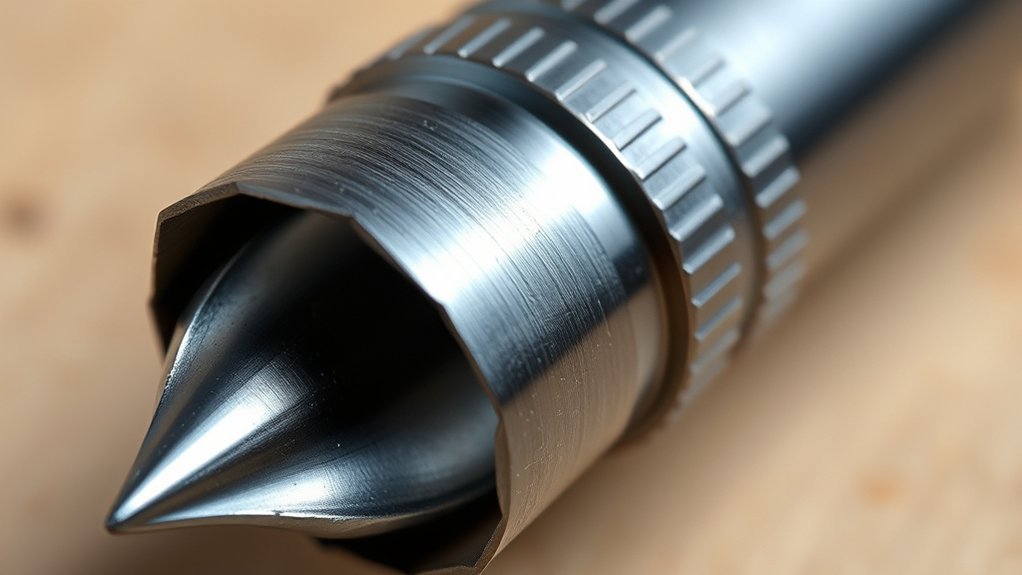
A metal drill bit typically features a cylindrical body with a pointed tip designed for cutting through metal surfaces. When you examine metal drill bit colors, you’ll notice variations that indicate different coatings or materials. Black oxide offers corrosion resistance, titanium nitride appears gold for increased hardness, and cobalt bits often have a silver-blue hue for heat resistance.
These color distinctions help you quickly identify the bit’s intended use and durability. Leading drill bit brands like DeWalt, Bosch, and Milwaukee utilize these coatings to enhance performance. As you select a drill bit, understanding the colors and their implications allows you to match the bit precisely to your metalworking needs, ensuring efficiency and longevity in your tasks.
Key Parts of a Metal Drill Bit Explained
Understanding the key parts of a metal drill bit is essential for selecting the right tool and optimizing your drilling performance. The drill bit anatomy primarily includes the shank, body, flute, and cutting edge.
The shank fits into your drill chuck, transmitting torque efficiently. The body houses the flutes, helical grooves that evacuate metal chips and reduce friction.
The shank secures the bit, while flutes clear chips and minimize friction for smooth drilling.
The cutting edge, located at the tip, is the critical contact point that initiates material removal. Its geometry influences penetration rate, heat buildup, and overall efficiency.
Recognizing these components allows you to assess bit suitability for specific metals and drilling conditions. By analyzing drill bit anatomy and the cutting edge design, you can guarantee precision, prolong tool life, and maintain effective heat dissipation during operation.
Metal Drill Bit Shapes and Tip Designs to Know
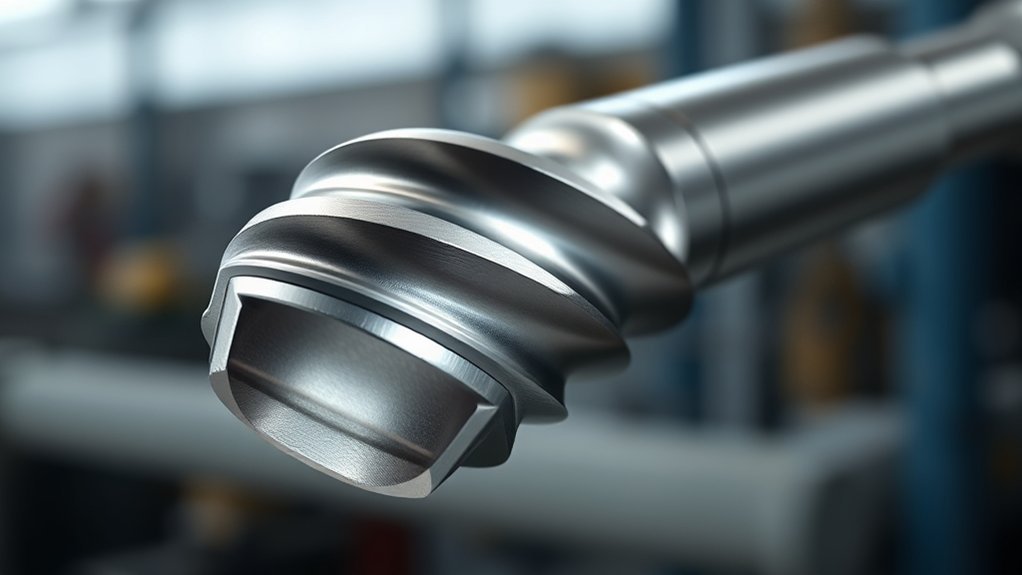
Knowing the key parts of a metal drill bit sets the foundation for recognizing how different shapes and tip designs affect drilling performance. Drill bit shapes influence cutting speed and chip removal, while tip designs determine accuracy and durability. Selecting the right combination optimizes your drilling tasks.
| Drill Bit Shape | Tip Design | Application |
|---|---|---|
| Twist | Standard 118° | General purpose metal |
| Step | 90° Split Point | Thin sheet metal |
| Brad Point | 135° Parabolic | Precision drilling |
| Countersink | Flat Tip | Hole finishing |
| Masonry | Carbide Tipped | Hard materials |
Understanding these variables helps you choose drill bits tailored to your project’s demands efficiently.
Common Sizes and Lengths of Metal Drill Bits
You’ll find metal drill bits come in standard diameter measurements ranging from very small fractions of an inch to larger sizes for heavy-duty tasks. Typical lengths vary to suit different drilling depths, with common options including jobber, screw machine, and extended lengths.
Specialty sizes also exist to accommodate specific applications, so understanding these variations helps you select the right bit for your project.
Standard Diameter Measurements
metal drill bits come in a variety of standard diameters, typically ranging from as small as 1/16 inch to over 1 inch for common applications. You’ll find that standard sizes adhere to strict measurement standards such as the fractional inch system and the metric system, ensuring compatibility with various tools and projects.
When selecting a bit, consider these common diameter categories:
- Fractional inch sizes (e.g., 1/16″, 1/8″, 3/16″)
- Metric sizes (e.g., 3 mm, 6 mm, 10 mm)
- Number gauge sizes (typically 1-60, smaller increments)
- Letter gauge sizes (A-Z, used for precision holes)
Understanding these measurement standards helps you choose the correct diameter for accurate, efficient drilling tasks on metal surfaces.
Typical Drill Bit Lengths
Several standard lengths exist for drill bits used in metalworking, each designed to accommodate different depths and precision requirements. You’ll commonly encounter three primary lengths: short (stub), standard, and long.
Stub bits offer superior rigidity and precision, ideal for shallow holes and drilling tasks requiring tight tolerances. Standard-length bits balance reach and stability, suitable for most typical drill bit uses, including general metal fabrication.
Long bits extend reach for deeper holes but sacrifice some rigidity, making them suitable for specific typical drill bit applications where access is limited. Choosing the right length directly affects hole accuracy, bit lifespan, and overall efficiency.
Understanding these length variations helps you optimize performance, ensuring you select the appropriate bit to match both material thickness and drilling depth demands.
Specialty Size Variations
Beyond standard lengths, drill bits come in a variety of specialty sizes tailored for specific metalworking tasks. When you encounter specialty applications, you’ll notice bits designed in uncommon sizes to meet precise requirements. These sizes often address unique material thicknesses or intricate drilling needs.
Common specialty size variations include:
Extra-long bits for deep-hole drilling
Micro drill bits below 1mm for precision work
Step drill bits for variable hole diameters
Reduced shank bits for larger diameters in smaller chucks
Understanding these specialty sizes allows you to select the right bit for accuracy and efficiency. Their design optimizes performance on metals with specific properties, ensuring clean holes and reduced tool wear. In metalworking, choosing the correct uncommon size drill bit is essential for professional results.
Materials and Coatings Used on Metal Drill Bits
Although drill bits may look similar at first glance, the materials and coatings used greatly impact their performance and durability. You’ll find common base materials include high-speed steel (HSS), cobalt steel alloys, and carbide, each offering distinct material properties such as hardness, heat resistance, and toughness.
Coating types further enhance functionality; titanium nitride (TiN) increases surface hardness and reduces friction, while black oxide improves corrosion resistance and lubricity. Other coatings like titanium aluminum nitride (TiAlN) provide superior thermal stability for high-temperature applications.
Selecting the right combination depends on your drilling needs. Harder materials resist wear but may be brittle, whereas coatings improve lifespan by minimizing heat buildup and wear. Understanding these variables helps you optimize drill bit selection for specific metalworking tasks, ensuring precision and longevity.
How Metal Drill Bits Differ From Other Types
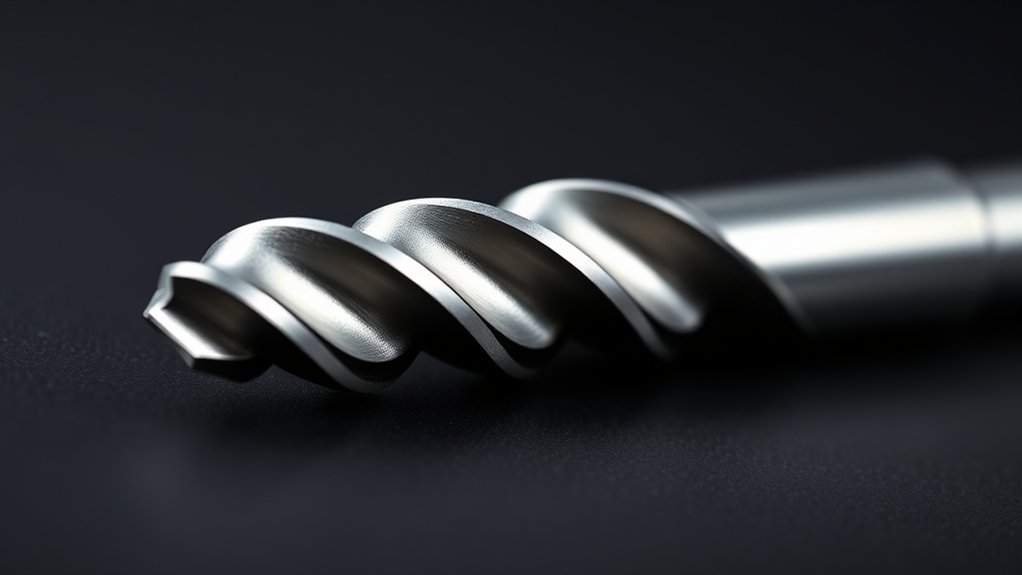
When you compare metal drill bits to those designed for wood or masonry, you’ll notice distinct differences in geometry, material composition, and intended use. A types comparison reveals that metal bits typically have a sharper point angle and a more robust helix design to manage metal shavings efficiently.
Performance evaluation highlights their superior hardness and heat resistance, unlike wood bits which prioritize fast chip removal.
Key differences include:
- Point angle: Metal bits often have 118° or 135° angles, optimized for metal penetration.
- Material: High-speed steel or cobalt alloys dominate metal bits for durability.
- Coating: Titanium or black oxide coatings enhance metal bit lifespan.
- Flute design: Metal bits feature narrower flutes for controlled chip evacuation.
These attributes distinctly set metal drill bits apart in functionality and application.
Conclusion
So, next time you pick up a metal drill bit, don’t just see a shiny stick—see a carefully engineered tool with flutes designed to whisk away chips, coatings that fight heat and corrosion, and tips shaped for precision.
Ironically, something so small holds the power to reshape metal, yet we often overlook its complexity.
Now, you know exactly what makes that simple-looking bit a high-performance cutting marvel and what a metal drill bit looks like.