Choosing the right drill bit to tap 5/16 holes is like selecting the perfect key to access a precise fit.
You might think a 1/4 inch or a #7 drill bit will work, but the subtleties of thread engagement demand more careful calculation.
Understanding the exact drill size isn’t just about hole diameter; it affects thread strength and tap longevity.
Before you start, consider what’s truly at stake with your drill bit choice.
What Does a 5/16 Tap Actually Mean?
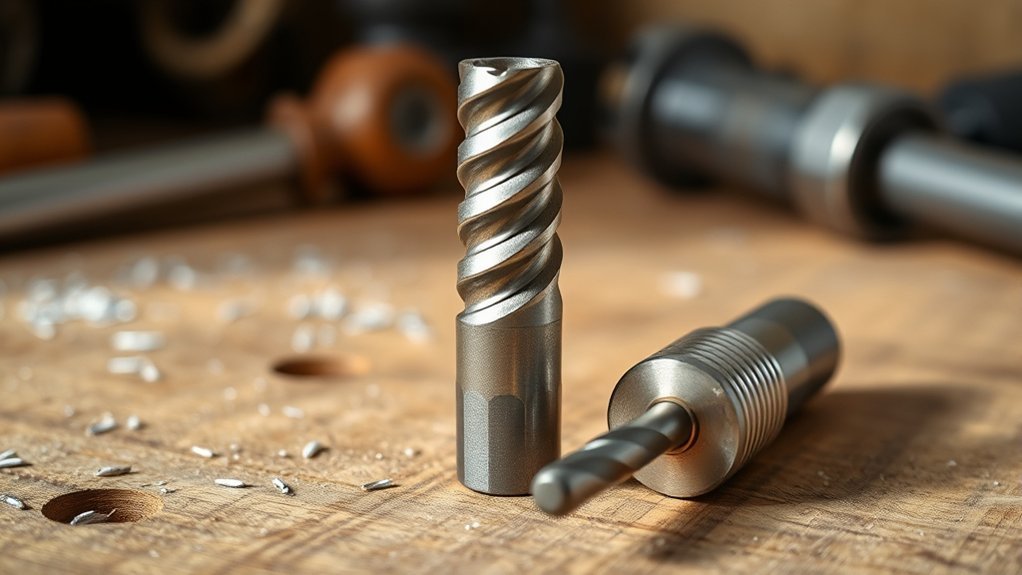
Although you might be familiar with the term “5/16 tap,” its meaning goes beyond just the size. In tap threading techniques, a 5/16 tap refers to a tool used to cut internal threads corresponding to a 5/16-inch nominal diameter.
Understanding taps requires recognizing that this dimension specifies the major diameter of the thread, not the drill hole size or thread pitch. The tap’s design incorporates flutes and cutting edges calibrated to create precise threads matching standardized thread profiles.
When you select a 5/16 tap, you’re choosing a tool optimized for a particular thread pitch and class, essential for accurate thread formation. Mastering these concepts guarantees you apply appropriate tapping methods, enhancing thread quality and mechanical integrity in your projects.
Standard Drill Bit Size for 5/16-18 Tap Holes
To create a proper 5/16-18 tap hole, you need to select the correct drill bit size, typically 27/64 inch or 0.4219 inches in diameter. Using the recommended drill diameter guarantees sufficient material is left for thread engagement without causing excessive stress or weakening the part.
Proper tap hole preparation directly affects thread quality and tool life, so accuracy in drilling is critical.
Recommended Drill Diameter
Selecting the correct drill diameter is essential when preparing holes for a 5/16-18 tap. For this standard tap size, the recommended drill diameter is typically 0.257 inches, which corresponds to a #7 drill bit.
This size guarantees sufficient material remains for proper thread engagement without risking tap breakage. When choosing the drill bit, consider the drill materials. High-speed steel (HSS) is common for general use, while cobalt or carbide bits suit harder alloys.
Also, factor in tap types: taper, plug, and bottoming taps require slightly different clearances but generally adhere to the 0.257-inch guideline for 5/16-18 threads. Using the precise drill diameter optimizes thread strength and tap longevity, so verify your drill bit’s actual diameter before proceeding to avoid costly errors.
Tap Hole Preparation
When you prepare a hole for a 5/16-18 tap, using the correct drill bit size is critical to guarantee accurate threading and avoid tap damage. The standard drill bit size for this tap is 27/64 inches, securing ideal material removal and thread engagement.
To maximize drilling accuracy and apply proper tap hole techniques, follow these steps:
- Select a high-quality, sharp 27/64-inch drill bit to maintain dimensional precision.
- Use a drill press or guide to guarantee perpendicular drilling, minimizing hole misalignment.
- Deburr the hole edges after drilling to facilitate smooth tap entry and reduce thread deformation.
Adhering to these procedures enhances thread quality and tool lifespan while preventing common tapping issues like thread stripping or excessive torque.
How to Calculate the Right Drill Bit Size for 5/16 Tap
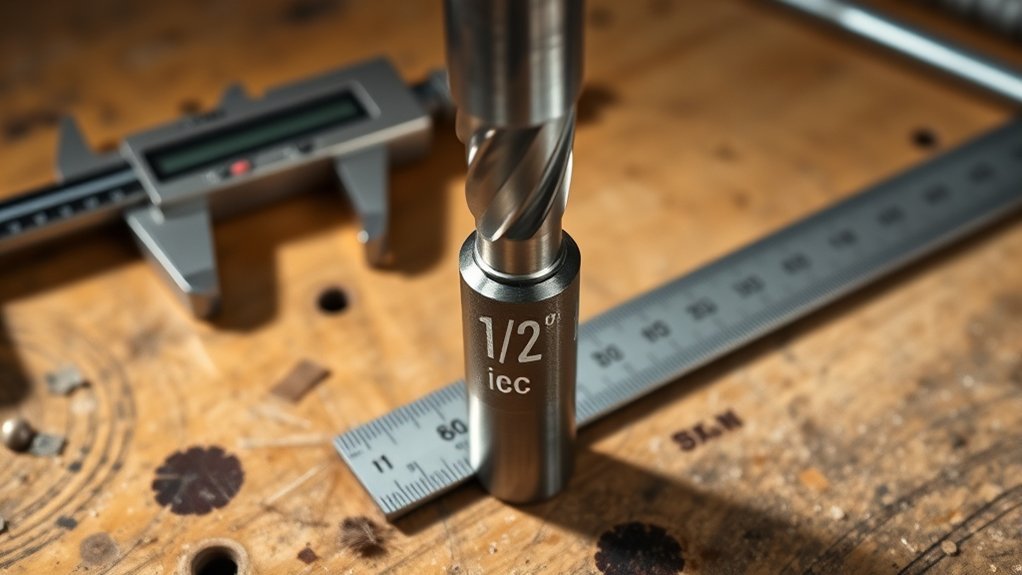
Calculating the correct drill bit size for a 5/16 tap requires understanding the thread pitch and core diameter. Drill bit terminology plays a vital role here, as the tap size includes the outer thread diameter and pitch, but the drill bit must match the minor diameter, the core of the threaded hole.
To find the right drill bit size, subtract the thread pitch from the nominal tap diameter. For example, a 5/16 tap with an 18 TPI (threads per inch) has a pitch of 1/18 inch (~0.0556 inches).
Subtracting this from 0.3125 inches (5/16 inch) gives approximately 0.2569 inches, which corresponds to a #7 drill bit. This precise calculation guarantees proper thread engagement and prevents tap breakage during threading.
Coarse vs. Fine 5/16 Threads: Which Drill Bit Should You Use?
You need to choose your drill bit based on whether you’re tapping coarse or fine 5/16 threads, as their pitch differs considerably. Coarse threads have a larger pitch and typically require a larger drill size, while fine threads have a smaller pitch and need a slightly smaller drill bit to maintain proper thread engagement.
Selecting the correct drill size guarantees thread strength and accuracy for your specific tapping application.
Thread Pitch Differences
Although both coarse and fine thread pitches serve specific purposes, selecting the correct drill bit size for tapping a 5/16 thread depends heavily on the thread pitch. Different thread types impact tap applications by altering the depth and diameter of the tapped hole.
When deciding which drill bit to use, consider these factors:
- Coarse Threads (5/16-18): Designed for general use, these require a slightly larger drill bit to allow proper material engagement and stronger thread grip.
- Fine Threads (5/16-24): With tighter thread spacing, they demand a smaller drill bit to accommodate the increased number of threads per inch.
- Material and Strength Requirements: The material’s hardness and intended load influence the thread pitch choice, affecting drill bit size selection.
Understanding these distinctions guarantees precise tapping and ideal thread performance.
Recommended Drill Sizes
Selecting the correct drill size for tapping 5/16 threads hinges on whether you’re working with coarse or fine thread pitches. For 5/16-18 coarse threads, use a #7 drill bit, which measures approximately 0.201 inches, to achieve the ideal tap thread engagement.
If tapping 5/16-24 fine threads, you’ll need a slightly larger drill bit, typically a #6 drill bit at 0.204 inches, to accommodate the denser thread count. Choosing the proper drill bit type is essential, as high-speed steel (HSS) bits are commonly preferred for their durability and precision in metal applications.
Matching the drill bit size precisely to the tap thread specifications guarantees sufficient material remains for strong threads without causing binding or stripping. Always verify drill bit dimensions against the tap chart for accuracy.
How Material Type Affects Drill Bit Choice for 5/16 Tap
Because different materials respond uniquely to drilling and tapping, the choice of drill bit size for a 5/16 tap depends heavily on the material’s hardness and ductility. You need to take into account material hardness and thread compatibility carefully to guarantee ideal thread engagement without damaging the workpiece.
Selecting the right drill bit for a 5/16 tap hinges on material hardness and thread fit.
- Soft Metals (e.g., aluminum): Use a slightly larger drill bit to prevent thread stripping caused by excessive material deformation during tapping.
- Hard Metals (e.g., stainless steel): Opt for a drill bit that closely matches the recommended size to maintain thread strength and avoid tap breakage.
- Plastics and Composites: Choose a drill bit size that accounts for material compressibility, guaranteeing threads form cleanly without cracking.
Adjusting drill bit size based on material type guarantees precise, high-quality threads for your 5/16 tap.
Why Correct Drill Bit Size Matters for 5/16 Tap Threads
When you choose the correct drill bit size for a 5/16 tap, you guarantee proper thread engagement and maintain the structural integrity of the workpiece. Precise drill bit selection is essential in tapping techniques to avoid thread stripping or weak joints.
If the hole is too small, the tap faces excessive torque, increasing the risk of breakage. Conversely, an oversized hole results in loose threads and compromised load-bearing capacity.
Accurate drill bit sizing guarantees ideal thread depth and consistent pitch, enhancing fastening strength. By adhering strictly to recommended drill bit dimensions, you facilitate smooth tap progression and uniform thread formation.
This precision maximizes both tool life and final assembly reliability, underscoring the importance of methodical drill bit selection in successful 5/16 tap threading operations.
Drill Bit Sizes to Avoid for 5/16 Tap Holes
While choosing the correct drill bit size is essential, you should steer clear of certain sizes that can compromise your 5/16 tap hole quality. Using the wrong bit can lead to avoid oversized bits, which reduce thread engagement and weaken the joint. Additionally, improper tap alignment often results from incorrect hole diameters.
Here are three drill bit sizes to avoid:
- #7 drill bit (0.201″) – Too small, causing excessive material displacement and tap breakage.
- 1/4″ drill bit (0.250″) – Undersized, risking thread stripping due to tight fits.
- 5/16″ drill bit (0.3125″) – Oversized, leading to loose threads and compromised structural integrity.
Select the precise drill bit to guarantee ideal thread strength and maintain tap accuracy.
Tips for Drilling and Tapping Clean 5/16 Holes
To achieve clean 5/16 holes, you must maintain steady drill speed and apply consistent pressure throughout the process. Utilize appropriate drilling techniques such as starting with a pilot hole to guide the drill bit accurately and reduce material stress.
Confirm the drill bit is sharp and correctly aligned to prevent wandering and produce a precise hole diameter. When tapping, use proper tapping methods by applying cutting fluid to reduce friction and heat buildup.
Ensure the drill bit is sharp and aligned; apply cutting fluid during tapping to reduce friction and heat buildup.
Turn the tap slowly and back it off periodically to clear chips and avoid thread damage. Keep the tap perpendicular to the hole axis to confirm uniform thread depth.
Following these precise drilling techniques and tapping methods will enhance hole quality, improve thread fit, and extend tool life, making your 5/16 tapping tasks more reliable and efficient.
How to Measure and Confirm Hole Size Before Tapping
Maintaining proper hole size after drilling is key to guaranteeing accurate thread engagement during tapping. To measure and confirm hole diameter and drill depth effectively before tapping, follow these steps:
- Use a calibrated drill gauge or micrometer to measure the hole diameter precisely. Verify the measurement matches the recommended drill size for a 5/16 tap.
- Measure drill depth with a depth gauge or caliper to guarantee the hole is sufficiently deep to accommodate the tap length and threading requirements.
- Visually inspect the hole for burrs or irregularities that may affect thread quality. Clean and ream as necessary to maintain uniform diameter throughout the drill depth.
What to Do If Your Drill Bit Size Doesn’t Exactly Match Your Tap
If your drill bit size doesn’t exactly match your tap, you’ll need to carefully assess how the difference impacts thread quality and tool performance. Minor discrepancies can be mitigated by understanding tap thread compatibility and making precise drill bit adjustments.
For undersized holes, you risk excessive thread deformation and tap breakage. Conversely, oversized holes reduce thread engagement, compromising joint strength.
To correct this, select the closest available drill bit and adjust the hole diameter by reaming or slight manual filing, ensuring ideal tap fit. Always verify the corrected hole size with precise measuring tools before tapping.
Choose the nearest drill bit and fine-tune the hole size for a perfect tap fit before threading.
Maintaining compatibility between drill bit and tap dimensions is critical to achieving durable, accurate threads without damaging your tools or workpiece.
Conclusion
Choosing the right drill bit for a 5/16 tap isn’t guesswork—you need precision for strong, clean threads. While you might think a smaller bit like a #7 or 1/4 inch works, these sizes risk weak threads or tap breakage.
Stick with the recommended 27/64 inch for coarse 5/16-18 threads to guarantee proper engagement and durability. Trusting the correct size saves you time and material, delivering reliable results every time.
When selecting what size drill bit to tap 5 16, always opt for the precise 27/64 inch to ensure the best thread quality and longevity.