When you’re preparing to tap a 3/8 tap, selecting the correct drill bit size is essential for strong, precise threads.
Using a drill bit that’s too small risks snapping your tap, while one that’s too large weakens thread engagement.
The standard drill bit size for a 3/8-16 UNC tap is typically 5/16 inch. This size balances the material removal needed while leaving enough material for the threads to form properly.
The general calculation involves subtracting the thread pitch from the major diameter, but factors like thread type and material hardness can influence your choice.
Understanding these nuances will help you avoid costly mistakes and guarantee a successful tap.
Find the Right Drill Bit Size for a 3/8 Tap
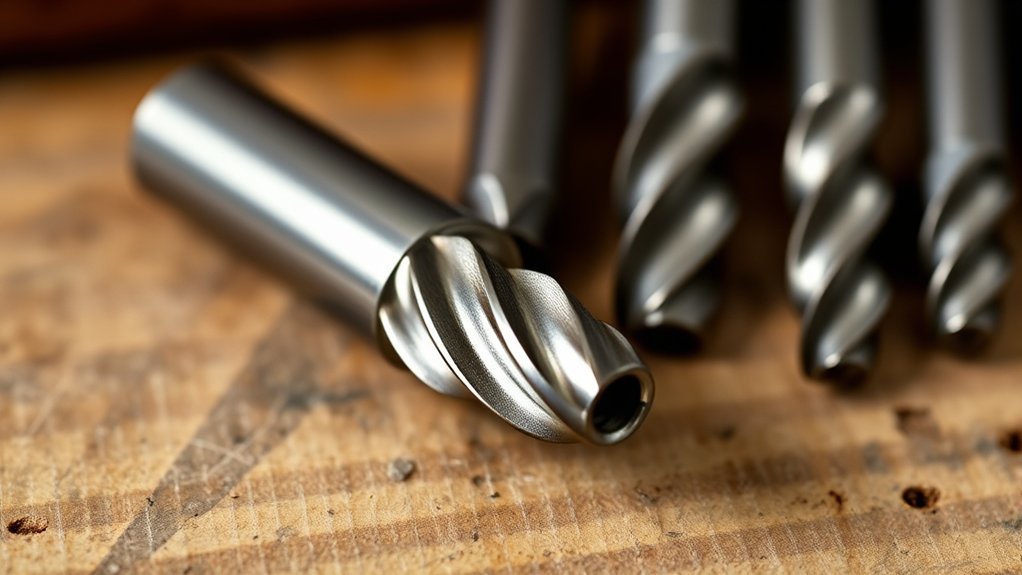
To find the right drill bit size for a 3/8 tap, you need to calculate the correct pilot hole diameter based on the thread pitch. Drill bit selection hinges on matching this diameter to guarantee proper thread forming without damaging the material or tap.
For a 3/8 tap, the pilot hole must accommodate the major diameter minus the thread depth, directly influenced by the thread pitch. Using an undersized drill bit risks excessive torque and tap breakage, while an oversized bit leads to weak threads.
Precise calculation allows ideal chip clearance and thread engagement. Focus on the tap’s specifications and material hardness during drill bit selection to maintain thread integrity and extend tool life. Accurate pilot hole sizing is fundamental for successful thread forming in machining operations.
Calculate the Tap Drill Size for 3/8 Threads
Calculating the tap drill size for 3/8 threads requires applying a formula that accounts for the thread pitch and major diameter. Specifically, you subtract the thread pitch from the major diameter to determine the appropriate drill size, ensuring ideal thread engagement.
For example, with a 3/8-16 UNC thread, the major diameter is 0.375 inches and the pitch is 1/16 inch (0.0625 inches), so the tap drill size is approximately 0.3125 inches.
Keep in mind that drill bit materials, such as high-speed steel or cobalt, influence the precision of your hole and the quality of thread engagement. Selecting the correct drill size based on this calculation guarantees the threads will hold securely without risk of stripping or insufficient engagement, critical for mechanical integrity.
Why Choosing the Correct Drill Bit Size Matters for Thread Strength
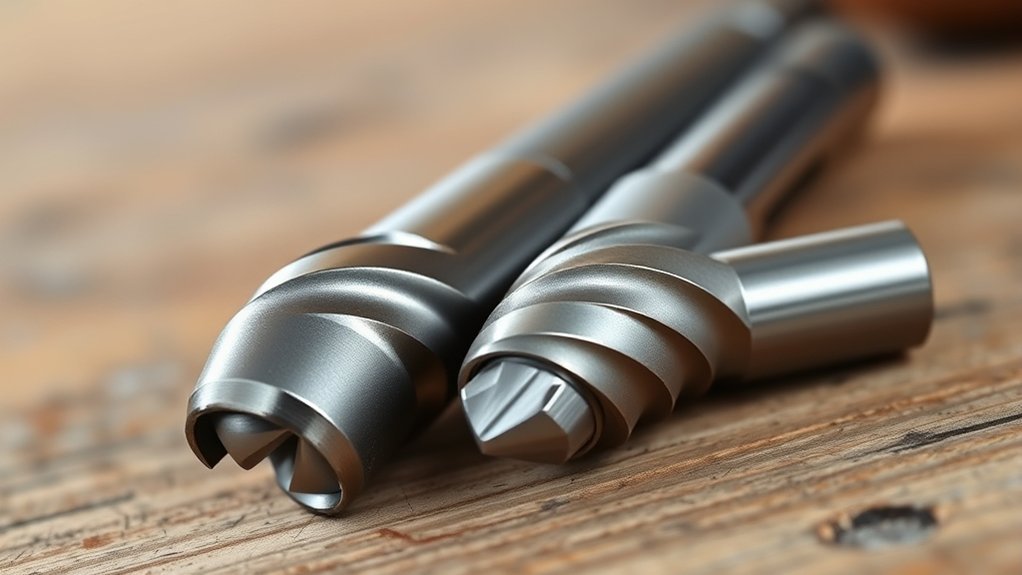
Although selecting the right drill bit size might seem straightforward, it directly impacts the strength and durability of your threaded connection. Using an incorrect size compromises thread durability and prevents an ideal fit, leading to weak joints or material damage.
| Drill Bit Size | Thread Durability | Ideal Fit |
|---|---|---|
| Too Small | Reduced strength | Tight, risks stripping |
| Correct Size | Maximum strength | Precise, secure fit |
| Too Large | Weak threads | Loose, prone to failure |
What’s the Difference Between UNC, UNF, and Metric 3/8 Taps?
When selecting between UNC, UNF, and Metric 3/8 taps, you need to take into account their distinct thread pitches, which affect thread engagement and strength. Each standard suits specific applications and materials, influencing compatibility and performance.
Understanding these differences guarantees you choose the correct tap for your project’s requirements.
Thread Pitch Differences
Since taps come in various thread pitches, understanding the differences between UNC, UNF, and metric 3/8 taps is crucial for selecting the right drill bit size. UNC (Unified National Coarse) taps have a larger thread pitch, meaning fewer threads per inch and a larger pitch diameter compared to UNF (Unified National Fine) taps.
UNF taps feature more threads per inch, resulting in a smaller pitch diameter and finer threads. Metric 3/8 taps are measured in millimeters, with thread pitch defined as the distance between threads in millimeters, differing from the inch-based UNC and UNF standards.
Recognizing these variations in thread pitch and pitch diameter allows you to choose a drill bit that guarantees proper thread engagement and strength, avoiding issues like stripping or weak threads in your tapped hole.
Application Variations
Three main types of 3/8 taps: UNC, UNF, and metric, serve distinct applications based on their thread characteristics. Understanding these differences helps you select the right tapping techniques and hole preparation for your project.
- UNC (Unified National Coarse) taps suit general-purpose fastening, offering robust threads for softer materials.
- UNF (Unified National Fine) taps create finer threads, ideal for high-stress or precision applications.
- Metric 3/8 taps follow ISO standards, requiring specific drill sizes and thread pitches.
- Hole preparation varies: UNC needs larger pilot holes than UNF. Metric taps demand precise metric-sized holes.
Material Compatibility
Although UNC, UNF, and metric 3/8 taps share a common nominal size, their material compatibility varies due to differences in thread geometry and pitch. When selecting a tap, you must consider the material types involved, as these compatibility factors influence thread strength and wear resistance.
UNC taps, with their coarser pitch, suit softer materials like aluminum and mild steel by reducing thread stripping risk. UNF taps, featuring finer threads, excel in harder materials such as stainless steel, providing increased tensile strength and fatigue resistance.
Metric 3/8 taps, defined by the ISO standard, align with international material specifications, ensuring ideal engagement in metric-rated alloys. Understanding these compatibility factors helps you choose the correct tap, ensuring thread integrity and longevity across diverse material types.
Tools and Tips for Drilling 3/8 Tap Holes
To drill holes for a 3/8 tap accurately, you need the correct drill bit size matched to the tap’s thread specifications. Maintain appropriate drill speeds based on the material to prevent tool wear and guarantee clean cuts.
Applying proper lubrication and cooling will reduce heat buildup and extend both drill bit and tap life.
Choosing Correct Drill Bit
When preparing to drill holes for a 3/8 tap, selecting the correct drill bit is critical to guarantee proper thread engagement and tool longevity. You need to evaluate the drill bit types and their compatibility with your tap applications.
Here’s how to choose accurately:
- Identify the tap size and thread pitch to determine the recommended drill bit diameter.
- Select a drill bit type, such as high-speed steel or cobalt, suited for the material you’re tapping.
- Calculate the drill size based on the tap’s major diameter minus the thread pitch for ideal thread depth.
- Verify the drill’s compatibility with your tap application, taking into account hardness and material thickness.
Drill Speed Recommendations
Since maintaining the correct drill speed directly impacts thread quality and tool life, you should adjust your drilling RPM based on the material type and drill bit diameter when creating holes for a 3/8 tap.
For softer materials like aluminum, a higher drill bit speed around 1500 to 2000 RPM is ideal, while harder metals like stainless steel require slower speeds, typically between 300 and 600 RPM, to prevent overheating and premature wear.
The drill bit diameter also influences the ideal RPM; larger bits demand slower speeds to reduce friction and maintain control. By calculating and adhering to recommended drill bit speed guidelines, you guarantee precise hole dimensions and extend tool longevity, ultimately achieving cleaner threads and reducing the risk of tap breakage during threading operations.
Lubrication And Cooling Tips
Although proper drill speed is essential, applying adequate lubrication and cooling during the tapping process greatly enhances tool performance and thread quality. Effective drill lubrication reduces friction and heat buildup, preventing premature tool wear.
Implement these cooling techniques to optimize your 3/8 tap drilling:
- Use cutting oil specifically designed for tapping to maintain low temperatures and smooth chip evacuation.
- Apply lubricant continuously during drilling to minimize metal-to-metal contact and improve thread precision.
- Employ air or mist coolant systems to dissipate heat rapidly without contaminating the workpiece.
- Pause periodically during deep holes to allow heat to dissipate and reapply lubrication.
Avoid Common Mistakes When Drilling 3/8 Tap Holes
To guarantee clean and accurate threads, you must avoid common mistakes when drilling holes for a 3/8 tap. Drilling mistakes like using the wrong drill bit size or poor tap alignment can ruin thread integrity. Ascertain the drill bit is perpendicular to the surface to maintain tap alignment, preventing cross-threading and tool breakage.
| Common Drilling Mistakes | Consequences |
|---|---|
| Incorrect drill bit size | Weak or stripped threads |
| Poor tap alignment | Cross-threading, tool damage |
| Insufficient lubrication | Overheating, premature wear |
You should also avoid excessive feed pressure, which can cause drill bit wandering. Maintain steady speed and use cutting fluid to reduce friction. By controlling these variables, you’ll create precise, durable threaded holes suitable for 3/8 taps without complications.
Check and Adjust Drill Bit Size for Perfect Threads
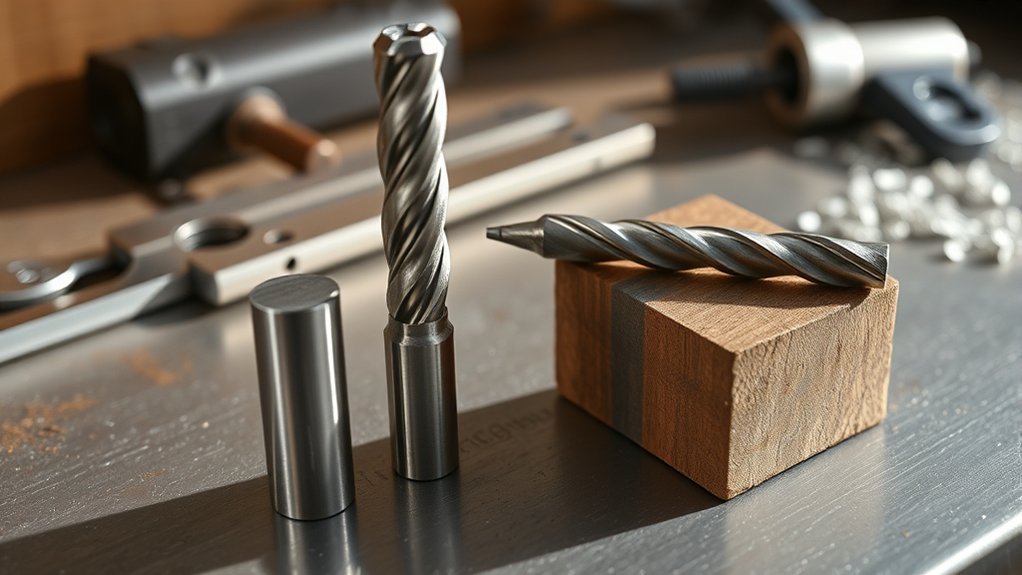
When preparing for a 3/8 tap, you must verify the drill bit size matches the tap specifications exactly to confirm thread strength and accuracy. Proper drill bit selection directly impacts thread engagement and the durability of your tapped hole.
To check and adjust drill bit size for perfect threads, follow these steps:
- Measure the tap’s major diameter and thread pitch to determine the proper drill bit size.
- Compare the recommended drill bit size against your current bit, considering any wear or manufacturing tolerance.
- Test the drill bit by drilling a sample hole and tapping it, inspecting thread fit and engagement.
- Adjust by selecting a slightly larger or smaller drill bit if threads are too tight or loose to optimize engagement and strength.
This process confirms precise, reliable threading every time.
Conclusion
Choosing the right drill bit size for your 3/8 tap isn’t just a detail—it’s critical for strong, reliable threads. You want to avoid excessive torque that could break your tap or loose fittings that compromise your project.
Remember, for a 3/8-16 UNC tap, a 0.3125-inch drill bit is ideal. Using the correct drill bit helps ensure your threads are precise and durable.
So, why risk weak threads when a precise drill size guarantees durability and performance every time? Get it right, and your threads will hold strong with the proper size drill bit for 3/8 tap.