When you’re preparing to drill a hole for a 7/16-inch bolt, selecting the correct drill bit size is critical for ensuring proper fit and strength.
Knowing what size drill bit for a 7/16 bolt to use will help you achieve a secure and precise installation.
You’ll need to take into account whether the hole is for a clearance fit or a tapped thread, as this directly affects the bit size.
Choosing a bit that’s too large or too small can compromise the bolt’s performance or the material’s integrity.
Understanding these nuances is essential before you proceed.
Proper bit selection ensures the bolt functions correctly and the material remains strong.
What Size Drill Bit Do You Need for a 7/16 Bolt?
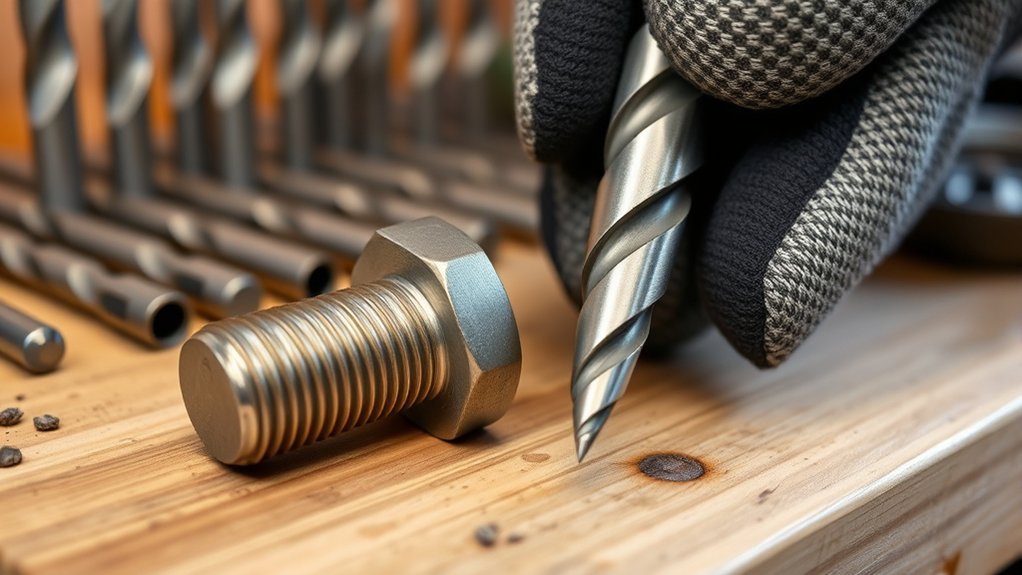
When preparing to drill a hole for a 7/16-inch bolt, you need a drill bit that matches the bolt’s core diameter to assure a proper fit and secure fastening. For bolt installation, a 7/16-inch bolt typically requires a drill bit sized between 27/64 inch and 29/64 inch, depending on the bolt’s thread pitch and material hardness.
Selecting the correct drill bit guarantees ideal thread engagement without compromising structural integrity. Employ precise drilling techniques, maintain perpendicular alignment and steady pressure to avoid oversized holes or misalignment. Using a slightly smaller drill bit than the bolt’s nominal diameter allows threads to form securely during installation.
This technical approach to selecting and using drill bits enhances the reliability and strength of the bolted joint in your assembly process.
How to Measure a 7/16 Bolt Accurately
To measure a 7/16 bolt accurately, start by determining the bolt’s diameter across the threaded section. Use calipers to obtain a precise reading, ensuring the jaws contact the outer edges without compressing the threads. This measurement confirms the bolt size and guides you to select the correct drill bit.
Measuring Bolt Diameter
Although bolt sizes are often listed nominally, measuring the exact diameter of a 7/16 bolt requires using a caliper or micrometer to obtain an accurate reading across the outermost thread points. This measurement is critical because the bolt thread profile and bolt grade influence the fit and strength requirements.
To measure diameter correctly:
- Align the measuring tool perpendicular to the bolt axis, ensuring it spans the widest thread peaks.
- Record the reading precisely, avoiding pressure that could deform threads or tools.
- Confirm measurements on multiple sections to account for thread wear or inconsistencies.
Using Calipers Effectively
Accurately measuring a 7/16 bolt requires more than just aligning a caliper across the threads. To guarantee precise caliper usage, position the caliper jaws on the bolt’s outer diameter, avoiding thread peaks which can distort your reading.
Use the caliper’s digital or vernier scale to capture the measurement, ensuring the tool is perpendicular to the bolt axis for accurate measurements. Confirm the caliper zeroes before measuring to eliminate errors.
Repeat the measurement at several points along the bolt to verify consistency. This method guarantees you determine the bolt’s true major diameter, critical for selecting the appropriate drill bit size.
Choosing the Right Drill Bit Size for Bolt Strength
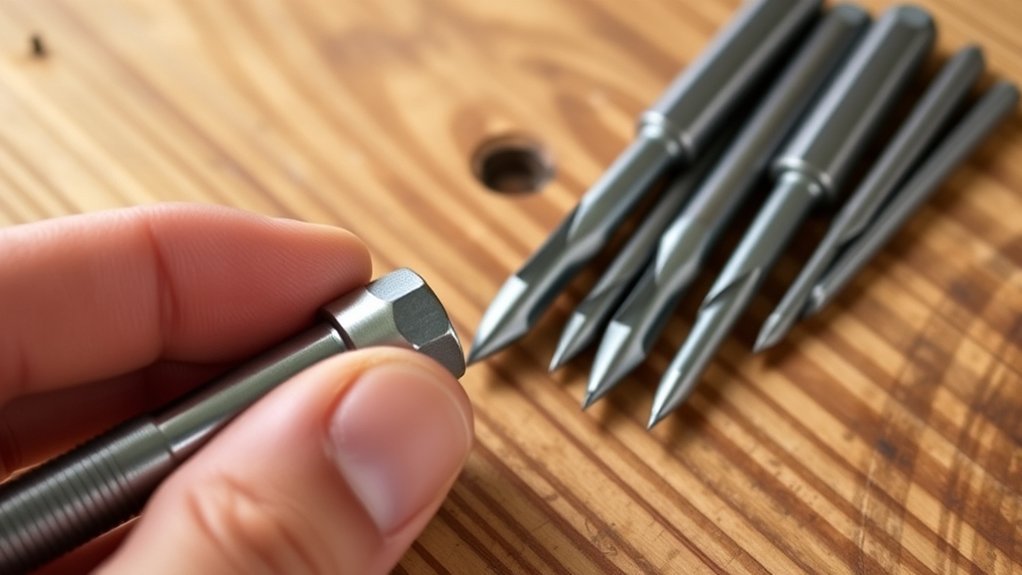
When selecting a drill bit size for a 7/16 bolt, you need to guarantee the hole aligns perfectly with the bolt’s diameter to maintain structural integrity. Proper drill bit selection directly influences bolt strength by ensuring ideal fit and load distribution.
Ensuring the drill bit matches the 7/16 bolt diameter is key for optimal fit and strength.
To choose correctly:
- Measure the bolt’s outer diameter precisely, considering thread pitch if applicable.
- Select a drill bit that matches the bolt’s core diameter for tapped holes or the bolt’s nominal diameter for clearance holes.
- Avoid oversizing the hole, which reduces bolt grip and compromises joint strength.
Drill Bits for Clearance Holes vs. Tapped Holes With 7/16 Bolts
Selecting the right drill bit size depends on whether you’re creating a clearance hole or a tapped hole for a 7/16 bolt. For clearance holes, you need a drill bit slightly larger than the bolt’s outer diameter, typically a 29/64-inch bit, allowing the bolt to pass through without threading. This guarantees proper fit and ease of assembly.
In contrast, tapped holes require a smaller drill bit to accommodate the internal threads. For a 7/16 bolt, this usually means a 23/64-inch drill bit, which provides the correct hole diameter for threading and ideal bolt engagement. Understanding this distinction is critical for mechanical integrity and assembly precision when working with 7/16 bolts. Your choice directly affects bolt fit and holding strength.
Fractional vs. Metric Drill Bits for 7/16 Bolts
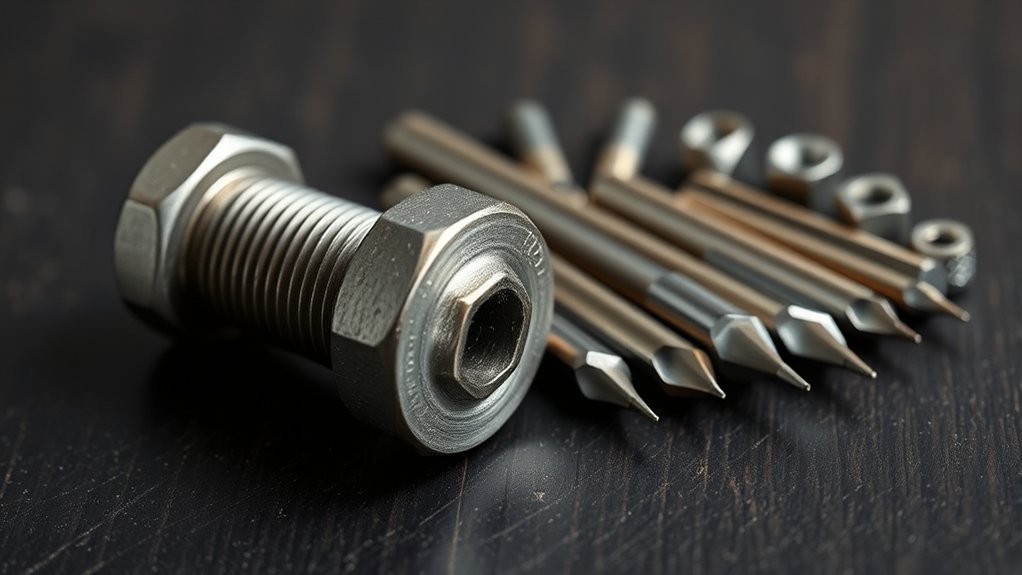
When working with a 7/16 bolt, you’ll typically use fractional drill bits sized around 29/64 inch for clearance holes.
However, metric drill bits can offer close equivalents, often around 11.5 mm, which may simplify sourcing or improve compatibility in mixed measurement systems. Understanding these size correlations helps you select the most accurate drill bit for your application.
Fractional Drill Bit Sizes
Understanding the differences between fractional and metric drill bit sizes is crucial for accurately fitting a 7/16 bolt. When working with fractional sizes, you’ll primarily encounter drill bit types measured in inches, which align directly with the imperial system used for the bolt.
For a 7/16 bolt, selecting the correct fractional drill bit guarantees proper hole diameter and bolt fit.
Consider these key points:
- Fractional drill bits are sized in increments like 1/16 or 1/32 inches, providing precise control over hole dimensions.
- Common fractional drill bit sizes for a 7/16 bolt range from 27/64 to 15/32 inches, depending on clearance or bolt threading.
- Using fractional sizes minimizes conversion errors, guaranteeing consistent, reliable hole preparation for 7/16 bolts without metric approximations.
Metric Drill Bit Equivalents
Although fractional drill bits are standard for 7/16 bolts, you’ll often need to use metric equivalents in regions or projects favoring the metric system. Understanding metric conversion is vital for accurate drill bit sizing.
A 7/16-inch bolt measures approximately 11.1125 mm in diameter. The closest common metric drill bit size is 11 mm, which is slightly undersized, or 11.5 mm, which is slightly oversized. Selecting between these depends on the required fit, whether a tight or clearance hole is necessary.
Precise metric drill bit sizing guarantees compatibility and prevents issues like bolt binding or excessive play. When substituting, always verify tolerances and intended application. Using proper metric equivalents maintains structural integrity, especially in international or metric-standard environments where fractional sizes aren’t standard.
Tips for Drilling Clean Holes for 7/16 Bolts
Since accurate hole dimensions are critical for securing a 7/16 bolt, you should select the correct drill bit size and maintain steady pressure throughout drilling. To guarantee clean drilling and ideal bolt installation, follow these tips:
Selecting the right drill bit and steady pressure ensures precise holes for secure 7/16 bolt installation.
- Use a sharp drill bit designed for the material to prevent wandering and create precise holes.
- Apply consistent, moderate pressure to avoid overheating and material deformation, which can compromise hole integrity.
- Employ a backing material or clamp the workpiece firmly to reduce vibration and splintering at the exit point.
Following these steps minimizes burrs and irregularities, guaranteeing the bolt fits snugly without excess play. Clean, accurately sized holes enhance load distribution and structural stability during bolt installation, preventing premature wear or failure.
How Drill Bit Material Affects Drilling 7/16 Bolt Holes
Choosing the right drill bit material greatly impacts the efficiency and accuracy when drilling holes for 7/16 bolts. Different drill bit types, such as high-speed steel (HSS), cobalt, and carbide, offer varying material hardness levels that directly influence cutting performance and durability.
For instance, HSS bits suit general applications but may dull quickly on hardened surfaces. Cobalt bits provide enhanced hardness and heat resistance, making them ideal for tougher metals. Carbide bits, being the hardest, excel in maintaining sharpness but require careful handling due to brittleness.
Selecting a drill bit with appropriate material hardness guarantees cleaner holes and reduces wear, improving precision when working with 7/16 bolts. Assess your workpiece material and match it with a compatible drill bit type to optimize drilling results.
Common Mistakes When Drilling Holes for 7/16 Bolts
Understanding the material of your drill bit is just one part of drilling accurate holes for 7/16 bolts; avoiding common mistakes during the process is equally important. When drilling, improper drilling techniques can lead to oversized or misaligned holes, compromising bolt alignment and structural integrity.
Proper drilling techniques are crucial to avoid oversized or misaligned holes for 7/16 bolts.
Avoid these pitfalls:
- Using excessive force: It causes bit wandering and uneven holes.
- Neglecting pilot holes: Skipping this step reduces precision and increases material stress.
- Ignoring drill speed: Incorrect speeds heat the bit, dulling edges and degrading hole quality.
Conclusion
Choosing the right drill bit for your 7/16-inch bolt is like selecting the perfect key for a lock—too large, and the fit’s loose; too small, and it won’t turn smoothly. By measuring accurately and considering thread pitch, you guarantee a strong, secure connection.
Remember to differentiate between clearance and tapped holes, and select drill bit material suited to your workpiece. Precision here assures lasting joint integrity and ideal bolt performance.
For a 7/16-inch bolt, selecting the proper drill bit size is crucial to ensure the bolt fits correctly and functions as intended.