You might think any 3/16 drill bit will work for your 3/16 screw, but that’s rarely the case if you want a solid hold.
What size drill bit for a 3/16 screw you choose depends on a few important factors.
Selecting the correct bit size depends on whether you’re drilling a pilot hole or a clearance hole.
The material you’re working with also affects this choice.
Understanding these nuances can prevent stripped threads or material damage.
It’s worth exploring the precise drill bit sizes suited for your task.
What Drill Bit Size Matches a 3/16 Screw?
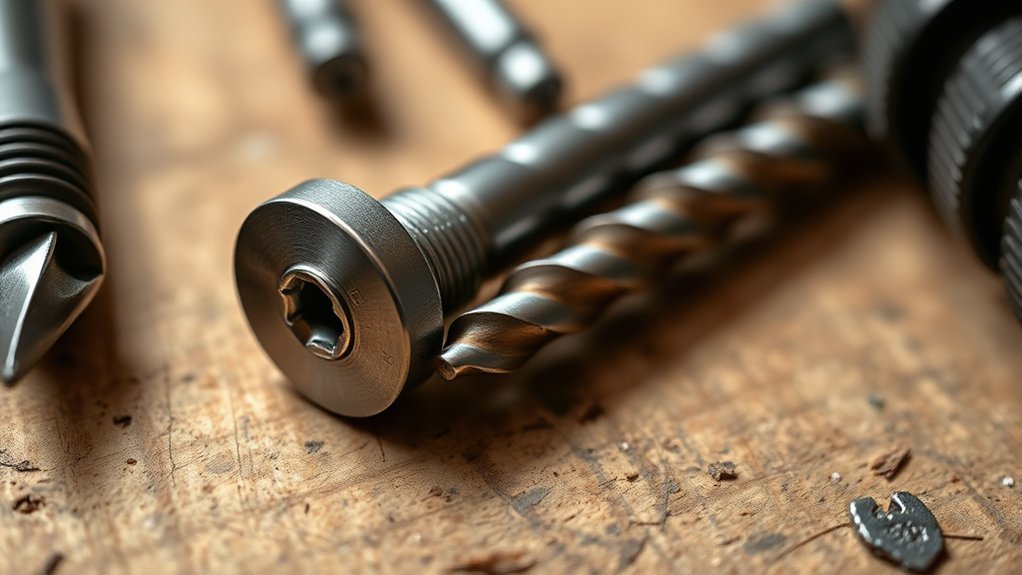
When selecting a drill bit size for a 3/16 screw, you need to evaluate whether you’re drilling a pilot hole for the screw’s shank or a clearance hole for the screw’s body. For pilot holes, choose a drill bit slightly smaller than 3/16 inch to accommodate the screw’s core diameter, guaranteeing adequate grip without splitting the material.
Clearance holes require a bit that matches or slightly exceeds 3/16 inch, allowing the screw to pass freely. Consider drill bit types, such as twist, brad-point, or masonry, based on your screw materials and substrate to optimize precision and reduce wear.
Accurately matching bit size to screw dimensions and materials guarantees secure fastening and structural integrity in your project.
Choosing the Right Drill Bit Size for Wood and Metal
Although wood and metal require different drilling approaches, selecting the correct drill bit size for each material is essential to confirm screw fit and material integrity. When working with wood, consider wood density; harder woods demand slightly smaller pilot holes to prevent splitting while maintaining grip.
For a 3/16 screw, a bit close to the screw’s minor diameter typically works best. In metal, you must account for metal thickness and hardness. Drill a pilot hole matching the screw’s core diameter to confirm proper threading without excessive torque.
Using a bit too large reduces holding strength, while one too small risks material damage or screw breakage. Accurately matching drill bit size to the material characteristics confirms efficient fastening and structural reliability in both wood and metal applications.
Why Correct Drill Bit Size Matters for 3/16 Screws
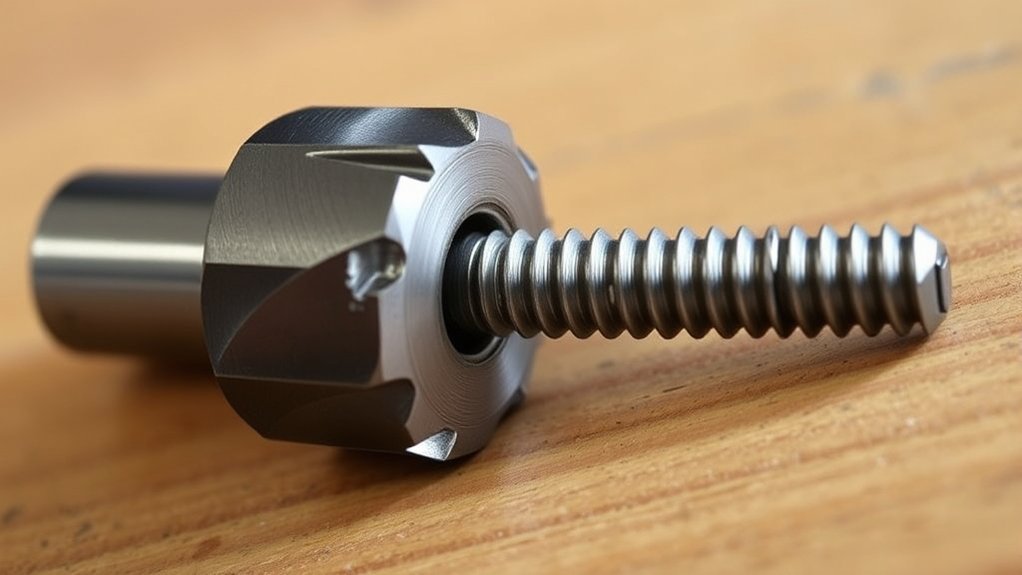
Selecting the correct drill bit size directly impacts the performance and durability of a 3/16 screw joint. When you use an appropriately sized drill bit, you optimize screw strength by guaranteeing the threads engage properly within the material.
Too small a hole increases insertion torque, risking screw breakage or material splitting, while too large a hole reduces thread engagement, weakening the joint. Material compatibility also plays an important role; harder materials require precise pilot holes to prevent stress concentrations and guarantee consistent load distribution.
Pilot Hole Drilling Tips for 3/16 Screws
Three key factors influence effective pilot hole drilling for 3/16 screws: drill bit size, drilling speed, and material type. To optimize pilot hole techniques, select a drill bit slightly smaller than the screw’s core diameter to guarantee proper grip without splitting the material.
Adjust drilling speed based on material hardness, using slower speeds for hardwoods and metals and faster for softwoods, to maintain control and prevent overheating. Maintain perpendicular alignment to the surface to assure straight screw installation and reduce stress on the screw shaft.
Use steady pressure, avoiding excessive force that could widen the hole or cause bit wandering. Finally, clear debris from the hole frequently to enhance accuracy and screw seating. Applying these technical considerations will improve pilot hole precision and overall screw installation quality.
Common Mistakes When Drilling 3/16 Screws
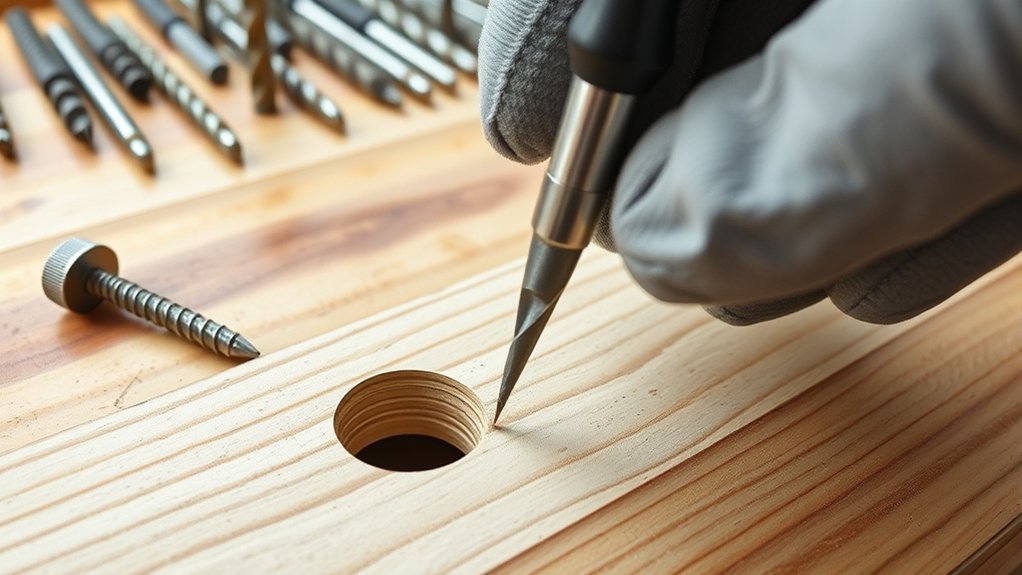
Even with the right drill bit size and proper technique, errors can undermine the effectiveness of drilling 3/16 screws. You must guarantee screw compatibility with the drill bit and material. Using an incorrect drill bit leads to poor grip, stripped threads, or split material.
| Mistake | Cause | Effect |
|---|---|---|
| Incorrect drill bit | Using a bit too large or small | Loose fit or material damage |
| Ignoring screw compatibility | Mismatched screw and pilot hole | Reduced holding strength |
| Excessive pressure | Forcing drill bit | Bit breakage or oversized holes |
| Skipping pilot holes | Direct screwing | Material splitting, weak joints |
Avoid these by matching drill bit size precisely to screw specifications and verifying compatibility before drilling.
Conclusion
Choosing the right drill bit size for your 3/16 screw—usually 9/64 inch for pilot holes—is essential for secure fastening. You might think using a larger bit saves time, but it risks weakening the material and reducing thread grip.
By selecting the precise size, you guarantee ideal engagement and prevent damage. Don’t overlook this step; proper sizing assures structural integrity and a clean, professional finish every time.
In conclusion, knowing what size drill bit for a 3/16 screw to use is crucial for achieving the best results in your project.