When you need to find an equivalent to a 25/64 drill bit, precision matters. This size translates to about 0.3906 inches or just under 10 millimeters.
It’s close to common metric sizes but does not exactly match any standard. Choosing the right substitute requires understanding the slight differences in diameter and how they affect your project’s fit and finish.
But how do you determine which nearby size will maintain your tolerances without compromising quality?
What Size Is a 25/64 Drill Bit? (Decimal, Fractional & Metric)
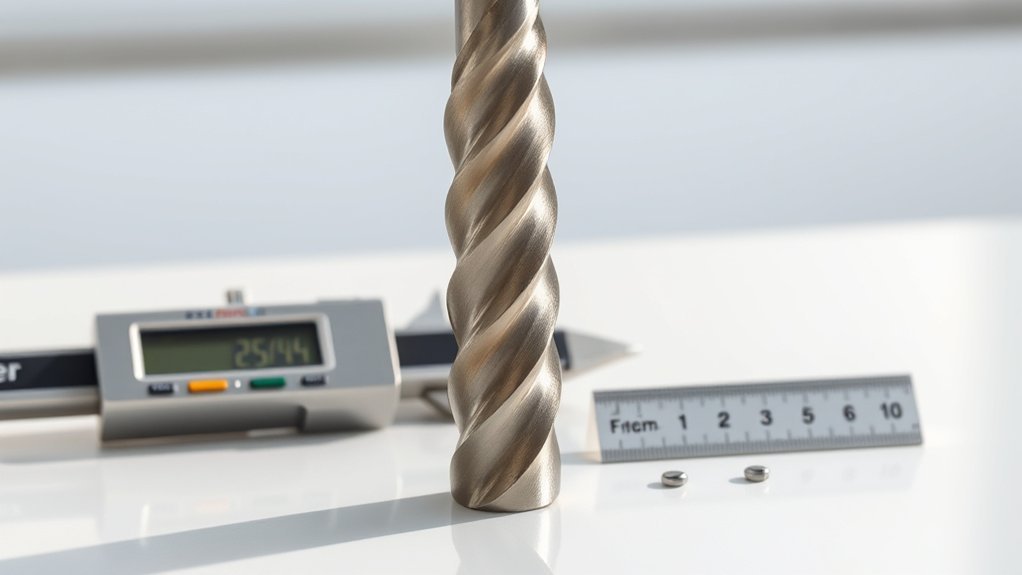
Although drill bit sizes may seem straightforward, understanding the exact dimensions of a 25/64 drill bit requires converting the fractional measurement into decimal and metric equivalents. You’ll find that 25/64 inches translates precisely to 0.390625 inches in decimal form.
This conversion is essential for drill bit conversions, ensuring compatibility with tools and materials specified in decimal or metric units. When you look at fractional equivalents, 25/64 sits between 3/8 inch (0.375 inches) and 13/32 inch (0.40625 inches), making it a precise choice for specific applications.
Knowing these exact values helps you select or verify drill bits accurately, maintaining consistency across standards. This technical clarity avoids errors in sizing and improves machining or construction outcomes.
Comparing 25/64 Drill Bit to Metric Sizes
When you compare a 25/64 drill bit to metric sizes, you’ll find it closely matches a 10 mm drill bit but with subtle differences that can impact precision tasks. The 25/64 inch bit measures approximately 9.92 mm, slightly under the 10 mm standard metric size.
This variance, though minimal, affects tolerance levels, especially in applications demanding exact hole diameters. Different drill bit types, such as twist or carbide, may also influence hole quality and fit when substituting between imperial and metric sizes.
You need to take these factors into account carefully; using a 10 mm bit instead of a 25/64 might lead to looser fits or require adjustments in assembly. Understanding these nuances guarantees you maintain dimensional accuracy and functional integrity in machining or fabrication work.
Common Drill Bit Sizes Near 25/64 for Easy Substitutes
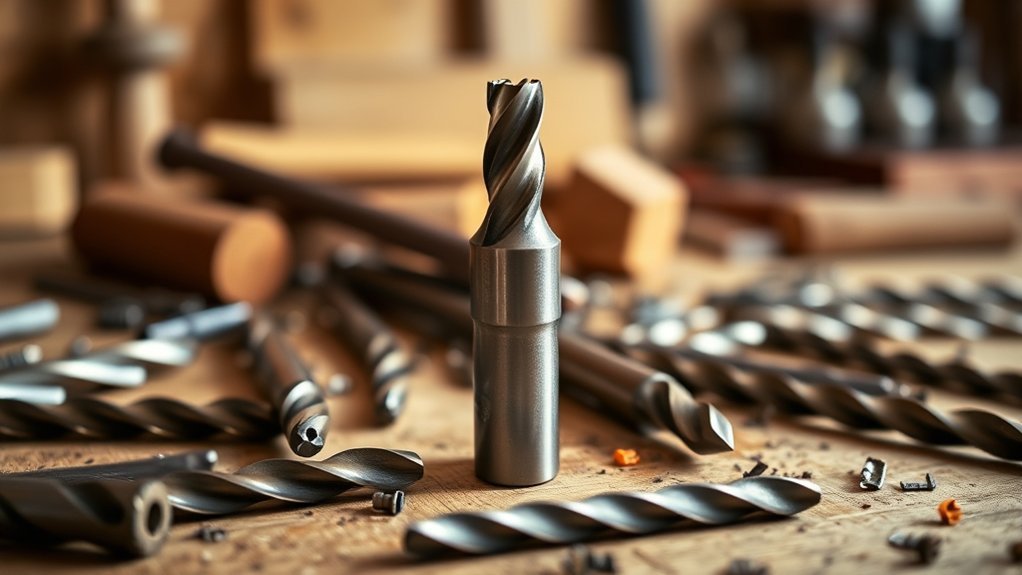
Since the 25/64 inch drill bit measures approximately 9.92 mm, close but not identical to the 10 mm metric size, you may need alternate options for certain tasks. Common drill bit sizes near 25/64 include 3/8 inch (9.53 mm) and 13/32 inch (10.32 mm), which can serve as substitutes depending on tolerance requirements.
When selecting substitute materials, consider the drill bit types: high-speed steel (HSS), cobalt, or carbide, based on the workpiece composition. For softer materials, a 10 mm bit may suffice despite slight size differences, but harder materials demand precise sizing to maintain structural integrity.
Always evaluate the bit’s diameter against the application’s specifications, ensuring the substitute drill bit type and material align with performance needs to prevent tool wear or material damage.
How to Measure and Verify Your Drill Bit Size
Before using a drill bit, you need to measure and verify its size accurately to ascertain it matches your project’s specifications. Precise drill bit measurements guarantee ideal fit and prevent costly errors.
Start by using a caliper or drill gauge to measure the diameter, comparing it against standard size charts. Confirming sizes avoids mismatched holes and structural weaknesses.
To verify sizes effectively:
Use a digital caliper for exact diameter readings.
Compare measurements with a drill bit size chart.
Inspect the bit’s tip and shank for wear that affects size.
Test fit the bit in a drill gauge for quick size confirmation.
Re-measure after use to detect wear and maintain accuracy.
When to Use a 25/64 Drill Bit vs. Equivalent Sizes
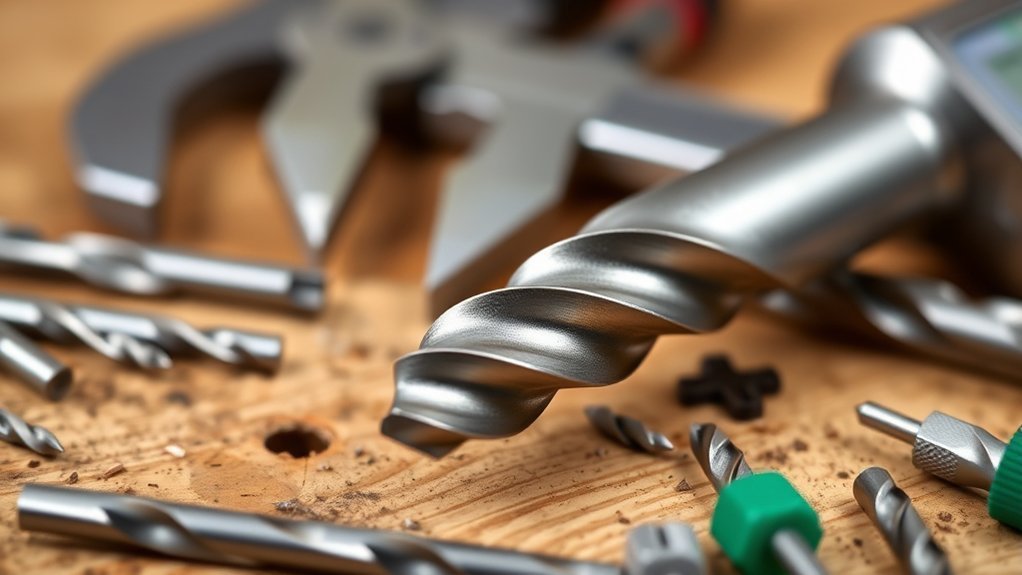
You’ll choose a 25/64 drill bit over equivalent sizes based on the material’s hardness and your need for exact hole dimensions. When working with tougher materials, the precise fit of a 25/64 bit guarantees structural integrity.
Slightly larger or smaller sizes may speed up drilling but sacrifice accuracy. Balancing precision versus efficiency depends on the specific application and tolerance requirements you face.
Material Compatibility Differences
Although various drill bits may share similar diameters, the 25/64 drill bit offers specific advantages depending on the material you’re working with. Understanding the material properties helps you select a bit that guarantees application suitability and peak performance.
The 25/64 bit’s diameter and flute design make it well-suited for certain materials where equivalent sizes might fall short.
Consider these factors when choosing:
- Hardness and density of the material impact bit wear and heat generation.
- Wood demands a bit with aggressive cutting edges to prevent tear-out.
- Metals require bits that maintain sharpness and resist deformation.
- Plastics benefit from bits minimizing melting through controlled chip removal.
- Composite materials need bits that balance precision and reduced delamination.
Precision vs. Speed Tradeoffs
Selecting between a 25/64 drill bit and its equivalent sizes hinges on balancing precision and drilling speed. You’ll find that smaller bits provide superior precision but may reduce drilling efficiency, while slightly larger equivalents increase speed at the cost of accuracy.
Achieving the right performance balance depends on your project’s tolerance requirements and material hardness.
| Drill Bit Size | Application Focus |
|---|---|
| 25/64″ | High precision tasks |
| 3/8″ (0.375″) | Faster drilling, less precise |
| 0.390″ | Increased speed, moderate precision |
| 0.400″ | Maximum drilling efficiency |
Choose the 25/64 bit for tight fits and critical tolerances. Opt for equivalents when speed outweighs the need for exact dimensions.
Tips for Choosing the Best Substitute for a 25/64 Drill Bit
When selecting a substitute for a 25/64 drill bit, you need to guarantee the alternative’s diameter closely matches the original to maintain hole accuracy. Additionally, consider the material compatibility to avoid premature wear or damage during drilling.
Evaluating these factors helps you achieve precise, reliable results without compromising tool performance.
Diameter Comparison Accuracy
Understanding the exact diameter of a 25/64 drill bit is essential for finding an appropriate substitute. The nominal size is approximately 0.3906 inches, so any replacement must match this dimension closely to guarantee size accuracy.
When comparing drill bits, even a slight deviation can affect hole fit and assembly integrity.
To maintain precision, consider these factors:
- Verify the substitute’s diameter with a caliper or micrometer
- Select drill bits manufactured to tight tolerance standards
- Avoid rounding sizes that compromise exactness
- Prioritize fractional sizes closest to 25/64 (e.g., 3/8” or 13/32”) only if within acceptable tolerance
- Confirm the substitute’s size accuracy aligns with your project requirements
Accurate diameter comparison prevents costly errors and preserves functional integrity in your work.
Material Compatibility Considerations
Matching the exact diameter of a 25/64 drill bit sets the foundation, but material compatibility plays an equally important role in choosing the best substitute. You must consider the material types you’re drilling into, as different substrates, such as wood, metal, and plastic, demand specific drill bit compositions and coatings.
Compatibility factors include hardness, heat resistance, and wear tolerance. For example, a high-speed steel bit suits wood and soft metals but may dull rapidly on hardened steel. Carbide-tipped bits excel in abrasive materials but can be brittle.
Selecting a substitute without matching these compatibility factors risks inefficient drilling, bit damage, or compromised hole quality. Consequently, prioritize both diameter and material compatibility to guarantee ideal performance and tool longevity when substituting a 25/64 drill bit.
Where to Buy Drill Bits Equivalent to 25/64
Although drill bits sized exactly at 25/64 inch can be rare, you can find equivalent alternatives by searching specialized hardware suppliers, industrial tool retailers, or reputable online marketplaces. When selecting drill bit brands, focus on those offering precise metric or fractional equivalents to guarantee compatibility with your project requirements.
Online retailers often provide detailed specifications, customer reviews, and comparison tools, helping you make informed decisions efficiently.
Online retailers offer detailed specs, reviews, and comparison tools to help you choose the right drill bit efficiently.
Consider these reliable sources for purchasing 25/64 drill bit equivalents:
- Industrial supply companies with CNC-grade tooling
- Specialist drill bit manufacturers’ websites
- Large-scale online marketplaces like Amazon or eBay
- Local hardware stores with custom order options
- Dedicated tool distributors offering calibrated sets
Final Thoughts on Using and Substituting 25/64 Drill Bits
Finding the right 25/64 drill bit or its equivalent requires careful consideration of size tolerances and material compatibility. When substituting, you must account for bit size variations that can affect hole precision and fit.
If an exact 25/64 bit isn’t available, selecting a slightly larger or smaller diameter may be acceptable depending on your project’s tolerance levels. Employing alternative drilling techniques, such as step drilling or reaming, can help achieve the desired hole dimensions when standard bits don’t match perfectly.
Always verify the material hardness and drill bit coating to guarantee peak performance and tool longevity. By analyzing these factors systematically, you can maintain drilling accuracy and avoid compromising your project’s structural integrity.
Conclusion
When you need a 25/64 drill bit, choosing the right equivalent is essential to avoid compromising your project’s precision. While a 10 mm bit is slightly larger, options like 3/8 inch or 13/32 inch can work if you assess your tolerance carefully.
Remember, using the wrong size is like fitting a square peg in a round hole—it might seem close, but even tiny differences can ruin your workmanship.
Always measure and match precisely to ensure the best results. Finding the correct equivalent to 25 64 drill bit is key to maintaining accuracy in your work.