When selecting drill bits, understanding whether a 5/8 drill bit is bigger than a 1/2 is essential. A 5/8-inch bit measures 0.625 inches, while a 1/2-inch bit is 0.500 inches, making the 5/8 noticeably larger.
This size difference impacts the diameter of the hole and the fit of fasteners, which can affect your project’s precision and overall integrity.
Before choosing which bit to use, consider how this size variation influences the material and application you’re working on.
How Much Bigger Is a 5/8 Drill Bit Than a 1/2?
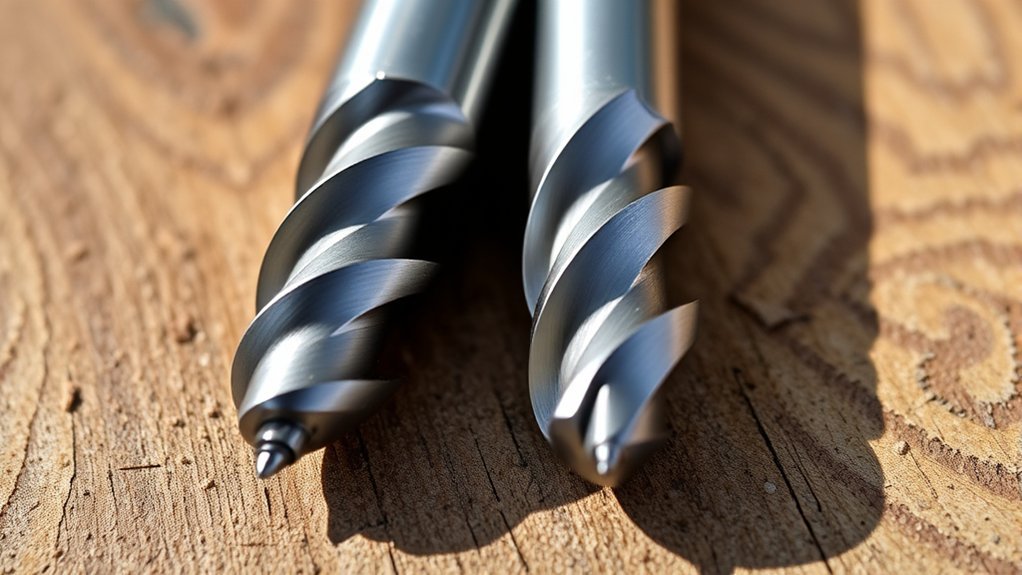
A 5/8-inch drill bit is exactly 1/8-inch larger in diameter than a 1/2-inch drill bit. When you conduct a drill bit comparison, the size differences are straightforward: 1/2 inch equals 0.500 inches, while 5/8 inch equals 0.625 inches.
This 0.125-inch increment may seem small, but it’s significant in applications requiring precise hole diameters. Understanding this difference helps you select the right bit for your project’s specifications.
Both sizes serve different purposes based on hole requirements, clearance, or fastener fit. By focusing on these exact measurements, you avoid guesswork and guarantee accuracy.
Why Does Drill Bit Size Matter for Your Project?
Knowing the exact difference between a 5/8-inch and a 1/2-inch drill bit sets the stage for understanding why drill bit size impacts your project’s outcome. Selecting the correct drill bit size guarantees ideal hole dimensions, which directly affects material integrity and assembly accuracy.
Different drill bit types suit specific materials and drilling techniques, so choosing the right size prevents damage such as cracking or misalignment. Using an oversized or undersized bit can compromise structural strength or cause fasteners to fail.
Proper size selection also influences drilling speed and efficiency, minimizing wear on your tools. As a result, understanding how drill bit size integrates with drill bit types and drilling techniques helps you achieve precision, maintain material quality, and secure your project’s success from start to finish.
How Does Drill Bit Size Affect Hole Fit and Fastener Grip?
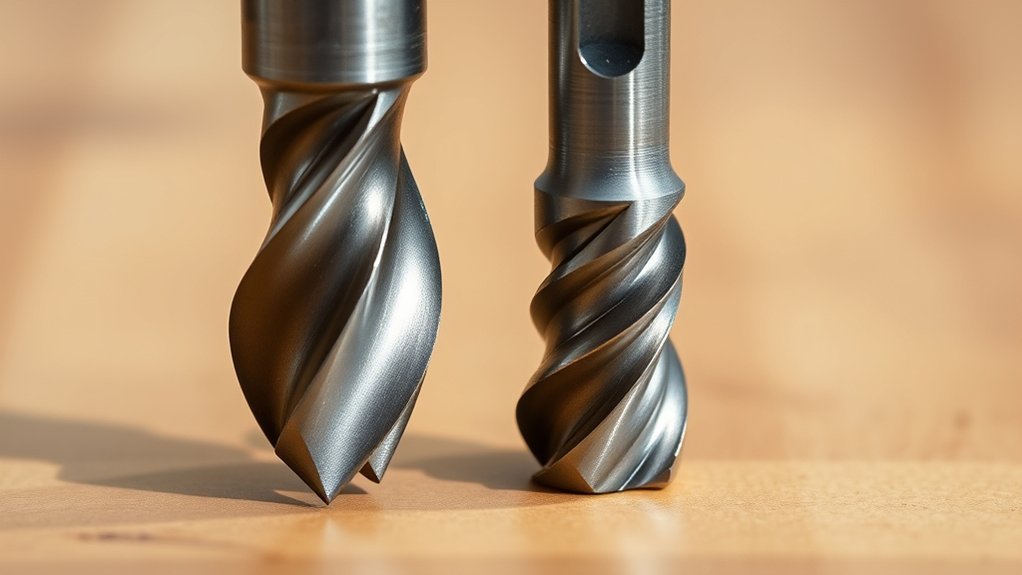
When you select a drill bit size, it directly determines how well the hole fits your fastener and how securely it grips. Accurate hole precision guarantees the diameter matches the fastener’s shank, preventing looseness or excessive friction.
If the hole is too large, fastener stability decreases, risking movement and structural weakness. Conversely, a hole that’s too small can cause material splitting or difficulty inserting the fastener, compromising grip strength.
Using the correct drill bit size maximizes the balance between ease of insertion and mechanical hold. This precision is critical for maintaining joint integrity and load-bearing capacity. As a result, choosing the right drill bit size is essential to achieve the best hole fit and maximize fastener stability in your project.
When Should You Use a 5/8 Drill Bit Instead of a 1/2?
Why choose a 5/8 drill bit over a 1/2? You opt for 5/8 applications when the hole must accommodate larger fasteners or provide greater clearance. The 5/8 size guarantees a precise fit for bolts or anchors requiring a wider diameter, preventing binding or stress.
Conversely, the 1/2 advantages lie in tasks demanding smaller, more controlled holes that maintain material strength. Use a 5/8 bit when structural integrity depends on a larger fastener or when the assembly specifies that size for load distribution.
Avoid the 1/2 bit in these cases, as it may produce insufficient hole size, risking fastener failure. To summarize, select 5/8 drill bits for larger fastener compatibility and 1/2 advantages for precision and material conservation.
What Materials and Tasks Are Best for 5/8 and 1/2 Drill Bits?
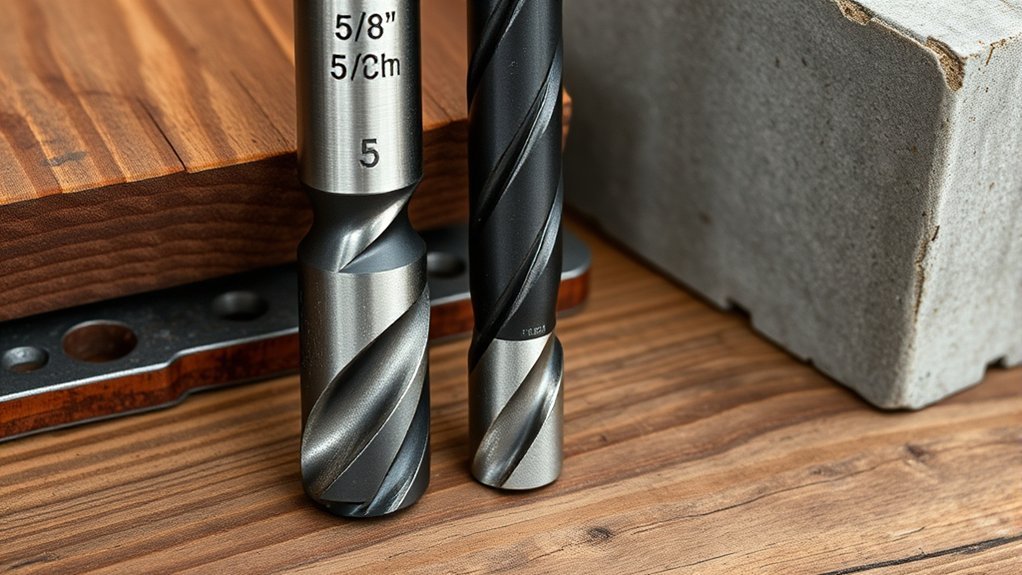
You’ll find 5/8-inch drill bits work best on tougher materials like hardwood or metal when larger holes are needed, while 1/2-inch bits excel in softer materials such as drywall or plastic for medium-sized holes.
Choosing the right size depends on the specific task and material hardness to guarantee clean, accurate drilling. Understanding these distinctions helps you match the drill bit to your project’s demands efficiently.
Suitable Materials Comparison
Although both 5/8 and 1/2 drill bits serve similar functions, their size differences make them suitable for distinct materials and tasks. When working with wood materials, the 5/8 bit excels at creating larger holes for bolts or dowels, while the 1/2 bit handles general-purpose drilling efficiently.
In metal materials, the 1/2 drill bit is preferred for precision and smaller fastener holes, especially in softer metals. The 5/8 bit can be used on thicker or tougher metals but requires more power and caution to avoid bit damage or material deformation. You should select the bit size based on the hole diameter and material hardness to guarantee clean holes and prolong bit life, optimizing performance for your specific project requirements.
Task-Specific Drill Uses
Selecting the right drill bit size directly impacts the effectiveness of your task. For tasks requiring larger holes in softer materials like wood or plastic, the 5/8-inch bit enhances task efficiency by removing material quickly without compromising drill precision.
Conversely, the 1/2-inch bit suits applications demanding tighter tolerances, such as metalworking or pilot holes, where drill precision is critical to avoid material damage. When installing anchors or bolts, choose the bit size matching the fastener’s diameter to guarantee a secure fit and ideal task efficiency.
Using a 5/8-inch bit for heavy-duty woodworking or larger plumbing holes maximizes throughput, while the 1/2-inch bit provides control and accuracy in framing or cabinetry. Matching drill bit size to your specific material and task guarantees both efficiency and precision.
How Can You Measure Drill Bits to Get the Right Size?
How do you accurately determine the size of a drill bit before use? Start by employing precise measuring techniques to avoid errors. Use a caliper to measure the diameter at the widest point of the bit’s cutting edge for an exact reading.
Alternatively, drill bit gauges provide a quick, reliable method to verify size. Insert the bit into the corresponding hole in the gauge; a snug fit confirms the diameter. Avoid estimating sizes by eye, as this leads to inaccuracies.
Combining caliper measurements with drill bit gauges guarantees you select the correct size consistently. This methodical approach prevents mismatches and improves your project’s precision, especially when differentiating closely sized bits like 1/2 inch and 5/8 inch.
How Do You Choose the Right Drill Bit Size for Bolts and Screws?
You need to match the drill bit diameter closely to the bolt or screw size for a secure fit. Consider the material type, as harder materials may require a slightly larger bit to prevent damage.
Choosing the right size guarantees proper grip and structural integrity.
Matching Drill Bit Diameter
Choosing the right drill bit size for bolts and screws depends on matching the bit diameter to the fastener’s dimensions. You’ll start by identifying the bolt or screw diameter, then select a drill bit that corresponds closely to that measurement.
For through holes, choose a bit equal to the bolt’s outer diameter. For clearance holes, pick a slightly larger bit to allow easy insertion. When tapping threads, the drill bit diameter must be smaller than the screw’s outer diameter to accommodate threads.
Different drill bit types, such as twist, spade, or step bits, offer varying precision and hole quality, so consider these in your size comparison. Accurate matching guarantees secure fastening and prevents material damage or loose fits, critical for reliable assembly and structural integrity.
Considering Material Type
Although selecting the correct drill bit size depends largely on bolt dimensions, material type plays an essential role in determining the ideal bit diameter. You need to take into account material compatibility to guarantee efficient drilling and avoid damage.
Harder materials like stainless steel require smaller pilot holes and high-durability drill bits to prevent wear. Softer materials, such as wood or plastic, allow for slightly larger bit sizes to accommodate expansion and reduce splitting.
Choosing a drill bit with appropriate drill bit durability tailored to the material’s hardness improves performance and prolongs tool life. Always match the drill bit’s coating and composition to the job; for example, cobalt bits excel in metal, while titanium-coated bits suit general use.
This precision guarantees clean holes and secure bolt or screw installation.
What Happens If You Use the Wrong Drill Bit Size?
When using the wrong drill bit size, material damage and compromised joint strength often result. You risk creating holes that are either too large or too small, leading to poor drill bit compatibility with screws or fasteners.
An oversized bit can cause loose fittings, reducing structural integrity, while an undersized bit forces excessive pressure, increasing the chance of material cracking or drill bit breakage. Incorrect size consequences also include inefficient drilling, wasted time, and potential damage to both the workpiece and your tools.
Ensuring you select the correct drill bit diameter is essential for precise hole dimensions and ideal joint performance. Always verify drill bit compatibility with the intended fastener and material to avoid these pitfalls and maintain professional-quality results.
Conclusion
You now know that a 5/8-inch drill bit is indeed bigger than a 1/2-inch by 0.125 inches—a difference that matters for precise fits and secure fasteners.
Don’t treat choosing drill bits like using a rotary phone; matching bit size to your project guarantees material integrity and avoids costly mistakes.
Always measure carefully and select the right size to keep your work tight and reliable, preventing misalignment or damage every time you drill.
In conclusion, understanding that a 5/8 drill bit is bigger than 1/2 helps ensure you pick the perfect bit for your task, enhancing both accuracy and durability.