If you need to drill a hole in a wall without a drill bit, there are alternative tools and techniques you can use to get the job done.
The key is to understand the material of your wall and choose the right method accordingly.
For example, you might apply steady pressure with a nail, heat a metal object for drywall, or carefully use a screwdriver.
Each approach requires caution to avoid damaging the wall or your tools.
By proceeding methodically and selecting the correct technique, you can effectively tackle this challenge without a drill bit.
Here’s how to do it safely and efficiently.
How to Drill a Hole Without a Drill Bit: The Basics
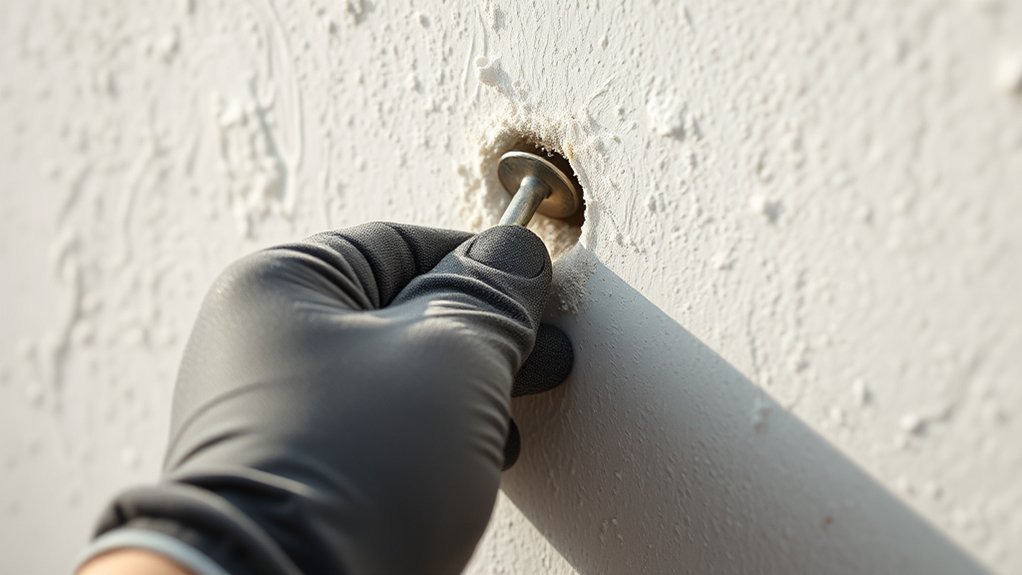
When you need to drill a hole without a drill bit, understanding the basic alternatives and techniques is essential. First, assess the wall materials—drywall, plaster, concrete, or brick—since each demands specific drilling techniques for effective penetration.
For drywall, you might use a heated nail or a screwdriver to create a pilot hole. In masonry walls, tapping a sharp metal rod or an awl with a hammer can initiate a hole. You’ll need to maintain steady pressure and rotational motion to gradually bore through.
The key drilling techniques involve applying consistent force while carefully controlling tool angle to prevent wall damage. Always consider the wall’s composition before selecting a method, ensuring safety and efficiency when you lack a traditional drill bit.
Top Tools to Drill Holes Without a Drill Bit
Effective hole drilling without a drill bit relies on selecting the right tools for your wall type and task. For drywall, a sharp utility knife or a heated metal rod can create precise holes safely. When working with plaster or softer masonry, a hammer and nail or a masonry nail can serve as effective tool alternatives.
Always enforce safety precautions: wear protective eyewear and gloves to prevent injury from debris or slips. For harder surfaces like concrete, a chisel and hammer combination allows controlled penetration without a drill bit. Remember, each tool alternative requires methodical application—apply steady pressure and maintain tool alignment to avoid wall damage.
How to Use a Screwdriver to Drill a Hole Without a Drill Bit
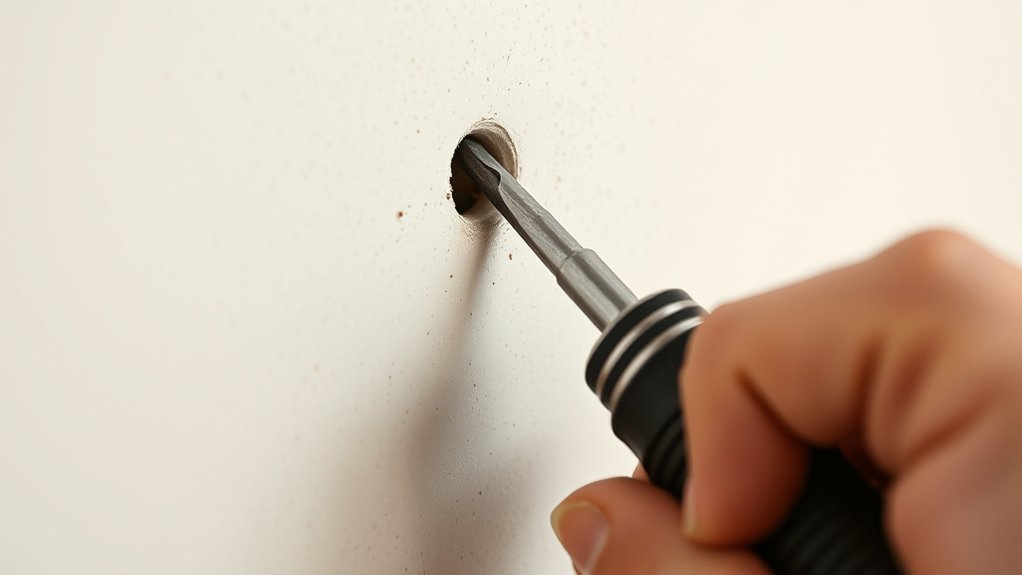
Among the various tools you can use to create holes without a drill bit, a screwdriver offers a practical option for softer wall materials like drywall or thin wood. First, select a flathead or Phillips screwdriver with a sturdy shaft.
Position the tip where you want the hole, applying firm, consistent pressure. Use a clockwise turning motion to gradually bore into the material. This screwdriver technique relies on friction and force rather than cutting edges.
Monitor the hole depth carefully; stop as soon as you reach the desired depth to avoid damaging the wall’s interior. If necessary, withdraw debris periodically by retracting the screwdriver.
This method works best for shallow holes and requires patience to maintain control and prevent wall surface cracking.
How to Make a Hole Using a Nail or Awl Safely
Although using a nail or awl requires more effort than power tools, you can create clean, controlled holes in softer wall materials by applying steady pressure and careful technique. Prioritize nail safety by wearing gloves and securing the wall surface.
Use the awl technique by positioning the tool perpendicular to the wall and twisting gently to puncture. Avoid forcing to prevent slips or wall damage.
| Tool | Technique | Safety Tip |
|---|---|---|
| Nail | Tap lightly, then press | Wear gloves to protect |
| Awl | Twist with steady pressure | Keep tool perpendicular |
| Both | Apply slow, controlled force | Clear work area |
This method guarantees precise holes while minimizing risk and material damage.
How to Use a Heated Metal Object to Drill a Hole
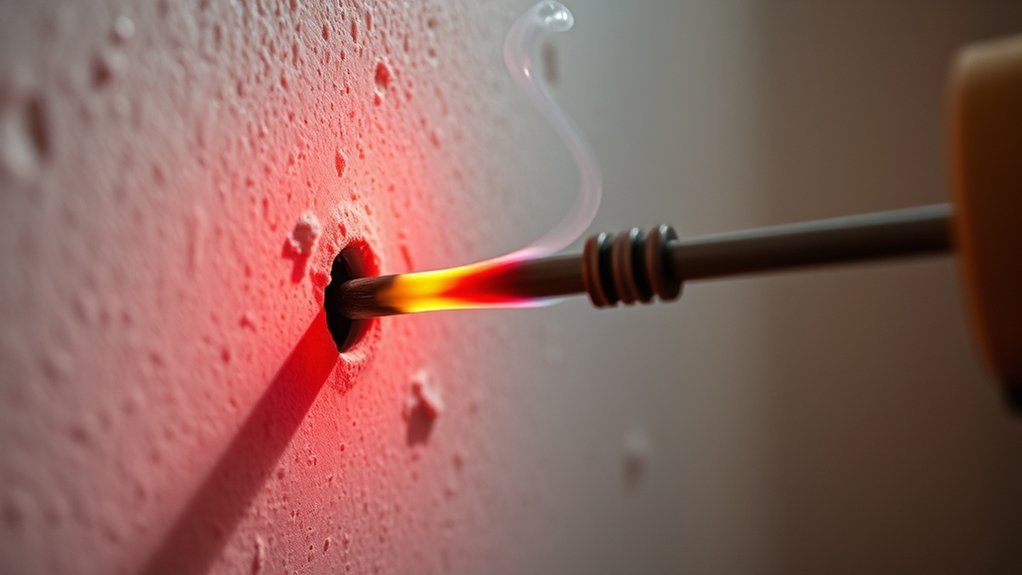
If you find that using a nail or awl isn’t sufficient for your wall material, a heated metal object can help create a hole by melting through softer surfaces like plastic or thin drywall. To do this effectively, follow these steps:
Select a sturdy metal object (e.g., screwdriver tip) suitable for heating. Heat the metal object evenly using a flame or heat gun until glowing hot.
Choose a durable metal tool like a screwdriver tip and heat it evenly until it glows hot.
Protect yourself with gloves and eye protection to avoid burns or sparks. Press the heated metal firmly against the wall material, applying steady pressure.
Maintain heat as needed to melt through, avoiding excessive force that may damage the wall.
This method works best on specific wall materials that soften under heat; avoid using it on hard surfaces like concrete or brick to prevent damage.
How to Use a Wire Hanger to Drill a Hole Without a Drill Bit
You can create a makeshift drill bit using a wire hanger by straightening and sharpening one end to puncture softer wall materials like drywall or plaster. Start by cutting a segment of the wire hanger about 6 inches long. Use pliers to straighten it completely, then file or sand one tip to a fine point.
Secure the hanger wire firmly and position the pointed end perpendicularly against the wall. Apply steady, clockwise pressure while rotating the wire manually, allowing the sharpened tip to gradually penetrate. Keep the wire aligned to avoid bending or breaking.
This wire hanger technique works best with softer wall materials; harder surfaces like brick or concrete require different tools. Always assess wall material considerations before proceeding to guarantee the method’s effectiveness and prevent damage.
How to Drill Holes Without a Drill Bit in Different Wall Materials
When drilling into masonry without a drill bit, you can use hardened nails or a metal file as alternatives, but always wear protective gear to avoid injury. For drywall or plaster, a heated metal skewer or a sharp knife can create clean holes if applied carefully.
Adjust your technique based on the wall material’s density to guarantee a precise and safe hole.
Alternative Tools For Masonry
Masonry walls require specialized approaches to create holes without traditional drill bits. You’ll need masonry alternatives that maintain tool efficiency and prevent wall damage. Consider these tools for effective, precise hole-making:
Rotary hammer with chisel attachment: Ideal for controlled chiseling in brick or concrete.
Angle grinder with diamond blade: Allows cutting shallow grooves to break material.
Hammer and cold chisel: Manual method for smaller holes or adjustments.
Masonry nail and hammer: Create pilot holes by repeated tapping.
Concrete screwdriver: Useful for softer masonry like cinder blocks.
Each tool offers a balance between precision and efficiency. Choose based on wall hardness and hole size requirements. Proper technique and steady pressure guarantee clean holes, preserving wall integrity without relying on drill bits.
Using Household Items Safely
Three common household items can effectively create holes in various wall materials without a drill bit, provided you apply them carefully and correctly. To guarantee safety precautions, always assess wall types before proceeding. Use protective gloves and goggles to avoid injury.
Identify the wall’s material to choose the best item and prevent damage.
| Household Item | Suitable Wall Types |
|---|---|
| Nail | Drywall, Softwood |
| Screwdriver | Plaster, Thin Paneling |
| Metal File | Masonry, Concrete (surface) |
Apply steady pressure; avoid excessive force which risks cracking. Start with a small indentation to guide the item.
Always confirm no electrical wiring or plumbing is behind the drilling area to maintain safety and structural integrity.
Techniques For Different Surfaces
Although drilling without a drill bit presents challenges, you can effectively create holes by adapting your technique to the wall material. Different surfaces demand distinct approaches and creative solutions using unexpected materials.
For drywall, use a heated nail or metal skewer to puncture cleanly. In plaster, gently score with a sharp utility knife before pressing in a heated screwdriver.
Brick or concrete requires tapping a hardened metal rod with a hammer, gradually deepening the hole. Wooden walls respond well to a heated metal coat hanger shaped into a spike.
Tile demands scoring with a glass cutter before applying steady pressure with a hardened metal spike.
How to Enlarge or Smooth Holes Without a Drill Bit
You can enlarge or smooth holes by carefully using sandpaper to abrade the edges, ensuring gradual material removal. Manual tools like files or rasp handsaws also help refine hole size and shape with controlled pressure.
Maintain consistent motion to achieve an even finish without damaging the surrounding wall.
Using Sandpaper Effectively
Master the technique of using sandpaper to enlarge or smooth holes when you lack a drill bit. Begin by selecting appropriate sandpaper grits: start coarse (60-80 grit) to shape, then progress to finer grits (120-220) for smoothing. Use precise sanding techniques, applying consistent pressure and rotating the sandpaper evenly around the hole’s edge.
Follow these steps for effective results:
Fold sandpaper into a small strip or wrap around a thin, rigid object.
Sand the hole’s interior with circular motions.
Check progress frequently to avoid over-enlarging.
Switch to finer grits to remove roughness.
Clean dust to assess smoothness accurately.
This methodical approach guarantees controlled enlargement and a clean finish without specialized tools.
Employing Manual Tools
Leverage manual tools like awls, files, or screwdrivers to enlarge or smooth holes when drill bits aren’t available. These hand tool alternatives require steady pressure and controlled movements to avoid damaging the wall.
Start by inserting an awl and twisting to widen the hole gradually. Then, use a file or flathead screwdriver to smooth edges, enhancing hole precision. Manual drilling techniques demand patience but offer fine control in tight spots.
| Tool | Purpose |
|---|---|
| Awl | Enlarge hole |
| Round file | Smooth interior edges |
| Flathead screwdriver | Widen and clean hole |
| Sandpaper | Final smoothing |
| Utility knife | Trim rough edges |
Use these tools methodically to achieve clean holes without drill bits.
Stay Safe: Essential Tips for Drilling Without a Drill Bit
Although drilling without a drill bit may seem straightforward, it requires careful attention to safety protocols to prevent injury and damage. You must prioritize safety precautions and wear appropriate protective gear. Before starting, confirm your workspace is clear and well-lit. Use steady pressure and controlled movements to avoid slips. Remember, improvising tools increases risk, so proceed methodically.
Drilling without a bit demands strict safety and steady control to prevent injury and damage.
Follow these essential safety tips:
- Wear safety goggles and gloves to protect eyes and hands.
- Use a dust mask to avoid inhaling debris.
- Secure the wall area with tape to prevent surface damage.
- Keep electrical cords away from the drilling zone.
- Maintain a firm grip on your tool to prevent accidents.
Adhering to these steps confirms you drill safely without a drill bit.
Conclusion
Now, imagine pressing your chosen tool firmly against the wall, feeling the surface give way as you twist or heat it just right. With steady hands and careful technique, you’re not just making a hole—you’re mastering the challenge without a drill bit.
Each method demands precision and patience, but the result is a clean, controlled opening. Stay focused, protect yourself, and watch as your wall transforms under your expert touch, one deliberate move at a time.
By applying these techniques, you can successfully drill a hole in the wall without a drill bit, achieving professional results with the right approach.