Using a Forstner bit in a hand drill isn’t always the smoothest path to clean, precise holes. While it’s technically possible, the lack of stability and consistent pressure can cause the bit to drift or bind, compromising your work.
Understanding the limitations and best practices for this setup will help you decide when to proceed or opt for a more controlled tool.
Let’s explore what makes Forstner bits perform best and how you can adapt your approach.
Can You Use a Forstner Bit in a Hand Drill?
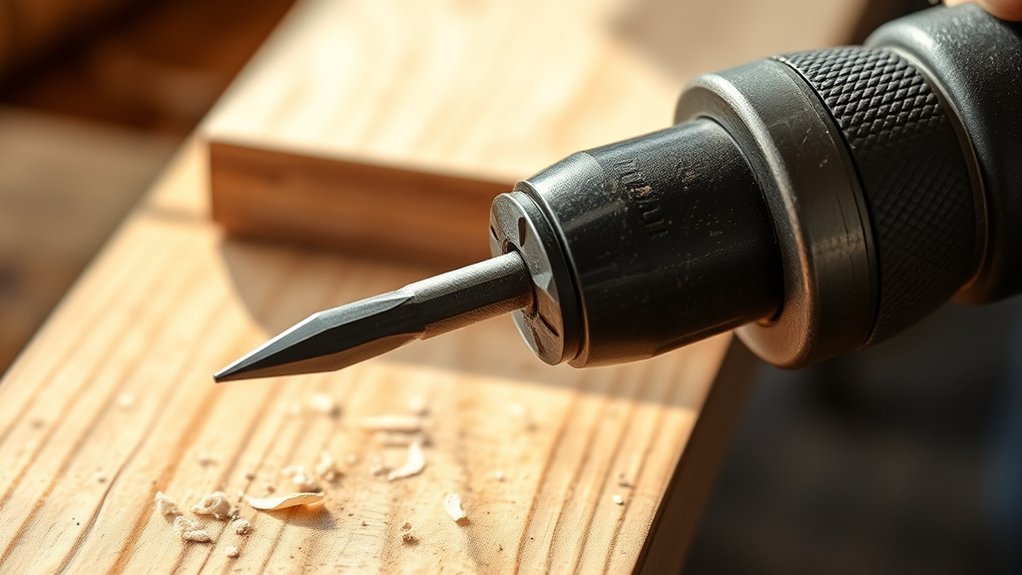
How effectively can you use a Forstner bit in a hand drill? Forstner bit applications typically require clean, precise holes, often in woodworking projects. While these bits excel in drill press setups due to consistent speed and control, you can still use them with hand drills under certain conditions.
Hand drill compatibility depends on your drill’s power and speed control. You’ll want a variable speed drill that can maintain moderate RPMs. Too fast risks overheating and bit damage; too slow impedes cutting efficiency.
Additionally, steady hand pressure is essential to avoid bit wandering or uneven holes. Forstner bits demand firm, controlled operation to achieve their clean cuts, so while not ideal, using them in a hand drill is feasible for light-duty tasks where precision is balanced with portability.
Why Are Forstner Bits Best for Drill Presses?
Although you can use Forstner bits in a hand drill for light tasks, their design truly shines when paired with a drill press. The precision and stability offered by the drill press enhance Forstner bit applications considerably. Here’s why:
- Controlled depth: Drill presses allow precise depth setting, essential for clean, flat-bottomed holes.
- Stability: The fixed platform prevents bit wandering, ensuring consistent hole placement.
- Power consistency: Drill presses maintain steady speed and torque, optimizing cutting efficiency.
- Safety: Reduced bit deflection lowers the risk of kickback or damage to workpieces.
These Forstner bit advantages make drill presses the ideal tool, especially when you need accuracy and smooth finishes in woodworking or cabinetry. You’ll get superior results that handheld drills simply can’t match.
Why Using a Forstner Bit in a Hand Drill Can Be Tricky
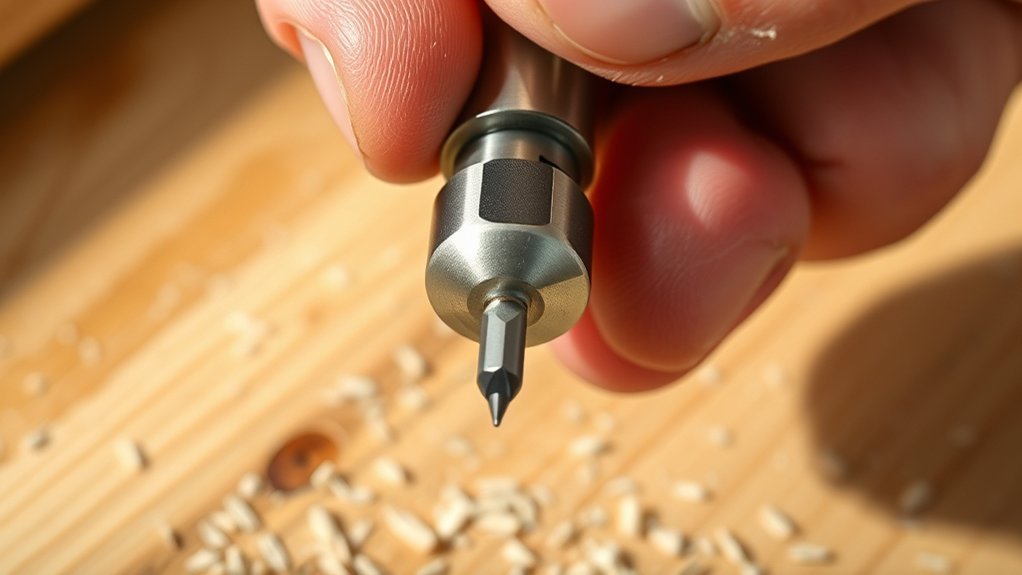
When you use a Forstner bit in a hand drill, maintaining control becomes challenging due to the bit’s design and the drill’s variable speed and torque. Forstner bit advantages include clean, flat-bottomed holes and precise cutting, but these bits require consistent pressure and stable rotation.
Hand drill limitations such as less torque stability and variable speed control make it difficult to sustain the steady force needed, increasing the risk of bit wandering or overheating. Unlike drill presses, hand drills don’t provide the rigid support essential for peak Forstner bit performance.
You’ll need to compensate for these limitations by applying firm, even pressure and controlling speed carefully. Understanding these challenges helps guarantee better results when using Forstner bits with hand drills.
Choosing the Right Forstner Bit Size for Hand Drills
Selecting the appropriate Forstner bit size greatly influences your control and the quality of the hole when using a hand drill. You must consider Forstner bit compatibility with your hand drill’s chuck size and power. Oversized bits can strain the drill, reducing hand drill performance and increasing user fatigue.
To optimize results:
- Match the bit diameter to the chuck capacity for secure mounting.
- Choose smaller sizes for precise, controlled cuts.
- Avoid bits larger than 50mm unless your drill handles high torque efficiently.
- Consider the material thickness; larger bits require more force and may compromise accuracy.
What Drill Speed Works Best With Forstner Bits in Hand Drills?
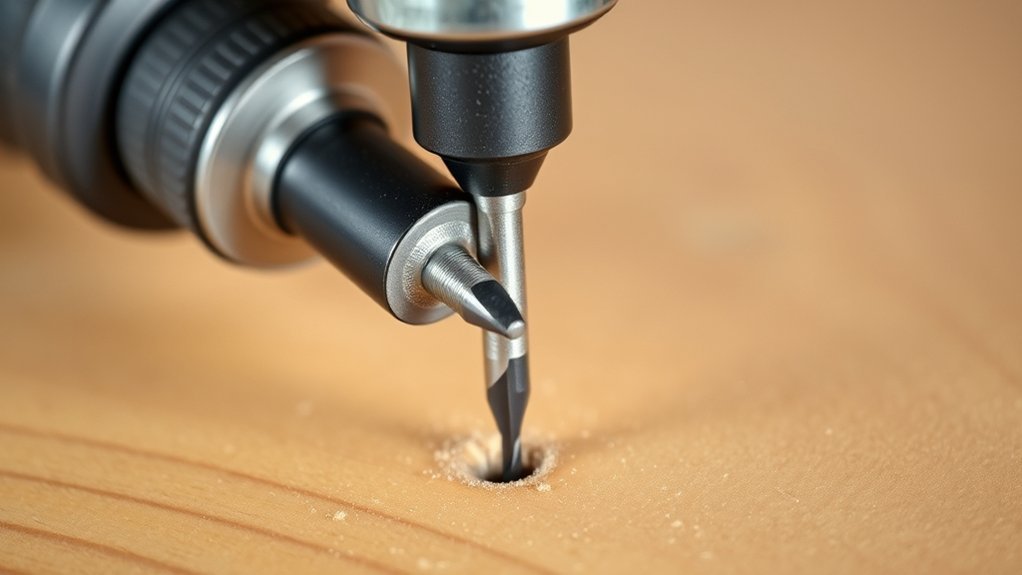
You’ll want to operate your Forstner bit within an ideal RPM range to guarantee clean cuts and prevent overheating. Adjusting drill speed based on the material helps improve efficiency and bit longevity. Softer woods require higher RPMs, while harder woods need slower speeds.
Understanding these variations helps you maintain control and achieve precise results with your hand drill.
Optimal RPM Range
Because Forstner bits require a smooth, controlled cut to maintain their clean edges and prevent overheating, dialing in the ideal RPM range is critical. To achieve optimal drill bit performance in a hand drill, consider these guidelines:
- Use 500 to 1,200 RPM for bits 1 inch or larger. Slower speeds reduce heat and preserve edge sharpness.
- For bits under 1 inch, maintain 1,200 to 1,800 RPM to balance cutting efficiency and control.
- Avoid exceeding 2,000 RPM to prevent burning the wood and dulling the bit.
- Adjust speed based on wood density. Harder woods require slower RPM to avoid excessive friction.
Impact Of Speed Variations
While adjusting the drill speed, you must balance cutting efficiency with bit longevity when using Forstner bits in hand drills. Effective speed control directly affects drill efficiency. Too high a speed can cause excessive heat, dulling the bit prematurely and risking wood burn.
Conversely, too low a speed reduces cutting effectiveness, increasing effort and potentially causing chatter or inaccurate cuts. Aim for a moderate, consistent speed that matches your hand drill’s capabilities and the bit size to maintain smooth, clean cuts.
Adjusting speed dynamically during drilling helps manage resistance and prevents stalling. By mastering this balance, you optimize drill efficiency, extend bit life, and achieve precise, clean holes without compromising tool performance or material integrity.
Material-Specific Speed Settings
Different materials demand specific drill speeds to maximize the performance of Forstner bits in hand drills. Adjusting your speed according to material durability and bit compatibility prevents damage and guarantees clean cuts. Here’s a quick guide:
- Softwoods: Use higher speeds (1200-1500 RPM) to maintain bit sharpness and achieve smooth cuts.
- Hardwoods: Lower speeds (600-900 RPM) reduce heat buildup, preserving bit life and preventing material burn.
- Plywood and composites: Moderate speeds (800-1100 RPM) minimize splintering due to layered construction.
- Metals and plastics: Very low speeds (300-600 RPM) guarantee precise cuts without melting or bit wear.
Always match your drill speed to the material’s properties and the Forstner bit’s specifications for best results.
Maintaining Control and Stability When Drilling by Hand
Although using a Forstner bit in a hand drill requires careful technique, maintaining control and stability is crucial for accurate, clean holes. You must focus on hand stability and proper drill technique to avoid wandering and uneven cuts.
Firmly grip the drill and stabilize your other hand on the workpiece or a supporting surface. Apply steady, moderate pressure to prevent the bit from binding or skidding.
| Factor | Recommendation |
|---|---|
| Hand Stability | Use both hands firmly |
| Drill Technique | Start slowly, increase speed |
| Pressure Application | Apply consistent, moderate force |
| Workpiece Support | Clamp securely to reduce movement |
Mastering these elements guarantees precision and safety during handheld Forstner bit drilling.
Tips for Drilling Clean Holes With Forstner Bits by Hand
Maintaining control and stability sets the foundation for drilling clean holes with Forstner bits by hand. To master Forstner bit techniques and achieve precise results, follow these hand drill tips:
- Secure your workpiece firmly to prevent movement during drilling, ensuring consistent pressure and alignment.
- Start drilling at a low speed to allow the bit’s cutting edges to engage cleanly without wandering.
- Apply steady, moderate pressure. Too much force risks bit deflection and tear-out, while too little causes burning.
- Periodically withdraw the bit to clear wood chips, reducing heat buildup and improving hole quality.
When Should You Avoid Using a Forstner Bit in a Hand Drill?
When should you reconsider using a Forstner bit in a hand drill? You should avoid it when precision and control are critical but your hand drill lacks adjustable speed or stability. Using a Forstner bit at high speeds with inconsistent pressure leads to burning or wandering, common mistakes that compromise hole quality.
Also, when drilling deep holes, a hand drill often can’t maintain consistent torque, causing bit binding or damage. Avoid using a Forstner bit in hard or dense hardwoods if your hand drill isn’t powerful enough; this increases the risk of overheating and bit dulling.
Alternative Bits That Mimic Forstner Bit Results in Hand Drills
If your hand drill can’t handle a Forstner bit effectively, you can turn to alternative drill bits designed to produce similar clean, flat-bottomed holes. Employing alternative drilling techniques, you’ll find versatile drill bits that fit your needs without sacrificing quality.
- Spade Bits Offer flat-bottomed holes, though less precise, but easier to control in handheld drills.
- Flat Wood Bits Similar to spade bits but with sharper edges for cleaner cuts.
- Hole Saws Create larger diameter holes with cleaner edges, suitable for shallow drilling.
- Brad Point Bits Provide accurate center positioning and cleaner edges, though they produce slightly rounded bottoms.
Using these versatile drill bits allows you to mimic Forstner bit results while ensuring your hand drill operates within its capacity.
How to Safely Handle and Store Forstner Bits
You should always grip Forstner bits by their shank to avoid damaging the cutting edges. Store them in a dedicated case or rack that prevents contact between bits, reducing the risk of dulling or chipping. Proper handling and organized storage extend the bit’s lifespan and maintain cutting accuracy.
Proper Handling Techniques
Although Forstner bits are designed for durability and precision, improper handling can compromise their performance and lifespan. To guarantee ideal use, follow these proper handling techniques:
- Maintain a proper grip on the bit when installing or removing it to avoid damage to the cutting edges.
- Use slow, steady pressure to prevent overheating and preserve the bit’s sharpness.
- Make technique adjustments based on material density; harder woods require slower speeds and more controlled feed rates.
- Avoid lateral force or twisting motions that can chip the cutting rim or cause bit misalignment.
Safe Storage Solutions
When handling Forstner bits, ensuring safe storage is essential to maintain their sharpness and prevent damage. You should implement a shelf organization system that keeps each bit separated and easily accessible.
Use dedicated holders or foam inserts designed to secure the bits firmly, preventing contact between cutting edges. This bit protection method minimizes dulling and chipping risks. Avoid tossing bits loosely into drawers or toolboxes where they can collide.
Label each storage slot by size to streamline your workflow and reduce handling errors. Additionally, store bits in a dry environment to prevent rust. By following these precise storage protocols, you’ll extend the lifespan of your Forstner bits and maintain peak performance during use.
Proper shelf organization and bit protection are critical for safe, efficient tool management.
Conclusion
You can use a Forstner bit in a hand drill, but be prepared for challenges such as bit wandering and inconsistent hole depth. These issues can make it difficult to achieve clean, precise holes.
Studies show that drill presses improve hole accuracy by up to 60%, which is why they are generally preferred for tasks requiring precision.
To get the best results when using a Forstner bit by hand, maintain steady pressure, select the appropriate bit size, and carefully control your drilling speed.
Remember, for precision and safety, using a drill press is usually the smarter choice when working with a Forstner bit.