Imagine trying to fit a puzzle piece that’s just slightly too big or small—it won’t lock in place securely.
When you’re working with a 5/16 rivet nut, choosing the exact drill bit size is just as critical. Selecting the right drill bit for a 5/16 rivet nut ensures a perfect fit every time.
Too large, and the nut won’t grip; too small, and you risk damaging the material or the nut itself.
Understanding the precise bit size for your rivet nut installation can save you time and guarantee structural integrity.
What Drill Bit Size Works for a 5/16 Rivet Nut
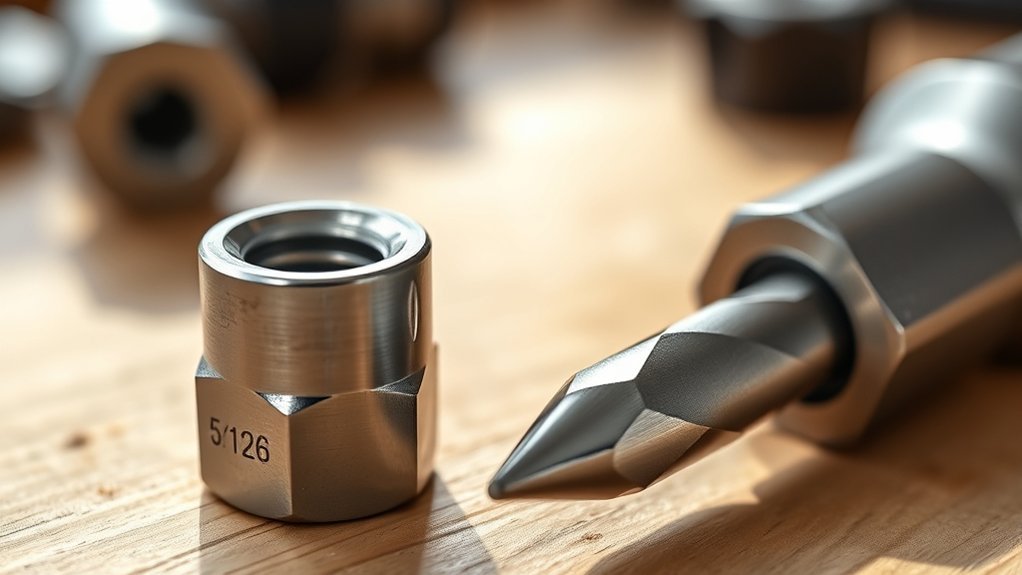
When installing a 5/16 rivet nut, selecting the correct drill bit size is essential to guarantee a secure fit and proper function. Typically, a 17/32-inch drill bit is recommended to create the appropriate hole diameter for this size rivet nut.
You’ll want to take drill bit types into account carefully; high-speed steel (HSS) bits work well for most metals, while cobalt bits offer enhanced durability for harder materials. Using the right drill bit type guarantees clean, precise holes, minimizing deformation during installation.
Proper installation techniques also demand that you drill perpendicular to the surface to maintain hole integrity, enabling the rivet nut to seat evenly. Accurate hole sizing and consistent drilling will greatly improve the rivet nut’s load-bearing capability and overall performance.
How to Measure Your 5/16 Rivet Nut for the Perfect Hole
Accurately measuring your 5/16 rivet nut guarantees the drill bit size matches the nut’s specifications for an ideal fit. Begin by identifying the outer diameter of the rivet nut’s body, which determines the hole size.
Use calipers to measure this diameter precisely, avoiding estimation errors common with rulers. Next, consider the rivet nut’s flange dimensions, as they affect surface contact. Employ appropriate measuring techniques like digital calipers for exactness.
After gathering measurements, select a drill bit type, preferably a high-speed steel or cobalt bit, that corresponds to the nut’s diameter. Confirm the drill bit’s cutting edge aligns with the hole size required, accounting for material thickness.
This analytical approach minimizes installation issues and maximizes rivet nut performance.
Why Choosing the Right Drill Bit Size Matters
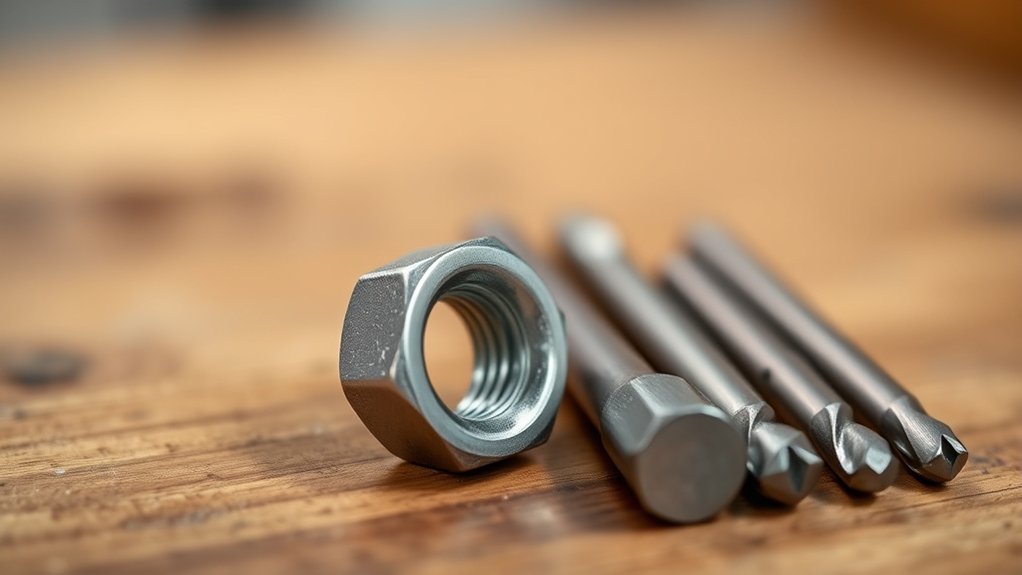
You need to select the exact drill bit size to guarantee the hole matches your rivet nut’s dimensions precisely. An incorrect hole diameter compromises the fit quality, leading to weak or unstable fastening.
Hole Precision Importance
Although selecting the correct drill bit size may seem straightforward, it directly affects the structural integrity and performance of the rivet nut installation. Precise hole alignment guarantees the rivet nut seats flush and maintains load distribution as designed.
If the hole diameter deviates, you risk misalignment, which compromises joint strength. Additionally, drill stability during the operation minimizes wobble, preventing oversized or irregular holes.
Consistent drill stability helps you maintain the exact hole dimensions required for a 5/16 rivet nut. Any variance in hole size can cause installation difficulties or reduce the rivet nut’s grip.
Rivet Nut Fit Quality
Maintaining precise hole dimensions directly influences the fit quality of a rivet nut, which determines its mechanical performance and durability. When you select the correct drill bit size for a 5/16 rivet nut, you guarantee a snug fit that minimizes movement and stress concentrations.
An undersized hole can cause deformation during installation, reducing rivet nut durability and compromising structural integrity. Conversely, an oversized hole leads to poor engagement, decreasing installation efficiency and potentially causing premature failure.
Materials That Affect Your Drill Bit Choice
When selecting a drill bit size for a rivet nut, the material’s hardness and thickness directly influence your choice. Different material types, such as aluminum, steel, or composites, demand specific considerations.
Harder materials require drill bit materials with superior wear resistance, like cobalt or carbide, to maintain sharpness and dimensional accuracy. Softer materials may allow the use of high-speed steel (HSS) bits, but you must still guarantee the drill bit diameter matches the rivet nut’s specifications precisely.
Additionally, thicker materials necessitate drill bits with optimized flute geometry for efficient chip evacuation, preventing heat buildup that could affect hole quality. By aligning drill bit materials and geometry with the substrate’s characteristics, you guarantee proper hole dimensions, which are critical for rivet nut fit and structural integrity.
Tips for Drilling Clean Holes for 5/16 Rivet Nuts
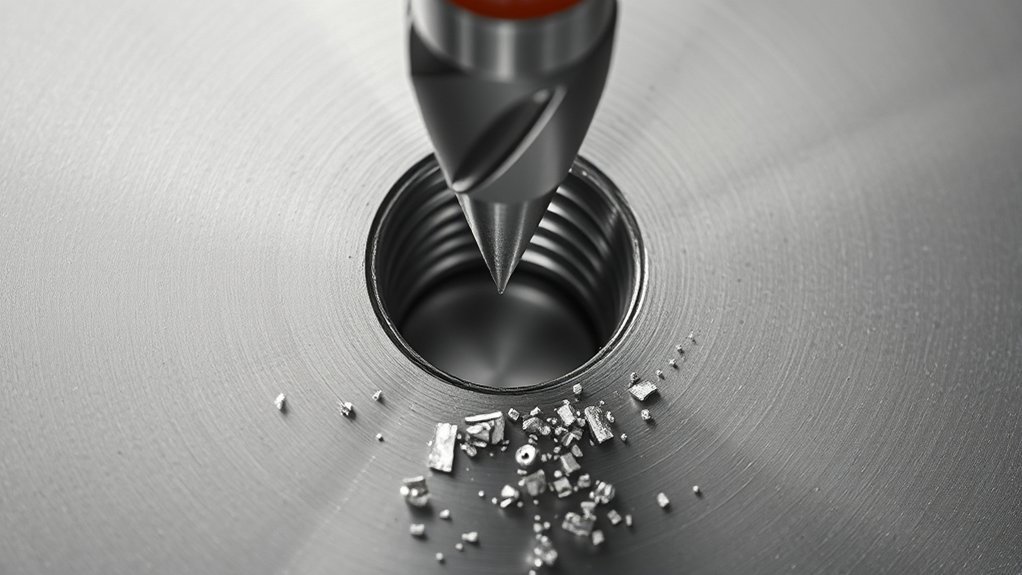
To guarantee a secure fit for 5/16 rivet nuts, you need to select the drill bit size that matches the nut’s specifications exactly. Using an oversized or undersized bit can cause misalignment or damage the hole edges, compromising the joint’s integrity.
Focus on steady drilling speed and proper bit sharpness to maintain clean, precise holes.
Choosing Correct Drill Size
Although selecting the correct drill size might seem straightforward, it critically impacts the fit and strength of a 5/16 rivet nut installation. You need to match the drill bit diameter precisely to the rivet nut’s outer thread diameter for ideal engagement.
Using the wrong drill bit type, such as a high-speed steel (HSS) versus a cobalt bit, can affect hole quality, especially depending on the material in rivet nut applications. For aluminum or softer metals, standard HSS bits suffice, while harder substrates demand cobalt or carbide bits for durability and clean cuts.
Additionally, verify the drill bit produces a hole diameter that allows the rivet nut to thread in snugly without forcing or looseness. This precision guarantees proper load distribution and prevents premature failure in your rivet nut installation.
Preventing Hole Damage
Matching the drill bit size to the rivet nut’s outer thread diameter sets the stage for clean hole creation. To prevent damage, use a sharp, high-quality drill bit designed for the material you’re working with.
Apply steady, controlled pressure to avoid enlarging or deforming the hole, which compromises hole reinforcement. Drilling at the correct speed reduces heat buildup, preserving material integrity.
To further minimize damage, clamp the workpiece securely, preventing vibration or movement during drilling. Consider deburring the hole edges to guarantee smooth insertion and ideal hole reinforcement.
Avoid using oversized bits, as this weakens the mounting surface and can cause rivet nut failure. By following these precise steps, you guarantee clean holes that provide reliable hole reinforcement and extend the longevity of your rivet nut installation.
Common Drilling Mistakes to Avoid
When you drill holes for rivet nuts, failing to select the correct drill bit size can compromise the joint’s strength and alignment. One common error is using a drill bit that’s too large, which creates an oversized hole, reducing the rivet nut’s grip and causing misalignment. Conversely, a bit that’s too small risks damaging the rivet nut during installation.
Another mistake is applying excessive drill pressure or speed, which can cause heat buildup, leading to material deformation or bit wandering. Verify you clamp the workpiece securely to avoid movement that distorts hole placement.
Employ precise drilling techniques such as maintaining perpendicularity and steady feed rate to achieve clean, correctly sized holes. Avoid these common errors to verify robust, accurate fastening with your 5/16 rivet nuts.
Essential Tools for Installing 5/16 Rivet Nuts
To install 5/16 rivet nuts effectively, you’ll need a specific set of essential tools designed for accuracy and durability. Start with a properly sized drill bit, typically 17/64 inch, to create precise holes matching rivet nut dimensions.
Next, select a rivet nut tool or threaded mandrel compatible with 5/16 rivet nut installation techniques. This guarantees consistent compression and secure fastening.
Choose a rivet nut tool or threaded mandrel that matches 5/16 rivet nut installation for secure, consistent fastening.
Essential hand tools include a drill equipped with a depth stop to prevent over-drilling and a torque wrench to apply controlled force during installation. Using these tools minimizes deformation and promotes uniform thread engagement.
Additionally, a deburring tool is critical for clean hole edges, reducing installation errors. By employing this toolkit, you enhance installation reliability and extend component longevity in your rivet nut applications.
Conclusion
To install a 5/16 rivet nut correctly, you need a 17/32-inch drill bit for a precise hole—no guesswork allowed. Measuring the nut’s outer diameter guarantees the fit is snug, avoiding misalignment that weakens your work.
Choose your drill bit material based on the metal you’re working with, whether HSS or cobalt. Remember, like a craftsman’s ancient chisel, the right tool makes all the difference in achieving a secure, professional installation every time.
For the best results, always confirm the drill bit size before starting. This attention to detail ensures that the hole matches perfectly for your 5 16 rivet nut.