You might think long nose pliers are only useful for gripping small objects, but their functionality goes far beyond that.
These tools are essential for tasks requiring precision, especially in tight spaces where other tools fall short.
Their slim, pointed jaws allow you to grip, bend, and cut with accuracy. This makes them ideal for delicate work such as electrical wiring or jewelry making.
But there’s more to their versatility than meets the eye.
Understanding the full range of uses for long nose pliers can greatly improve your project outcomes and efficiency.
What Are Long Nose Pliers and How Do They Work
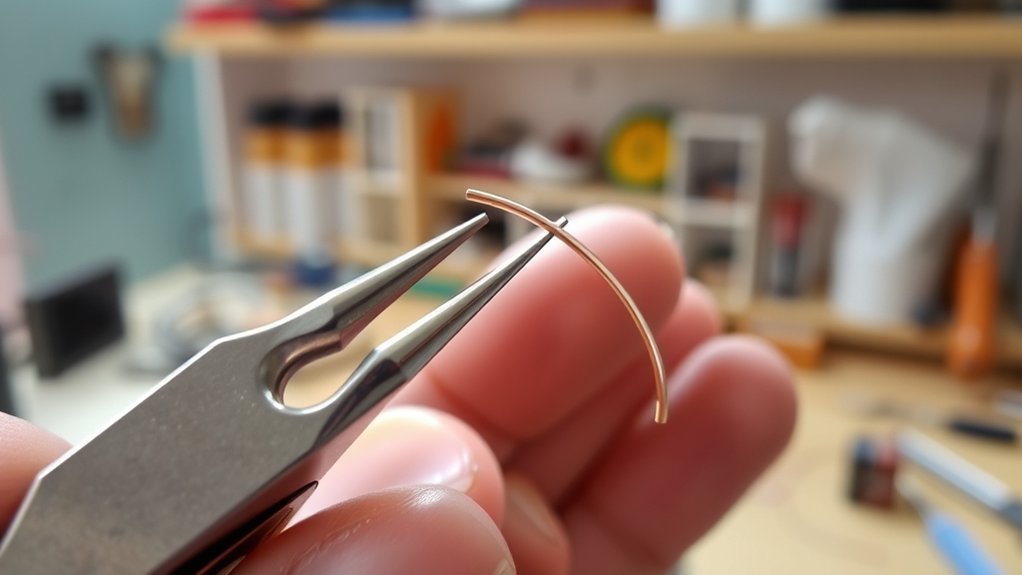
Long nose pliers are specialized hand tools designed for gripping, bending, and cutting small wires or components in tight spaces. You’ll find their elongated, tapered jaws allow precise control, reaching areas inaccessible to standard pliers.
The serrated gripping surfaces enhance your hold on delicate materials without slipping. When you use long nose pliers, you leverage tool benefits such as improved accuracy and versatility in electrical work, jewelry making, and intricate repairs.
The built-in wire cutter near the pivot point lets you trim wires efficiently. These pliers operate through a simple lever mechanism that amplifies your hand force, giving you better control over tiny parts.
Understanding how long nose pliers function helps you select the right tool for detailed tasks requiring finesse and precision.
What Makes Long Nose Pliers Perfect for Precision Work
When you need to manipulate small components with exactness, the narrow, tapered jaws of these pliers provide unparalleled access and control. Their ergonomic design reduces hand fatigue during prolonged use, allowing you to maintain steady precision.
The slim profile lets you reach confined spaces that other tools can’t access, making intricate tasks manageable. Jaw versatility is a key feature; the serrated inner surfaces grip a variety of materials securely without slipping, while the pointed tips enable delicate adjustments.
This combination of ergonomic comfort and adaptable jaw functionality guarantees you can perform detailed work efficiently and accurately, whether you’re handling tiny wires or assembling fine mechanical parts. Long nose pliers are engineered to optimize precision, making them indispensable for tasks demanding meticulous attention to detail.
Gripping, Bending, and Cutting With Long Nose Pliers
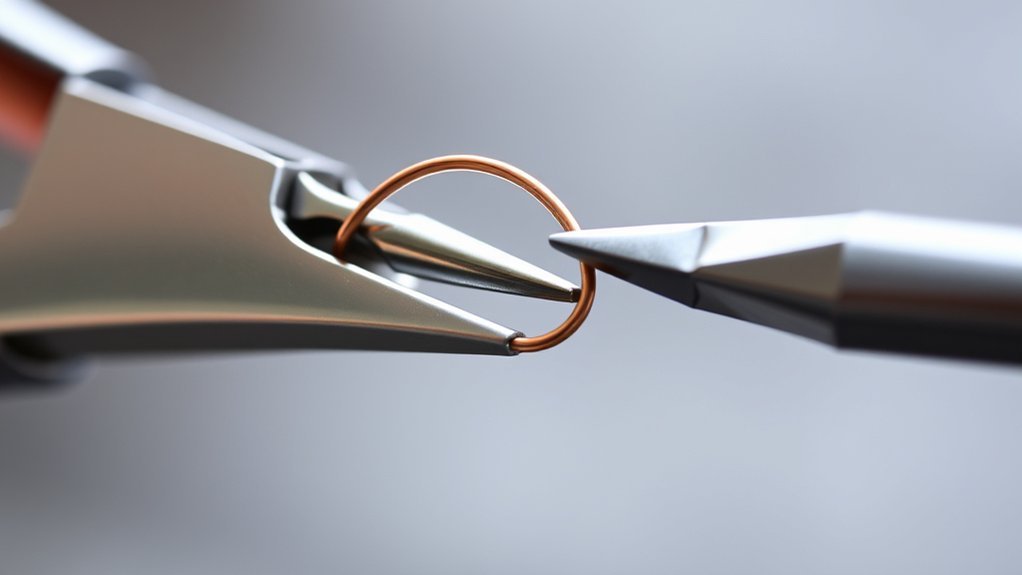
You’ll use long nose pliers primarily for gripping small components securely without slipping, applying precise pressure in tight spaces. When bending wire, position the jaws close to the bend point to control angles accurately and avoid kinks.
Additionally, the integrated cutting edge allows you to trim wires cleanly, so make sure to apply steady force for a smooth cut.
Precision Gripping Techniques
Mastering precision gripping techniques with long nose pliers allows you to manipulate small components accurately in tight spaces. To achieve ideal control, you need to develop fine motor skills that enable subtle adjustments without losing grip.
Position the pliers’ tips precisely around the object, applying just enough pressure to hold it firmly without causing damage. Your grip strength should be balanced: strong enough to maintain control but gentle enough to prevent deformation.
Using the pliers’ tapered jaws, you can access confined areas where conventional tools won’t fit. Practice steady hand movements to improve dexterity and reduce hand fatigue.
Effective Wire Bending Methods
Bend wires accurately by leveraging the long nose pliers’ tapered jaws for controlled gripping and precise manipulation. To master wire shaping techniques, position the wire securely between the jaws near the tip, allowing you to create tight bends and intricate curves.
Adjust your grip to maintain consistent bending angles, essential for uniform results in electrical or jewelry work. Use the pliers’ leverage to apply steady pressure, avoiding deformation or damage to the wire.
When forming sharp bends, rotate the pliers slowly while holding the wire stationary for accuracy. Employ the smooth inner surfaces of the jaws to prevent marring the wire’s surface during manipulation.
These effective wire bending methods enhance your ability to shape wires with precision and repeatability, critical for professional-quality assemblies and repairs.
Cutting Applications and Tips
Beyond shaping wires, long nose pliers excel in cutting applications where precision is key. When using these pliers for cutting, apply proper cutting techniques by positioning the wire close to the pivot point to maximize leverage and guarantee a clean cut.
Always use the cutting edge designed specifically for snipping, avoiding excessive force that may damage the tool. Maintaining tool safety is vital; wear protective eyewear to guard against flying wire fragments and inspect the pliers regularly for wear or damage.
Additionally, grip the handles firmly and cut slowly to maintain control, especially with thin or delicate wires. By following these guidelines, you can efficiently grip, bend, and cut wires with long nose pliers while minimizing risks and extending the tool’s lifespan.
Choosing the Right Long Nose Pliers
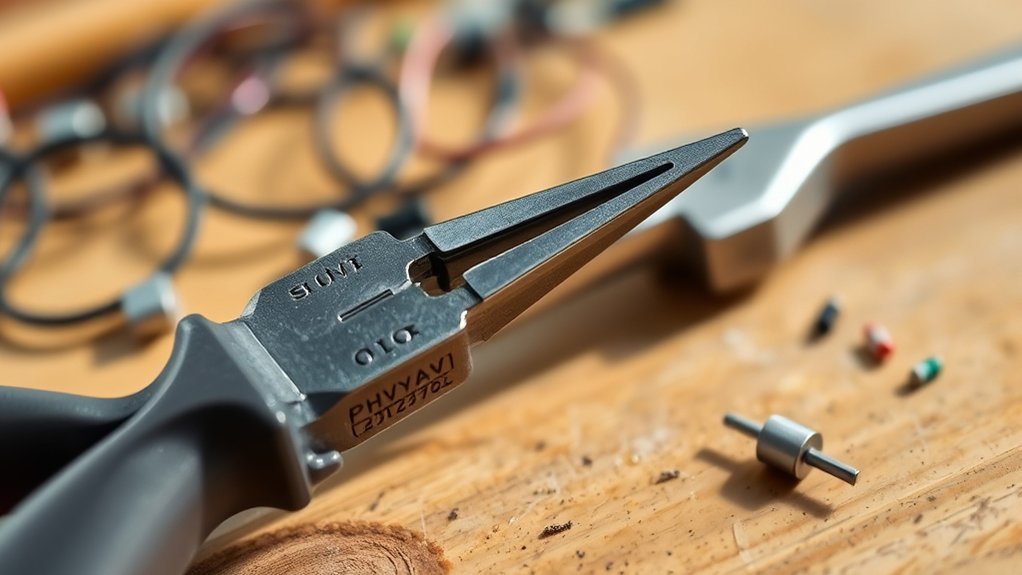
Choosing the right long nose pliers depends on the specific tasks you’ll be performing and the materials you’ll handle. Start with a features comparison to identify pliers with the appropriate jaw length, tip shape, and cutting edge.
For intricate work, opt for finer tips and a longer reach. Material selection is critical; high-carbon steel offers durability and corrosion resistance, while insulated handles provide safety when working near electrical components.
Consider pliers with ergonomic grips to reduce hand fatigue during extended use. Additionally, check for a smooth joint mechanism to guarantee precise control.
Using Long Nose Pliers for Electrical Wiring
Once you’ve selected long nose pliers with the right jaw length and insulated handles, you’ll find they greatly improve your control when manipulating electrical wiring. These pliers excel at precise wire stripping and forming tight circuit connections in confined spaces.
Their tapered jaws allow you to reach into tight spots, bend wires accurately, and twist conductors without damaging insulation.
| Task | Technique | Benefit |
|---|---|---|
| Wire stripping | Use the cutting edge | Clean removal of insulation |
| Bending wires | Grip near the tip | Precise angle formation |
| Circuit connections | Twist wires together | Secure, stable electrical joints |
| Reaching tight spots | Narrow jaw insertion | Access in confined areas |
Mastering these techniques enhances safety and efficiency in electrical wiring projects.
Using Long Nose Pliers for Jewelry Making
When making jewelry, you’ll rely on long nose pliers for precise bending techniques that shape wire accurately without damaging it. You’ll also use them to form consistent wire loops essential for connecting components securely.
Mastering these skills guarantees clean, professional-looking results in your designs.
Precision Bending Techniques
Although long nose pliers are versatile tools, their true value in jewelry making lies in precision bending techniques. You’ll rely on these precision techniques to manipulate fine wire accurately without damaging it.
Effective bending strategies involve controlled pressure and exact angling, enabling you to create intricate shapes and sharp bends essential for detailed work.
| Technique | Purpose | Emotional Impact |
|---|---|---|
| Controlled Pressure | Prevents wire damage | Confidence |
| Exact Angling | Guarantees symmetry | Satisfaction |
| Incremental Adjustments | Refines shape progressively | Mastery |
Mastering these strategies guarantees your designs hold structural integrity while reflecting your artistic vision with precision.
Wire Loop Formation
Three essential steps define effective wire loop formation using long nose pliers in jewelry making. First, you select the appropriate wire gauge and secure it firmly between the pliers’ jaws. Next, apply consistent pressure while rotating the pliers to create a uniform loop, ensuring the wire maintains its structural integrity.
Finally, use the pliers’ tapered tips to refine the loop’s shape and close any gaps precisely. Mastering these wire loop techniques allows you to produce consistent, durable loops vital for connecting jewelry components.
Incorporating precise wire shaping methods with long nose pliers enhances your control over loop size and symmetry, important for professional-quality results. By following these steps, you optimize both the aesthetic and functional aspects of your wirework in jewelry design.
Long Nose Pliers for Tight Space Repairs
Because tight spaces limit access and maneuverability, long nose pliers are essential tools for precise repairs in confined areas. Their slender, pointed jaws allow you to reach narrow gaps where conventional tools won’t fit, making them ideal for tight space solutions.
When performing compact repairs, these pliers enable you to grip, bend, or cut wires with accuracy without damaging adjacent components. Their design provides enhanced control and leverage, critical for tasks requiring delicate manipulation.
Whether you’re working inside electrical panels, automotive assemblies, or intricate mechanical systems, long nose pliers offer the precision needed to efficiently complete repairs. By incorporating these tools into your workflow, you streamline tight space solutions and improve the quality and reliability of compact repairs in challenging environments.
Tips for Maintaining and Caring for Long Nose Pliers
To guarantee your long nose pliers perform reliably and last longer, you need to maintain them regularly. Start with effective cleaning methods: wipe down the jaws and pivot area after each use with a dry cloth to remove debris. For stubborn grime, use a mild solvent or soapy water, ensuring you dry the tool thoroughly to prevent rust.
Apply a light machine oil to the pivot joint to maintain smooth operation and prevent corrosion.
Regarding storage solutions, always store your pliers in a dry environment, ideally in a toolbox or on a pegboard with hooks to avoid moisture exposure. Avoid storing them loosely with other tools to prevent damage to the delicate tips.
Proper maintenance through these cleaning methods and storage solutions will extend the lifespan and functionality of your long nose pliers.
Common Long Nose Pliers Mistakes and How to Avoid Them
While long nose pliers are versatile tools, using them incorrectly can lead to damage or injury. One of the most frequent common usage errors is applying excessive force, which can deform the tool’s tips or damage delicate components. Avoid this by using proper handling techniques. Apply steady, controlled pressure instead of sudden force.
Another mistake is using the pliers as a hammer or prying tool, which compromises the tool’s integrity. Always use long nose pliers strictly for gripping, bending, and cutting tasks within their design limits.
Additionally, neglecting to maintain clean, lubricated joints can cause stiffness and reduce precision. By recognizing these common usage errors and adhering to proper handling techniques, you’ll prolong your tool’s lifespan and guarantee safer, more effective operation.
Conclusion
Whether you’re delicately bending a tiny wire loop or maneuvering in a cramped electrical panel, long nose pliers serve as your precise extension. Their slender jaws contrast with the bulk of conventional tools, giving you control where space is scarce and detail matters.
By mastering their use and care, you’ll transform complex tasks into seamless actions, ensuring accuracy without sacrificing efficiency.
With long nose pliers, precision meets practicality in every grip, making them an indispensable tool for detailed work.