What Drill Bit for Acrylic Sheet you use is crucial when working with this material.
Drilling into acrylic is like walking a tightrope—you need balance and the right tools to avoid a costly slip. If you choose the wrong drill bit, you risk cracking or chipping the material.
Knowing which bit to use and how it interacts with acrylic can make all the difference between a clean hole and a ruined piece.
Before you start, consider the specific characteristics that make acrylic unique and why standard bits often fall short.
Best Drill Bits for Acrylic Sheets
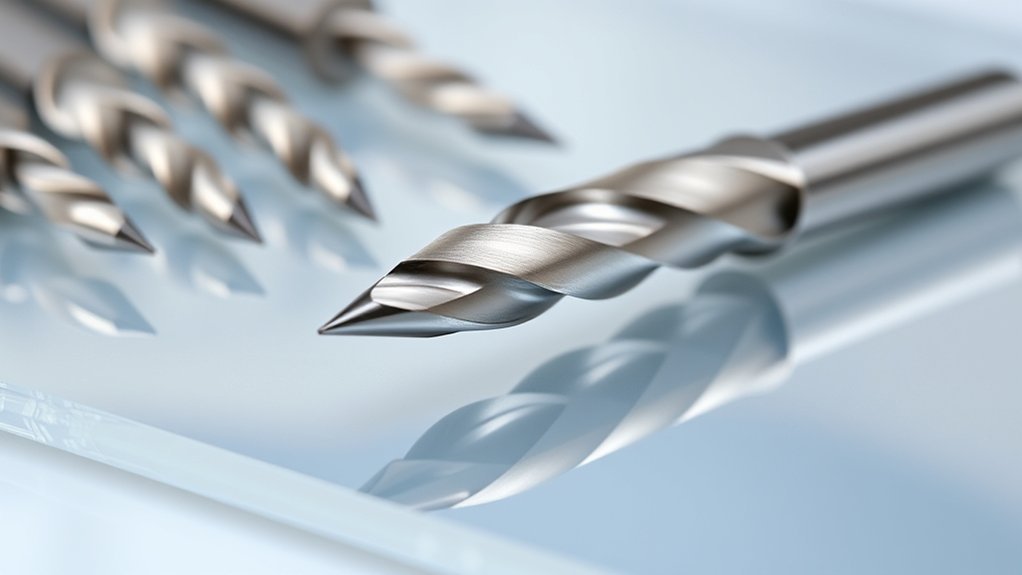
When drilling acrylic sheets, choosing the right drill bit is essential to prevent cracking and achieve clean holes. Different acrylic types, such as cast and extruded acrylic, respond uniquely to drilling.
Cast acrylic is harder and more prone to cracking, so you’ll want a drill bit designed for brittle materials. High-speed steel (HSS) bits with a split point tip are a solid choice for general acrylic drilling, providing precision and durability.
For cast acrylic, use high-speed steel drill bits with split point tips to prevent cracking and ensure precision.
For tougher acrylic types, consider carbide-tipped drill bits; their enhanced hardness reduces heat buildup and minimizes stress on the material. Avoid standard twist bits, which can cause chipping.
Selecting drill bit materials tailored to the acrylic type guarantees the best cutting performance and surface finish, maintaining the structural integrity of your sheet throughout the drilling process.
Why the Right Drill Bit Matters for Acrylic
Selecting the right drill bit directly influences the quality and durability of your acrylic project. Using inappropriate drill bit types can cause cracking, chipping, or melting due to excessive heat. Matching the bit to the acrylic thickness guarantees clean, precise holes without damaging the material.
| Acrylic Thickness | Recommended Drill Bit Type | Reason |
|---|---|---|
| Up to 1/8 inch | Step drill bit | Gradual cutting reduces stress |
| 1/8 to 1/4 inch | Brad point bit | Sharp tip minimizes cracking |
| Over 1/4 inch | Carbide-tipped bit | Durable for thicker sheets |
| All thicknesses | High-speed steel (HSS) | General purpose, avoid melting |
Choosing the correct drill bit type based on acrylic thickness optimizes performance and extends the life of both your tools and material.
Preparing Acrylic for Drilling With the Right Bit
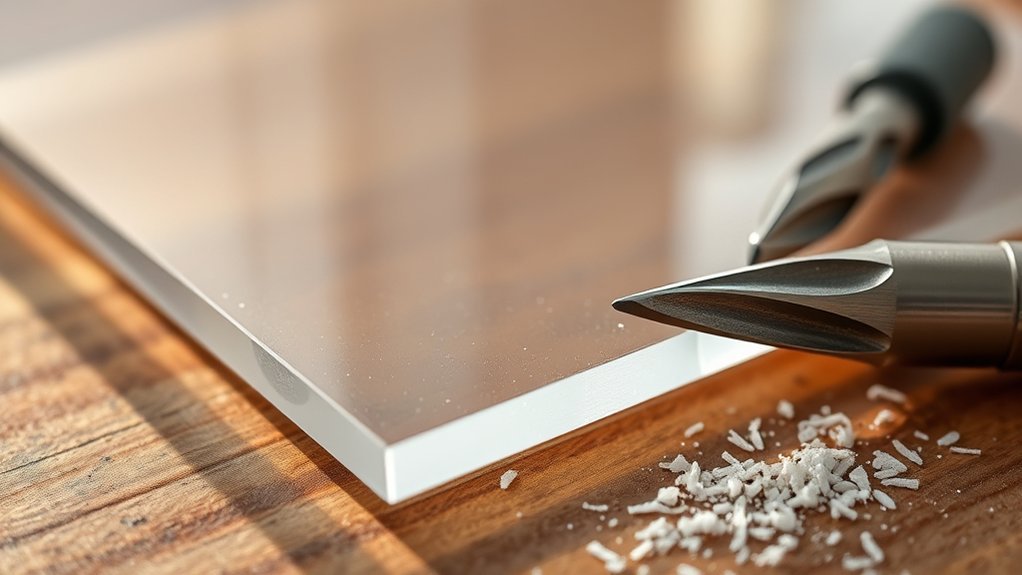
Before you start drilling, make sure the acrylic sheet is securely clamped to prevent movement and reduce vibration. Proper acrylic preparation is essential to achieve clean, precise holes without cracking.
Select a drill bit specifically designed for plastics, such as a spur-point or a modified twist bit with a sharp cutting edge. These bits minimize heat buildup and reduce stress on the material.
Use low to moderate drilling speed to avoid melting the acrylic. Apply consistent, gentle pressure to maintain control and prevent chipping. Additionally, consider backing the acrylic with a sacrificial piece to support the drill exit point.
How to Drill Acrylic for Clean, Crack-Free Holes
Properly preparing your acrylic sheet and choosing the right drill bit set the stage for drilling clean, crack-free holes. Begin by securing the acrylic firmly to prevent movement during drilling, which could cause cracking.
Use a drill bit specifically designed for acrylic, such as a sharp, brad-point or step bit, to reduce heat buildup and minimize stress on the material. Apply steady, moderate pressure and employ consistent drilling techniques, avoiding sudden force or hesitation.
To further prevent cracking, periodically withdraw the bit to clear debris and allow the acrylic to cool. After drilling, perform acrylic maintenance by gently sanding the hole edges with fine-grit sandpaper to eliminate sharpness and potential stress points.
These steps guarantee precise, durable holes without compromising the acrylic’s integrity.
How Speed and Pressure Impact Drilling Acrylic
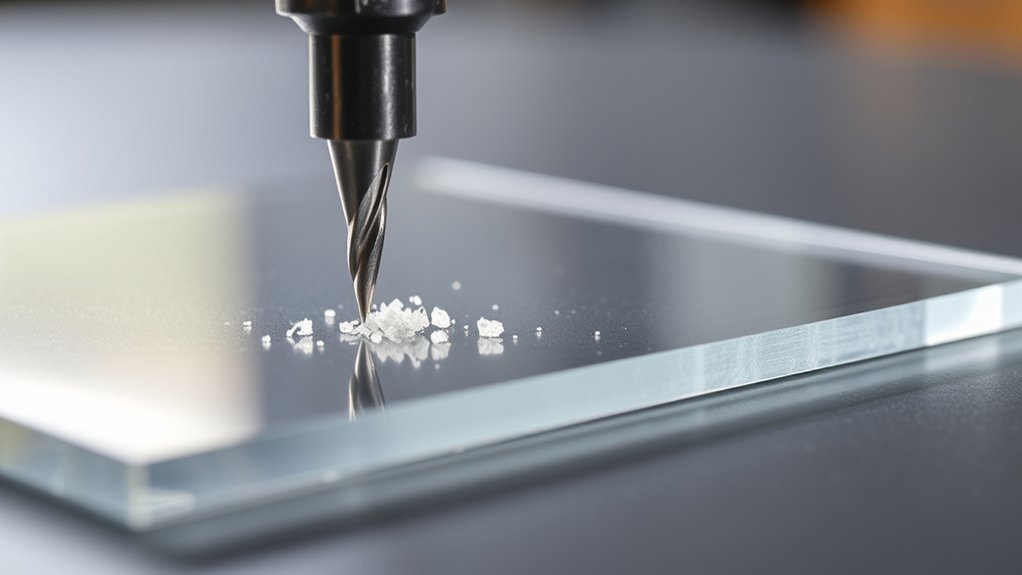
Drilling speed and applied pressure critically influence the quality of holes in acrylic sheets. When you adjust drilling techniques according to material thickness, you prevent cracking and melting.
Use a moderate speed. Too fast generates heat that softens acrylic, causing deformation. Conversely, too slow may lead to chipping. Apply consistent, gentle pressure; pressing too hard risks cracking, especially in thicker sheets.
Instead, let the drill bit do the work while you maintain control. For thin acrylic, lighter pressure and slightly higher speeds work best. Thicker materials require slower speeds and steady, moderate pressure to avoid stress fractures.
Balancing speed and pressure guarantees clean, precise holes without compromising acrylic’s structural integrity, making your drilling efficient and damage-free.
Common Drill Bit Mistakes When Drilling Acrylic
Choosing the right drill bit and using it correctly can make all the difference when working with acrylic sheets. Many common misconceptions and frequent errors lead to cracking, melting, or uneven holes. Avoid these mistakes to guarantee clean, precise results.
Using standard twist bits without modification causes excessive heat and stress. Applying too much pressure creates cracks or chip-outs around the hole edges. Drilling at high speeds generates heat, melting the acrylic instead of cutting it. Not securing the sheet firmly allows vibrations, resulting in inaccurate holes.
Understanding these pitfalls helps you select specialized bits, control speed, and apply gentle pressure. This knowledge prevents damage and guarantees professional quality when drilling acrylic sheets.
Conclusion
Choosing the right drill bit for acrylic is like finding the perfect key to access clean, crack-free holes. You’ll want to use HSS bits with split points or carbide-tipped bits for tougher sheets, avoiding standard twist bits that chip easily.
Remember, controlling speed and pressure is just as essential as the bit itself. With the right tools and technique, you’ll drill through acrylic smoothly, preserving its clarity and strength every time.
In conclusion, selecting the proper drill bit for acrylic sheet ensures precise and damage-free results every time you work with this material.