You might assume pliers all look the same, but pliers come in many different shapes and sizes depending on their purpose.
When you pick one up, you’ll notice how the handles, jaws, and pivot work together to perform specific tasks.
Understanding these differences can help you choose the right tool and use it more effectively.
Let’s explore the distinct features that define various types of pliers and what sets them apart visually and functionally.
What Are the Basic Parts of Pliers?
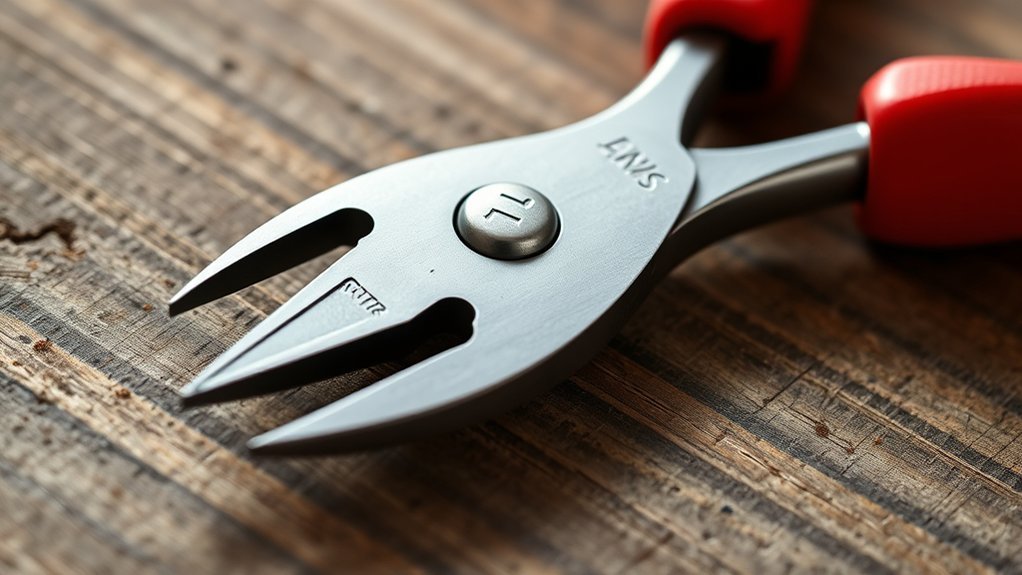
Pliers consist of three main parts that work together to provide grip and leverage: the handles, the pivot joint, and the jaws. When you examine various plier types, you’ll notice the handles are designed for comfort and force application, often coated with insulating material for safety.
The pivot joint acts as the fulcrum, enabling you to open and close the jaws smoothly while multiplying your hand’s force. The jaws, aligned precisely at the front, perform the essential tasks of gripping, cutting, or bending materials.
Understanding these basic parts helps you appreciate how different plier types adapt these components to fulfill specific basic functions, whether you’re tightening, twisting, or cutting. Mastering this knowledge guarantees you select the right pliers for your task efficiently.
How Do Pliers’ Jaws Differ in Shape and Purpose?
The jaws of these tools come in various shapes, each engineered to perform specific tasks with maximum efficiency. You’ll notice that jaw shapes vary to optimize grip, cutting, or bending functions.
For example, needle-nose pliers have long, slender jaws designed for precision work in tight spaces, while slip-joint pliers feature wider jaws with adjustable pivot points, allowing you to handle different object sizes. Diagonal cutting pliers possess sharp, angled jaws tailored for cutting wire cleanly.
Each jaw shape reflects distinct purpose differences, meaning you select a pair based on the task’s requirements. Understanding these variations helps you choose pliers that enhance control, force distribution, and durability, ensuring you apply the right tool for gripping, twisting, or cutting efficiently without damaging the workpiece.
How Can You Identify Pliers by Size and Build?
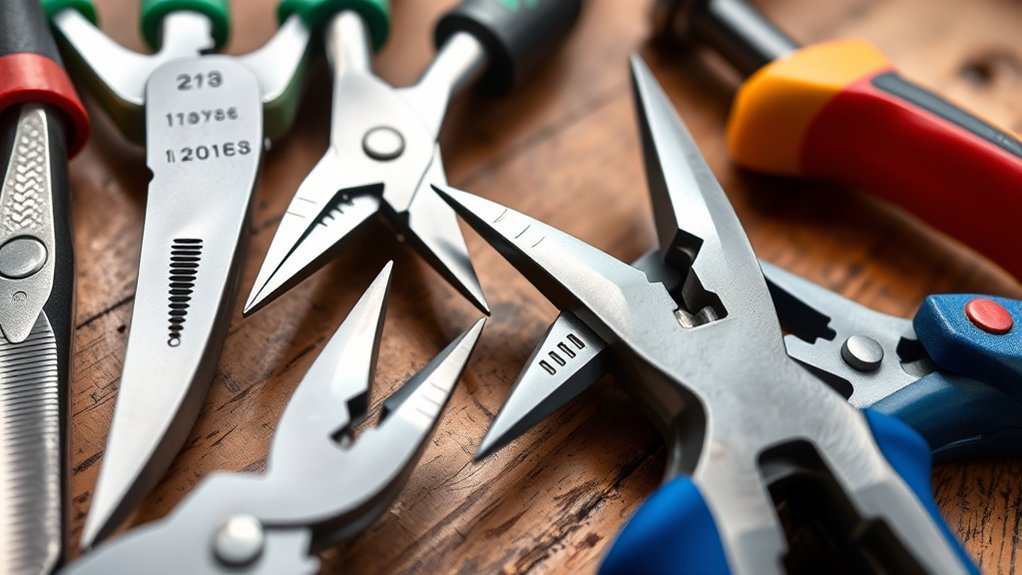
You can identify pliers by measuring their overall length, which typically ranges from 6 to 10 inches, and noting the handle material, such as rubber or plastic coatings for grip and insulation.
Pay close attention to the build, as variations in jaw shape like needle-nose or slip-joint directly affect function and suitability. Understanding these size and structural differences helps you select the right tool for your specific task.
Common Pliers Sizes
Several key measurements help you identify common pliers sizes: overall length, jaw width, and handle span. Understanding these common pliers dimensions allows you to select the right tool for specific tasks.
Standard pliers types like needle-nose, slip-joint, and lineman’s pliers each have typical size ranges that reflect their intended use and ergonomic design.
| Pliers Type | Typical Overall Length (inches) |
|---|---|
| Needle-nose | 5 – 7 |
| Slip-joint | 6 – 8 |
| Lineman’s | 8 – 10 |
Handle Material Variations
Knowing the size of pliers gives you a general idea of their intended use, but the handle material provides additional insights into durability, grip comfort, and electrical insulation properties.
You’ll find various handle types, including plastic, rubber, and composite materials. Plastic handles offer lightweight durability but may lack cushioning. Rubber handles improve grip comfort and reduce slippage through specialized grip textures, essential for prolonged use or working in oily conditions.
Composite handles often combine materials to balance strength and comfort while providing electrical insulation, vital for electrical work. When identifying pliers by build, note the handle’s surface finish and texture, as these directly affect control and safety.
Understanding these handle material variations helps you select the right tool for specific tasks and environments.
Jaw Shape Differences
Although size and handle materials provide useful identification clues, the jaw shape of pliers plays an essential role in determining their specific function and suitability for tasks. You can identify pliers by analyzing their jaw types, which directly influence jaw functions.
For example, needle-nose pliers feature long, narrow jaws designed for precision gripping in tight spaces, while slip-joint pliers have adjustable jaws suited for varying object sizes. Cutting pliers possess sharp, angled jaws specialized for wire cutting, whereas groove-joint pliers include serrated jaws optimized for enhanced grip on irregular surfaces.
What Handle Designs Improve Pliers’ Comfort?
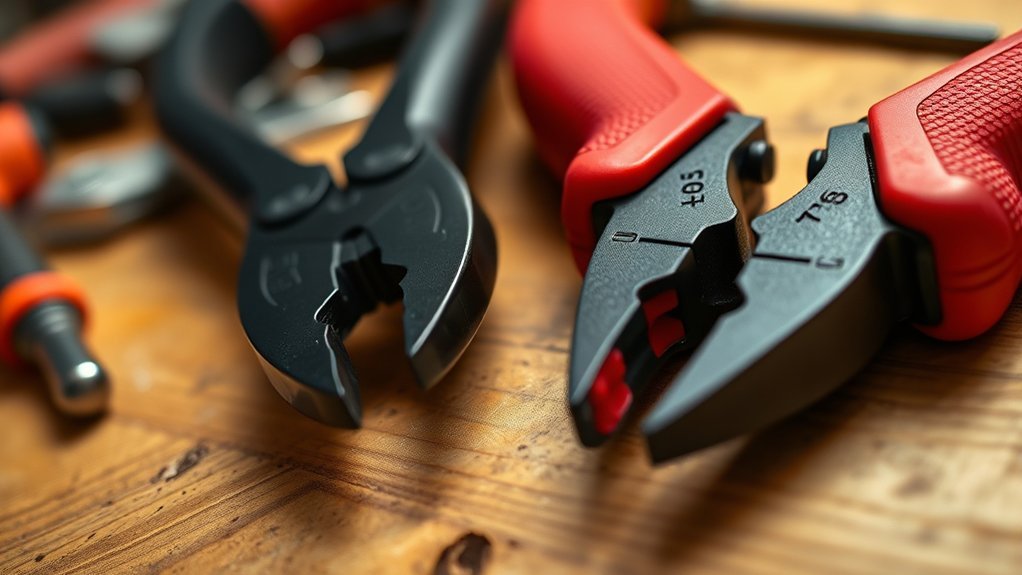
When you select pliers with ergonomically designed handles, you reduce hand fatigue and improve grip efficiency during prolonged use. Ergonomic grips contour to your hand’s natural shape, distributing pressure evenly and minimizing strain.
Look for handles featuring textured surfaces, which enhance friction and prevent slippage, especially when your hands are sweaty or oily. Additionally, handles with a slightly cushioned or rubberized coating increase comfort by absorbing some of the force applied.
The combination of these design elements guarantees that you maintain control and precision without discomfort. By prioritizing ergonomic grips and textured surfaces, you optimize your tool’s usability, making repetitive tasks less taxing. These features are vital for professionals and hobbyists who rely on pliers for extended periods.
What Materials Make Pliers Strong and Durable?
You’ll find that most pliers are made from high-carbon steel or chrome vanadium, materials chosen for their strength and resistance to wear. These metals provide the toughness needed to handle heavy use without bending or breaking.
Understanding how these material properties affect durability helps you select pliers that last longer and perform reliably.
Common Pliers Materials
The durability and strength of pliers largely depend on the materials used in their construction. Commonly, manufacturers use various steel types, such as carbon steel and chromium-vanadium steel, to balance hardness and toughness.
Carbon steel offers excellent edge retention, while chromium-vanadium steel enhances corrosion resistance and strength. You’ll often find pliers with alloy steel components designed to endure high stress without deforming.
For grip enhancements, handles typically feature rubber or thermoplastic elastomers that improve comfort and reduce slippage during use. Some premium models incorporate textured or molded grips to increase control and reduce hand fatigue.
Understanding these materials helps you select pliers suited for specific tasks, ensuring reliability and efficiency in demanding environments without compromising durability.
Material Properties Impact
Understanding the specific properties of materials like carbon steel and chromium-vanadium steel explains why pliers maintain strength and durability under stress. When you select pliers, you rely on materials that combine high material strength with excellent corrosion resistance.
Carbon steel offers toughness but requires protective coatings. Chromium-vanadium steel enhances hardness and resists wear, making it ideal for demanding tasks.
| Material | Material Strength | Corrosion Resistance |
|---|---|---|
| Carbon Steel | High | Moderate (coated) |
| Chromium-Vanadium Steel | Very High | High |
| Stainless Steel | Moderate | Very High |
| Alloy Steel | High | Moderate |
This table helps you visualize how each material balances strength and corrosion resistance, impacting pliers’ longevity and reliability in various environments.
How to Recognize Specialized Pliers and Their Uses?
Although many pliers look similar at first glance, you can identify specialized types by examining their jaw shape, size, and handle design. For instance, needle-nose pliers feature long, slender jaws that allow you to reach confined spaces, ideal for electronics or jewelry work.
Identify pliers by jaw shape, size, and handle design to find the perfect tool for detailed tasks.
Diagonal cutting pliers have sharp, angled jaws designed to cut wires cleanly, essential in electrical applications. Lineman’s pliers combine gripping and cutting functions with robust jaws and insulated handles for heavy-duty electrical tasks.
Groove-joint pliers adjust to various sizes, making them versatile for plumbing and mechanical work. Recognizing these specialized types helps you select the right tool for specific pliers applications, improving efficiency and safety.
Pay attention to handle insulation and jaw material, as these factors also indicate intended use and durability.
Conclusion
Think of pliers as a skilled artisan’s hands—each part crafted to perform a precise task. The jaws shape your grip, the handles provide comfort and control, and the materials guarantee strength and durability.
Just as a sculptor chooses tools carefully, you can identify pliers by their size, build, and specialized features to match your needs. Understanding these details lets you wield pliers with confidence.
By recognizing what do pliers look like, you can turn every grip into a perfect, purposeful action.