Choosing the wrong drill bit color for wood can feel like trying to cut a diamond with a butter knife—frustrating and ineffective.
When it comes to wood, selecting the right color drill bits is crucial for efficient and clean drilling. You might assume all bits are the same, but the color actually reveals key features that affect performance and durability.
Knowing which colors suit softwoods or hardwoods can save you time and prevent damage to your tools and project.
Let’s explore which drill bit colors truly belong in your woodshop.
What Does Drill Bit Color Mean for Woodworking?
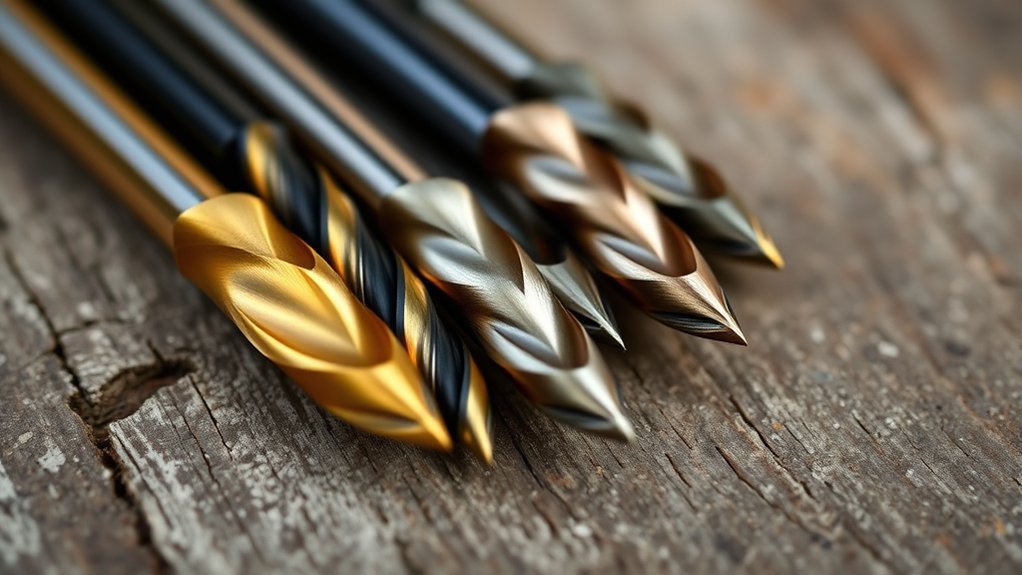
Although drill bit colors might seem purely aesthetic, they actually indicate important information about the bit’s material and coating, which directly affects performance and durability when working with wood. Understanding bit color significance helps you select the right tool for your project.
Different drill bit coatings provide specific benefits: black oxide resists corrosion and reduces friction, while titanium coatings increase hardness and extend lifespan. Some bits feature bright finishes, signaling a lack of coating, which may wear faster.
Knowing these color cues allows you to anticipate how a bit will perform under typical woodworking conditions. By paying attention to drill bit coatings and their associated colors, you can avoid premature wear and achieve cleaner, more precise holes in wood, ultimately improving your craftsmanship and tool longevity.
Which Colored Drill Bits Are Best for Wood?
When choosing drill bits for wood, which colors should you prioritize to secure peak performance? For wood drilling, drill bits with black oxide and gold titanium coatings stand out.
Black oxide bits resist corrosion and provide smooth drilling through softwoods and hardwoods alike. Gold-colored titanium bits offer enhanced durability and heat resistance, making them ideal if you plan prolonged use or harder wood types.
While other drill bit types like cobalt or silver finish excel in metalwork, they’re overkill for most woodworking tasks. Stick to black oxide or gold titanium bits for clean, efficient holes without damaging your wood or tools.
Choosing the right color coating guarantees your drill bits last longer and perform better, saving you time and effort in every woodworking project.
How Do Colored Drill Bits Compare for Softwood vs. Hardwood?

Black oxide and gold titanium drill bits each bring advantages depending on the wood type you’re working with. Softwood characteristics, like lower density and less resin, mean black oxide bits handle them well, offering smooth cuts without excessive wear.
For hardwood properties, including higher density and tighter grain, gold titanium bits excel because their coating reduces friction and maintains sharpness longer during tough drilling tasks. When drilling softwoods, you can rely on black oxide bits for efficient, clean holes.
However, for hardwoods, gold titanium bits resist heat buildup, preventing dulling. You should match your drill bit choice to the wood’s nature: softwoods favor black oxide for general use, while hardwoods demand the durability and heat resistance of gold titanium to maintain precision and extend bit life.
Why Are Black Oxide Bits Great for Wood?
Since you often work with softer woods, you’ll appreciate how black oxide bits combine durability and sharpness to deliver clean, efficient holes. Their black oxide advantages include enhanced resistance to corrosion, which boosts drill bit durability and lifespan.
This makes them a reliable choice for continuous use without frequent replacements. Here’s why you should consider black oxide bits for your woodworking:
- Resist rust better than plain steel bits
- Maintain sharpness longer for smoother cuts
- Offer balanced toughness and heat resistance
- Provide consistent performance on various wood types
When Should You Use Titanium or Gold-Colored Bits on Wood?
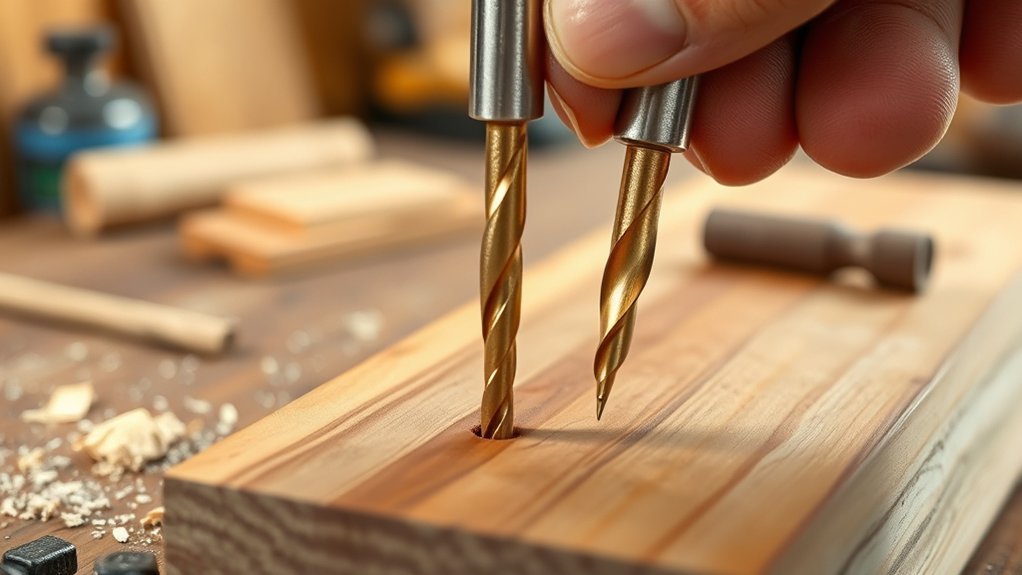
Although titanium or gold-colored drill bits cost more than standard bits, they offer significant advantages for woodworking projects that demand extra durability and heat resistance. You should choose titanium bits when you expect prolonged drilling sessions or when working with hardwoods, as titanium benefits include a harder surface and reduced friction.
This means the bits stay sharper longer and resist wear better than uncoated alternatives. Gold coatings, often titanium nitride, enhance performance by providing a slick surface that dissipates heat efficiently, preventing bit overheating and extending tool life. Using these bits makes sense if you need consistent, clean holes without frequent bit replacements.
However, for light or occasional drilling in softwood, the extra cost may not justify the benefits. Always match your bit choice to the demands of your woodworking project.
How Do Blue Drill Bits Perform on Wood?
If you’ve considered titanium or gold-colored bits for their durability and heat resistance, you might wonder how blue drill bits compare when working with wood. Blue drill bits typically boast a nitride coating, enhancing drill bit durability and heat dissipation.
Blue drill bits feature a nitride coating, boosting durability and heat resistance for effective woodworking.
Their blue drill performance excels in maintaining sharpness during extended use, making them suitable for hardwoods. Here’s what you should know:
- Blue bits resist heat buildup, reducing wear during long drilling sessions.
- They offer consistent cutting precision, preventing wood splintering.
- Durability extends drill bit lifespan, saving you replacement costs.
- However, they might not outperform specialized wood bits designed solely for softwoods.
You can rely on blue drill bits for solid, precise holes, especially when durability matters in tougher wood applications.
How to Identify the Best Colored Drill Bits for Wood?
How can you quickly spot the best colored drill bits for wood among the many options? First, understand the color significance tied to drill bit coatings. Different coatings serve distinct purposes. Black oxide offers corrosion resistance, titanium nitride adds durability, while cobalt coatings enhance heat resistance.
Look for bits with coatings that match your wood drilling needs, ensuring longer life and cleaner cuts. Examine the bit’s color carefully; it’s not just aesthetic but functional. Also, check if the manufacturer specifies the coating type and intended use.
Avoid bits with unclear or inconsistent coloring, as this may indicate lower quality or improper coating. By focusing on drill bit coatings and their color significance, you’ll confidently select the best colored drill bits designed precisely for woodworking tasks.
How to Maintain Colored Drill Bits for Wood?
To keep your colored drill bits for wood performing at their best, you need to clean and store them properly after each use. Proper maintenance extends their life and guarantees consistent efficiency. Here are key steps using effective cleaning techniques and storage solutions:
Proper cleaning and storage are essential to maintain the performance and longevity of your colored wood drill bits.
- Wipe bits clean with a dry cloth to remove wood dust and debris immediately after use.
- Use a soft brush to clean flutes and edges gently, avoiding damage to the colored coating.
- Apply a light coat of machine oil to prevent rust and corrosion before storing.
- Store bits in a dedicated case or rack to protect the coating and prevent dulling from contact.
Following these steps helps preserve the color finish and cutting precision, keeping your drill bits reliable for every woodworking project.
What Are Common Mistakes When Choosing Colored Drill Bits for Wood?
When choosing colored drill bits for wood, don’t confuse color codes; they indicate specific coatings and uses. You also need to match the drill bit material with the type of wood you’re working on to avoid damage or poor performance.
Overlooking these details can lead to frustration and wasted effort.
Misunderstanding Color Codes
Although color codes on drill bits can seem like helpful guides, they often lead to confusion and mistakes when selecting the right bit for wood. You might assume colors always indicate specific drill bit materials or intended uses, but that’s not always true.
Misunderstanding color coding can cause you to pick a bit unsuitable for your project.
Common mistakes include:
- Assuming all gold-colored bits are titanium-coated suitable for wood.
- Believing blue or black bits automatically mean high-speed steel ideal for wood.
- Confusing manufacturer-specific colors with industry standards.
- Overlooking that some colors indicate coatings, not material type.
Knowing that color codes vary and don’t universally represent drill bit materials helps you avoid these pitfalls and choose the right bit confidently.
Ignoring Material Compatibility
Because drill bits come in various materials and coatings, ignoring material compatibility can lead you to choose a bit that damages the wood or wears out quickly. Each drill bit material has specific applications; for example, high-speed steel (HSS) bits are common but may dull faster on hardwood, while titanium-coated bits offer better durability but aren’t always ideal for softer woods.
Understanding the color significance helps you pick the right bit. Gold-colored bits often indicate titanium coating, while black oxide bits resist corrosion. If you overlook these details, you risk inefficient drilling, tear-out, or bit failure.
Always match the drill bit materials and their coatings with the wood type and project needs to guarantee clean holes, longer bit life, and safer operation.
How to Choose the Right Colored Drill Bit for Your Wood Project?
Why does the color of a drill bit matter for your wood project? The color often indicates the coating or material, which affects durability and performance on wood. To choose the right colored drill bit, consider these factors:
The color of a drill bit reveals its coating, impacting durability and effectiveness for your wood project.
- Match drill bit types to wood: For softwood, standard black oxide may suffice; for hardwood, titanium-coated bits (gold color) offer longer life.
- Check drill bit sizes: Select sizes based on your screw or dowel dimensions for a precise fit.
- Consider coating benefits: Colored coatings like black oxide reduce friction; titanium adds hardness.
- Evaluate project demands: For frequent, heavy use, invest in more durable bits, often indicated by specific colors.
Conclusion
Choosing the right drill bit color for wood is like picking the perfect tool from your toolbox—it makes all the difference between a clean cut and a frustrating mess. Black oxide bits glide smoothly through soft and hardwood alike, while gold titanium bits stand tough against the hardest grains.
By understanding these color cues, you’ll drill with confidence, keeping your bits sharp and your projects flawless.
Remember, the right color bit is your secret weapon for woodworking success. Choosing the correct color drill bits for wood ensures precision and durability in every project.