You want durability, you want precision, you want speed—and that all starts with the material your drill bit is made from. The hardest drill bits are critical for tough jobs, and knowing what they are made of can make all the difference in your work.
The hardest drill bits aren’t just tough by chance; their composition defines their ability to cut through the most resistant surfaces. Understanding what materials offer the best hardness and why will change how you approach any drilling task.
But which materials truly stand out in this demanding category?
Hardest Drill Bit Materials: An Overview
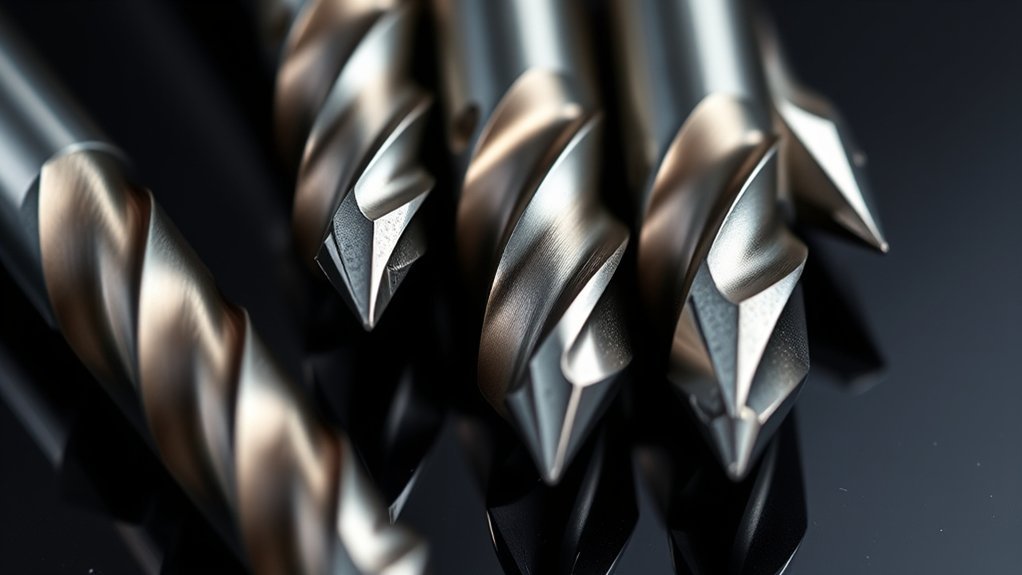
Although selecting the right drill bit material depends on your specific application, understanding the hardest drill bit materials is essential for maximizing durability and performance. You’ll find that recent drill bit innovations focus on materials like tungsten carbide, cobalt steel alloys, and polycrystalline diamond (PCD).
These materials exhibit superior hardness and wear resistance, enabling efficient drilling through tough substrates. Material advancements have improved toughness, reducing brittleness while maintaining cutting-edge hardness. For example, tungsten carbide blends hardness with impact resistance, while PCD offers unmatched abrasion resistance for non-ferrous metals and composites.
When evaluating drill bits, you should consider not just hardness but also thermal stability and fracture toughness, which directly influence lifespan and cutting efficiency. Staying informed on these material advancements helps you select bits that best suit your cutting environment and maximize tool longevity.
Understanding Drill Bit Hardness: The Mohs Scale Explained
When selecting drill bits, you need a clear understanding of hardness to match the bit to your material. The Mohs scale measures hardness from 1 (talc) to 10 (diamond), providing a comparative framework for evaluating drill bit hardness.
This scale helps you anticipate wear resistance and cutting efficiency since a bit must be harder than the material it drills. For instance, drill bits with higher Mohs hardness values maintain sharpness longer when used on tough surfaces.
Understanding this scale enables you to select bits that minimize dulling and breakage. By focusing on drill bit hardness through the Mohs scale, you optimize tool performance and lifespan, ensuring precision in demanding applications without over-specifying or risking premature failure.
Tungsten Carbide: Why It Excels in Tough Drilling
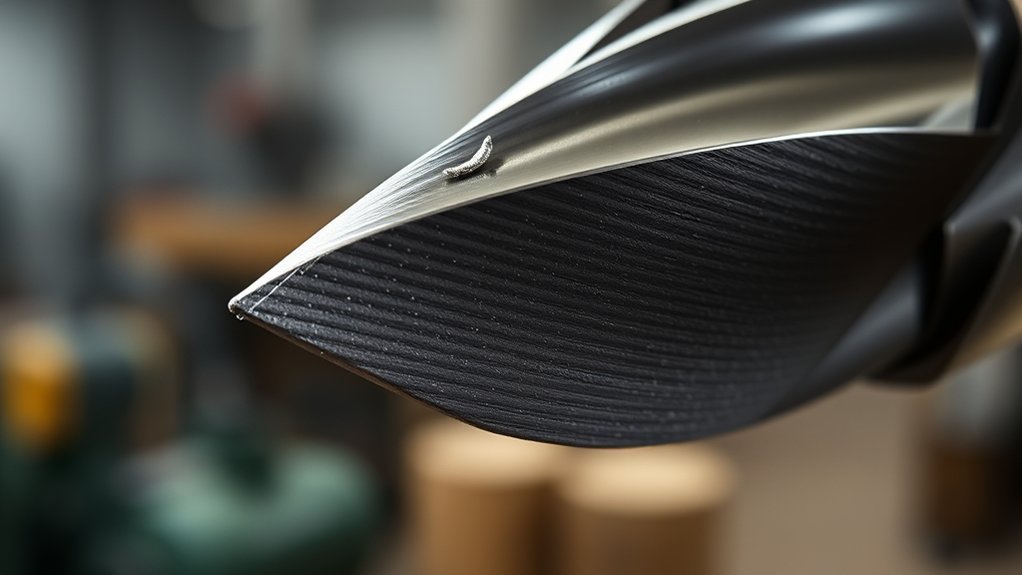
Because tungsten carbide combines exceptional hardness with impressive toughness, it stands out as a superior material for drill bits designed to penetrate hard and abrasive surfaces. You’ll find its unique tungsten properties, such as high melting point and resistance to deformation, crucial in demanding carbide applications.
When you use tungsten carbide drill bits, you benefit from:
- Outstanding wear resistance, allowing longer tool life even under intense friction
- Superior compressive strength, enabling drilling through hardened metals and composites
- Heat resistance that maintains sharpness and structural integrity during high-speed drilling
These attributes guarantee tungsten carbide bits perform reliably where lesser materials fail. Understanding these properties helps you select the right drill bit for tough materials, maximizing efficiency and minimizing downtime.
Cobalt Steel for Hard Drill Bits: Strength and Heat Resistance
If you need drill bits that combine durability with superior heat resistance, cobalt steel offers a powerful solution. The cobalt properties embedded within the steel matrix enhance hardness and thermal stability, allowing the bit to sustain high temperatures without losing structural integrity.
This heat resistance is essential when drilling into tough metals, where friction generates intense heat. You’ll find that cobalt steel drill bits maintain sharpness longer than standard high-speed steel bits, reducing wear and extending tool life.
Their alloy composition typically includes 5-8% cobalt, which optimizes toughness while preventing brittleness. By selecting cobalt steel bits, you guarantee efficient drilling performance under demanding conditions, minimizing downtime and material degradation.
Understanding these attributes helps you choose the right bit for high-heat, high-stress applications.
Titanium Coatings: Making Drill Bits More Durable
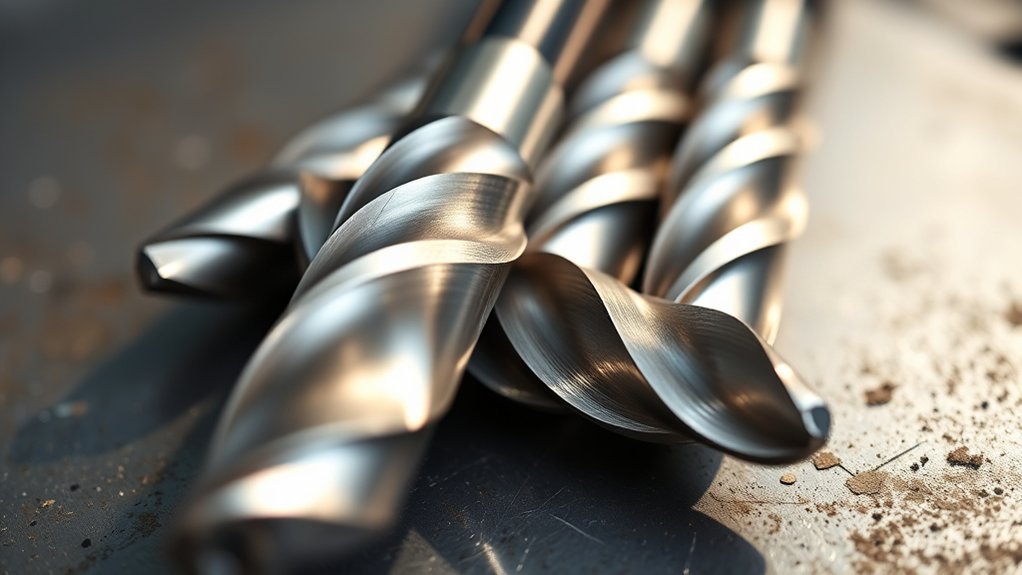
You’ll find several types of titanium coatings, like TiN, TiCN, and TiAlN, each enhancing drill bit durability differently. These coatings improve hardness, reduce friction, and extend tool life under high-stress conditions.
Understanding the application techniques, such as PVD and CVD, is essential for maximizing their performance benefits.
Types Of Titanium Coatings
Several types of titanium coatings enhance drill bit durability by improving hardness, reducing friction, and increasing heat resistance. When selecting a drill bit, understanding these coatings helps you optimize performance for specific applications:
- Titanium Nitride (TiN): This gold-colored coating increases surface hardness and reduces wear, making it suitable for general-purpose drilling in softer metals and wood.
- Titanium Carbonitride (TiCN): Combining carbon and nitrogen, TiCN offers higher hardness and better heat resistance than TiN, ideal for tougher materials like stainless steel.
- Titanium Aluminum Nitride (TiAlN): Provides superior oxidation resistance and maintains hardness at elevated temperatures, perfect for high-speed drilling in hard metals.
Each coating modifies the drill bit’s surface properties, allowing you to match bit performance with material demands precisely.
Benefits Of Titanium Coatings
Although titanium coatings may seem like a minor detail, they greatly enhance drill bit durability by increasing hardness, reducing friction, and improving heat resistance. You benefit from titanium advantages such as extended tool life and consistent performance under high-stress conditions.
These improvements stem from advanced coating processes that deposit thin, uniform layers of titanium compounds, optimizing surface properties without compromising the bit’s geometry.
| Benefit | Effect on Drill Bit | Impact on Performance |
|---|---|---|
| Increased Hardness | Resists wear and deformation | Extends bit lifespan |
| Reduced Friction | Lowers heat generation | Enhances cutting efficiency |
| Heat Resistance | Maintains hardness at high temp | Prevents premature failure |
Application Techniques For Coatings
Three primary methods dominate the application of titanium coatings on drill bits: Physical Vapor Deposition (PVD), Chemical Vapor Deposition (CVD), and ion implantation. Each technique offers distinct advantages in coating applications and surface treatments, impacting durability and performance. You’ll want to select the method based on the intended use and material compatibility.
PVD: Deposits thin, uniform titanium nitride layers under vacuum, enhancing hardness and wear resistance without compromising bit geometry.
CVD: Utilizes chemical reactions at high temperatures to form thicker, adherent coatings, ideal for heavy-duty drilling.
Ion Implantation: Bombards the surface with titanium ions, modifying subsurface properties without adding a distinct coating, improving fatigue life.
Understanding these methods helps you optimize drill bit longevity through precise surface treatments.
Diamond-Tipped Drill Bits: Best for Hard Surfaces
You’ll find diamond-tipped drill bits excel in cutting through the hardest surfaces due to their industrial-grade diamond crystals bonded to the bit’s core. These bits are ideal for applications involving glass, ceramics, and reinforced concrete, where precision and durability are critical.
Keep in mind, their higher cost and specific maintenance requirements reflect their specialized composition and performance.
Composition And Durability
When drilling through extremely hard materials like concrete or stone, diamond-tipped drill bits outperform other types due to their superior composition and durability. The drill bit manufacturing process fuses industrial-grade diamonds onto a metal core, ensuring maximum hardness and wear resistance. This composition allows you to maintain sharpness even under high friction and heat.
Key factors contributing to their durability include:
- Uniform diamond distribution on the cutting edge for consistent performance
- A robust metal bonding matrix that holds diamonds firmly during use
- Enhanced wear resistance, reducing the need for frequent replacements
Ideal Applications
Although diamond-tipped drill bits demand a higher initial investment, their exceptional hardness and durability make them indispensable for penetrating the toughest surfaces. When selecting materials for your projects, consider these bits for concrete, glass, ceramics, and hardened steel.
Proper drilling techniques, like controlled speed and coolant use, enhance performance and bit longevity. Below is a quick guide to ideal applications for diamond-tipped bits:
| Material | Recommended Drilling Techniques |
|---|---|
| Concrete | Low speed, steady pressure |
| Glass | High speed, minimal pressure |
| Ceramics | Moderate speed, water cooling |
| Hardened Steel | Slow speed, lubricant application |
| Granite | Low speed, constant water flow |
Choosing the right material and adapting drilling techniques guarantee optimal results with diamond-tipped bits.
Cost And Maintenance
Selecting diamond-tipped drill bits for demanding materials like concrete and hardened steel involves weighing their upfront cost against long-term value. A thorough cost analysis shows these bits have a higher initial price point but offer extended durability, reducing replacement frequency.
To maximize their lifespan, follow these maintenance tips:
- Use proper cooling methods, such as water, to prevent overheating and premature wear.
- Avoid excessive pressure that can damage the diamond coating and decrease cutting efficiency.
- Regularly inspect the cutting surface for wear and replace the bit when the diamonds become sparse or rounded.
Choosing Between Carbide and Diamond Drill Bits
Because both carbide and diamond drill bits offer exceptional hardness, choosing between them requires careful consideration of the specific material and application. You’ll find carbide advantages in drilling metals and tougher composites due to its superior toughness and resistance to heat.
Carbide bits handle impact better, making them ideal for general industrial use. Conversely, diamond applications excel in cutting through extremely hard, abrasive materials like glass, ceramics, and stone. Diamond’s unmatched hardness provides precision and durability where carbide might wear quickly.
When selecting between the two, assess the workpiece hardness, required precision, and operating conditions. Opt for carbide if you need versatility and impact resistance; choose diamond for specialized, high-precision tasks on ultra-hard materials.
This analytical approach guarantees you match drill bit material to application demands efficiently.
How Drill Bit Materials Affect Performance and Lifespan
Drill bit materials directly influence both cutting efficiency and tool longevity by determining hardness, heat resistance, and wear characteristics. When selecting a drill bit, understanding how these factors affect drill bit performance and lifespan factors is essential.
Different materials offer distinct advantages:
- High-Speed Steel (HSS): Balances toughness and cost, suitable for moderate drilling tasks but wears faster under high heat.
- Cobalt Alloys: Increase heat resistance and hardness, enhancing lifespan factors in demanding applications.
- Carbide and Diamond: Provide superior hardness and thermal stability, maximizing cutting efficiency and extending lifespan, especially in abrasive or hard materials.
Tips to Maintain Hard Drill Bits and Keep Them Sharp
Although hard drill bits are designed for durability, you’ll need to perform regular maintenance to preserve their sharpness and effectiveness. Employ precise sharpening techniques, such as using a dedicated drill bit sharpener or a bench grinder with appropriate angles, to restore cutting edges without compromising bit geometry.
Avoid overheating during sharpening to prevent material degradation. Implement strict storage practices by keeping bits in a dry, organized case with individual slots to prevent physical damage and corrosion.
Additionally, clean bits after each use to remove debris and moisture. Inspect bits frequently for wear or chipping, addressing issues promptly to maintain peak performance.
Conclusion
You might think all drill bits are created equal, but clearly, they’re not. When you need to conquer the toughest materials, relying on ordinary steel just won’t cut it—literally. Tungsten carbide, cobalt steel alloys, and diamond-tipped bits aren’t just fancy names; they’re engineered to withstand extreme heat and abrasion.
These materials ensure durability and precision, making them essential for heavy-duty drilling tasks. Their superior hardness allows them to maintain sharpness and resist wear much longer than standard bits.
So, if you want your drilling to last and perform, choosing the right hard material isn’t optional—it’s the only way to avoid frustrating failure. Understanding what are the hardest drill bits made of will guide you to the best tool for your toughest projects.