Imagine you’re fitting aluminum panels on an aircraft wing and need a fast, secure way to hold parts in place before riveting. Cleco pliers are designed specifically for this purpose: they install and remove Cleco fasteners that temporarily clamp metal sheets together.
Knowing how these specialized tools work can save you time and improve alignment accuracy.
But what exactly makes Cleco pliers indispensable in metal fabrication?
What Cleco Pliers Are and How They Work
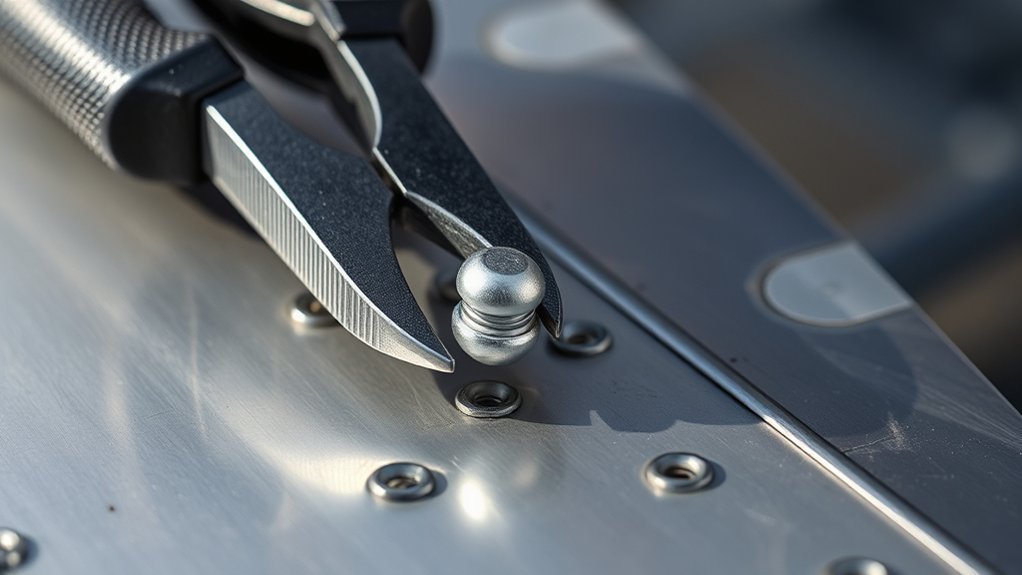
Cleco pliers are specialized hand tools designed to install and remove Cleco fasteners, which temporarily hold materials together during assembly or fabrication. When you use Cleco pliers, you compress the tool’s handles, causing the fastener to retract and fit into pre-drilled holes.
Upon release, the fastener expands, securing the materials firmly. These tools are essential in applications such as aerospace, automotive, and sheet metal work, where precise temporary fastening is critical.
To guarantee reliable performance, you must perform regular Cleco pliers maintenance, including cleaning the jaws, lubricating moving parts, and inspecting for wear or damage. Proper maintenance prevents tool malfunction and extends service life, enabling you to maintain accurate, efficient assembly processes in demanding environments.
How to Use Cleco Pliers for Temporary Metal Fastening
When working with sheet metal, you’ll use Cleco pliers to quickly and securely join parts before final fastening. Start by aligning the metal sheets and drilling appropriately sized holes. Squeeze the Cleco pliers to open the fastener’s jaws, insert the Cleco through the aligned holes, then release the pliers to lock it in place.
This method guarantees precise temporary fastening during metal assembly, allowing you to reposition or remove fasteners as needed.
Visualize the process:
- Aligning multiple metal sheets with drilled holes
- Compressing the Cleco plier handles to open the fastener
- Inserting the Cleco into the hole with steady pressure
- Releasing the handles to secure the fastener firmly
- Confirming the tight hold before final riveting or bolting
This technique streamlines assembly and maintains alignment accuracy.
Types of Cleco Pliers and When to Use Them
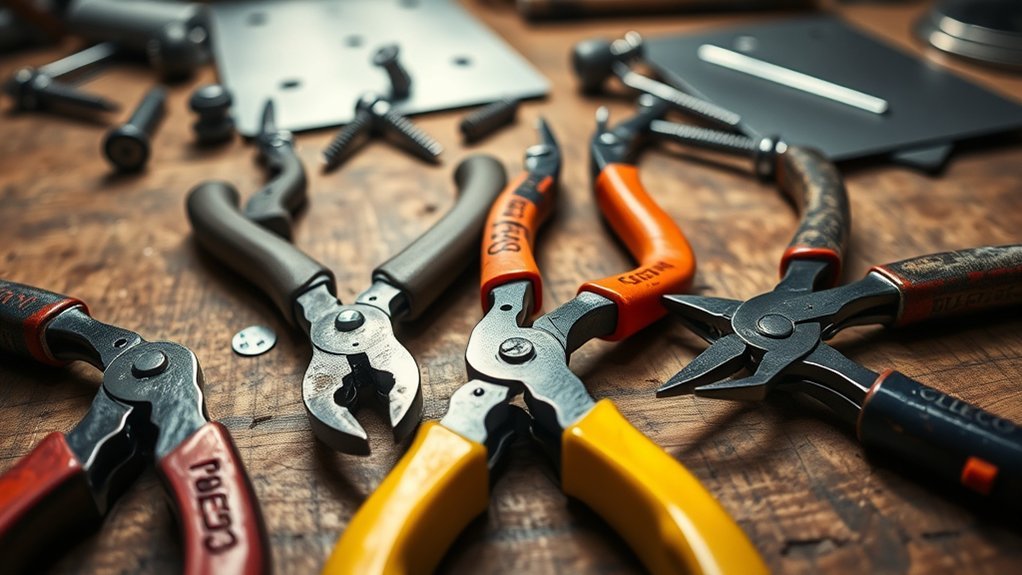
You’ll encounter several common types of Cleco pliers, including standard, flush, and pneumatic models, each designed for specific fastening needs. Choosing the right pliers depends on factors like material thickness, access limitations, and the frequency of use.
Understanding these distinctions guarantees precise, efficient temporary fastening in your projects.
Common Cleco Pliers Types
Various types of pliers are designed to handle Cleco fasteners efficiently, each tailored for specific applications and materials. When working with Cleco pliers, understanding their varieties aids in peak performance and prolongs tool life through proper cleco pliers maintenance.
Top cleco pliers brands often offer distinct models catering to diverse needs.
Common Cleco pliers types include:
- Standard Cleco pliers for general installation and removal
- Pneumatic Cleco pliers for high-volume, repetitive tasks
- Offset Cleco pliers for tight or awkward spaces
- Heavy-duty Cleco pliers designed for thicker materials
- Stainless steel Cleco pliers for corrosion resistance in specialized environments
Selecting the right type guarantees precision and durability in fastening applications.
Selecting Pliers For Tasks
Understanding the specific features and functions of different Cleco plier types enables you to select the right tool for each fastening task. Your pliers selection criteria should focus on task specific features such as jaw design, handle ergonomics, and locking mechanisms.
For example, straight Cleco pliers are ideal for standard installation and removal, offering straightforward grip and control. Offset pliers provide access in tight or angled spaces, thanks to their angled jaws.
Additionally, locking Cleco pliers secure the fastener firmly, reducing hand fatigue during repetitive tasks. By matching the plier type to the operational environment and task demands, you guarantee efficient, safe, and precise fastening.
Prioritize pliers that enhance accessibility and grip, as these task specific features directly impact your workflow and outcome quality.
Why You Need Cleco Pliers for Metal Fabrication
Because metal fabrication demands accuracy and efficiency, cleco pliers become indispensable tools in your workflow. They enable precise temporary fastening, ensuring alignment before permanent riveting or welding. The cleco applications span sheet metal assembly, aircraft skin installation, and prototype fabrication, offering versatility.
The cleco benefits include quick installation and removal, consistent clamping force, and reusable design, which streamline your project timeline.
When you use cleco pliers, you can:
- Secure multiple metal sheets with consistent pressure
- Maintain perfect hole alignment for drilling or riveting
- Reduce the risk of material distortion during assembly
- Speed up adjustments without damaging surfaces
- Reposition components easily during fitting
Incorporating cleco pliers enhances accuracy and efficiency, making them essential for metal fabrication tasks.
How to Choose the Right Cleco Pliers for Your Project
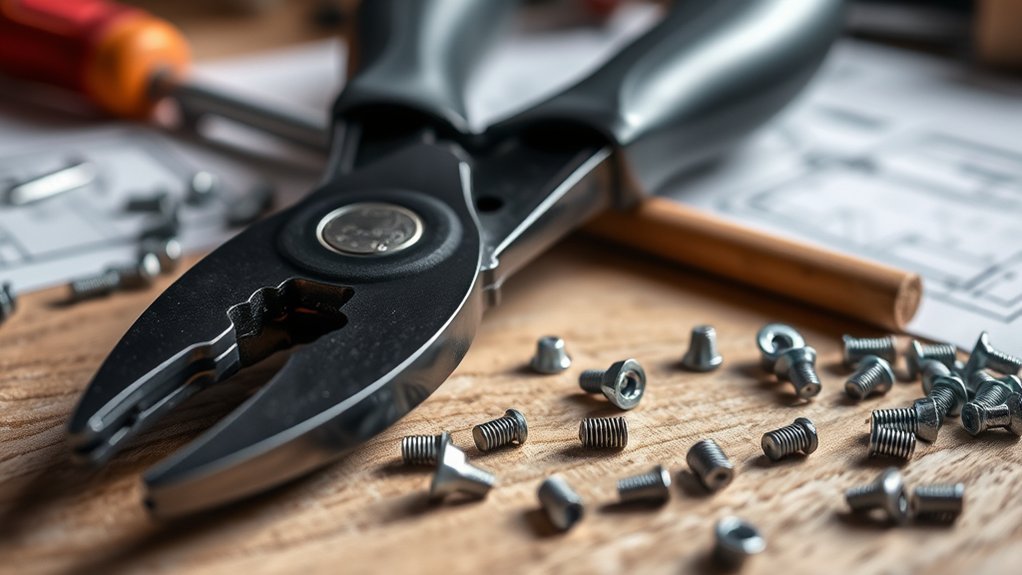
You’ll want to select cleco pliers based on the specific type suited for your fastening needs, whether standard or heavy-duty. Consider the material and durability to guarantee they withstand repeated use without compromising performance.
Also, prioritize handle comfort and grip to maintain control and reduce hand fatigue during extended projects.
Types Of Cleco Pliers
When selecting cleco pliers for your project, it is crucial to evaluate the specific type that matches your fastening needs and material thickness. Different types offer distinct cleco pliers advantages, so choosing correctly simplifies cleco pliers maintenance and improves efficiency.
Consider these common types:
- Standard cleco pliers: versatile and suitable for most sheet metal applications.
- Heavy-duty cleco pliers: designed for thicker materials requiring stronger clamping force.
- Push-type cleco pliers: enable quick installation and removal with minimal effort.
- Safety-lock cleco pliers: prevent accidental release during operation.
- Extended-handle cleco pliers: provide increased leverage for tougher fastenings.
Material And Durability
Selecting the right type of cleco pliers is only part of the equation; understanding the materials used in their construction and their durability directly impacts performance and longevity. Cleco pliers commonly feature steel alloys, such as carbon steel or stainless steel, valued for their strength and resistance to wear.
Material types influence corrosion resistance, weight, and tool rigidity, all critical durability factors. High-grade steel guarantees the pliers withstand repeated clamping forces without deforming. Additionally, heat-treated components enhance hardness, reducing the risk of bending or breaking under stress.
When choosing cleco pliers, consider these durability factors to ascertain the tool maintains precision and reliability throughout your project’s demands. Prioritizing robust materials ensures your investment delivers consistent, long-term functionality in demanding environments.
Handle Comfort And Grip
How does handle comfort and grip influence your efficiency with cleco pliers? An ergonomic design reduces hand fatigue during repetitive tasks, allowing you to maintain precision and control. A non slip grip guarantees secure handling, even in oily or sweaty conditions, minimizing slippage and potential errors.
When selecting cleco pliers, focus on these features to enhance your workflow and safety.
Consider these aspects for ideal handle comfort and grip:
- Contoured handles that fit naturally in your hand
- Soft, textured surfaces for improved tactile feedback
- Balanced weight distribution to reduce strain
- Durable materials resisting wear and tear
- Adequate spacing to accommodate gloved hands
Prioritizing these elements guarantees your cleco pliers perform reliably and comfortably throughout your project.
Common Mistakes to Avoid When Using Cleco Pliers
Although cleco pliers are straightforward tools, improper use can lead to misaligned fasteners and damaged materials. One common mistake is applying excessive force, which risks deforming the cleco or the workpiece. Always use controlled pressure to guarantee proper fastening.
Another error is neglecting cleco plier maintenance; failing to lubricate moving parts or clean debris can cause malfunction or jamming. For cleco plier safety, avoid using worn or damaged pliers, as compromised tools reduce grip reliability and increase injury risk.
Additionally, don’t insert clecos into holes that don’t match their size, since this can distort holes and fasteners. By adhering to correct usage and maintenance protocols, you’ll preserve tool integrity and guarantee accurate, secure temporary fastenings every time.
Conclusion
Think of Cleco pliers as the conductor of an orchestra, ensuring every metal piece aligns perfectly before the final performance. Without them, your project risks misalignment and costly rework. In fact, studies show using Cleco fasteners can reduce assembly errors by up to 40%.
By mastering these tools, you’ll not only speed up your workflow but also guarantee precision in every fastening. This makes your metal fabrication as seamless as a well-tuned symphony.
Ultimately, understanding how to use Cleco pliers effectively is key to achieving flawless alignment and efficient assembly in any metalworking project.