To remove oil-based stains from wood, first identify if the stain is fresh or set.
For fresh stains, apply a baking soda and dish soap paste, then gently scrub and wipe clean.
For tougher stains, sprinkle talcum powder or cornstarch to absorb oil before brushing off.
Use mineral spirits cautiously with a lint-free cloth to break down residue, and sand stubborn areas with progressively finer grit.
Proper cleaning and conditioning restore wood, and more detailed methods guarantee thorough results.
Identify Your Oil-Based Stain
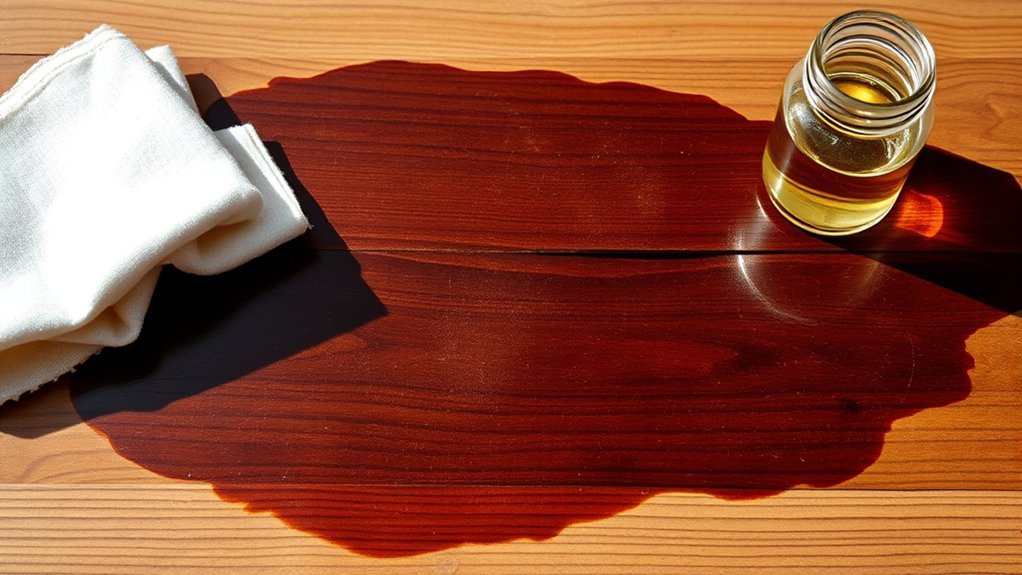
How can you accurately identify the type of oil-based stain on your wood surface? First, understand the primary oil stain types: penetrating stains, which soak into the wood grain, and surface stains, which create a film atop the wood.
To determine the category, use stain identification methods like applying a small solvent test. Dab a cotton swab soaked in mineral spirits on an inconspicuous area; if the stain softens or dissolves, it’s likely a surface stain. If it remains unaffected, it’s probably a penetrating stain.
Additionally, consider the stain’s sheen. Surface stains often have a glossier finish. Documenting these characteristics precisely helps you select the appropriate removal technique, ensuring effective restoration without damaging the wood’s integrity.
Prepare Wood Surface Before Removal
Before removing an oil-based stain, make certain you thoroughly clean the wood surface to eliminate dust and debris that could interfere with the process. You’ll also want to test your chosen removal method on a small, inconspicuous area to avoid damaging the wood.
This preparation guarantees more accurate results and protects the wood’s integrity during treatment.
Clean Dust And Debris
Although it might seem like a minor step, thoroughly cleaning dust and debris from the wood surface is essential to secure effective stain removal. Proper dust removal guarantees that no particles interfere with your stain removal agent’s penetration or adherence. Before proceeding, focus on meticulous surface cleaning to optimize results.
To effectively clean dust and debris:
Use a vacuum with a soft brush attachment to lift loose particles without scratching the wood. Wipe the surface with a tack cloth or microfiber cloth dampened slightly with mineral spirits for fine dust removal. Avoid water-based cleaners that can raise wood fibers or cause swelling. Inspect corners and grooves to remove hidden debris that might obstruct stain removal.
This preparation step secures uniform contact between the wood and the treatment, improving stain removal efficiency.
Test Stain Removal Method
Why should you test your stain removal method on a small, inconspicuous section of the wood before applying it broadly? Testing allows you to evaluate the oil stain effectiveness of your chosen solvent or technique without risking widespread damage or discoloration.
By conducting a test stain removal method, you can observe how the wood’s finish and grain respond, ensuring the treatment won’t cause fading, warping, or surface degradation. This step is critical because wood varies in porosity and finish type, affecting stain absorption and removal success.
Apply the removal agent with a clean cloth, wait the recommended time, then assess results under good lighting. Only after confirming satisfactory oil stain effectiveness should you proceed to treat the entire stained area, protecting the wood’s integrity and appearance.
Use Baking Soda and Dish Soap to Remove Fresh Oil Stains
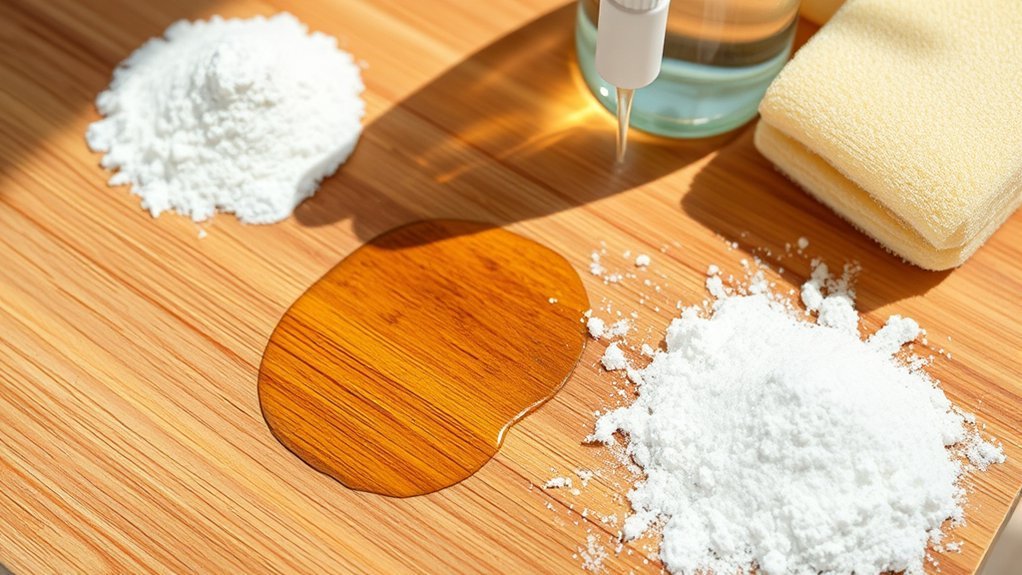
When you catch an oil stain fresh on wood, applying a mixture of baking soda and dish soap can effectively break down the grease. Baking soda acts as a mild abrasive and absorbent, while dish soap emulsifies the oil, allowing for easier removal.
To treat the stain:
- Mix equal parts baking soda and dish soap to form a paste.
- Apply the paste directly onto the stained area.
- Let it sit for 10–15 minutes to penetrate the oil.
- Gently scrub with a soft brush or cloth, then wipe clean with a damp cloth.
This method targets fresh stains by lifting oil from wood pores without damaging the finish. Make sure to dry the area thoroughly afterward to prevent moisture damage.
Use Talcum Powder or Cornstarch to Absorb Oil-Based Stains
If the oil stain has set beyond the initial fresh stage, relying on absorbent powders like talcum powder or cornstarch can help draw the oil out of the wood fibers. Talcum powder’s fine granules penetrate the porous wood surface, effectively soaking up residual oil without damaging the finish.
Similarly, cornstarch benefits include its high absorbency and gentle, non-abrasive nature, making it ideal for delicate wood surfaces. To use, generously sprinkle your chosen powder over the stain, then let it sit for several hours, preferably overnight, to maximize absorption.
Afterward, carefully brush away the powder using a soft brush or cloth. This method minimizes further staining and prepares the wood for any additional cleaning steps, ensuring better restoration of the wood’s original appearance.
How to Use Mineral Spirits for Tough Oil Stains
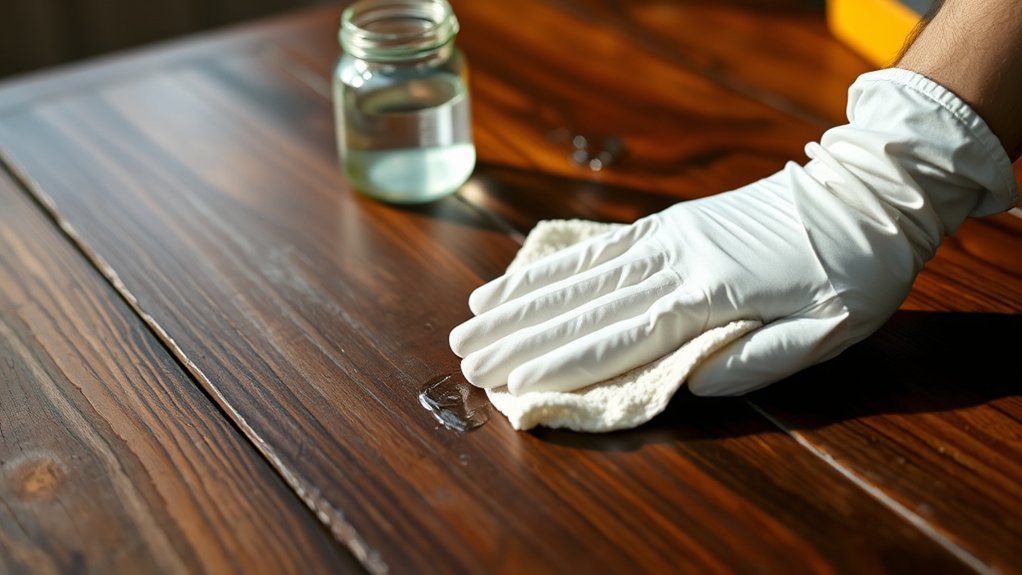
When tackling tough oil stains on wood, selecting the appropriate mineral spirits with low odor and high purity is essential for effective cleaning. You’ll need to apply the solvent using a lint-free cloth, working in small sections with controlled strokes to dissolve the stain without damaging the wood grain.
Always guarantee proper ventilation and wear protective gloves to minimize inhalation risks and skin contact during the process.
Choosing The Right Mineral Spirits
Although mineral spirits are a common solvent for removing oil-based stains from wood, selecting the appropriate type is essential to guarantee effective cleaning without damaging the surface. You’ll want to take into account the different mineral spirits types, as their solvent strength and evaporation rates vary considerably.
For instance, odorless mineral spirits minimize fumes but may act slower, while regular spirits clean more aggressively. If you prefer less toxic options, some mineral spirits alternatives like citrus-based solvents or bio-based cleaners offer safer profiles but can differ in effectiveness.
When choosing, evaluate:
- Solvent strength relative to stain severity
- Drying time suited to your project
- Toxicity and ventilation requirements
- Compatibility with wood finish and sealants
This precision guarantees you pick the right solvent for ideal stain removal.
Application Techniques For Effective Cleaning
Selecting the right mineral spirits sets the stage for effective stain removal, but knowing how to apply them properly guarantees the best results. When tackling tough oil stains, you’ll want to use specific cleaning solutions and application methods to maximize efficiency.
First, dampen a clean cloth with mineral spirits, avoiding soaking it to prevent wood damage. Next, gently rub the stained area in a circular motion to break down the oil. Finally, let the surface air dry before evaluating if a second application is needed.
| Step | Cleaning Solution Usage | Application Method |
|---|---|---|
| 1. Preparation | Use mineral spirits | Lightly dampen cloth |
| 2. Application | Target oil-based stains | Circular rubbing motion |
| 3. Drying | Allow solvent evaporation | Air dry area |
| 4. Reassess | Inspect stain removal | Repeat if necessary |
Safety Precautions And Ventilation
Because mineral spirits emit volatile fumes that can be harmful if inhaled, you’ll need to confirm adequate ventilation and take proper safety precautions before use. Confirming proper ventilation reduces the concentration of hazardous vapors, minimizing respiratory risks.
Always equip appropriate safety gear such as chemical-resistant gloves, safety goggles, and a respirator rated for organic vapors. Work in an open area or near windows and use fans to enhance airflow. Avoid sources of ignition since mineral spirits are flammable.
- Wear chemical-resistant gloves and goggles to prevent skin and eye contact
- Use a respirator designed for organic vapors to avoid inhalation hazards
- Work in a well-ventilated space with cross-ventilation or mechanical exhaust
- Keep away from open flames, sparks, or heat sources to prevent fire risks
Adhering to these protocols confirms safe and effective use of mineral spirits for tough oil stains.
Sanding Techniques to Remove Stubborn Oil Stains
When oil-based stains penetrate deeply into wood fibers, chemical treatments alone won’t suffice, so you’ll need to employ sanding techniques to effectively remove the residue. Start with a coarse grit sandpaper, typically 80-100 grit, to abrade the stained surface layers aggressively.
Use an orbital sander or sanding block to guarantee even pressure and prevent gouging. After initial sanding, switch to a finer grit, like 150-180, to smooth the wood and remove any remaining stain traces. Always sand along the grain to maintain wood integrity.
Monitor progress closely to avoid excessive material removal, which can alter wood dimensions. Proper sanding techniques combined with effective grit progression will restore the wood’s natural appearance, preparing it for any subsequent finishing steps without residual oil-based stain interference.
Clean and Condition Wood After Oil Stain Removal
After sanding has effectively removed the oil-based stain, the wood surface will often have residual dust and uneven moisture absorption. To restore the wood’s integrity, thorough cleaning and targeted wood conditioning are crucial.
Once sanding removes the oil-based stain, clean and condition the wood to restore its integrity.
Start by wiping the surface with a tack cloth or vacuuming to remove fine dust particles. Then, apply a wood conditioner to balance moisture levels and prepare the wood for future finishes. Here are key maintenance tips to follow:
- Use a damp, lint-free cloth to gently clean without saturating the wood.
- Choose a wood conditioner compatible with your wood type.
- Allow the conditioner to penetrate fully, following manufacturer instructions.
- Regularly inspect and recondition to prevent drying and cracking.
These steps guarantee ideal wood conditioning and extend the longevity of your woodwork.
Common Mistakes to Avoid When Removing Oil Stains
Although removing oil stains from wood might seem straightforward, there are several technical pitfalls that can compromise the wood’s surface or prolong the staining issue. One common misconception is using water-based cleaners, which can spread the oil deeper into the wood fibers instead of lifting it.
Avoid harsh scrubbing; excessive abrasion can damage the wood grain and cause uneven discoloration. Another DIY pitfall is neglecting to test solvents on a small, hidden area. This step prevents unexpected damage or finish removal.
Additionally, over-application of chemical strippers can saturate the wood, making stain removal more difficult. Finally, skipping proper drying time causes residual moisture, promoting mold or further staining. By avoiding these errors, you guarantee effective, safe oil stain removal without compromising your wood’s integrity.
When to Call a Professional for Oil Stain Removal
How do you know if an oil stain issue on wood requires professional intervention? While DIY techniques work well for minor stains, some situations demand expert attention. You should consider professional services when:
The stain deeply penetrates or covers a large surface area, making removal complex. Previous DIY attempts have altered the wood’s integrity or finish, risking further damage. The wood is antique or valuable, requiring specialized care to preserve its condition. You lack access to industrial-grade solvents or equipment needed for thorough extraction.
In these cases, professionals employ advanced methods like controlled chemical stripping and precision sanding, minimizing harm while restoring wood quality. Calling in experts guarantees precise stain removal and protection of your wood’s structural and aesthetic integrity.
Frequently Asked Questions
Can Oil-Based Stains Be Removed From Finished Wood Furniture?
Yes, you can remove oil stain from finished wood by applying specific removal techniques like using mineral spirits or specialized wood cleaners.
Test in a small area first to avoid damaging the finish or wood surface.
Are There Eco-Friendly Alternatives to Mineral Spirits for Stain Removal?
Like a gentle breeze clearing fog, you can use citrus solvent alternatives or the vinegar cleaning method for eco-friendly stain removal. Both break down oils effectively while being less toxic and biodegradable, protecting your wood and health.
How Long Should Oil-Based Stain Removers Sit Before Wiping Off?
You should allow an application time of 10 to 15 minutes for ideal stain absorption, ensuring the remover penetrates the wood fibers thoroughly before wiping off. This helps effectively lift the oil-based stain without damaging the surface.
Will Oil Stain Removal Methods Damage Wood Grain or Texture?
You might expect damage, yet proper grain preservation techniques and texture restoration methods minimize harm. Using controlled solvents and gentle abrasion guarantees the wood’s natural grain and texture stay intact while effectively removing oil-based stains.
Can Oil-Based Stains Transfer to Clothing During Removal?
Yes, oil-based stains can cause oil transfer onto your clothing during removal. To prevent this, wear protective garments and handle materials carefully, ensuring clothing protection to avoid unsightly stains and maintain fabric integrity throughout the process.
Conclusion
Tackling oil-based stains on wood is like peeling back layers to reveal the wood’s true character. By identifying the stain and choosing the right method—whether baking soda for freshness or mineral spirits for toughness—you’re wielding precision tools in your restoration arsenal.
Remember to prep, clean, and condition meticulously to protect your wood’s integrity. Avoid common pitfalls, and don’t hesitate to call a pro if the stain runs deeper than your efforts can reach.
When dealing with oil-based stains on wood, patience and the correct technique are key to restoring its natural beauty effectively.