Linseed oil serves as a natural varnish by penetrating wood fibers and polymerizing to form a flexible, water-resistant film. This enhances the wood grain while still allowing the wood to breathe.
You can choose raw linseed oil for deep penetration and slower drying or boiled linseed oil for faster curing and a harder finish.
Though it offers moderate protection compared to synthetic finishes, its low VOC emissions and biodegradability make it an eco-friendly option.
To maximize results and longevity, understanding application and maintenance techniques is essential.
What Is Linseed Oil and Why Use It as Varnish?
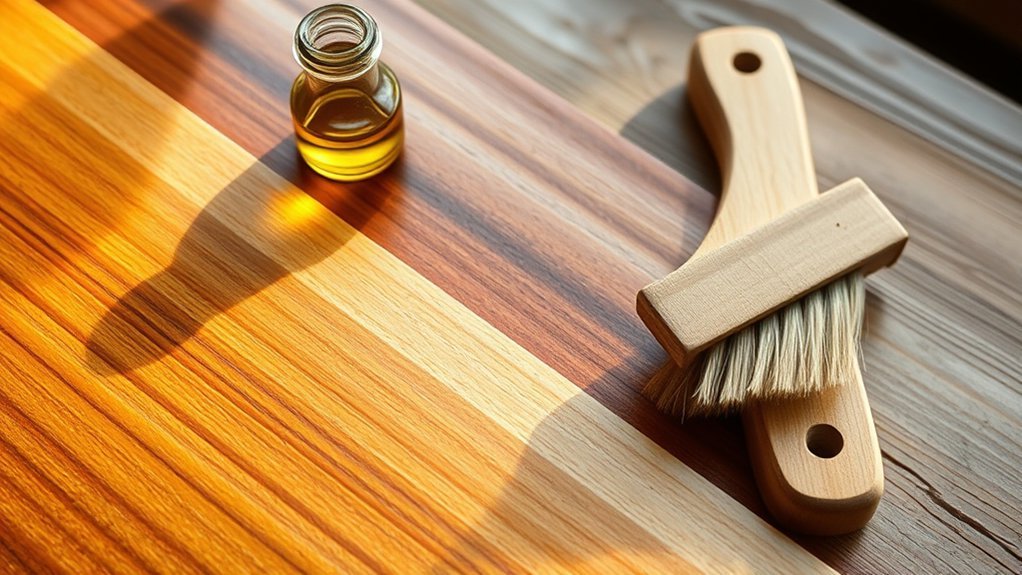
Linseed oil, extracted from the seeds of the flax plant, is a drying oil widely used as a natural varnish due to its polymerizing properties. When applied, it undergoes oxidation and cross-linking, forming a solid, transparent film that enhances surface durability.
In your benefits overview, note that linseed oil offers excellent water resistance, flexibility, and a rich, warm finish, making it ideal for protecting wood and metal surfaces. Its application uses extend beyond varnishing; it’s also effective in restoring and preserving antique furniture, artworks, and outdoor structures.
Raw vs Boiled Linseed Oil: Which One to Choose?
How do you decide between raw and boiled linseed oil when choosing a varnish? Raw linseed oil is unprocessed, drying slowly and penetrating deeply, making it suitable for fine, controlled finishes where curing time isn’t critical. However, its extended drying period can attract dust and dirt.
Boiled linseed oil, on the other hand, is treated with drying agents to accelerate polymerization, greatly reducing drying time and forming a harder, more protective film. This makes boiled linseed preferable for projects requiring faster completion and enhanced durability.
Keep in mind that boiled linseed may yellow over time due to additives, whereas raw linseed retains a more natural finish but demands patience. Ultimately, your choice hinges on balancing drying time, finish hardness, and aesthetic preference between raw linseed and boiled linseed oils.
How Linseed Oil Protects Wood and Enhances Its Appearance

When you apply linseed oil to wood, it penetrates deeply into the fibers, creating a durable barrier that repels moisture and slows down degradation. This deep absorption enhances wood preservation by reducing susceptibility to swelling, cracking, and fungal attack.
The oil polymerizes within the cellular structure, reinforcing the wood’s mechanical integrity over time. Additionally, linseed oil provides significant aesthetic enhancement; it intensifies natural grain patterns and imparts a warm, rich sheen without forming a surface film.
This subtle gloss not only accentuates the wood’s texture but also maintains its breathable quality, preventing trapped moisture. By combining protective and visual benefits, linseed oil serves as an effective varnish alternative, optimizing both the longevity and the appearance of wooden surfaces in indoor and outdoor applications.
Applying Linseed Oil Varnish: Step-by-Step Guide
Before applying linseed oil varnish, you’ll need to prepare the wood surface by thoroughly cleaning and sanding it to guarantee proper adhesion.
Next, follow specific application techniques such as using a lint-free cloth or brush to apply thin, even coats. These steps are critical to achieving a durable, smooth finish that enhances both protection and appearance.
Surface Preparation Essentials
Although linseed oil varnish offers durable protection, its effectiveness largely depends on meticulous surface preparation. Before applying, you must verify the surface is perfectly conditioned to maximize adhesion and finish quality.
Start with thorough surface cleaning to remove dust, oils, and residues that impede penetration. Employ precise sanding techniques, progressing from coarse to fine grit to create a uniform texture without damaging the substrate.
Follow these essential steps:
- Remove existing finishes or contaminants using appropriate solvents.
- Sand the surface uniformly, emphasizing grain direction.
- Eliminate sanding dust with a tack cloth or vacuum.
- Inspect for and repair any surface imperfections.
- Verify the substrate is completely dry before application.
Application Techniques Steps
Applying linseed oil varnish involves several critical steps to assure ideal penetration and curing. First, select appropriate application tools such as natural bristle brushes or lint-free cloths to guarantee even distribution.
Next, apply a thin, uniform coat, allowing the oil to saturate the wood fibers. Monitor drying times closely; typically, each coat requires 24-48 hours to cure depending on environmental conditions.
After drying, lightly abrade the surface with fine steel wool or sandpaper to promote adhesion of subsequent layers. Repeat application and abrasion for the desired finish.
| Step | Key Consideration |
|---|---|
| Application Tool | Natural bristle brush/cloth |
| Coat Thickness | Thin, uniform layer |
| Drying Time | 24-48 hours per coat |
Tips for a Smooth, Even Linseed Oil Varnish Finish
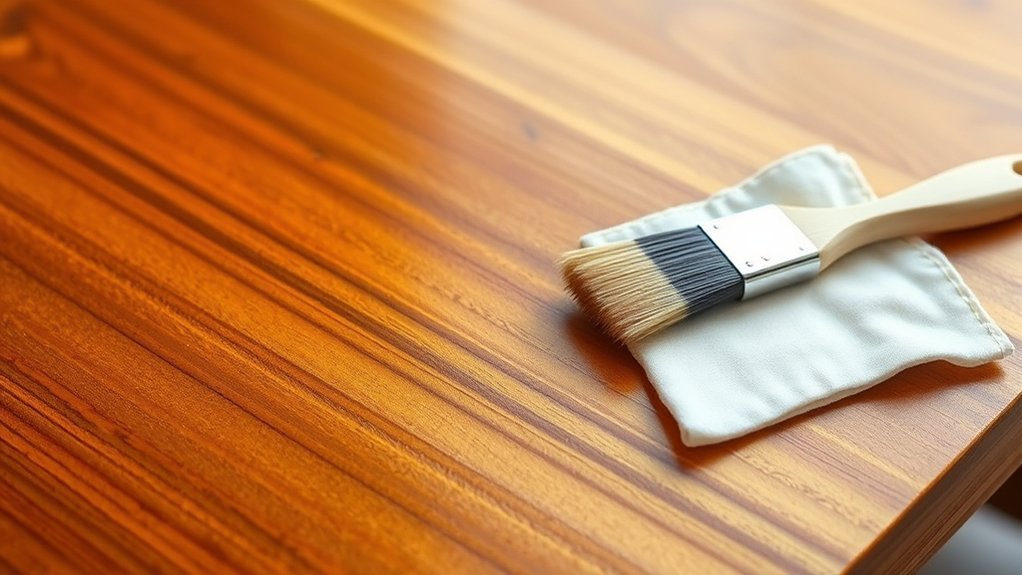
Achieving a smooth, even linseed oil varnish finish requires meticulous surface preparation, controlled application techniques, and appropriate drying conditions. To optimize brush techniques, use a high-quality natural bristle brush, applying thin, even coats with long, steady strokes.
Be mindful of drying times; allow each layer to cure fully before applying the next to prevent tackiness and unevenness. Maintain a dust-free environment to avoid surface imperfections.
Sand between coats with fine-grit sandpaper for smoothness. Apply varnish in a well-ventilated, moderate humidity setting.
Avoid over-brushing, which can cause streaks and bubbles. Use a clean brush to minimize contamination.
Monitor drying times closely to guarantee proper polymerization.
Following these steps guarantees a uniform, durable linseed oil varnish finish.
Common Linseed Oil Varnish Mistakes to Avoid
Why do many linseed oil varnish projects fail to deliver the desired finish? The answer lies in common mistakes during varnish application. One frequent error is applying linseed oil too thickly, which inhibits proper drying and results in a tacky surface.
Another is neglecting to thoroughly prepare the wood; insufficient sanding or cleaning leaves contaminants that prevent uniform absorption and adherence. You should also avoid applying varnish in high humidity or low temperatures, as these conditions extend drying times and promote uneven curing.
Additionally, skipping the recommended number of coats or failing to allow sufficient drying between applications compromises durability and appearance. By understanding these pitfalls and controlling application thickness, environmental conditions, and surface preparation, you can guarantee a consistent, durable linseed oil varnish finish.
How to Maintain and Reapply Linseed Oil Varnish
Maintaining the quality of your linseed oil varnish finish requires regular inspection and timely reapplication to address wear and environmental effects. Effective maintenance techniques involve evaluating surface integrity and moisture resistance periodically.
The reapplication frequency depends on exposure conditions but typically ranges from 6 to 12 months for indoor use and more frequently outdoors. Follow these key steps:
Clean the surface with a mild detergent and allow it to dry thoroughly. Lightly sand the existing varnish to promote adhesion of the new layer. Apply a thin, even coat of boiled linseed oil using a lint-free cloth or brush.
Allow sufficient drying time, generally 24–48 hours, between coats. Repeat application until the desired finish and protection level is restored.
Consistent application of these maintenance techniques guarantees durability and aesthetic longevity.
Comparing Linseed Oil Varnish to Other Wood Finishes
When choosing a wood finish, you’ll want to evaluate durability and protection levels, as linseed oil varnish often offers moderate resistance compared to synthetic options. You’ll also notice differences in application methods, with linseed oil requiring multiple coats and longer drying times.
Additionally, consider environmental and health impacts, since linseed oil is biodegradable and low in VOCs, unlike many chemical finishes.
Durability and Protection Levels
Durability is a critical factor when choosing a wood finish, and linseed oil varnish offers a unique balance of protection and aesthetic appeal. When evaluating durability factors and protection levels, you’ll find linseed oil penetrates deeply, enhancing wood resilience but providing moderate surface hardness compared to synthetic varnishes.
Its natural curing process allows flexibility, reducing cracking risks but limiting resistance to abrasion and chemicals.
Consider these durability and protection characteristics:
- Moderate water resistance, inferior to polyurethane
- Enhanced UV protection, yet less than specialized coatings
- Flexibility reduces brittleness under stress
- Requires periodic reapplication for sustained protection
- Biodegradable, posing fewer environmental risks
Understanding these factors helps you weigh linseed oil varnish’s practical longevity against alternative finishes.
Application Process Differences
Although linseed oil varnish shares some common steps with other wood finishes, its application process demands more patience and attention to curing times, which can affect your project timeline. Unlike shellac or lacquer, linseed oil requires multiple thin coats applied with careful rubbing or brushing to guarantee proper penetration.
The drying times are considerably longer, often 24 to 48 hours per coat, due to its oxidative curing mechanism. You’ll need to plan for extended intervals between applications to avoid tackiness or uneven finishes. Additionally, unlike polyurethane, which can be sprayed or rolled, linseed oil’s application techniques rely heavily on hand-applied methods to control absorption and avoid pooling.
Understanding these differences is essential for achieving ideal results when selecting linseed oil varnish over faster-curing alternatives.
Environmental and Health Impact
Because linseed oil varnish is derived from natural sources and cures through oxidation rather than solvent evaporation, it generally poses fewer environmental and health risks compared to many synthetic wood finishes. When you use linseed oil varnish, you benefit from reduced volatile organic compound (VOC) emissions and lower toxicity levels. However, appropriate safety measures are still necessary, especially to prevent spontaneous combustion of oil-soaked rags.
Key environmental and health considerations include:
- Minimal VOC release during and after application
- Reduced reliance on petrochemical solvents
- Lower acute toxicity for users and indoor air quality
- Biodegradability and lower environmental persistence
- Requirement for safe disposal and storage to avoid fire hazards
Choosing linseed oil varnish supports environmental benefits while maintaining manageable safety protocols.
Frequently Asked Questions
Is Linseed Oil Varnish Safe for Food Contact Surfaces?
You shouldn’t use linseed oil varnish on food contact surfaces without thorough surface preparation, as it may compromise food safety due to incomplete curing or contaminants.
Properly cured, food-safe finishes are recommended instead for reliable protection.
Can Linseed Oil Varnish Be Used Outdoors in Harsh Climates?
Can you imagine wood enduring relentless rain and scorching sun? Linseed oil varnish offers moderate outdoor durability but limited climate resistance.
For harsh climates, you’d need additives or alternative finishes designed specifically for extreme weather protection.
How Long Does Linseed Oil Varnish Take to Fully Cure?
The curing process for linseed oil varnish typically takes 7 to 30 days, depending on temperature and humidity. Its drying time includes initial tackiness reduction, but full hardness and chemical stability require this extended period for ideal durability.
Does Linseed Oil Varnish Have a Strong Odor During Application?
You might notice a mild, earthy odor during application, less pungent than synthetic varnishes. For best results, apply thin coats in a well-ventilated space. These application tips reduce odor impact and improve curing precision.
Can Linseed Oil Varnish Be Tinted or Colored?
Yes, you can tint linseed oil varnish by incorporating color additives carefully. Employ tinting techniques that guarantee uniform dispersion, maintaining the varnish’s protective qualities while achieving the desired hue without compromising drying time or finish integrity.
Conclusion
Choosing linseed oil as your varnish isn’t just a decision—it’s an investment in your wood’s future. Whether you opt for raw or boiled, linseed oil penetrates deeply, enhancing durability and beauty with precision.
Remember, applying it correctly and maintaining the finish guarantees long-lasting protection. Like a silent guardian, it works beneath the surface, preserving and enriching your wood.
So, are you ready to let your wood tell its story with linseed oil varnish? Embracing linseed oil as your varnish means choosing a timeless finish that highlights and protects your wood beautifully.