Imagine trying to peel an orange with a butter knife—you’ll either waste fruit or hurt your hand. Stripping wire insulation demands similar precision and the right tool: wire stripping pliers.
Using wire stripping pliers correctly prevents damage to the delicate conductor inside, ensuring reliable electrical connections.
Before you start, you need to understand how to select, adjust, and maneuver these pliers for different wire sizes—details that make all the difference in your work.
Understanding Wire Stripping Pliers
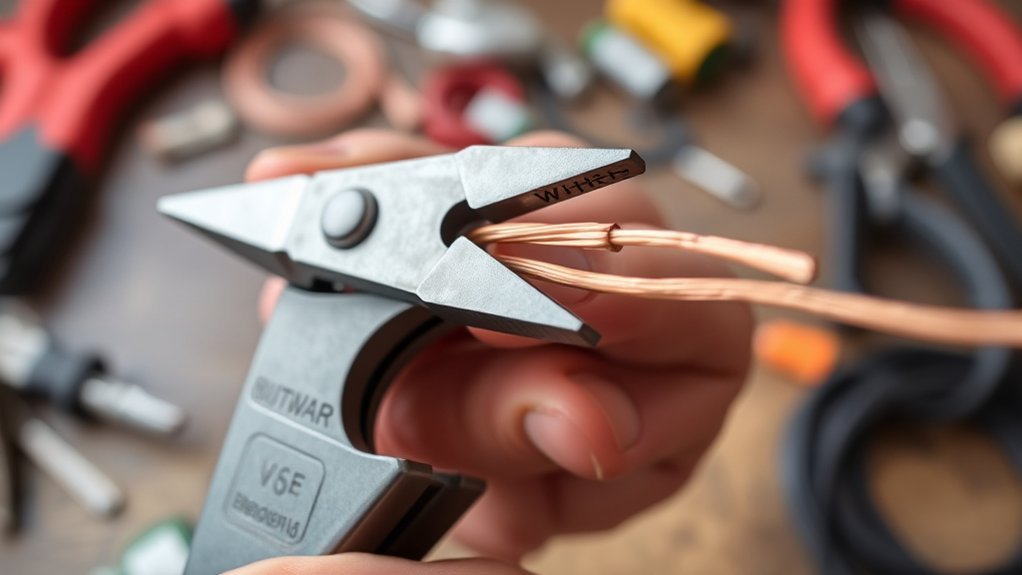
Wire stripping pliers are specialized hand tools designed to remove insulation from electrical wires without damaging the conductive core. When using these pliers, you must master proper wire stripping techniques to guarantee clean, precise cuts.
Position the wire in the correct gauge slot, squeeze the handles firmly, and pull the insulation away smoothly. Always observe safety precautions: wear insulated gloves and verify the wire is de-energized before starting.
Avoid nicking or crushing the wire’s core by using the appropriate slot size and consistent pressure. Maintaining control throughout the process reduces the risk of injury and wire damage.
Choosing the Right Wire Stripping Pliers for Your Project
To guarantee clean, efficient stripping, you need to select the correct type of wire stripper for your project, whether manual, automatic, or ratcheting. Match the pliers to the wire gauge and insulation type to prevent damage to the conductor.
Choosing the right tool reduces errors and improves your overall workflow.
Types Of Wire Strippers
Selecting the appropriate stripping pliers is essential for efficient and safe wire preparation. You’ll encounter several types designed for specific tasks and wire gauges. Here are the main categories:
- Manual Wire Strippers: These require you to position the wire and apply pressure manually. They offer precision but can be slower for repetitive tasks.
- Automatic Wire Strippers: These grip and strip insulation with a single squeeze, improving speed and consistency, ideal for bulk work.
- Multi Tool Strippers and Specialized Wire Strippers: Multi tool strippers combine stripping with cutting or crimping functions, while specialized strippers target unique wire types or insulation materials.
Choose based on your project’s complexity, volume, and wire specifications for best performance and safety.
Matching Pliers To Wire
Different types of stripping pliers perform best with specific wire gauges and insulation materials. To guarantee plier compatibility, you must select wire strippers designed for the wire gauge you’re working with.
Using the wrong pliers can damage the wire or insulation, compromising your project. Refer to the table below to match your wire gauge with the appropriate plier type:
| Wire Gauge (AWG) | Suitable Pliers Type | Insulation Material |
|---|---|---|
| 10-14 | Heavy-Duty Wire Strippers | Thick Rubber or PVC |
| 16-20 | Standard Wire Strippers | Nylon or Thin PVC |
| 22-26 | Precision Wire Strippers | Delicate or Thin Insulation |
Always verify plier compatibility before starting to strip wire to achieve clean, efficient results.
Adjusting Wire Stripping Pliers for Different Sizes
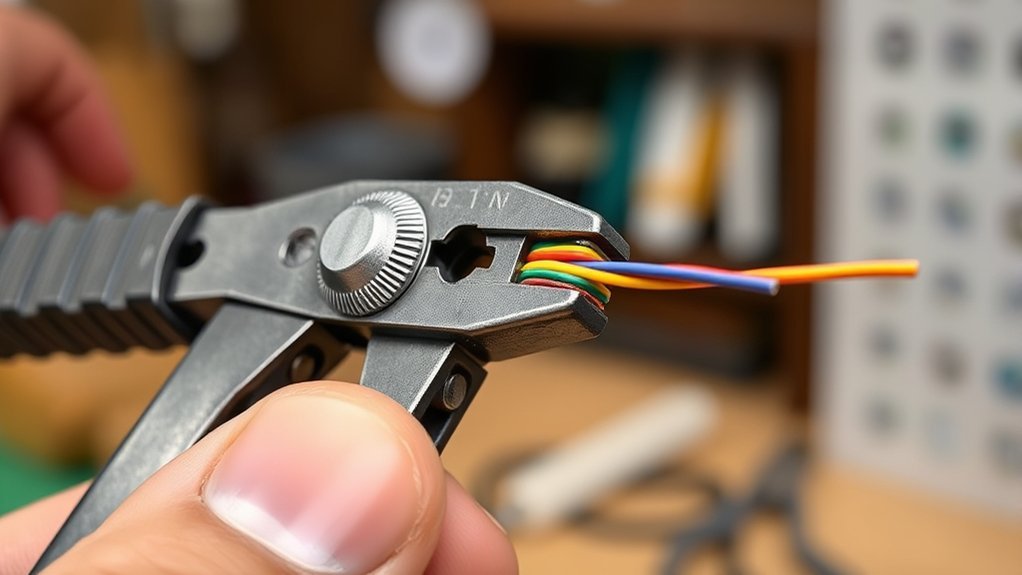
Although wire stripping pliers come with preset notches, you’ll need to adjust them carefully to match the exact wire gauge you’re working with. Proper adjustment guarantees a clean strip without damaging the conductor. Follow these steps for precise calibration:
Adjust wire stripping pliers precisely to the wire gauge for a clean, damage-free strip every time.
- Identify the wire gauge using a wire gauge chart or markings on the pliers.
- Use the adjustable settings, usually a dial or screw, to align the cutting blades with the wire’s diameter.
- Test the adjustment on a scrap wire piece, tightening or loosening as needed until the insulation is removed cleanly without nicking the wire.
How to Prepare Wires for Wire Stripping Pliers
Before you start stripping, make sure the wire is clean and free of any dirt, oil, or corrosion that could affect the stripping process. Inspect the wire insulation thoroughly to confirm it’s intact and undamaged, as compromised insulation can cause inaccurate stripping and potential wire damage.
Next, identify the wire gauge; this is essential for adjusting your wire stripping pliers correctly. Use a wire gauge chart or tool to measure the wire’s thickness precisely.
Cut the wire to the desired length using wire cutters, guaranteeing a clean, straight edge for ideal stripping. Position the wire so the section to be stripped is accessible and stable.
Proper preparation of the wire insulation and accurate gauge measurement guarantee efficient, safe, and precise wire stripping outcomes.
Step-By-Step Guide to Stripping Wire With Wire Stripping Pliers
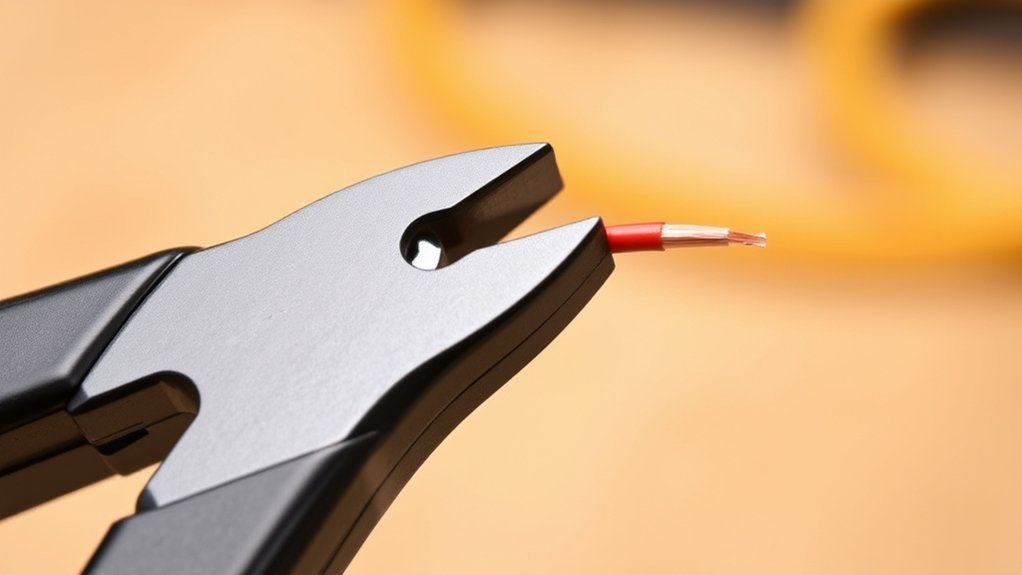
Once you’ve prepared the wire and adjusted your pliers to the correct gauge, position the wire firmly within the stripping notch. Follow these steps carefully to maintain safety precautions and avoid damaging the wire insulation:
- Squeeze the handles gently to cut through the insulation without nicking the wire strands.
- Pull the pliers away from the wire end, sliding off the cut insulation cleanly.
- Inspect the exposed wire for any damage or remaining insulation fragments.
Always wear protective gloves and safety glasses to protect against accidental cuts or wire fragments. Ascertain the wire is stable during stripping to prevent slips. By adhering to these precise steps, you’ll strip wire insulation efficiently while preserving the wire’s integrity and maintaining a safe working environment.
Common Wire Stripping Mistakes and How to Fix Them
When you strip wire insulation, mistakes like cutting too deeply or leaving fragments can compromise your work’s safety and reliability. Common mistakes include nicking the conductor, stripping uneven lengths, and failing to remove all insulation.
To fix these errors, first inspect the conductor for damage; if nicks are present, cut the wire end and strip again to avoid weak points. Use the correct notch size on your pliers to guarantee a clean cut without conductor damage.
Remove all insulation by pulling firmly but gently to prevent leftover fragments. Finally, measure and strip consistent lengths according to your project specifications.
Tips for Maintaining and Caring for Your Wire Stripping Pliers
Although wire stripping pliers are designed for durability, regular maintenance guarantees they perform accurately and last longer. Proper care involves specific cleaning techniques and effective storage solutions to preserve their functionality.
- Cleaning Techniques: After each use, wipe the blades with a dry cloth to remove residue. For stubborn grime, use a mild solvent and a soft brush, then dry thoroughly to prevent rust.
- Lubrication: Apply a light machine oil to the pivot joint regularly to confirm smooth operation and reduce wear.
- Storage Solutions: Store your pliers in a dry, organized toolbox or hang them on a pegboard to avoid moisture exposure and physical damage.
When to Replace Your Wire Stripping Pliers for Best Results
You should replace your wire stripping pliers as soon as you notice consistent performance issues such as difficulty gripping or stripping wires cleanly. These signs of wear indicate that the cutting edges or gripping surfaces have dulled or become misaligned.
Pay close attention to visible damage like nicks, corrosion, or bent components, as these also affect functionality. When to replace your wire stripping pliers depends primarily on their ability to maintain precision and efficiency.
If you find that repeated adjustments fail to restore ideal performance, it’s time to invest in a new tool. Using worn pliers can damage wires, leading to unreliable connections and increased work time.
Prioritize replacement to guarantee safety and maintain professional-quality results in your electrical projects.
Conclusion
Using wire stripping pliers is like wielding a sculptor’s chisel—precision and care carve away the unwanted layers without harming the masterpiece within. By selecting the right notch, applying steady pressure, and pulling away cleanly, you reveal the conductor’s true form.
Treat your pliers like a trusted tool, maintaining them well, and they’ll serve you like a craftsman’s steady hand. This ensures every wire is stripped flawlessly and ready for connection.
Mastering the use of wire stripping pliers is essential for any electrical task, making your work both efficient and professional.