You might not realize that using the wrong technique with hose clamp pliers can damage both the clamp and the hose. Knowing how to use hose clamp pliers correctly helps prevent this damage and makes the job easier.
When you position the tool correctly and apply the right amount of force, removing or installing clamps becomes much easier and safer.
Before you start, it’s important to understand the specific type of clamp you’re dealing with. This knowledge can save you time and frustration, especially if the clamp is rusted or stuck.
Taking these steps ensures a smoother and more efficient process.
What Hose Clamp Pliers Are and Why You Need Them
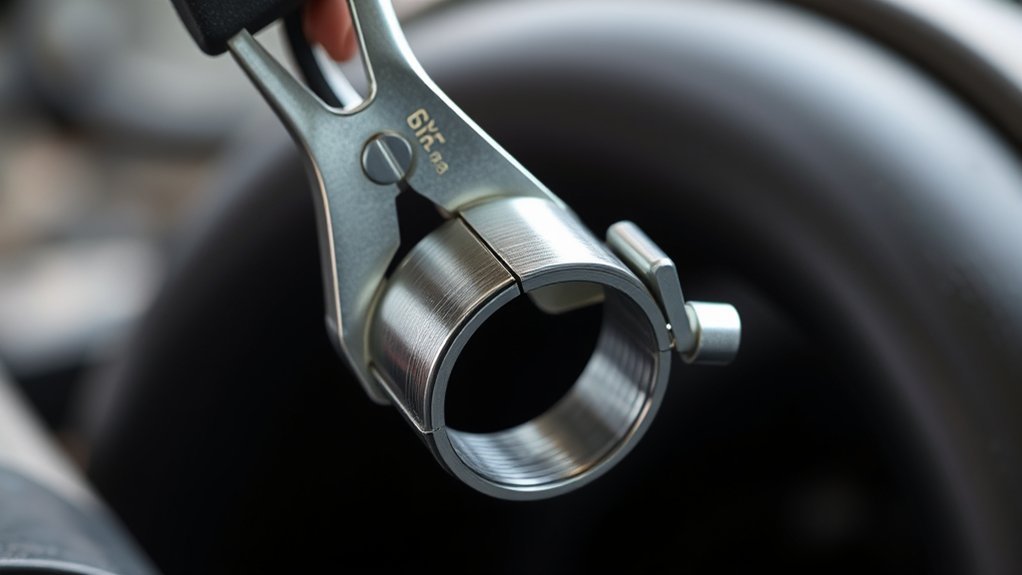
Hose clamp pliers are specialized tools designed to grip and compress hose clamps, allowing you to easily loosen or tighten them without damaging the hose or clamp. Understanding hose clamp basics is essential; these clamps secure hoses in automotive, plumbing, and industrial applications, requiring precise handling to avoid leaks or damage.
Using your hands or standard pliers often risks deforming the clamp or hose, making the tool necessity clear. Hose clamp pliers offer a secure grip and controlled compression, enabling efficient removal or installation even in tight spaces.
Their design minimizes slippage and wear, ensuring both the clamp and hose remain intact. Investing in these pliers simplifies your work, improves safety, and maintains system integrity by properly managing hose clamp tension.
Choosing the Right Hose Clamp Pliers for Different Clamps
You need to match your hose clamp pliers to the clamp type for effective use and to avoid damage. Consider the pliers’ design features, like jaw shape and locking mechanisms, to guarantee secure grip and ease of operation.
Selecting the right pliers saves time and prevents slippage during clamp removal or installation.
Clamp Types Compatibility
Selecting the right pliers hinges on the type of clamp you’re working with, as different clamps require specific tools for ideal grip and release. Understanding clamp types and their compatibility options guarantees you avoid damage and improve efficiency.
Common clamp types include:
Worm gear clamps: Require pliers that can adjust the screw mechanism.
Spring clamps: Need pliers with strong locking grips for tension release.
Ear clamps: Compatible with pliers designed to compress the ear securely.
Wire clamps: Demand pliers capable of handling irregular shapes and tight spaces.
Pliers Design Features
Different clamps demand specific design features in pliers to confirm secure handling and efficient release. When choosing hose clamp pliers, consider pliers types such as locking, snap-ring, or long-nose, each tailored for particular clamp designs.
Locking pliers offer a firm grip for heavy-duty clamps, while snap-ring pliers excel at compressing spring-type clamps. Pay attention to pliers materials; high-quality steel with corrosion-resistant coatings confirms durability and reliable performance in harsh environments.
Ergonomic handles reduce hand fatigue during repetitive tasks. Additionally, pliers with angled jaws provide better access in tight spaces. By matching the pliers type and materials to your clamp’s design and working conditions, you’ll achieve precise control and prevent clamp or hose damage, optimizing maintenance efficiency.
How to Use Hose Clamp Pliers Safely
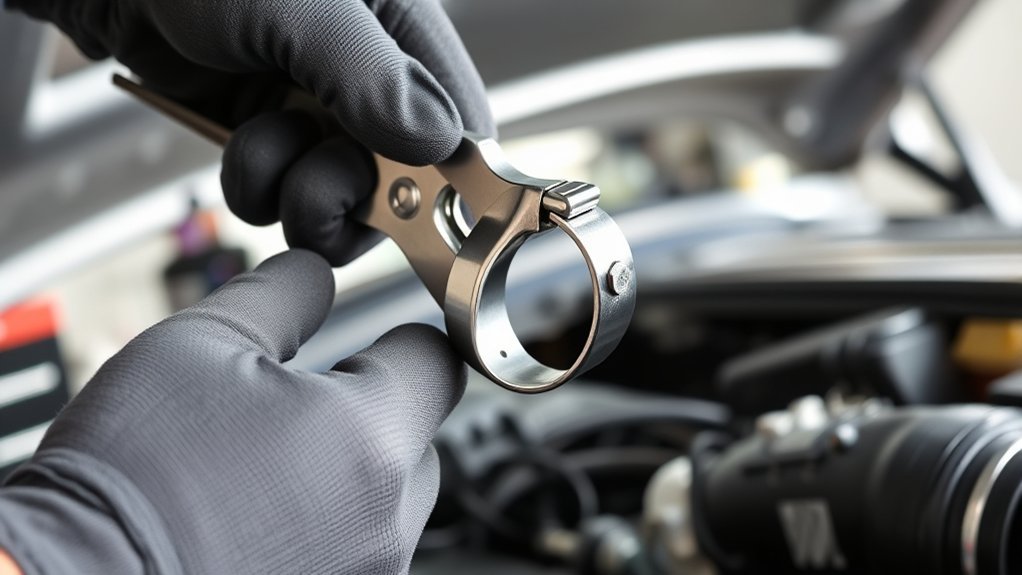
Although hose clamp pliers are designed to simplify clamp removal and installation, improper use can cause injury or damage. To guarantee safety, follow essential safety precautions and apply proper handling techniques. Always wear protective gloves and eye protection to guard against sudden clamp release.
Inspect the pliers before use to confirm they’re in good condition, free of rust or damage. Securely grip the clamp with the pliers to prevent slippage. Avoid applying excessive force that could cause the clamp or tool to break.
Maintain a firm but controlled grip on the pliers. Keep your working area clean and well-lit. Release tension slowly to prevent sudden clamp movement. Store pliers properly to retain tool integrity and safety.
Tips to Grip Stubborn Hose Clamps Better
Tackle stubborn hose clamps by ensuring your pliers have a secure, non-slip grip on the clamp’s tabs or ears. Use hose clamp pliers with textured, rubberized handles to enhance control. Apply steady, even pressure to prevent slippage or damage.
For best grip techniques, position the jaws squarely on the clamp’s ears, avoiding angled contact that reduces leverage. If the clamp resists, try rocking the pliers gently while squeezing to loosen its hold.
Additionally, warming the hose slightly with a heat gun can expand the material, easing clamp removal. When dealing with rusted or corroded clamps, spray penetrating lubricant beforehand for stubborn clamp solutions.
These methods improve your grip efficiency and reduce the risk of stripping or slipping during removal or installation.
Common Mistakes When Using Hose Clamp Pliers
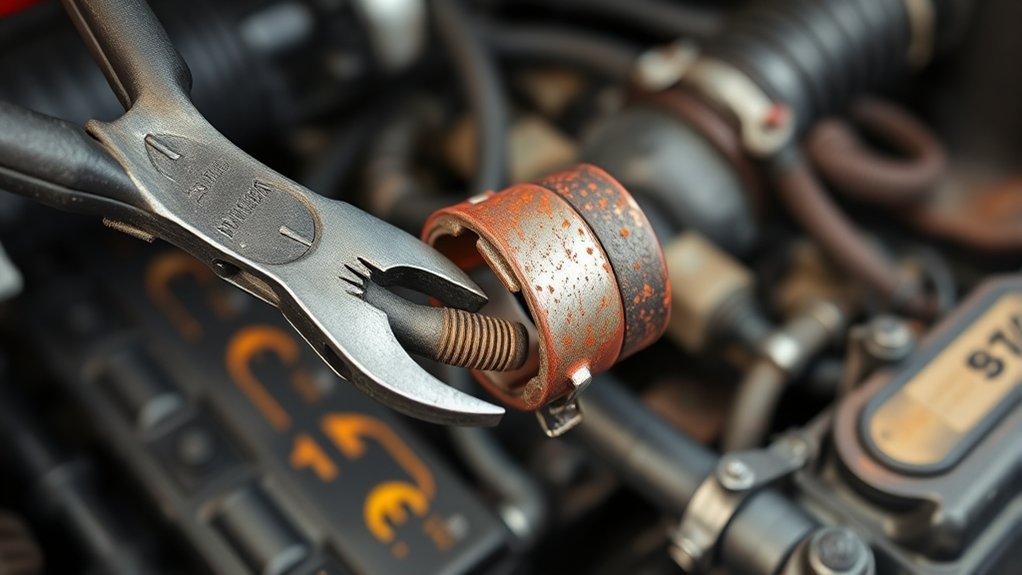
Make sure you position the clamp correctly before applying pressure to avoid slippage. Using the wrong size pliers can reduce your grip and damage the clamp.
Also, avoid overtightening, as it can deform or break the hose clamp.
Incorrect Clamp Positioning
Misplacing the hose clamp during installation can cause leaks and damage to the hose or fitting. You need to guarantee correct alignment to avoid clamp misplacement, which compromises the seal and may lead to hose failure. Always position the clamp evenly around the hose circumference, avoiding areas near sharp edges or bends that can stress the material.
Avoid placing clamps too close to the hose end; leave a small gap. Confirm the clamp’s tightening mechanism aligns with the hose’s reinforcing rib. Do not position clamps over damaged or weakened hose sections.
Verify the clamp sits flat and does not twist during installation.
Using Wrong Pliers Size
Using the wrong size pliers can quickly compromise your hose clamp installation. When you select pliers that are too large or too small, you risk an improper fit that reduces your control and grip on the clamp.
This can lead to slipping or uneven pressure during tightening or loosening. Using the wrong size also increases the chance of damaging the clamp or hose, as excessive force may be applied in the wrong areas.
Always match the pliers to the specific clamp size and type to guarantee ideal mechanical advantage. Proper sizing guarantees consistent, secure clamping and prevents tool wear.
Avoid guessing; verify the pliers’ compatibility with your hose clamps before starting the job to maintain efficiency and safety.
Overtightening Damages Clamps
Although it might seem like tightening clamps as much as possible guarantees a secure fit, overtightening can actually damage both the clamp and the hose. Excessive force causes deformation, which compromises the clamp’s grip and reduces clamp lifespan. It also stresses the hose material, leading to cracks or leaks.
Avoid these overtightening effects by applying only the necessary torque.
Common overtightening issues include:
- Stripped threads on the clamp band
- Crushed or cracked hose ends
- Reduced elasticity and sealing capability
- Premature clamp failure due to metal fatigue
Use hose clamp pliers to apply controlled pressure. Stop tightening once the clamp firmly secures the hose without visible distortion. This approach preserves clamp lifespan and guarantees a reliable, leak-free connection.
Maintaining and Storing Hose Clamp Pliers
Because hose clamp pliers endure frequent use and exposure to dirt and moisture, you need to maintain them regularly to uphold peak performance. Follow these cleaning tips and storage solutions to extend their lifespan and guarantee reliable operation.
| Task | Recommendation |
|---|---|
| Cleaning tips | Wipe with a clean cloth after use; apply light oil to joints. |
| Drying | Always dry pliers thoroughly to prevent rust. |
| Storage solutions | Store in a dry toolbox or hang on a pegboard to avoid damage. |
| Inspection | Regularly check for wear or corrosion; replace if damaged. |
Conclusion
Using hose clamp pliers is like wielding a key to release tight connections with precision and care. By choosing the right tool, gripping firmly yet gently, and applying steady leverage, you’ll avoid damage and frustration.
Remember, patience and the right technique turn stubborn clamps into easy tasks. Keep your pliers well-maintained, and they’ll serve as reliable extensions of your hands.
With proper use and care, hose clamp pliers will make every hose removal or installation smooth and efficient. Mastering how to use hose clamp pliers ensures you handle these tasks with ease and confidence.