You might not realize that using the right pliers can greatly reduce injury to both you and the fish when removing a hook from fish with pliers. Gripping the hook properly minimizes stress on the fish’s jaw and speeds up the process, which is essential for catch-and-release fishing.
However, not all pliers are created equal, and technique matters just as much. Understanding the best approach will help you handle even the trickiest hooks with ease and care.
Why Pliers Are Best for Removing Fish Hooks
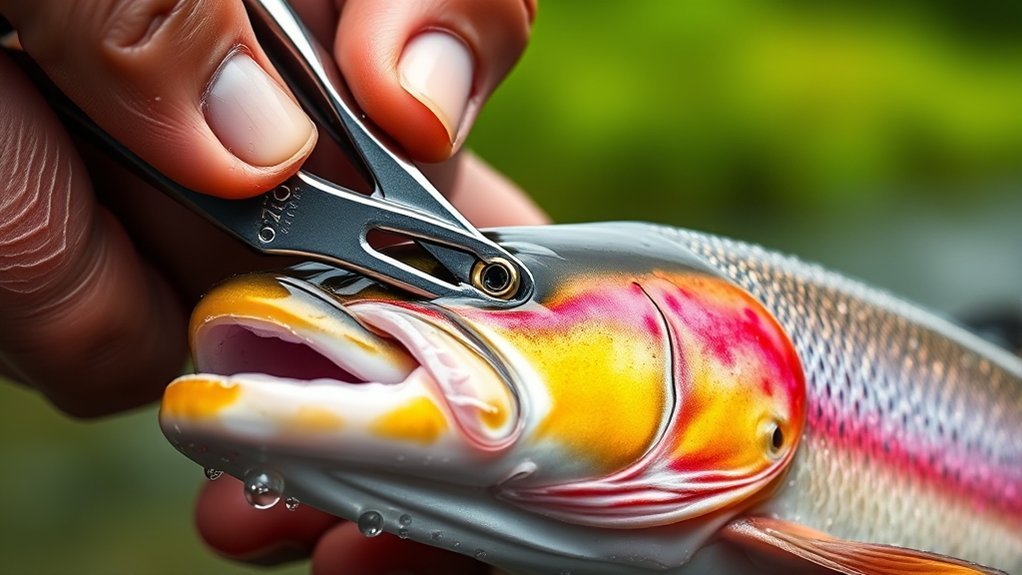
When you need to remove a hook from a fish quickly and safely, pliers give you the control and grip necessary to do the job efficiently. The pliers advantages lie in their ability to firmly grasp even the smallest hooks without slipping, reducing the risk of injury to both you and the fish.
Their design allows you to reach deep into the fish’s mouth and maneuver the hook precisely, enhancing hook removal efficiency. Using pliers also minimizes the time the fish spends out of water, improving its survival chances.
Unlike makeshift tools, pliers provide a reliable, sturdy grip that helps you extract hooks cleanly and swiftly, making them the best choice for safe and effective hook removal.
Choosing the Best Pliers for Fish Hook Removal
Pliers offer the control and grip needed for efficient hook removal, but not all pliers are created equal. When choosing the best pliers for fish hook removal, focus on pliers types designed specifically for fishing, such as needle-nose or bent-nose models. These provide precision and access to tight spaces.
Consider pliers materials carefully; stainless steel is ideal due to its corrosion resistance, ensuring durability in wet environments. Aluminum pliers are lightweight but may lack strength, while titanium offers strength and corrosion resistance at a higher cost.
Look for features like a non-slip grip and a spring-loaded mechanism to reduce hand fatigue. By selecting the right pliers type and material, you’ll remove hooks more efficiently and protect both yourself and the fish.
How to Hold Your Fish Safely Before Removing the Hook
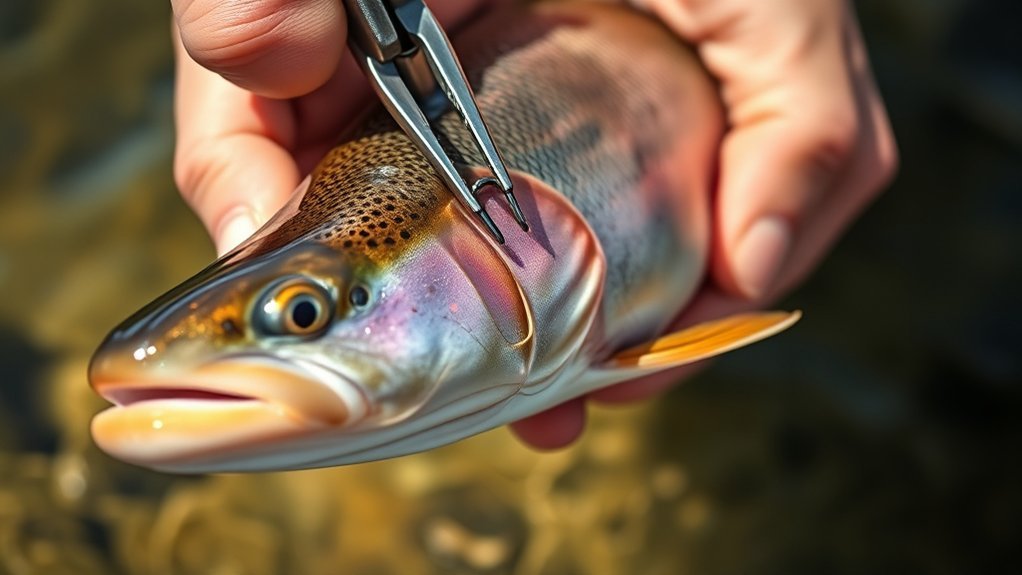
Although removing the hook quickly is important, you must first hold your fish securely to prevent injury to both you and the fish. Start by wetting your hands to protect the fish’s slime coat.
Wetting your hands before securely holding the fish protects its slime coat and prevents injury during hook removal.
Use proper handling methods: support the fish’s body firmly but gently. Employ a reliable fish grip to avoid slipping, especially with larger or slippery species. Avoid squeezing too tightly, which can cause harm.
Hold the fish horizontally and keep it close to the water if possible, reducing stress. Secure the head and tail to limit movement, giving you better control during hook removal.
Mastering these handling methods guarantees the fish stays calm and reduces the risk of injury, making the hook removal process safer and more efficient for both of you.
Step-by-Step Guide to Removing a Fish Hook With Pliers
Since safely removing the hook minimizes harm to the fish, you’ll want to use needle-nose pliers for precise control. First, identify the hook type, barbed or barbless, to determine removal technique. Hold the fish firmly but gently, exposing the hook.
Grip the shank of the hook with your pliers close to the fish’s mouth. For barbed hooks, push the hook slightly forward to disengage the barb, then carefully back it out along the entry path. For barbless hooks, simply pull it out steadily. Avoid twisting, which can increase injury.
After removal, promptly release the fish. Maintain your pliers by cleaning and drying them after each use to prevent rust and guarantee smooth operation. Proper plier maintenance guarantees you’re always ready for any hook type you encounter.
Handling Deeply Embedded Fish Hooks Safely
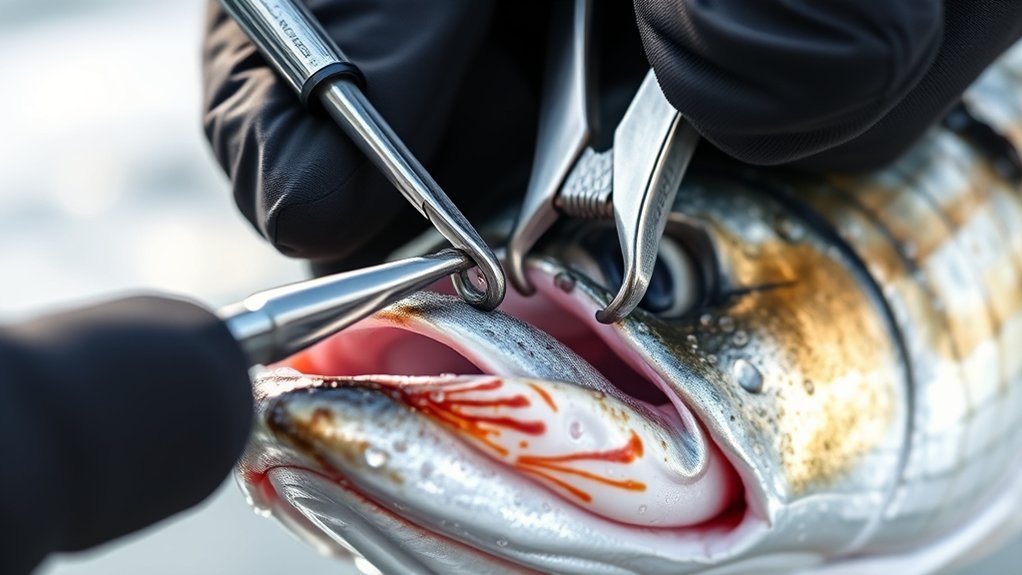
When a hook is deeply embedded, first assess its position carefully to plan your approach. Use the right pliers technique to grip and back the hook out gently without causing extra damage. Your goal is to minimize injury to the fish while removing the hook efficiently.
Assess Hook Position Carefully
Before attempting to remove a hook, you need to carefully assess its position in the fish’s mouth or body. Understanding hook anatomy: point, barb, shank, and bend helps you determine the best removal approach.
If the hook is shallow and in the lip or jaw, removal is straightforward. However, deeply embedded hooks in the throat or gill area require extra caution to avoid injuring the fish or yourself.
Your fishing techniques often influence hook placement; for example, treble hooks or barbed hooks pose more challenges. By evaluating the hook’s location and how it’s lodged, you can plan a safer, more effective removal.
Take your time to visually inspect and gently manipulate the fish to reveal the hook’s exact position before proceeding.
Use Proper Pliers Technique
Although removing deeply embedded hooks can be tricky, using proper pliers technique makes the process safer and more efficient. First, make sure you have a firm pliers grip on the hook’s bend or shank. This control prevents slipping and reduces injury risk to both you and the fish.
Apply steady, controlled pressure to back the hook out along the entry path. Avoid twisting or jerking motions that could cause further damage.
Maintain your pliers by regularly cleaning and lubricating the joints; this guarantees smooth operation and reliable grip when seconds count. Inspect the tool for rust or damage before each use.
Minimize Fish Injury Risks
Mastering proper pliers technique sets the foundation, but minimizing injury to the fish requires careful handling throughout the removal process. To prioritize fish welfare, keep the fish wet and supported to reduce stress.
Use firm but gentle pressure; avoid squeezing the fish’s body or gills, which can cause serious harm. When dealing with deeply embedded hooks, work slowly and steadily to prevent tearing tissue.
If the hook is too deep, consider cutting the line and leaving the hook in place rather than forcing removal, which can worsen injury. Always disinfect your pliers and avoid contact with the fish’s eyes or gills.
These steps guarantee effective injury prevention, promoting the fish’s survival and wellbeing after release. Your mindfulness directly impacts fish welfare during hook removal.
Removing Barbed or Rusty Fish Hooks Without Damage
When dealing with barbed or rusty fish hooks, you’ll need to proceed carefully to prevent further injury to the fish or yourself. Start by firmly gripping the hook’s shank with pliers. For barbed hooks, gently push the barb through the entry wound to expose it, then use the pliers to pinch down the barb, allowing smoother extraction.
If the hook is rusty, avoid forcing it, as corrosion weakens the metal. Apply a rust removal solution or soak the hook briefly in vinegar to loosen it before removal. Always work slowly and steadily to minimize tissue damage. Using these techniques guarantees you remove barbed hooks and address rust effectively, protecting the fish’s health and your safety.
Caring for Your Fish After Hook Removal
Right after removing the hook, handle your fish gently to minimize stress and injury. Keep it in the water as much as possible and support its body properly.
Then, give your fish time to recover before releasing it to improve its chances of survival.
Immediate Fish Handling
Handle your fish gently and swiftly after removing the hook to minimize stress and injury. Proper fish handling is essential to preserve the fish’s health and guarantee hook safety.
Use wet hands or a damp cloth to hold the fish securely but without squeezing, avoiding damage to its protective slime coat. Support the fish’s body, especially larger species, to prevent internal injuries.
Keep the fish close to the water whenever possible to reduce air exposure. After hook removal, inspect the fish for any bleeding or damage near the hook site.
If bleeding occurs, apply gentle pressure with a clean cloth. Prioritize quick, careful fish handling to enhance survival chances, maintaining both the fish’s welfare and your adherence to hook safety best practices.
Post-Removal Recovery Tips
After carefully removing the hook and addressing any immediate injuries, focus on helping your fish recover before releasing it. Effective fish recovery and stress management are essential to increase survival rates. Keep your fish in water as much as possible to reduce stress.
Use these tips to aid post-removal recovery:
- Hold the fish gently in the water, allowing it to regain strength and oxygenate properly.
- Avoid squeezing or holding the fish by the gills or eyes to prevent further injury.
- Minimize handling time; the quicker you release, the better the fish recovers.
- If the fish appears lethargic, gently move it back and forth in the water to stimulate water flow over its gills.
Preventing Injuries When Removing Fish Hooks With Pliers
Grasping the hook firmly with pliers reduces the risk of accidental slips that can cause injury to both you and the fish. Use proper hook removal techniques to minimize damage and apply injury prevention strategies such as wearing gloves and keeping the fish steady.
Always work in a well-lit area and maintain control over both pliers and fish.
| Step | Injury Prevention Tip | Tool/Action |
|---|---|---|
| 1. Secure fish | Use a wet cloth to hold fish | Wet cloth |
| 2. Grip hook firmly | Use needle-nose pliers | Needle-nose pliers |
| 3. Remove carefully | Pull slowly to avoid tearing | Controlled pull |
| 4. Check for injury | Inspect fish’s mouth | Visual inspection |
| 5. Release or treat | Handle gently or treat wounds | Gentle handling |
Conclusion
Removing a hook with pliers is like opening a delicate treasure chest—you need the right tools, a gentle touch, and careful patience. By fastening your fish properly and using pliers skillfully, you protect its health while freeing it safely.
Remember, every careful removal helps keep the underwater world thriving. Treat your catch like a valued guest, and you’ll guarantee it swims away strong.
Using pliers to remove the hook ensures a safe and effective release, promoting the fish’s well-being and longevity in its natural habitat.