You might not realize that salmon pin bones are often hidden just beneath the surface, making them tricky to spot without the right technique.
Learning how to debone salmon fillet without pliers is a handy skill that can save you time and effort in the kitchen.
If you don’t have pliers on hand, you can still remove these bones effectively using simple household tools and careful finger work.
Mastering this method guarantees your fillet is bone-free and ready to cook, but it requires a few precise steps to avoid damaging the delicate flesh.
With patience and a gentle touch, you’ll be able to enjoy perfectly boneless salmon every time.
How to Identify Pin Bones in a Salmon Fillet
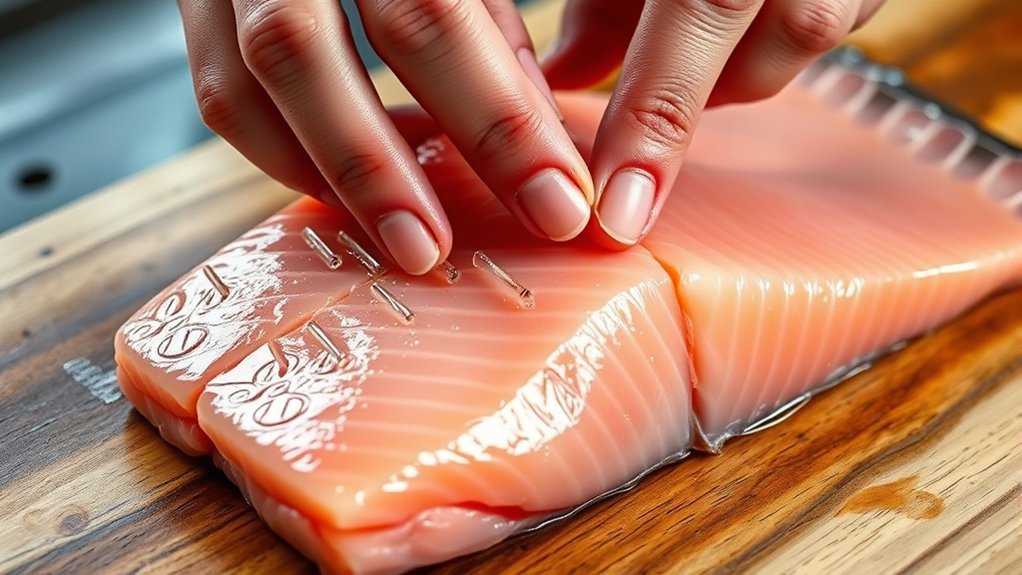
How can you quickly spot pin bones in a salmon fillet? Begin by understanding salmon fillet anatomy: pin bones run along the centerline, embedded in the flesh. For effective pin bone identification, gently run your fingers over the fillet surface, feeling for small, stiff protrusions.
These thin, needle-like bones are usually close together, about an inch or two from the fillet’s thickest part. Lighting helps—hold the fillet under bright light to see slight shadows cast by the bones. Pin bones are flexible but firm, so applying slight pressure helps distinguish them from the soft flesh.
Identifying these bones accurately guarantees safe deboning and a better eating experience. Mastering this step is essential before moving on to removing the pin bones efficiently.
What Tools to Use When You Don’t Have Pliers for Salmon Fillet Deboning
Once you’ve located the pin bones by feeling along the salmon fillet, the next step is removing them, usually done with pliers. If you don’t have pliers, several kitchen utensils can help.
Use clean tweezers or even needle-nose tongs, common in home cooking, to grip and pull out the bones gently. If those aren’t available, a pair of small, sharp kitchen scissors or a paring knife can carefully lift the bone’s end for easier removal.
A fish boning knife, if you have one, also works well for maneuvering around the bones. Whatever tool you choose, make sure it’s clean and offers a firm grip to avoid breaking the bones inside the flesh.
Proper tools will make deboning safer and more efficient in your home cooking.
How to Remove Pin Bones From Salmon Fillet Step-By-Step
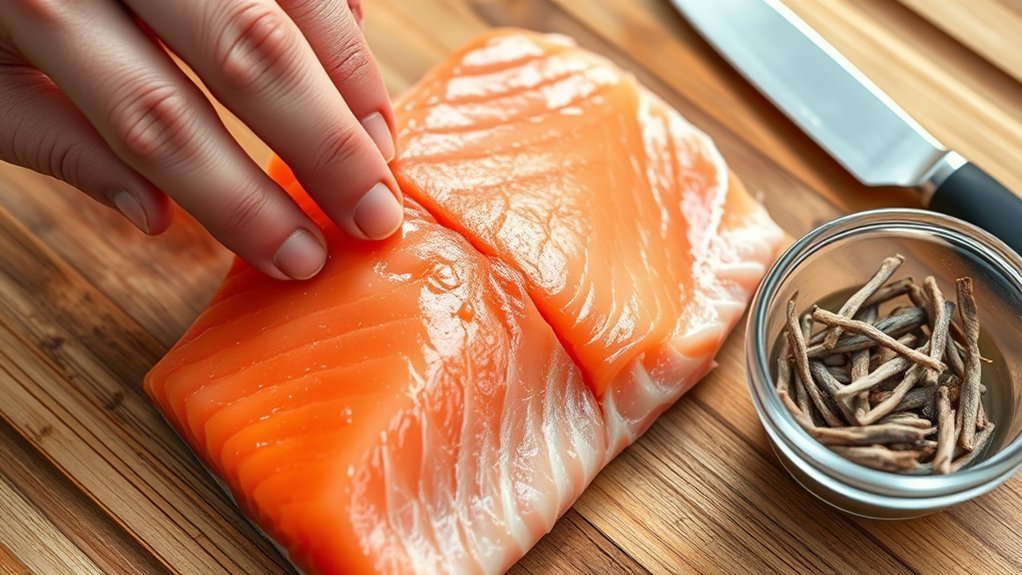
Start by locating all the pin bones along the centerline of the salmon fillet using your fingers. Once identified, gently grasp each pin bone with a clean cloth or tweezers alternative and pull firmly at a slight angle to avoid tearing the flesh. Repeat this salmon fillet technique until the fillet is free of bones. Check your work by running your fingers over the surface again.
| Step | Action | Tip |
|---|---|---|
| 1 | Locate pin bones | Use your fingertips |
| 2 | Grip pin bone firmly | Use cloth for better hold |
| 3 | Pull at an angle | Prevent flesh damage |
| 4 | Repeat for all bones | Be thorough |
| 5 | Double-check fillet | Verify complete removal |
Master these pin bone removal steps for clean, boneless salmon fillet every time.
How to Use Your Fingers to Find and Pull Out Pin Bones
Using your fingers effectively is key to identifying and removing pin bones from a salmon fillet. The finger technique relies on the contrast between the smooth salmon texture and the sharp, rigid pin bones beneath the surface. Here’s how to do it:
Master the finger technique to feel and remove pin bones from salmon fillets with ease and precision.
- Gently press your fingers along the fillet’s surface, moving from tail to head, feeling for slight bumps or firmness indicating a pin bone.
- Once you locate a bone, use your thumb and forefinger to grip it firmly at the base.
- Pull the pin bone out slowly and steadily, following the angle it entered to avoid tearing the flesh.
This method guarantees you remove bones cleanly without damaging the delicate salmon texture, making your fillet safe and enjoyable to eat.
How to Use Tweezers or Needle-Nose Pliers for Salmon Deboning
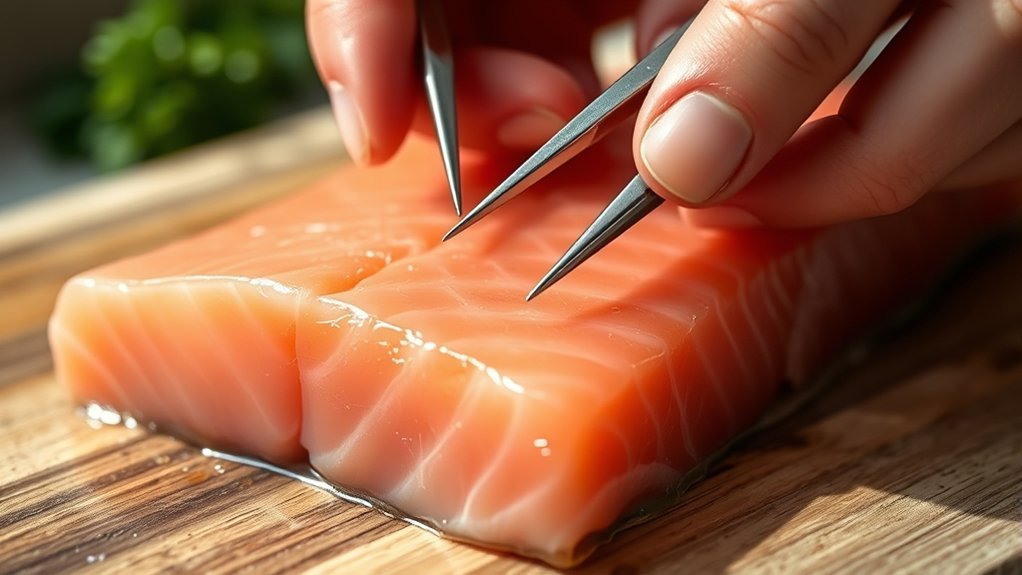
Two essential tools for salmon deboning are tweezers and needle-nose pliers, which provide better grip and control when removing stubborn pin bones. Using the tweezers technique, position the tips firmly around the base of each visible pin bone. Pull gently but steadily, following the bone’s natural angle. This minimizes flesh damage and guarantees clean removal.
The needle nose advantage lies in its slim, elongated shape, allowing you to reach deeper or tightly embedded bones with precision. Hold the pliers close to the bone for maximum control, then pull outward smoothly. Both tools reduce the risk of tearing the fillet compared to fingers alone.
Mastering these methods makes deboning faster, more efficient, and leaves your salmon ready for cooking without leftover bones.
Easy Tips to Debone Salmon Fillet Without Special Tools
If you don’t have tweezers or pliers on hand, you can still easily remove pin bones from your salmon fillet with just your fingers and a little patience. Here are three essential salmon fillet tips to master deboning techniques without special tools:
- Feel for bones: Gently run your fingertips along the fillet to locate each pin bone by touch.
- Loosen bones: Wiggle each bone carefully with your fingers to loosen it from the flesh without tearing.
- Pull out steadily: Grasp the base of the bone between your thumb and forefinger, then pull it out slowly and steadily.
Using these straightforward steps, you can effectively debone your salmon fillet, ensuring a smooth, enjoyable eating experience without needing specialized equipment.
How to Check Your Salmon Fillet for Missed Pin Bones
How can you be certain no pin bones remain in your salmon fillet after deboning? First, run your fingers gently but firmly along the flesh, feeling for any small, stiff protrusions. Fresh salmon offers a firmer texture, making pin bones easier to detect.
Good salmon freshness also guarantees the flesh isn’t overly soft or mushy, which can hide bones. Use bright light to spot any tiny white tips poking through the fillet. Checking thoroughly before cooking techniques like grilling or baking prevents unpleasant surprises.
If you miss any bones, they’ll be harder to remove once cooked. Taking this extra moment assures a smoother cooking experience and safer dining. Always prioritize salmon freshness and tactile inspection to guarantee a boneless, enjoyable meal.
How to Handle Stubborn or Broken Pin Bones in Salmon
Dealing with stubborn or broken pin bones in salmon can be tricky, but you can tackle them effectively with the right tools and techniques. When stubborn bones resist, don’t force them; instead, try these steps:
- Use tweezers or clean needle-nose pliers for better grip on stubborn bones.
- Gently wiggle the broken bones loose by moving them back and forth instead of pulling straight out.
- If a broken bone is embedded deep, carefully lift the surrounding flesh and use a toothpick to tease it out.
Always check the fillet afterward to confirm no broken bones remain. Handling stubborn bones with patience prevents damaging the salmon’s texture, preserving the quality of your fillet for cooking.
Conclusion
Deboning a salmon fillet without pliers is like gently unthreading a delicate necklace—you just need the right touch and tools. By feeling for pin bones with your fingers and using tweezers or even kitchen scissors, you can remove every stubborn bone carefully.
Always double-check your fillet to guarantee a smooth, bone-free finish. With patience and attention, you’ll prepare a perfect salmon fillet ready to cook and enjoy.
Mastering how to debone salmon fillet without pliers ensures a clean, enjoyable eating experience every time.