You might not realize that although pliers and wrenches both grip objects, their mechanical designs serve very different functions.
Pliers use leverage and serrated jaws to manipulate irregular shapes, while wrenches apply torque to standardized fasteners with smooth jaws. Understanding these distinctions can prevent common tool misuse and improve your efficiency.
But what specific design features set pliers apart from wrenches, and when should you choose one over the other?
Recognizing these differences helps you select the right tool for your task, ensuring better results and less wear on your tools.
What Are Pliers and How Do They Work?
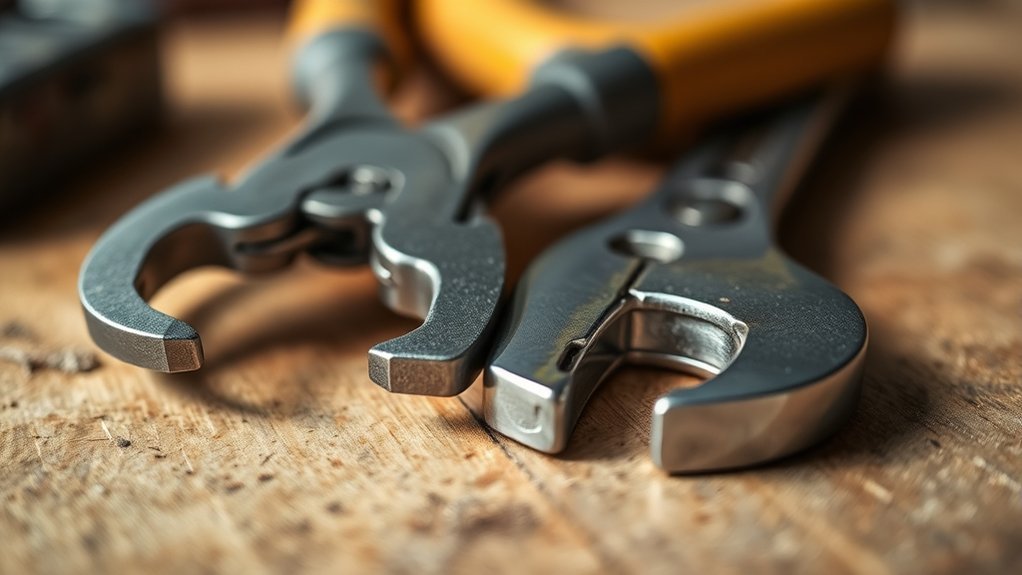
Although pliers come in various shapes and sizes, they all operate on the principle of a lever to amplify your hand’s gripping force. When you use pliers, you apply force at the handles, which is transmitted through a pivot point, increasing the gripping pressure at the jaws.
Different types of pliers, such as needle-nose, slip-joint, and locking pliers, are designed for specific tasks, varying in jaw shape, size, and functionality. The choice of pliers materials directly affects durability and performance; most commonly, manufacturers use high-carbon steel or alloy steel for strength and wear resistance.
Handles often feature insulating or ergonomic coatings to improve grip and safety. Understanding these technical details guarantees you select the right pliers for precise mechanical work.
What Are Wrenches and How Do They Work?
Wrenches provide the mechanical advantage needed to tighten or loosen fasteners by applying torque through a lever arm. When you use a wrench, you convert your applied force into rotational force, allowing you to overcome the fastener’s resistance efficiently.
Various wrench types exist, such as open-end, box-end, and combination wrenches, each tailored to specific fastener shapes and applications. Selecting the correct wrench size is essential; an improper size can strip the fastener or reduce torque effectiveness.
Wrenches are typically sized by the fastener’s width across flats, measured in metric or imperial units. By choosing the appropriate wrench type and size, you guarantee peak grip and torque transmission, minimizing damage and maximizing mechanical efficiency during fastening tasks.
Design Differences: Jaw, Grip, and Adjustability
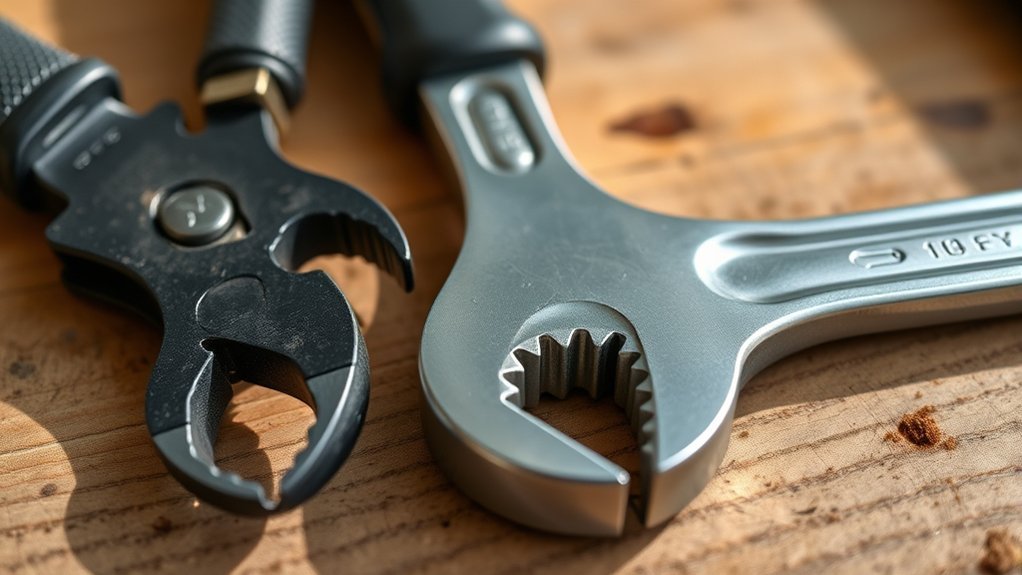
You’ll notice that pliers and wrenches differ considerably in jaw shape, affecting how they grip objects. The handle design also varies, influencing comfort and control during use.
Additionally, the types of adjustment mechanisms determine the tool’s versatility and ease of size modification.
Jaw Shape Variations
When selecting between pliers and wrenches, understanding jaw shape variations is essential because these differences directly impact grip efficiency and adjustability. The jaw shape determines the jaw function, influencing how each tool interacts with fasteners or materials.
- Pliers’ jaws often feature serrated or toothed surfaces, enhancing grip on irregular shapes and aiding in cutting or twisting tasks.
- Wrenches typically have smooth, flat jaws designed to fit hexagonal or square fasteners, maximizing contact to prevent rounding edges.
- Adjustable pliers incorporate curved or angled jaws to increase versatility across various shapes and sizes.
- Adjustable wrenches use a parallel jaw design with a movable lower jaw, allowing precise adjustment to fastener dimensions.
Recognizing these variations helps you choose the right tool for specific mechanical needs.
Handle Grip Designs
A tool’s handle grip design greatly affects comfort, control, and efficiency during use. When comparing pliers to wrenches, you’ll notice ergonomic designs tailored for specific tasks.
Pliers often feature contoured grips with softer handle materials like rubber or thermoplastic, enhancing slip resistance and reducing hand fatigue during repetitive motions. Wrenches, on the other hand, generally prioritize rigid, durable handle materials such as steel or chrome vanadium, sometimes with minimal grip padding to maintain strength under high torque.
These differences reflect their functional requirements: pliers demand precise manipulation and comfort, while wrenches require robust handles to withstand significant force. Understanding these design distinctions helps you select the right tool, optimizing both performance and user experience according to task demands.
Adjustment Mechanism Types
Although both pliers and wrenches serve to grip and manipulate objects, their adjustment mechanisms differ significantly in design and function. Understanding these adjustment types helps you select the right tool for precision and efficiency.
Here’s a breakdown of key mechanism designs:
- Slip-Joint Pliers use a pivot point allowing two jaw positions, offering limited but quick adjustability.
- Tongue-and-Groove Pliers feature a sliding pivot with multiple jaw settings for broader grip ranges.
- Adjustable Wrenches employ a worm gear mechanism, providing fine, incremental jaw width control.
- Box-End and Open-End Wrenches lack adjustment mechanisms, relying on fixed sizes for specific fasteners.
These distinct adjustment types reflect the fundamental design differences between pliers’ versatile jaws and wrenches’ precise, fixed or finely adjustable grips.
When Should You Use Pliers vs Wrenches?
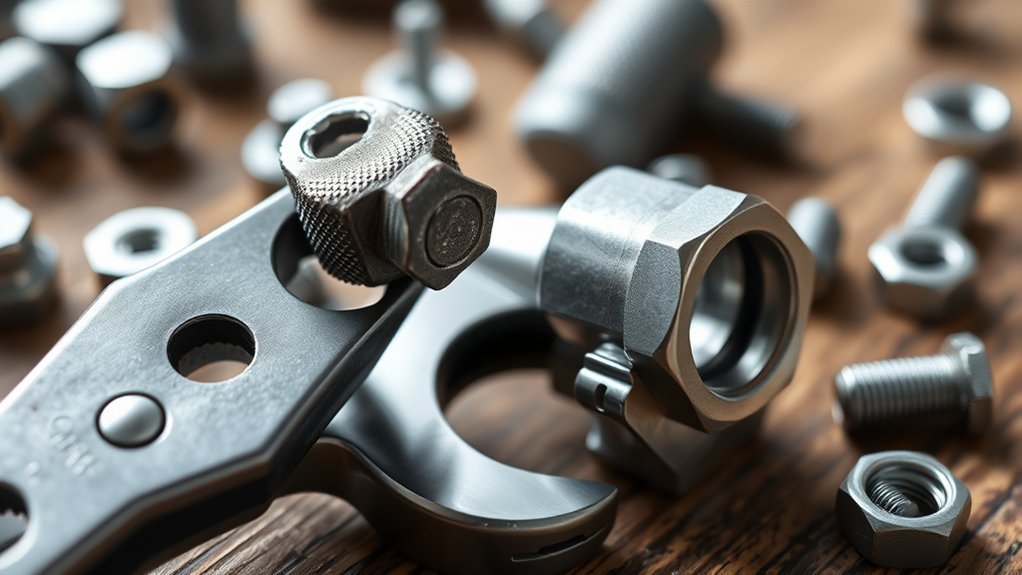
You’ll want to choose pliers when you need a versatile grip that can adjust to irregular shapes or hold objects firmly without damaging them.
Wrenches are better suited for precise torque application on fixed-size fasteners like nuts and bolts. Understanding the grip types and matching them to your specific task guarantees both efficiency and tool longevity.
Grip Types Comparison
When deciding between pliers and wrenches, understanding their distinct grip mechanisms is essential. Each tool offers unique advantages based on grip materials and ergonomic designs.
- Pliers use serrated jaws to clamp irregular shapes, providing versatile grip but can mar surfaces.
- Wrenches have fixed or adjustable smooth jaws, designed to fit specific fastener sizes, ensuring secure, non-damaging grip.
- Grip materials on pliers often include rubber or plastic coatings for slip resistance and comfort during prolonged use.
- Wrenches typically feature metal handles with ergonomic contours, optimizing torque application without sacrificing control.
Ideal Task Scenarios
Understanding the grip mechanisms of pliers and wrenches helps clarify their ideal applications. You should use pliers for plumbing tasks when you need to grip irregular shapes or apply variable pressure, as their adjustable jaws accommodate diverse materials and sizes.
In electrical work, pliers excel in manipulating wires and small components due to their precise control and cutting capabilities. Conversely, use wrenches when working with fasteners that require consistent torque, such as nuts and bolts.
Their fixed or adjustable jaw openings provide a secure, non-slip grip essential for loosening or tightening without damaging hardware. Selecting the correct tool depends on the task’s requirements: pliers for adaptability and fine manipulation, wrenches for standardized, torque-driven fastening.
This distinction guarantees efficiency and prevents tool or material damage.
Common Mistakes Choosing Pliers vs Wrenches
Although pliers and wrenches serve distinct mechanical functions, many users mistakenly interchange them, leading to inefficient work and potential tool damage. Understanding common misconceptions is essential for accurate tool selection.
Pliers and wrenches have unique roles; confusing them often causes inefficiency and tool damage.
Here are frequent mistakes to avoid:
- Assuming pliers provide the same grip strength as wrenches, which can cause rounding off fasteners.
- Using wrenches for irregularly shaped objects, where adjustable pliers offer better adaptability.
- Overlooking the torque limitations of pliers, resulting in stripped bolts or damaged components.
- Confusing adjustable wrenches with slip-joint pliers, leading to improper fit and slippage.
How to Choose the Right Tool for Your Project
Mistaking pliers for wrenches can compromise your project’s outcome, so selecting the correct tool depends on the specific mechanical demands you face. Start by analyzing your project requirements, considering the type of fastener, torque needed, and space constraints.
Wrenches excel at applying precise torque to nuts and bolts, making them ideal when exact tension is critical. Pliers offer versatile gripping and twisting but lack the torque control wrenches provide.
Your tool selection criteria should prioritize functionality: choose pliers for irregular shapes or when you need to manipulate objects beyond fasteners. Conversely, when working with standardized fasteners requiring controlled force, opt for wrenches.
Understanding these distinctions guarantees you use each tool effectively, optimizing performance and preventing damage to components or tools.
Tips for Maintaining Your Pliers and Wrenches
Since proper maintenance extends the lifespan and efficiency of your tools, you should regularly clean, lubricate, and inspect both pliers and wrenches. Implement the following steps to optimize performance and guarantee rust prevention:
- Use appropriate cleaning techniques, such as wiping with a solvent-soaked cloth, to remove grease and debris.
- Apply a light machine oil or specialized lubricant to pivot points and moving parts to maintain smooth operation.
- Inspect tools for signs of wear, cracks, or rust; address minor rust with fine-grit sandpaper or a rust remover.
- Store tools in a dry environment, preferably with silica gel packs, to minimize moisture exposure and prevent corrosion.
Conclusion
Now that you’ve unpacked the subtle dance between pliers and wrenches, you’re better equipped to avoid the “creative improvisation” that can slow your project down. By choosing the right tool—whether it’s the versatile grip of pliers or the precise torque of wrenches—you’ll guarantee each fastener and shape receives the respect it deserves.
Keep these distinctions in mind, and your mechanical tasks will flow with efficiency and finesse, sparing you from unnecessary twists and turns. Understanding how pliers are different than wrenches will help you select the perfect tool every time. This knowledge ensures your work is both effective and smooth, enhancing your overall tool-handling experience.