Do All Drill Bits Fit your drill?
You might assume every drill bit fits your drill, but that’s not the case. Drill bits vary in shank size and type, and your drill’s chuck can only accommodate certain dimensions and designs.
Using the wrong bit can compromise performance or even damage your tool.
Understanding these compatibility factors is essential before starting any project—otherwise, you risk inefficiency or safety issues.
Do All Drill Bits Fit Every Drill? Here’s What You Need to Know
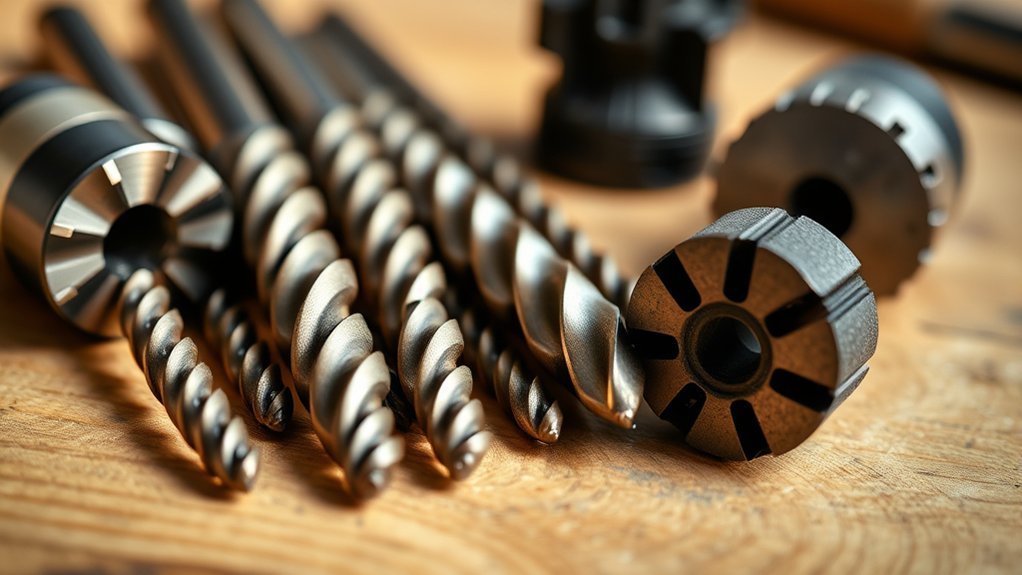
How do you determine if a drill bit will fit your drill? First, identify the drill bit types you need—twist, spade, masonry, or auger. All are designed for specific tasks and materials.
Next, examine your drill’s chuck size, as it dictates the maximum shank diameter the drill can hold securely. Standard chuck sizes are typically 1/4 inch, 3/8 inch, or 1/2 inch.
Using a drill bit with a shank larger than your chuck size means it won’t fit, while too small a shank may slip during use. Also, consider if your drill uses a keyed or keyless chuck, as this impacts bit insertion ease but not compatibility.
Matching appropriate drill bit types with compatible chuck sizes guarantees peak performance and safety.
Drill Bit Shank Types and Chuck Compatibility
Although selecting the right drill bit type is essential, understanding shank designs is equally important for guaranteeing compatibility with your drill’s chuck. Different shank types must match the chuck sizes and mechanism to secure the bit correctly and transmit torque efficiently.
Common shank types include:
- Round shanks: Compatible with standard three-jaw chucks; require proper tightening to prevent slipping.
- Hex shanks: Designed for quick-change chucks, providing enhanced grip and faster bit swaps.
- SDS shanks: Meant for rotary hammer drills with specialized chucks for high-impact drilling.
- Reduced shanks: Fit larger bits into smaller chuck sizes, but may reduce stability.
Matching these shank types to your drill’s chuck sizes guarantees peak performance and prevents damage or slippage during operation.
How Drill Bit Size and Material Affect Compatibility
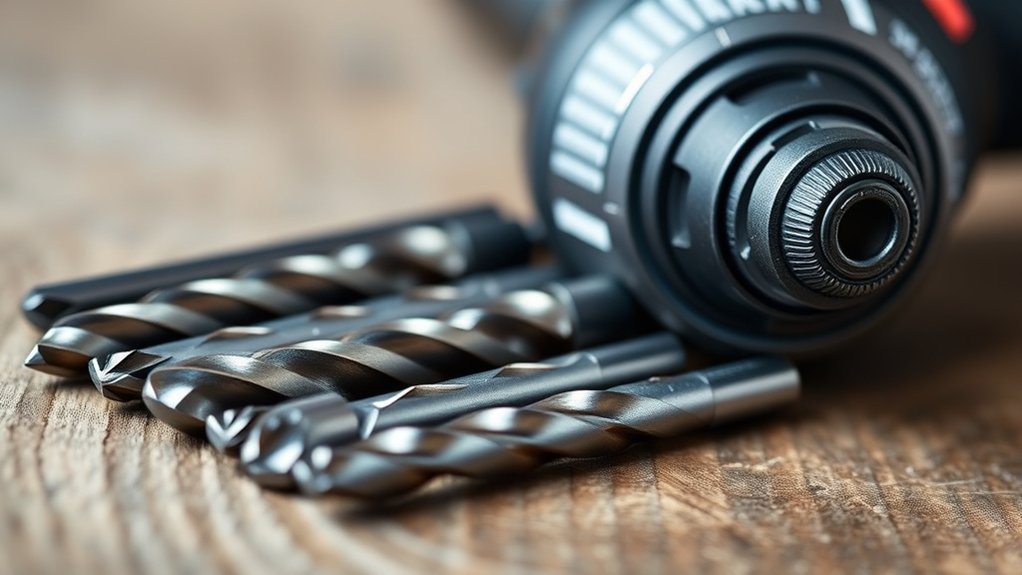
Since drill bit size directly influences the chuck’s grip and the drill’s torque capacity, you must select bits that align with both your tool’s specifications and the material you’re working on. Drill bit sizes vary widely, and choosing an incompatible size can reduce efficiency or damage your equipment.
Similarly, material types dictate drill bit composition to guarantee durability and performance.
| Drill Bit Size (inches) | Recommended Material Type |
|---|---|
| 1/16 – 1/8 | High-Speed Steel (HSS) |
| 1/8 – 1/2 | Cobalt Steel |
| 1/2 – 1 | Carbide-Tipped |
| Above 1 | Solid Carbide |
Matching drill bit sizes with proper material types guarantees ideal compatibility and operational safety.
Risks of Using the Wrong Drill Bit
When you use the wrong drill bit, you risk damaging both your tool and the workpiece. Improper bit selection can lead to increased friction, overheating, and premature wear, compromising tool integrity and causing material damage.
Additionally, safety concerns arise from potential bit breakage or slippage, which may result in injury. You should be aware of these critical risks:
- Excessive heat buildup causing bit dulling or snapping
- Inaccurate hole size or shape leading to poor assembly
- Surface cracks or splintering of the material
- Increased operator risk due to bit instability or breakage
Choosing the Right Drill Bits for Your Project
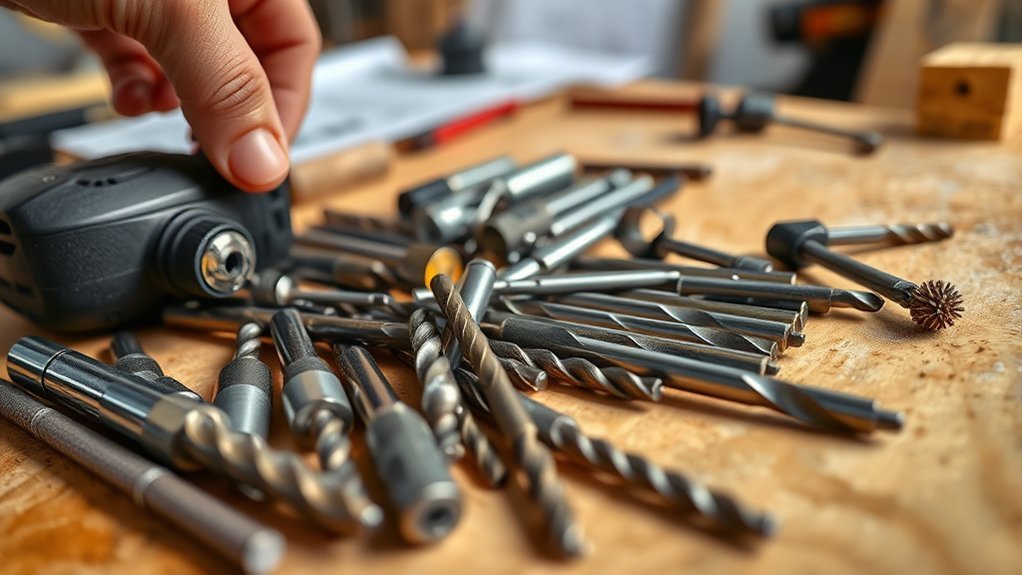
Choosing the right drill bit directly addresses the risks associated with using an incorrect one. To select appropriately, analyze your project requirements thoroughly, considering material type, hole size, and precision needed.
Drill bit materials vary considerably: high-speed steel suits wood and soft metals, cobalt excels in hard metals, and carbide is ideal for abrasive materials. Matching bit composition to the workpiece prevents premature wear and guarantees efficiency.
Additionally, consider the bit’s geometry and coating, which affect heat dissipation and cutting performance. Ignoring these factors risks damaging your tool and workpiece.
Conclusion
So, you’re thinking every drill bit fits every drill? That’d be like expecting every shoe to fit every foot—sure, if you enjoy blisters and broken toes.
Match your bit’s shank type and size to your drill’s chuck, or prepare for inefficiency and potential disaster. Don’t gamble with compatibility; precision matters.
After all, your drill isn’t a magic wand—it’s a tool that demands the right partner to perform like one. Choose wisely, or pay the price.
Remember, not all drill bits fit every drill, so ensuring compatibility is key to getting the job done right.